
| ABOUT US | ARCHIVES | LINKS | RSS FEED | MONDAYS | |

3quarksdaily

An Eclectic Digest of Science, Art and Literature

« Swerves | Main | Twombly and Poussin rub shoulders in an uneasy way »

June 29, 2011

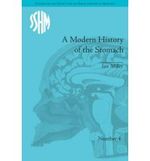
St Martin’s stomach

9781848931824
Alexis St Martin was one of the 19th century’s most important scientific guinea pigs. In 1822, the illiterate young French-Canadian was working as a ‘voyageur’ for John Jacob Astor’s fur-trading company in northern Michigan. He was hanging out with a bunch of rowdies in the company store when a shotgun accidentally went off and he was hit below his left nipple. The injury was serious and likely to be fatal – his half-digested breakfast was pouring out of the wound from his perforated stomach, along with bits of the stomach itself – but a US army surgeon called William Beaumont was nevertheless sent for. Beaumont was pessimistic, but he cleaned the wound as best he could and was amazed the next day to find his patient still alive. It was touch and go for almost a year: St Martin survived, though with a gastric fistula about two and a half inches in circumference. It was now possible for Beaumont to peer into St Martin’s stomach, to insert his forefinger into it, to introduce muslin bags containing bits of food and to retrieve them whenever he wanted. Human digestion had become visible. Beaumont took over St Martin’s care when charity support ran out, and over the next ten years the patient lived intermittently with the doctor, as both his domestic servant and a contractually paid experimental object. St Martin’s fistula was soon to become one of the modern world’s most celebrated peepshows.
more from Steven Shapin at the LRB here.

Posted by Morgan Meis at 08:48 AM | Permalink

Comments

This is a most interesting post because it highlights the relative importance to life of the organ of digestion.

Of course, living without a stomach it’s not only possible, but has been already demonstrated by some. http://www.bbc.co.uk/news/health-10786205

However, the stomach, for its survival significance, and for its myriad of (yet to be understood functions), maintains close, but if ill understood, humoral communications with the brain.

‘Writing in 1840, an English physician had it as a matter of course that ‘a most intimate sympathy exists between the Stomach and the Brain’. We can now ratify this premonitory assertion (Larocca, FEF: Gastroplastía y lobotomía: La conexión entre el estómago y el cerebro - La serotonina reexaminada en http://www.monografias.com/trabajos67/cirugia-gastroplastica-lobotomia/cirugia-gastroplastica-lobotomia.shtml?monosearch)

Walter Cannon was not as much interested on the physiology of digestion as he was in finding the origin of the perception of hunger.

His paper, published with Arthur Washburn in 1912 established erroneously that hunger resulted from the peristalsis of the stomach and not from the lowering of glucose levels in the blood and other mechanisms now sufficiently understood.

The question that yet remains to be settled is, how (if it in realty does) the poorly understood physiology of the stomach could be relevant to our understanding of the course (and curse) of obesity?

Thanks for posting


Posted by: Felix E F Larocca MD | Jun 29, 2011 1:42:22 PM

Post a comment


Subscribe to this blog's feed  

PayAnywhere with iphone credit card swiper

Android Tablet

Bluetooth Headset

2013 New Style Dresses

Compare Car Rental Prices

DHgate.com Wholesale

3QD on Facebook

3QD on Kindle

3QD by Daily Email

Receive all blogposts at the same time every day.

Enter your Email:


Preview 3QD Email

3QD on Twitter

Miscellany

Lijit Search

AddThis Social Bookmark Button

Add to Google

Recent Comments

Junaida on Tuesday Poem

rafiq on Tuesday Poem

Raza Husain on the culture animal

Nebor on Tuesday Poem

Eleutheria on I am dust and ashes and full of sin

carlos on I am dust and ashes and full of sin

Joe on the culture animal

Sundar on the culture animal

Eleutheria on Positive Failure - a review of "The Power" by Rhonda Byrne

Eleutheria on Positive Failure - a review of "The Power" by Rhonda Byrne

Matt on The Science Mystique

Eleutheria on Why is Europe so Messed Up? An Illuminating History

Elatia Harris on I am dust and ashes and full of sin

PeteChapman on I am dust and ashes and full of sin

Raza Husain on the culture animal

Chris on Positive Failure - a review of "The Power" by Rhonda Byrne

DAS on Why is Europe so Messed Up? An Illuminating History

DAS on Is the Brain No Different From a Light Switch? The Uncomfortable Ideas of the Philosopher Daniel Dennett

DAS on the culture animal

Raza Husain on Unknown Mathematician Proves Elusive Property of Prime Numbers

Dredd on NORTH KOREA’S NERVE WAR

Dredd on Unknown Mathematician Proves Elusive Property of Prime Numbers

Raza Husain on Is the Brain No Different From a Light Switch? The Uncomfortable Ideas of the Philosopher Daniel Dennett

Dana on germ houses

musafir on Tuesday Poem

Acclaim For 3QD


"I couldn't tear myself away from 3 Quarks Daily, to the point of neglecting my work. Congratulations on this superb site."—Steven Pinker, Johnstone Professor of Psychology, Harvard University.

"I have placed 3 Quarks Daily at the head of my list of web bookmarks."—Richard Dawkins, Charles Simonyi Professor of the Public Understanding of Science at Oxford University.

"Just wanted you to know I’m one of many who reads and enjoys 3 Quarks....almost daily."—David Byrne, musician, former lead-singer of the Talking Heads, artist, intellectual.

Read more here.

The 3QD Prizes

Subscribe to this blog's feed