
by Scott F. Aikin and Robert B. Talisse
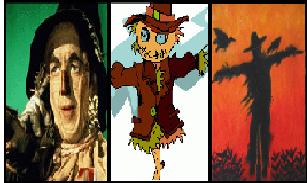
Although it is common to speak of the Straw Man fallacy, there are actually several Straw Men. What they have in common is that they manifest a certain failure of dialogue. This makes Straw Men different from many other fallacy forms. Inductive fallacies—such as Hasty Generalization—and relevance fallacies—like Scare Tactics—are internal to the individual’s reasoning: Just because some X’s are Y’s, it doesn’t mean that all X’s are Y’s; just because doing A is risky, it doesn’t follow that it’s wrong to do. One can commit these errors on one’s own. But straw-manning involves the misrepresentation of an interlocutor’s view; consequently, Straw Man fallacies involve more than one person. When we commit a straw man fallacy, we fail to live up to the responsibilities of the exchange of reasons. Consider:
Military Spending
Adam: We really need to beef up our military budget—the world’s a dangerous place.
Betty: No way! We don’t need to devote our whole economy to being the world’s bully.
Betty’s right about not needing to pour a country’s entire budget into being a bully, but that’s not what Adam proposed. Betty misrepresents Adam’s view; therefore, she’s not in proper dialogue with Adam. This simple case exemplifies the standard form of the Straw Man. We’ve called it elsewhere the representational form of the Straw Man fallacy; the distortion happens when a specific interlocutor’s views are not accurately represented.
Yet there are other ways in which a dialogue can be distorted. Perhaps a person may get hung up on one weak part of the argument and, even after it has been improved, not be able to let it go. Or consider someone who responds only to the poorly-informed and less-capable proponents of a view. Here’s an example:
Libertarianism
Every time Glenn Beck or Ron Paul make a case for “getting the government off our backs,” they do so on the basis of misinformation and conceptual confusion. Hence libertarianism is indefensible.
It may well be the case that Beck and Paul are ill-informed and confused, but no one should expect their views to be especially well-developed. To refute libertarianism, one could, perhaps, start with these two, but the case cannot end there. There are smarter libertarians around, and in order to claim to have refuted the view, one must tangle with von Mises, Friedman, and Nozick. The arguer in Libertarianism selects weak opponents, makes short work of them, and then attributes the defeated view to the class of libertarians generally. The misrepresentation, then, isn’t of the views of the individuals criticized (as it is in the representational Straw Man), but of the overall dialectical terrain. Accordingly, we’ve called this the selectional form of the Straw Man, or the Weak Man.
But what if one’s opponents are complete fictions? In the previous two cases, real opponents either get misrepresented or are selected as distorted representatives of a view or movement. But what about arguers that tangle with and refute arguments that nobody holds and no one could hold? For example, George W. Bush, in defending the U.S.’s continued occupation of Iraq, had this in the 2004 State of the Union to characterize his opposition:
We also hear doubts that democracy is a realistic goal for the greater Middle East, where freedom is rare. Yet it is mistaken, and condescending, to assume that whole cultures and great religions are incompatible with liberty and self-government.
In case the charge against his critics wasn’t clear, Bush later ran another version of this argument in a 2004 Rose Garden speech:
There's a lot of people in the world who don't believe that people whose skin color may not be the same as ours can be free and self-govern. I reject that. I reject that strongly.
The trouble is that nobody says that. India is the world’s largest democracy, and the vast majority of its population has skin darker than G.W. Bush’s. Recently this form of straw-manning has been termed the Hollow Man.
The lesson of this proliferation of Straw Men is that there is more than one way to fail to be responsive to the reasons of others. Another lesson is about the consequences of deployments of these argumentative strategies. A Straw Man succeeds only when one’s audience doesn’t know or doesn’t care about the quality of argument offered by the speaker’s opponent. And so, with the Libertarianism case, not only does the argument badly frame where the issues are, it badly educates those to whom it is presented. In fact, Straw Men depend upon their audiences being ignorant of the issue under discussion. In Military Spending, Betty encourages her audience to think that anyone who supports military spending is thereby committed to bankrupting and bullying. In the Bush case, opposition to continued occupation is painted as little more than veiled racism instead of being about sustainable nation-building.
These three Straw Men do not exhaust the varieties of the Straw Man fallacy. There are others waiting to be theorized. Perhaps there is a Burning Man, wherein one constructs an elaborate bricolage of opponents as a monstrous collection of ideas that must be opposed. Such arguments occur, for example in David Horowitz’s use of detailed lists of the “150 Worst Courses in the Academy”. Alternately, there may be an Iron Man, wherein one, instead of representing the opposition as worse than it is, represents as opponent as being better than he or she is. Some see in the media coverage of Sarah Palin and Michelle Bachmann a tendency to wash away or ignore their most unpalatable statements in order to present them as more formidable interlocutors than they in fact are. Certainly there are many Straw Men around, and as the election cycle in the US begins to pick up, we will meet them.