
| ABOUT US | ARCHIVES | LINKS | RSS FEED | MONDAYS | |

3quarksdaily

An Eclectic Digest of Science, Art and Literature

« Diagnosing Torture: Should doctors decide when an interrogation has gone to far? | Main | perceptions »

May 16, 2011

The Land Before Time

by Hasan Altaf

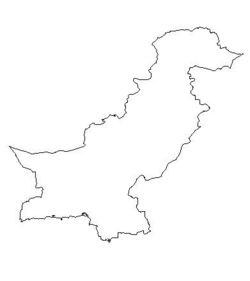
Pakistan When we talk about Pakistan, generally what we talk about is change. Most conversations will involve headshaking and sighs and riffs on the idea that things – take your pick: security, economy, culture, education, health – are “getting worse”; most conversations also will have one person to point out all the things that are “getting better.” But whichever position one takes, progress or regress, growth or decay, what’s behind it is change. 

This is of course true for most countries; we compare how they are now to how they were then. At an individual level too we tend to believe firmly in the possibility and even the inevitability of some kind of change, at some point, somehow: Today is not yesterday, and tomorrow will not be today; something will be different, because something has to be different. Politics, advertising, media, self-improvement; they’re all based on this belief.

It would be foolish to deny that Pakistan has changed over the years. It’s changed right in front of us. Everyone, I imagine, has their own metric for this, their own yardstick (for a lot of people it’s cell phones) but I think most of us see it. Sometimes, though, it seems that this might not be as true as we think, and in many ways, Pakistan is stuck in the past.

For a project recently I had to dig through several years worth of editorials in two Urdu newspapers, Jang and Nawa-i-Waqt, starting with 1995. The experience was actually eerie. Almost everything that was written fifteen years ago could have been written yesterday. Low literacy rates, insufficient power generation, strikes, ethnic violence, terrorism, Bhuttos, Sharifs, trips-to-America, foreign hands, poverty, misery, elegies, eulogies, laments, hope. When the subject was Pakistan, it wasn’t at all hard to imagine that they were talking about today’s Pakistan. It’s not time travel or even time-lapsed; it’s just as if time didn’t exist, and in some ways for Pakistan the past nearly two decades had never happened.

At one level this weirdness shouldn’t have been surprising. Literacy rates are still shamefully low, loadshedding is still a fact of life, the same people are fighting the same fights (now there are new fights, too, but the old ones aren’t gone), the same people rotate through the halls of power in the same time-honored dance. This is part of how we talk about Pakistan, too, but it was startling to be confronted so directly with this stasis. More than anything else, it reminded me of Cuba, another country that in many ways seems caught in a particular moment.

In Cuba, perhaps it makes more sense, since the country’s official narrative has been defined by a certain event and shaped by the same people since that time. The same might be true for Pakistan – the “story” of Pakistan has been given a particular shape ever since the formation of the country, and we have not really had any new leaders who are willing to question it, change it or correct it. But it seems irresponsible and almost tragic, too, in both Cuba and Pakistan – because people are changing, constantly, and want change, usually more change, not less.

What it made me think of, for some reason, was Tunisia and Egypt and Libya, Syria, Yemen. In all these countries, people are pushing back, and one of the things it seems they’re trying to do is take back control of the story. They’ve all been given a particular narrative and told to live within it for so many years, and eventually, like a skin that splits or a balloon that bursts, eventually they can’t do that anymore. Some of the problems will of course remain, because no revolution fixes everything overnight, and there will be new problems too, but the story will be different. In Cuba now, even the storytellers – the government – have begun to accept that there is a problem with their narrative.

I don’t see this happening soon for Pakistan. Perhaps because of its size and complexity, perhaps because the linkages between the different Pakistans are so weak, perhaps because we have just enough of everything (just enough “democracy,” just enough liberty, just enough safety, just enough electricity and literacy and hope) to keep us from revolting. But it was nice to put the editorials down, roll up the microfilm, and look for the smaller, individual stories that people tell, on Facebook and Twitter, in person, over the phone. Pakistan isn’t really completely stuck in a particular moment or a particular rut; there are just a lot of powerful people who would benefit from that.

Posted by Hasan Altaf at 12:25 AM | Permalink

Comments

As you stated, Pakistan has obviously changed in so many different ways (economically, socially, culturally) but there is a particular way in which it is permanently stuck; It is useful to isolate what that sticking point is. I think you will find that the sticking point is the national identity narrative and the disproportionate influence that has on REAL things in Pakistan...
It makes you think that in a reasonably successful society, all the bullshit cancels out and there really ARE deeper layers of identity that have some sort of hard-to-define but dense relationship to history. But in Pakistan the bullshit is not only stuck (and badly stuck...read Manto and see for yourself that its not just the last 15 years, it has been this way since Jinnah bhoy shuffled off the mortal coil after paying for his own socks when he was put to pasture in Ziarat..insiders will get the jokes involved), in Pakistan the bullshit is more bullshitty, less coherent and yet seems to have too many real life consequences. Thousands and thousands of people are dying and a few hundred people are making very real money from it and everyone is paying a price in some way.
Its possible to believe that the same is true in the USA or China or England, but I think there is a qualitative difference.
Maybe in most places there is a vast ocean of counter-bullshit bullshit and academia and media are not all stuck at the same narrow tottering ledge all the time. In Pakistan, the "ideology of Pakistan" issue seems to go beyond the world norm in these matters. Its more brittle, its poorly supported by current world fashions in these matters, its historical basis is very confused...its not just stuck in a rut, its stuck in a very narrow, very peculiar and very strange rut.
Something like that.

Posted by: omar | May 16, 2011 2:20:31 PM

Gellner has a discussion of the tropics of national time somewhere that seems apropos. Struck me that your conclusion might be an expression of the very phenomenon you describe? And if so does that mean that you're right?

Posted by: aditya dev sood | May 16, 2011 11:31:06 PM

Post a comment


Subscribe to this blog's feed  

PayAnywhere with iphone credit card swiper

Android Tablet

Bluetooth Headset

2013 New Style Dresses

Compare Car Rental Prices

DHgate.com Wholesale

3QD on Facebook

3QD on Kindle

3QD by Daily Email

Receive all blogposts at the same time every day.

Enter your Email:


Preview 3QD Email

3QD on Twitter

Miscellany

Lijit Search

AddThis Social Bookmark Button

Add to Google

Recent Comments

Joel Grant on Why Rational People Buy Into Conspiracy Theories

Tomboktu on Why is Europe so Messed Up? An Illuminating History

Joe on Why Rational People Buy Into Conspiracy Theories

Jalees Rehman on The Science Mystique

Dredd on The Moral Status of Rocks

sjg on Why Rational People Buy Into Conspiracy Theories

Dredd on Why Rational People Buy Into Conspiracy Theories

Louise Gordon on Why race as a biological construct matters

Louise Gordon on The stories of two Palestinian villages: From Al-Araqib to Susiya

musafir on a pretty funny book

freddie on The stories of two Palestinian villages: From Al-Araqib to Susiya

freddie on The stories of two Palestinian villages: From Al-Araqib to Susiya

Junaida on Tuesday Poem

rafiq on Tuesday Poem

Raza Husain on the culture animal

Nebor on Tuesday Poem

Eleutheria on I am dust and ashes and full of sin

carlos on I am dust and ashes and full of sin

Joe on the culture animal

Sundar on the culture animal

Eleutheria on Positive Failure - a review of "The Power" by Rhonda Byrne

Eleutheria on Positive Failure - a review of "The Power" by Rhonda Byrne

Matt on The Science Mystique

Eleutheria on Why is Europe so Messed Up? An Illuminating History

Eleutheria on I am dust and ashes and full of sin

Acclaim For 3QD


"I couldn't tear myself away from 3 Quarks Daily, to the point of neglecting my work. Congratulations on this superb site."—Steven Pinker, Johnstone Professor of Psychology, Harvard University.

"I have placed 3 Quarks Daily at the head of my list of web bookmarks."—Richard Dawkins, Charles Simonyi Professor of the Public Understanding of Science at Oxford University.

"Just wanted you to know I’m one of many who reads and enjoys 3 Quarks....almost daily."—David Byrne, musician, former lead-singer of the Talking Heads, artist, intellectual.

Read more here.

The 3QD Prizes

Subscribe to this blog's feed