
May 30, 2011
The Eclipse of Pragmatism
By Scott F. Aikin and Robert B. Talisse
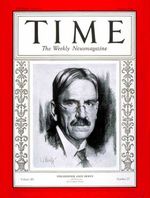
Pragmatism is widely regarded as the Unites States’ only indigenous philosophical movement. Founded by a quirky and largely isolated genius, Charles Peirce, pragmatism was introduced as a method for clear thinking which insisted that all words and statements be understood in terms of concrete experience. It was popularized by William James in a series of lectures delivered in Boston and New York 1906 and 1907. Indeed, many of the connotations of the term as it is used in popular parlance derive from James’s writing; it was James who identified pragmatism with the doctrines the truth is what “works” and that statements should be accepted or rejected in part according to their success. Yet pragmatism received its most sustained articulation in the philosophy of John Dewey, who in the course of his long academic career incorporated central insights of Peirce and James into an all-embracing philosophical system of experimental naturalism. In Dewey’s hands, pragmatism became the philosophical basis for accounts of art, experience, mind, knowledge, language, communication, education, happiness, science, religion, and politics. And Dewey embodied the pragmatic commitment to unifying theory and practice. He was a tireless public intellectual whose activities ran the gamut from marching in support of women’s suffrage to helping to found the NAACP to presiding over the Trotsky trial in Mexico. It is with good reason, then, that contemporary philosophers who are most keen to ally themselves with this “classical” pragmatist movement tend to idolize Dewey.
Within the community of contemporary advocates of “classical” pragmatism there is a prevailing narrative according to which Dewey and pragmatism were marginalized, dismissed, or “eclipsed” in the years following Dewey’s death in 1952. According to the Eclipse Narrative post-war professional philosophy in the United States fell under the spell of a style of philosophizing imported from England and championed by Bertrand Russell, G. E. Moore, and the early Ludwig Wittgenstein, a style generally called analytic philosophy. Analytic philosophy, with its pretensions to logical rigor and scientific precision, deemed pragmatism “soft” and unserious, driving pragmatist ideas and texts out of the professional mainstream and ultimately underground.
Like many persecution stories, the Eclipse Narrative culminates with a resurrection. It runs as follows: Thanks primarily to Richard Rorty’s influential work, pragmatism saw a renaissance in the 1980s, and is today again considered a major philosophical force. Yet, from the point of view of contemporary classical pragmatists, the resurrection of pragmatism was bittersweet. Rorty had indeed revived pragmatism, but Rorty’s “neo-pragmatism” is, by the Deweyans’ lights, a perverted and emaciated pragmatism, a pragmatism not worth resuscitating. And so, even though pragmatism is now widely recognized as philosophical force, current proponents of classical pragmatism see themselves as marginalized.
And with this sense of marginalization comes resentment. Consequently, it is almost impossible to find a recent work about Dewey’s philosophy that does not rehearse the Eclipse Narrative; and the Narrative is often accompanied by a Cassandra-esque insistence that John Dewey has solved all the philosophical problems and has shown the way to philosophical salvation, if only the professional philosophical mainstream would listen. An academic industry has since emerged devoted to publishing books and articles about What Dewey Said, What Dewey Would Have Said, and Things Dewey Said Before Anyone Else Thought To Say Them. That so much self-avowedly pragmatist philosophy should be so transfixed on ideas and texts that are nearly a century old is staggeringly ironic. After all, pragmatism describes itself as an intrinsically forward-looking philosophy.
As we have argued in our introduction to The Pragmatism Reader (Princeton University Press, 2011), this irony is compounded by the fact that the Eclipse Narrative is rooted in an untenable view of pragmatism’s past. In the first place, the Eclipse Narrative presupposes an unduly unitary conception of the classical pragmatists, failing to notice that Peirce, James, and Dewey disagreed significantly on many substantive philosophical questions, and their differences often track traditional disputes throughout the history of philosophy. Once these differences are properly noted, it is difficult to imagine what a wholesale eclipse of pragmatism could involve.
Secondly, the Eclipse Narrative relies upon an objectionably narrow conception of pragmatism. It is true that in the final decade of his life, Dewey receded from center stage. The majority of his major works were written in the 20s and 30s, and post-war American philosophers did not write much by way of explicit commentary on Dewey’s philosophy. However, this is because many of Dewey’s key insights had been incorporated into the philosophical mainstream; explicit discussion of Dewey was unnecessary because the general thrust of Deweyan naturalism had become the lingua franca of philosophy in America. Thus one finds frequent affirmation of ideas and arguments with an identifiably pragmatist pedigree in the work of post-War luminaries like Ernest Nagel, Sidney Hook, Morton White, Nelson Goodman, Sidney Morgenbesser, W. V. O. Quine, Wilfrid Sellars, and Rudolf Carnap. Oddly, many of these thinkers are identified by those who promote the Eclipse Narrative as the “analytic” philosophers who marginalized pragmatism. On a more responsible reading, Nagel, Goodman, Quine and the others advanced pragmatism beyond its Deweyan articulation. And it is precisely the developments they introduced which have enabled contemporary pragmatist philosophers-- Nicholas Rescher, Issac Levi, Hilary Putnam, Richard Gale, Susan Haack, Donald Davidson, Elizabeth Anderson, Robert Brandom, Cheryl Misak, Cornel West, and others-- to make their own contributions.
Finally, the Eclipse Narrative encourages the mistaken view that non-pragmatist philosophy simply ignored the classical pragmatists. Again, this view is not sustainable. What one finds in non-pragmatist 20th Century philosophy is a constant engagement with pragmatist opponents, beginning with the criticisms of William James proposed by Russell and Moore, to the nativism defended by Noam Chomsky and Jerrold Katz, the fallibilist foundationalism in epistemology proposed by Roderick Chisholm, the Kantian but yet empirical methodology for moral theory introduced by John Rawls, and the property-dualism in philosophy of mind championed by John Searle. In all of these cases (and there are many others), non-pragmatist philosophers are found developing their views in direct response to pragmatist challenges and alternatives, most often conceding the success of pragmatist critiques of earlier non-pragmatist views.
In short, the Eclipse Narrative is corrosive in that it obstructs deeper and potentially fruitful engagements between current philosophy and some of the classical expressions of pragmatism. Perhaps more importantly, the Eclipse Narrative is demonstrably false. Far from being a once marginalized and only recently revived movement, the arguments and ideas introduced by the original pragmatists have been alive and well since the end of the 19th Century. Indeed, pragmatism is the picture of a successful and enduring philosophical program.
Posted by Scott F. Aikin and Robert B. Talisse at 12:12 AM | Permalink


Comments
Is the disagreement today about the history of pragmatism in the 20th century merely one about what actually happen? (i.e. a merely a “factual” disagreement)? There is also a
a “value” type disagreement that must be considered. Tallise and Aiken pressuppose a conception of what is “progress” in philosophy or what is "good" philosophy. In telling the “history” of Pragmatism in the 20th century this sort of selectivity seems unavoidable. We cannot decide what is the proper narrative about the history of pragmatism without taking a stand on what is “the best legacy of pragmatism”, i.e. on what is philosophical advancement and cutting edge in philosophy.
One more thing: has Talisse/Aiken set their narrative against a narrow view of view of the alternative? No one (at least me) on the Americanists side is denying that Quine and others were influenced and continue the legacy of pragmatism (to some extent).
Peace! your colega in the Pragmatists "disfunctional family"....Gregory F. Pappas
Posted by: Gregory F. Pappas | May 30, 2011 11:27:35 AM
A lot of philosophy today is about commentary -- not just pragmatism. Great People write Good Books (Good Articles) and the rest of us write articles about their articles (books about their books). And it isn't just philosophy that does that -- it's the humanities in general. I don't know if it happens in science also, but I have heard of things called "review of the literature".
I don't see what's terrible about it, either, insofar as a large part of intellectual life still does and has for a long time consisted in reading things that other people wrote. (Again, only the scientists seem to get out of this -- because they do experiments.)
Posted by: Alex Leibowitz | May 30, 2011 1:03:17 PM
I wonder about the place of C.I. Lewis in this narrative. He's a major figure that has seemingly dropped out of the philosophical consciousness. Following Murray Murphey, I think this is regretful and that we should be looking to Lewis as a major figure in the development of analytic philosophy and philosophy of science and its relationship to pragmatism. This is for a few reasons. Lewis explicitly frames his philosophical outlook as continuous with the American Pragmatists before him. And, as Bruce Hunter notes in his Stanford Encyclopedia article, he was perhaps the most important American philosopher of the 30s and 40s. Moreover, Lewis was a sympathetic and critical interlocutor of the logical empiricists, was a teacher and colleague of Quine's, and more importantly a forgotten target of Quine's criticisms of the analytic/synthetic distinction (Quine mentions two contemporaries by name in the last paragraphs of "Two Dogmas": Lewis and Carnap).
This last fact could explain Lewis's relative lack of neglect. Two major commitments at the center of Lewis's conceptual pragmatism were characterized respectively by Quine as a dogma and the other by Sellars (another student) as a myth: the Given. And, if, at the time, Lewis was understood to be the standard bearer of a thoroughgoing pragmatism - I'm not sure he was, hence the wonder expressed above - then this fact might explain why pragmatism seemingly disappeared (or however we want to put it). At the very least, it might explain why C.I. Lewis seems neglected. The narrative won't be that neat, but, as pointed out above, the received view has been shown to be inadequate also.
Lewis might end up being an important figure in this story not only given his prominence during the 30s and 40s, but - for those not convinced by historical/sociological reasons - also because of his ideas; ideas which were adopted into the mainstream of philosophy also. I think Lewis prefigures the pragmatic strains of both Carnap and Quine and his conceptual pragmatism seemingly occupies an important middle ground between the two. For instance, Lewis was advancing something like Carnap's principle of tolerance in the 20s and says many things that prefigure Quine's pragmatic naturalism and holism. Furthermore, Lewis also advances a theory of knowledge centered on pragmatically revisable a priori categories that might help illuminate the Kantian underpinnings of other philosophers of science at the time now being emphasized by scholars like Michael Friedman.
Given all this - not that anyone has to give any part of this story - I'd be interested to hear more about Lewis's place in the development of pragmatism.
Posted by: Paul L. Franco | May 30, 2011 1:36:29 PM
I agree with a good deal of this. The 'eclipse' narrative was/is neither wrong nor unreasonable if confined to characterizations of the reputational standing of particular philosophers. Its true that that particular pragmatists' works have gone out of fashion from time to time (e.g., James, Dewey, Lewis.) What's wrong and unreasonable is making is making the fortunes of particular contributors one's touchstone for assessing the fortunes of the approach to philosophical problems which they exemplified in their various ways. This too many have been prone to do, with unfortunate results.
Posted by: Jennifer Welchman | May 30, 2011 4:57:52 PM
Most of the postwar philosophers you two mention are most influential as theoretical philosophers, rather than practical ones. So, while I find your debunking of the Eclipse Narrative very convincing in the case of theoretical philosophy, I am less convinced in the case of practical philosophy. (And isn't that where the Neo-Deweyans tend to be most insistent?)
According to what I take to be the standard narrative, there were three dominant positions in 20th-century analytic practical philosophy prior to Rawls: fairly strict versions of utilitarianism, emotivism, and Rossian intuitionism (the latter often in Kantian dressing). On the Eclipse version of this narrative, exponents of these positions either ignored the pragmatists completely, or addressed crude oversimplifications of their views. I do not know how true this is, but surely it is at least fair to say that neither Ayer's emotivism, Ross's intuitionism, nor Smart's utilitarianism engaged with Dewey's ethical thought (or James's, or--who else?--Santayana's? Whitehead's?) in anything like a serious way.
I'm sure the actual story is much more complicated. I wonder about a number of other, now (comparatively) diminished leading lights--say, Brandt, Urmson, Blanshard, or Falk--and plausibly you can extend a rough but nontrivial line from the classical pragmatists to Ryle, the Wittgensteinians, and maybe further on to Taylor and Williams. But this does not seem at all as decisive to me as it does in the case of Goodman, Quine, et al.
Posted by: Ben | May 30, 2011 5:29:43 PM
Perhaps the authors of this article are only focused on pragmatism about truth. But it's worth bearing in mind that pragmatism about justification and knowledge is very much alive in contemporary epistemology.
Posted by: Jason Stanley | May 30, 2011 7:38:26 PM
Philosophers, perhaps more now than ever, seem inordinately preoccupied with questions of how certain, for lack of a better term, schools of thought are received: i.e. whether said schools have been unjustly ignored, buried, misconstrued, etc. There appears to be an idea that if we could just agree on the proper emphasis for which schools of thought are alive, and which are dead, we might then finally find philosophy more renewed and prominent than before. The problem with this is that it often seems that the fixation with the narrative of philosophical history is really a way of putting off addressing the more pressing problem: i.e. the problem of actually doing philosophy.
Posted by: Nat | May 31, 2011 3:20:15 PM
Personal anecdote:
When I was a young scholar (graduate student) I went to the Harvard library to research the letters of William James. I was walking through the philosophy department building and noticed that prof. Quine (who was already retired) was in his office. I decided to knock in his office door and introduce myself. Here is how that went:
Pappas: Prof. Quine! I am just a graduate student doing research in the library and decided to drop by to say hello to a philosopher that I admire.
Quine: nice to meet you, come in.
(I will omit must of the conversation, which I take is not of interest here. I wanted to talk with him about philosophy but when he found out that I was Puerto Rican, he started to talk to me in perfect Spanish and ask me questions about famous pirates in the Caribbean, which I was embarrassed to admit I knew nothing about.)
At the end of my visit, I said:
Pappas: Before I leave I want to ask you one question that has been in my mind.
Quine: sure! what is it?
Pappas: Well, when I read your work I can appreciate your predominant philosophical influences, I think. Sometimes in one same essay, in one paragraph you sound like James-C.I. Lewis and in the next paragraph you sound like Carnap and the rest in that tradition. I think it is silly to think that one must choose between these two philosophical approaches or schools BUT if you were forced tomorrow to choose between the two, which one would you??
Quine: the Carnap one, of course!!
Posted by: gregory Pappas | May 31, 2011 5:32:19 PM
I think Nat hit it on the head. Perhaps what motivates the eclipse narrative is that, for a period, several master idea-generators of pragmatic themes (Peirce, James, and Dewey) were read less, in favor of others and the mainstream, for a period, saw these pragmatic thinkers as marginal, relativistic, or both. The anti-eclipse narrative sees this historical development (whether proved in fact or not) as placing an inordinate focus on the "injustice" of the temporary falling out of favor of Peirce et al. as "worship." One side's "injustice" is the other side's "idolatry." But Nat's larger point is well taken: too much emphasis by either side constitutes a kind of idolatry-by-historical-narrative. As the classical pragmatists and our authors here would say, "Get on with it!" (It being the debate and argument that makes culture healthy.)
Posted by: David H. | Jun 6, 2011 12:16:02 PM
Post a comment