
| ABOUT US | ARCHIVES | LINKS | RSS FEED | MONDAYS | |

3quarksdaily

An Eclectic Digest of Science, Art and Literature

« The Elusive City | Main | perceptions »

May 30, 2011

Creationism in the Classroom: A Tragic State of Affairs

by Quinn O'Neill

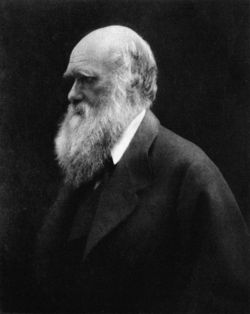
CD The latest battle in the long standing war between evolution and creationism was lost in Louisiana last week. 17-year-old Zack Kopplin spearheaded a valiant effort to repeal Louisiana’s Science Education Act, an Act that opens the door to the teaching of Creationism in science classrooms. Tragically, the bill was shelved and the anti-evolution Act retained.

Some might wonder what could be so terrible about teaching students that we were created in our current form by a kind and loving God. It’s an idea that can help people to cope with mortality and uncertainty and offer a sense of purpose to our existence. It may seem pretty harmless.

The teaching of Creationism as science constitutes a tragic failure of science education for a number of reasons, some of which don’t get mentioned often enough. When debate bubbles up on the internet, it tends to revolve around what is and isn’t true, with talk of facts and evidence. Certainly evolution is true and there are reams and museums of supporting evidence; but the rejection of facts and evidence itself isn’t really tragic in my opinion, it’s just disappointing and frustrating.

The real tragedy has more to do with the power and utility of evolution than with its truth. Evolution is a potent concept that can transform the way we see the world and everything in it. In Darwin’s Dangerous Idea: Evolution and the Meanings of Life, Daniel Dennett compares the concept to a sort of “universal acid” that’s so powerful it will inevitably eat through anything used to contain it. In Dennett's words, evolution “eats through just about every traditional concept, and leaves in its wake a revolutionized world-view, with most of the old landmarks still recognizable, but transformed in fundamental ways.”

But evolution doesn’t just change the way we look at things, it’s necessary for making sense of much of science. Major science organizations have acknowledged this vital role. The American Association for the Advancement of Science states:

"The modern concept of evolution provides a unifying principle for understanding the history of life on earth, relationships among all living things, and the dependence of life on the physical environment. While it is still far from clear how evolution works in every detail, the concept is so well established that it provides a framework for organizing most of the biological knowledge into a coherent picture."1 

The U.S. National Academy of Sciences has echoed this sentiment, noting that evolutionary theory “has become the central unifying concept of biology and is a critical component of many related scientific disciplines.”2 What level of science literacy can we expect students to achieve without a solid understanding of such a fundamental and unifying concept?

Understanding evolution is also vitally important in the field of medicine, which should interest not only physicians and medical researchers, but anyone who might at some point be affected by a medical condition - in other words, all of us. The field of Darwinian medicine has grown rapidly, and by 1997, the literature already contained more than 1200 related articles.3 Evolutionary principles are indispensible in the management of antibiotic resistance and in vaccine design, since pathogens are continually adapting to our strategies for killing them. We are susceptible to a variety of diseases and conditions because we've evolved in environments that are radically different from those in which we now live. According to the hygiene hypothesis, the increased prevalence of allergic and autoimmune conditions in the developed world is explained by our cleaner, modern environments. Our immune systems evolved in coexistence with microbes and parasites that have been largely eliminated by improvements in hygiene. As a result, our immune systems may no longer be kept in proper balance.

Fruit flies Perhaps the most objectionable part of evolution for many is the idea of common descent, that we share an ancestor with non-human primates and other organisms. It's understandably difficult for some people to accept the fact that fruit flies are members of our extended family.

Common ancestry, however, provides valuable tools for improving our approaches to disease. It’s the reason why we share many aspects of our biology with other animals - we are the products of variations of a common genetic recipe - and it’s because we have so much in common that we can use animal models to study human diseases and conditions. Fruit flies, for example, can be used to study mitochondrial dysfunction which underlies a number of neurological disorders. An important gene that may contribute to mitochondrial dysfunction in Down syndrome has a fruit fly homolog - a gene that’s very similar to the human version due to a common evolutionary origin.4

Sarah Palin, poster girl for science illiteracy, famously displayed her ignorance of both evolution and its role in medical reseach with her derisive comment about the wastefulness of fruit fly research. “Some of these pet projects,” she explained, “they really don’t make a whole lot of sense and sometimes these dollars they go to projects having little or nothing to do with the public good, things like fruit fly research in Paris, France.” As the mother of a child with Down syndrome, Palin ought to have a greater appreciation for these tiny, winged friends of science.

If evolution didn’t have such an impact on our lives, it wouldn't be so important to teach it well. Evolutionary theory is sometimes compared to gravitational theory, which is similarly well-established, but a better comparison might be to germ theory. Just as evolution provides a unifying framework for understanding biology, germ theory is a cornerstone of medicine and clinical microbiology. Rejection would have consequences for all of us and they wouldn’t be pretty.

Evolution’s opponents often point to destructive ideologies, like eugenics, that once co-opted Darwin’s ideas. But understanding evolution and natural selection doesn’t mean we ought to let those who might be deemed weak die. On the contrary, it offers powerful tools for understanding our constitutional and physiological weaknesses and enables us to obviate the major effects of natural selection. The consequences of failing to impart students with a solid understanding of evolution may ultimately stifle our ability to help those with poor health.

Principles of evolution were also misused to justify racist views in Victorian times, but evolution actually provides a powerful antidote to racism. From an evolutionary point of view, we’re all African and our differences really are insignificant. A literal interpretation of the bible, on the other hand, would permit ownership of slaves as long as they come from neighboring nations. Leviticus 25:44 states that 'Your male and female slaves are to come from the nations around you; from them you may buy slaves.” Rigid adherence to a literal interpretation of the bible is a very bad idea for obvious moral reasons.

Perhaps the saddest thing about Creationism’s creep into the classroom is that it reflects a greater social pathology. We live in a society in which money is power and gross imbalances of wealth are possible. If you have enough money, you can advance any agenda you’d like.

Creationists aren’t the only group taking advantage of this, with their well-financed lobby groups and monstrous, nonsensical theme parks. The John Templeton Foundation, with an endowment of $1.5 billion, aims to "to explore spiritual and moral progress through the use of scientific methods," or as Jerry Coyne has argued, “to give credibility to religion by blurring its well-demarcated border with science”. Putting aside the inappropriateness of mixing science and religion, there’s a bigger question here: should wealthy people have the power to reshape the very nature of science? Or to direct educational reform?

In a recent article in The Daily Beast, Diane Ravitch argued that Bill Gates is “using his vast resources to impose his will on the nation and to subvert the democratic process.” She asks “Why have we decided to outsource public education to a well-meaning but ill-informed billionaire?”. Good question! The power to reshape science and education - which have important consequences for sustainability, equality, human health and well-being, and ultimately for the survival of our species - has fallen into the hands of people who are not only unqualified for the job, but who may have very different values than we do.

The current distribution of power isn’t compatible with democracy, and in a society that depends heavily on science and technology, neither is public science illiteracy. We are ill-equipped to participate in decision-making that profoundly affects us. Carl Sagan explained this best in his last interview:

“we live in an age based on science and technology with formidable technological powers and if we don’t understand it, [...] then who’s making all the decisions about science and technology that are going to determine what kind of a future our children live in? Just some members of congress? But there’s no more than a handful of members of congress with any background in science at all, and this combustible mixture of ignorance and power sooner or later is going to blow up in our faces. I mean, who is running the science and technology in a democracy if the people don’t know anything about it?”.

The solution is a solid science education that imparts critical thinking skills and a comprehensive understanding of fundamental concepts in science. This demands a curriculum that is shaped by experts and not by groups with money and their own agendas. The most recent battle over Creationism in the science curriculum is just one in a long history of similar struggles, but the battlefield has changed and the stakes are higher than ever. At a time when we've become completely dependent on science and technology for our survival, the loss of the integrity of science education portends a grim future. On a brighter note, the youthful and prodigiously savvy leadership of Zach Kopplin offers a ray of hope that the next generation of decision-makers will have greater vision. We’d do well to follow his lead.

“Darwin matters because evolution matters. Evolution matters because science matters. Science matters because it is the preeminent story of our age, an epic saga about who we are, where we came from, and where we are going.” ~Michael Shermer


References:

1 American Association for the Advancement of Science (1990). Science for all Americans: Oxford    University Press New York. 

2 Science and Creationism: A View from the National Academy of Science, Second Edition (1999).    National Academy of Sciences.

3 Stearns SC, Ebert D. (2001). Evolution in health and disease. Quarterly Review of Biology 76:417-432.

4 Chang, KT, Min, KT (2005). Drosophila melanogaster homolog of Down syndrome critical region 1 is critical for mitochondrial function. Nature Neuroscience 8:1577-1585.

photo credits: Wikimedia Commons

Posted by Quinn O'Neill at 09:53 AM | Permalink

Comments

This posting represents one of the most elegant and thoroughly scientific description of the scope of evolutionary science.

In addition, it leaves room for the expression of whatever personal biases are on this, very unique of American, conundrums.

If God created the world, so be it. But, if it didn’t, or if Darwin (or chance) did it instead, it really doesn’t matter. The end result is the same.

We’re here, and we know nary why that is.

But, if the evidence against the creationist notion weighs against it, what harm is it done by presenting the alternative views, accepting, and teaching it?

I happen to admire someone who took so much work and detailed effort to make a point for the enjoyment of those who are ‘addicted’ to 3QD.

Kudos! To you, ‘Sir’ (Señor) Quinn O’Neill

I admire your talents…

Posted by: Felix E F Larocca MD | May 30, 2011 9:12:03 PM

Dr, Larocca, the problems with teaching creationism in the science classroom are manyfold. The main reason is that there is no one agreed-upon creationism from which to base lessons, and none of them demonstrate the process of scientific exploration in demonstrating their conclusions. They are 'just-so' stories based on mythologies of a multitude of cultural heritages.

In teaching evolution, science students learn the process of acquiring knowledge of the various factors that lead to species diversification over billions of years.

Intelligent Design was initiated to skirt the problem in the United States of Lemon Test violations of the 1st and 14th amendments, but it has created no teachable science; instead the Intelligent Design "researchers" only attack straw versions of evolution, but suggest no way to demonstrate design other than the slippery "specified complexity" baseline to say that beyond this specification, things are too complex to develop non-intelligently. It's a mess.

If there is a proper place for comparison of evolution with creationism, it would be in a philosophy of science course at a college level, and not appropriate to the high school level.

Posted by: Mike Haubrich | May 30, 2011 9:26:08 PM

"Creationism in the Classroom: A Tragic State of Affairs"

Tragic? Please!

"If there is a proper place for comparison of evolution with creationism, it would be in a philosophy of science course at a college level"

Nonsense. Highschool kids love to engage in this kind of thinking. It helps them understand the limitations of science, the kinds of questions in can and cannot answer.

The same issue arises in physics: does our universe appear to be designed to support intelligent life because it in fact was so designed or because there must be an infinite number of universes out there with different laws of physics and we just happen to live in one of the ones that support life?

Question: what conceivable evidence would support the existence of an intelligent designer at the cosmological level?

Science has it's uses, but deciding wether there is or is not a God is not one of them. Public schools have no business pretending otherwise, by insisting for example that evolution is driven by blind chance, as though chance and design were mutually exclusive.

Science can't tell us what's good or what's beautiful and to the extent that the good and the beautiful are important science can't tell us -- or explain -- everything that is true.

Besides, what bright kid ever got turned off on science because of debating these questions? Answer: None! How many got turned on by it? Answer: plenty!

Posted by: Luke Lea | May 30, 2011 9:45:03 PM

"The real tragedy has more to do with the power and utility of evolution than with its truth. Evolution is a potent concept that can transform the way we see the world and everything in it."

For example, it inspired social Darwanism and Germany's attempt to become a world power in the late 19th century.

It has also inspiring the human biodiversity debate in contemporary society in which many of the same voices that favor the teaching of evolution in the schools are opposed to teaching that human evolution did not end with the emergence of modern homo sapiens 50,000 years ago, that important mental and physical differences have evolved in different population groups during that time.

These are difficult issues and to pretend otherwise is foolish.

Posted by: Luke Lea | May 30, 2011 9:55:34 PM

"At a time when we've become completely dependent on science and technology for our survival . . ." If that is all we depend on, then heaven help us. Good sense, moderation, and an appreciation of history are also important. Critical thinking skills are of little use without a good liberal education, which is almost impossible to find nowadays even in the Ivy League. The Age of Ignorance is a better description of our current situation.

Posted by: Luke Lea | May 30, 2011 10:07:02 PM

"Those who know their history and do not know their Bible do not know their history." I wish I could remember who said that. Anybody know?

Posted by: Luke Lea | May 30, 2011 10:09:36 PM

Thank you for this great researched essay!!! The only comment/question to the people responded so far is:
Can you detect a relationship between creationism and violence? or is that only god given coincidence, that there seems to be a clear relationship between ignorance and violence in the history of human behaviour. Hitler also ordered to burn books, but not the bible why?

Posted by: mica hubertus mick | May 30, 2011 11:32:52 PM

Whilst I have no problems with some discussion about creationism in a classroom, the point is that it is non-scientific nonsense, and therefore can only be included in science class as an exemplar of non-science.

Lea however then gets confused, since the science of evolution is what has been observed and proven using the scientific method. God doesn't come into it. It sounds like you are blaming atheism on evolution, rather than someones lack of faith.
Design, as a concept related to the evolutionary record, has no place in the science classroom because, oddly enough, nobody has found any scientific evidence for design....

I think you'll also find that Germany was trying to become a world power before anyone paid any attention to Darwinism, which happened along at the right time to be co-opted into their general world view. Racism based upon superiority of your countries population over another countries population had been around for millenia beforehand, so you can't blame evolution for it.

You'll also find that onlyu idiots deny that the evolution of humans has stopped, since evolution is defined as changes in allele frequency. The ironic thing is that a lot of the evolution of the last few thousand years has been in response to disease. But your mention of important mental and physical differences is something else again, because actually there isn't much evidence for such things outwith a number of specific examples, and also specific populations vary greatly themselves anyway.


Posted by: guthrie | May 31, 2011 6:33:59 AM

Luke, Intelligent Design and creationism are not science whether you believe in God or not. Creationists place red herrings out there such as the fine-tuning argument and whether or not science can explain beauty.

I am at a loss to understand what you mean by the teaching that evolution stopped at 50,000 year ago. Evolution has never stopped and never will as long as life reproduces. Can you clear this up for me?

Posted by: Mike Haubrich | May 31, 2011 6:38:37 AM

"...there’s no more than a handful of members of congress with any background in science at all, and this combustible mixture of ignorance and power sooner or later is going to blow up in our faces. I mean, who is running the science and technology in a democracy if the people don’t know anything about it?”.

The perfect illustration of the perils of ignorance is 9/11. Despite the fact that a grade-school knowledge of physics (and the scientific method) leads one to the inevitable conclusion that only controlled demolition could have caused the collapse of three steel-framed skyscrapers, there is mass denial in Congress and the population. They'd all rather believe a fairy story (19 crazy Arabs with boxcutters) than make a logical deduction from the evidence. Sadly, the official fantasy is more politically acceptable than the ugly truth, an inside job. So we have a population of idiots led by criminal zealots.

The US is an empire of half-wits.

Posted by: Chris Michie | May 31, 2011 7:34:47 AM

Of course evolutionary theory is true, but that is not necessarily decisive in deciding whether it should be taught in schools.

1. Is it useful?
You assert that understanding evolution in high school is essential for understanding biology and medicine. But that doesn't seem at all the case and isn't demonstrated by your examples. Understanding and manipulating the mechanics of genes, cell development, disease, etc makes no more demands on a command of evolutionary theory than driving a car requires a deep understanding of the principles of an internal combustion engine.

2. Is it a political issue?
You quote Dennet that evolution “eats through just about every traditional concept, and leaves in its wake a revolutionized world-view, with most of the old landmarks still recognizable, but transformed in fundamental ways.”

Well, isn't it reasonable not to want one's cherished beliefs dissolved by acid? Doesn't it interfere with your ability to raise your children with your traditional values? What we teach our children is a matter of collective choice about our values, and therefore something that political communities can democratically debate about.

3. A democratic confusion
Your final paragraphs give the (I hope misleading impression) that you think democracy is about getting things done your way.

You say, "The power to reshape science and education - which have important consequences for sustainability, equality, human health and well-being, and ultimately for the survival of our species - has fallen into the hands of people who are not only unqualified for the job, but who may have very different values than we do."

Well, yes. But that's the nature of democracy. (It's also exactly how religious people feel when evolutionists get their way with the curriculum!) Surely there is some contradiction in your democratic argument for teaching scientific values and concepts so that voters may one day fill congress with people who agree with them and think like you.

Posted by: Philosopher's Beard | May 31, 2011 8:22:18 AM

Harry Frankfurt has defined "bullshit" not as outright lies, but as an orientation that pretends to be interested in truth, but really doesn't care about truth. A lie is more of a friend of the truth than bullshit; at least you have to be aware of the truth to know you're lying.

Bullshit, in the Frankfurtian view, is found whenever important cultural legends need to be cemented, but they contradict fact.

Creationism is bullshit, in the Harry Frankfurt sense. But so is the idea that evolutionary biology need be friendly. We may turn out to learn truly awful things from evolution, but at least it's the truth.

Posted by: Sister Y | May 31, 2011 11:29:12 AM

Freeman Dyson, the eminent scientist who who just won the Templeton Prize, wrote
"300 million years ago some amphibians waddled uncertainly out of dried up ponds into an alien and hostile world."
To me that truth of our beginnings is more awful and beautiful than Creationism's Garden of Eden.

Posted by: HoBo | May 31, 2011 2:37:45 PM

This is a great post. I have a story for you guys - sort of an off-shoot of the conversation marked by:

"But there’s no more than a handful of members of congress with any background in science at all, and this combustible mixture of ignorance and power sooner or later is going to blow up in our faces."

I was sitting around a campfire with some folks over the weekend and one girl began insisting that you cannot change the Constitution of the United States without a Convention... therefore, she insisted, you cannot change our fundamental rights as American citizens. She mentioned Congressman Ron Paul for some reason (who as a lawmaker, I would assume knew exactly how his direct actions affected our rights - hope this isn't his lie).

Anyway, I was dumbfounded.

We (me and the only other person who heard this utterance) tried to explain to her how amendments, laws, taxes, Congress, etc... affected people's rights. She was confused. We tired all angles. She was still confused. Someone told me later that this is a conversation that's been had with her many times over.

Could you imagine how a conversation about science education might go with this one?

Here's the kicker: She's in college. She's not failing out either and though her major is not political science, you'd think someone (other than a the media clowns) would have explained to her how this works.

I give you this example as a good reason as to why we should have ONE coherent message on things like the basics of science and government, all others should be extra-credit. If this college-girl was confused, imagine what the Creationists agenda could lead to.

Its not that one shouldn't have the right to learn about things (they should, we all should), it's that knowledge builds on itself and if education is so poor in this country as the above example (true story, swear to you) then we probably shouldn't be adding to the course-load until the basics are taken care of.

Of interest: the girl mentioned is actually a talented artist and wonderful person. Regardless, a vibrant and effective Democracy is dependent on public education. It's a shame that in this country you can flourish at a reputable college and not undestand the basics of the K-12 system. (Yet people without the means to get a degree are degraded?) It's also a shame that people of a more abstract leaning would be so thoroughly taken advantage of by the American media bizarre.

I was raised to question everything and to think critically. That in hand, and a basic outline of what one needs in order to understand more complex ideas, isn't that enough? Why confuse people? Who is anyone offending by teaching that which is accepted in the rest of the world and offereing critical analysis from sources for and against? It's such a simple formula!!!

Ok, I'm done. This topic gets me a little heated.

Posted by: unfinishedscript | May 31, 2011 4:32:29 PM

Re: Luke -

"Public schools have no business pretending otherwise, by insisting for example that evolution is driven by blind chance, as though chance and design were mutually exclusive."

Do our science teachers (and evolutionary theory for that matter) insist on the existentialist view? Not that I recall.

Evolutionary theory has actually lead to (it took a long time) the Big Bang theory being an acceptable theory as the origins of the Universe and Christians (and other religious/philosophical thinkers) have pointed to this and said a few things about it mainly:

a) it does not prove there is no God (unless your Stephen Hawkins and then the point he really amkes is that there doesn't need to be a God in order for the Universe to have been created - but would an all-powerful, totally humble, all-knowing master of the Universe create such a Universe?)

b) it does however prove that the Bible should not be taken literally (many well-rounded religious teaching institution will support this as an acceptable example) and this is what creationist take offense to.

I cannot count the number of religious folk (and institutions) that I have come across that say exactly that.

Evolution poses no threat to their belief... it only poses a threat to the belief of fundamentalist believers and the power of their institutions.

And on the topic of Public schools: they are there to teach our youth the tools they need in order to be viable members of our democratic society. They are an extension of our secular-democratic government. With so many different possible religions an American could be, why impose religious ideas on a secular institution. Religion is a family or individual decision and such institutions exist to perpetuate that learning. We SHOULD keep it out of public schools lest we begin to fall into Fundamentalist ideology and subsequent turmoil (site: Communism!?!?!? lol)

This country was founded on well thought out ideals that challenged our country to form a new government that was accountable to the people it served in radical ways.

The campaign of misinformation by these groups seems to be coming to fruition in the young and educated elite and it is a horror to watch a whole section of my peers being taken by waves of fear-mongering and histeria comparable only to a more sophisticated McCarythiasm. Who is teaching them this fear-based mythology? It must be mainstream in a country that dominates the world in military spending.

Posted by: unfinishedscript | May 31, 2011 5:14:02 PM

Every public school science book should start with an elementary discussion of what science can and cannot do, the kinds of questions it can and cannot answer. And it should be made clear that there are many important questions in the world -- such as what is consciousness, how did life begin, the origin of the cosmos -- that are quite beyond science, as are all questions of right and wrong. Only if we have a good a appreciation of the limits of science can we have a proper appreciation of its value. This discussion cannot be shirked and it belongs in the science curriculum, right up front at the beginning.

There are many reasons for this postion. Simple honesty to begin with: the humility of science, if you will. And public support for the future funding of scientific research for another. Evolutionary fundamentalists are just as big a threat as religious fundamentalists. No, let me amend that: neither evolutionary fundamentalists nor religious fundamentalists are a threat to a properly framed science curriculum in our public schools.

Posted by: Luke Lea | May 31, 2011 7:59:38 PM

Luke, I agree that in some settings it may be a useful and stimulating exercise to debate the relative merits of standard scientific and alternative views. Some studies have looked at the effects of explicit comparison of evolution and creationism in college classrooms and it appears to improve students’ understanding and/or acceptance of evolution (Verhey 2005; Ingram and Nelson 2006). Science educators who’ve advocated this approach caution that they are not advocating “teaching the controversy” (evolution isn’t controversial in the scientific community). Rather, they advocate teaching appropriate scientific criteria for evaluating a scientific theory and having students apply these criteria to evaluate evolution and its alternatives.

It’s critical with this exercise that the instructor have a solid understanding of both evolution and the nature of science. Unfortunately, studies show that at pre-college levels many teachers don’t have a satisfactory grasp of either and may even advocate Creationism in their classrooms (Nehm and Schonfeld 2007; Berkman and Plutzer 2011). In the hands of a teacher who lacks a comprehensive understanding of either evolution or the nature of science, or is unskilled in the art of diplomacy (religion’s a touchy subject), this approach can backfire.

Of course, another issue at pre-college levels is that teaching a religious ideology simply isn’t permitted; it’s unconstitutional. Creationism is deeply rooted in religion and as such has no place in K-12 science classrooms.

I completely agree that students should learn about the nature of science, including its limits, early on. I’ve written about this in the past: http://bit.ly/hxap6O

NB: Evolution is not “driven by blind chance”; natural selection isn't a random process. Traits are selected on the basis of their survival and reproductive advantages. It’s because natural selection isn’t random that we can end up with seemingly improbable, highly complex outcomes. Yahtzee makes a great analogy. Your odds of getting five ‘ones’ in a single roll are pretty slim; but, if at each roll, you set aside the ‘ones’ you get and keep trying, you’ll end up with five ones in no time. With non-random selection you can easily get a seemingly improbable outcome in a short time. Imagine what could happen in a few billion years.

Berkman, M. B., & Plutzer, E. (2011). Defeating creationism in the courtroom, but not in the classroom. Science, 331(6016), 404.

Ingram, E. L., & Nelson, C. E. (2006). Relationship between achievement and students' acceptance of evolution or creation in an upper level evolution course. Journal of Research in Science Teaching, 43(1), 7-24.

Nehm, R. H., & Schonfeld, I. S. (2007). Does Increasing Biology Teacher Knowledge of Evolution and the Nature of Science Lead to Greater Preference for the Teaching of Evolution in Schools? Journal of Science Teacher Education, 18(5), 699-723.

Verhey, S. D. (2005). The effect of engaging prior learning on student attitudes toward creationism and evolution. Bioscience, 55(11), 996-1003.

Posted by: Quinn O'Neill | May 31, 2011 8:56:56 PM

@Philosopher’s Beard:

Evolutionary principles underlie aspects of medicine that can be very important for the general public to understand. Antibiotic resistance is a good example. Many people have heard about the dangers of drug resistance and worry about us running out of useful antibiotics. It’s not uncommon for people to decide to stop taking an antibiotic as soon as they feel better, reasoning that they’ll be less likely to contribute to the problem if they use the drugs as sparingly as possible. Unfortunately, this isn’t the case. If a person has a bacterial infection of some sort and they stop taking the antibiotic too soon or don’t take as much as they were prescribed, the bacteria that survive will tend to be the ones that are most resistant to the antibiotic. Most physicians and dentists don’t (and probably can't) take the time to explain this when they prescribe antibiotics but it would be helpful if more people understood this.

The “universal acid” point pertains more to domains outside of biology than to biblical literalism per se. Evolution has inspired evolutionary psychology, new ways of looking at the propagation of cultural ideas (memetics) and applications in agriculture, aquaculture, and even in high energy physics; it gives us new ways of approaching existing problems. As for biblical literalism, as cherished as it may be, it’s already threatened by readily observable facts and basic reasoning.

When I say that the power to shape science and education “has fallen into the hands of people who are not only unqualified for the job, but who may have very different values than we do” I don’t mean Creationists specifically but people and groups with a lot of money and consequently the power to advance their own agendas. Regardless of whether I agree or disagree with the agenda, when money confers power and gross inequalities of wealth are possible, we don’t have a democracy. The consequences for science and education may not be pleasing to either experts or the majority.

Posted by: Quinn O'Neill | May 31, 2011 9:14:51 PM

Thanks, for replying, Quinn.

It would be lovely if the general public could be more literate about science and medicine (and everything else). But does teaching evolution in high school achieve this? Clearly not, since we already do teach evolution and, as your own example about anti-biotic resistance shows, we still have illiteracy.

Many of your arguments relate to defending the place of science in American society generally rather than evolution in the classroom specifically (nice dig at Palin, BTW). To me your essay seems directed at general culture war concerns - what kind of society you want to live in - rather than evolution theory's specific utility for educating children for success or citizenship. Given the manifest failings of America's public school system - e.g. the large percentage of its graduates completely unequipped to prosper in a modern economy, its reproduction of class inequality, etc - the cynic may still ask: Why is evolution really the important issue?

Posted by: Philosopher's Beard | Jun 1, 2011 12:46:29 AM

Evolution is an issue in the US because it is a nation founded largely by Protestants. For them, Darwin is worse than a Devil: he is a papist!
Protestantism is based on a rejection of hierarchical authority and the promotion of the literal text of the Bible, with no interpretation or exegesis or room for doubt, as the sole authority for anything. For Protestants, any attempt to question or reinterpret their holy text is viewed suspiciously as the meddling of priests. The pattern of a close-knit (religious) community that is sustained by its basic values is thoroughly infused in US culture as the ideal state of being. Watch any movie about small towns or baseball for evidence of this. For them, Science is an outsider whose aim is to mess things up and impose thinly disguised versions of Popes and Bishops who wish to dictate to them what to think and which values to hold. US Protestants view themselves as descendants of pioneers who left Europe to escape just such a hierarchy.
That is why the Creationist movement is not essentially about stupidity or ignorance, it is about DISTRUST.

Posted by: aguy109 | Jun 1, 2011 10:32:27 AM

@unfinished script: "(evolution isn’t controversial in the scientific community)"

Actually that's not quite right. Evolution is a complex subject and their is plenty of controversy in the field. Not that that is a bad thing. Science is an open-ended process of discovery and right now the big controversies concern "Lamarkian" inheritance mechanisms, lateral gene transfer, group selection, kin selection, recent human evolution, Neanderthat introjection of genes into Homo Sapiens, Out of Africa vs. Multi-Regional hypotheses, the genetic vs. environmental basis of intelligence, cultural-gene interactions, sexual selection vs. natural selection, human bio-diversity, the origin of new species (!), life on other planets, and probably others I'm not familiar with. What's not at issue is the overwhelming evidence of evolutionary processes and the basic unity of life based on DNA, and the kinship of all forms of life based on that evidence.

Darwin himself by the way didn't get it all right. He thought variations were not point-like but blended -- ie, had no concept of the gene. He was a racist too by contemporary standards -- in fact by any standards, though a humane racist in his own way (thought "lower" races would gradually die out). He opposed slavery and cruelty to animals, and his studies rocked his own religious faith.

Posted by: Luke Lea | Jun 1, 2011 10:54:17 AM

Question: How are Creationists and Darwinian Fundamentalists alike?

Answer: They both want to cram things down other people's throats.

Posted by: Luke Lea | Jun 1, 2011 11:10:16 AM

Make that "Religious Fundamentalists" instead of "Creationists."

Posted by: Luke Lea | Jun 1, 2011 11:11:38 AM

Not sure that's quite right, Luke. I think there are plenty of Religious Fundamentalists who don't wish to cram anything down your throat. They simply believe what they believe, and don't want to have to subsidize people who think religious fundamentalists are wrong cramming that opinion down their throats.

Posted by: Carlos | Jun 1, 2011 12:04:35 PM

Luke:

Exactly what I meant. There would not be so many different scientific theories up for debate right now, if there wasn't a substantial basis or "overwhelming evidence of evolutionary processes" to draw from.

So, yeh, I was kinda right on on that point. The basics (which I really was clearly not aiming to veer too far from since it woud have made no sense to go on a tangent since what I was talking about was a bit off track already- see how that takes away from the point.... ) are not really disputed. The basics. Thanks for reinforcing that for me.

What science can and cannot do. hmmm...

"And it should be made clear that there are many important questions in the world -- such as what is consciousness, how did life begin, the origin of the cosmos -- that are quite beyond science, as are all questions of right and wrong."

I believe those are all questions that many scientific fields are attempting to answer.

Origin of cosmos: ummm... cosmology

What is consciousness?

http://www.nytimes.com/2010/09/21/science/21consciousness.html

right/wrong: there are a lot of people looking into this right now, from a lot of different angles and an incredibly interesting array of material and ideas are starting to come to surface:

http://en.wikipedia.org/wiki/Science_of_morality


Science (as I am familiar with it) is a lot more than what you learned in high-school and so-called 'soft-science' has been bringing a lot of interesting research to the table to be considered.

I think what is confusing is what should be considered 'The Basics' but that's something maybe Arne Duncan should be looking at right now... instead he's fighting to keep food in the cafateria and books in library... and maybe, just maybe, to get a few more minority students to graduate.

http://www.economist.com/blogs/freeexchange/2011/05/education_and_unemployment?fsrc=scn/tw/te/bl/blackandjoblessinamerica

Posted by: unfinishedscript | Jun 1, 2011 2:59:38 PM

If you're concerned about fundamentalist, consider this: I am concerned about the extremely poor state of education in America. So, when I talk to someone who is clearly misinformed, and I have the time to stop, I try and explain some basic principles and ideas that might help them to successfully learn things on their own by having the debate and giving examples of where I have gotten the information from.

for some reason there's a HUGE mass of under-educated youth in this country reading criticisms and critique and assuming they have found facts and information.

It's appalling (have I made that clear enough) that we have not taught our students how to learn.

Posted by: unfinishedscript | Jun 1, 2011 3:06:49 PM

"for some reason there's a HUGE mass of under-educated youth in this country reading criticisms and critique and assuming they have found facts and information."

Since these woefully undereducated students happen with high frequency in areas underrepresented by fundamentalists, and under the tutelage of teachers unencumbered by any doubts about the "correct" truths about life and the universe, possessing even the "correct" politics, I fear this is a separate issue.

Posted by: Carlos | Jun 1, 2011 4:18:04 PM

"Since these woefully undereducated students happen with high frequency in areas underrepresented by fundamentalists, and under the tutelage of teachers unencumbered by any doubts about the "correct" truths about life and the universe, possessing even the "correct" politics..."

Says who? I don't think there's a geographical divide between the two demographics, nor do I think the under-educated youths are found predominantly in just one area.

What is the basis for your division of areas, Carlos? Urban-rural? Bible-belt vs. not?

Posted by: Amos | Jun 1, 2011 4:35:36 PM

no, it's not the 'correct' truths that scare the pants off me, it's the lack of critical thinking skills... if i had time (like if I didn't have to work for a living and cared enough to think that I really had to prove it) I'd find a way to measure these skills and send the survey across the country. It's pretty amazing, and shocking.

Posted by: unfinishedscript | Jun 1, 2011 4:53:55 PM

I'd bet (if I had anything to bet with) that young Americans would have more useful understanding of business and marketing than they would of history and research... what's more: it's a huge gap.

any takers for my bet of nothing? prove me wrong and... I'll feel better and you'll look smart.

Posted by: unfinishedscript | Jun 1, 2011 4:57:28 PM

let's amend that:

young Americans would have more useful understanding of business and marketing than they would of history and science...

Posted by: unfinishedscript | Jun 1, 2011 5:02:47 PM

"soft-science' has been bringing a lot of interesting research to the table to be considered"

Soft is the operant word here: if it's soft it's not science, not yet anyway.

Interesting factoid: consciousness is not a fact. A scientific fact, that is.

Posted by: Luke Lea | Jun 1, 2011 6:00:30 PM

Readers are directed to a most enlightening essay by E.J. Hoffman "Creation by Evolution and the Artifices of Knowledge" at this link:
www.contrarianisms.com.

Here is a quote of the concluding two paragraphs:

"As a wrapping up, consider therefore what Will Durant wrote in his Chapter XXXIX, The Surrender of Philosophy, in The Life of Greece. Section IV is titled The Return to Religion, whereby “Philosophy … gave up the pursuit of truth and the quest of happiness, returned repentant … and sought again in faith the foundations of hope and the sanctions of charity.”
Then, of course, in full circle, back to philosophy …. And as a party shot in this interminable internecine conflict about origins, consider that Spengler distinguished culture from civilization (Spengler, I, p. 358). “As the essence of every Culture is religion, so -- and consequently – the essence of every Civilization is irreligion – the two words are synonymous.” "

This article is documented with hundreds of references.
Professor Hoffman is the author of four books. His background is in chemistry and engineering. If you think you understood the difference between science and religion, you might find yourself being surprised by how little you really know and understand from reading this most enlightening piece.

Winfield J. Abbe, Ph.D., Physics
Athens, GA
Born at Cleveland, Ohio.
Raised at Sierra Madre, California.

Posted by: Winfield J. Abbe | Jun 1, 2011 8:47:45 PM

"Says who? I don't think there's a geographical divide between the two demographics, nor do I think the under-educated youths are found predominantly in just one area."

I think we agree, Amos. My suggestion was that religious fundamentalism doesn't seem to be the source of bad learnin'. There are areas in the US where the teaching of evolution is non-controversial. These areas don't seem to be doing much better at preparing the brains of our youth.

"no, it's not the 'correct' truths that scare the pants off me, it's the lack of critical thinking skills... if i had time (like if I didn't have to work for a living and cared enough to think that I really had to prove it) I'd find a way to measure these skills and send the survey across the country. It's pretty amazing, and shocking."

Yep. We also agree. But part of your work is done: Shocking

Posted by: Carlos | Jun 2, 2011 9:09:42 AM

How would it follow that if creationism became a respected theory of origins, then the theoretical benefits of evolutionary theory would be lost? Hasn't the history of physics shown that the theoretical benefits of Newtonian physics remains while its truth-value has diminished? Science doesn't work like a political zero-sum game or the necessities of deductive logic. Good models can endure insofar as they provide the explanatory power needed for simple inferences. To my knowledge, creationists of all varieties are OK with the micro evolutionary processes at the level of bacteria resistance. I guess I just see the urgency.

Posted by: Adam | Jun 11, 2011 1:37:55 PM

Simply put, creationalism, intelligent design, etc., is not science. Poking holes in the theory of evolution does not validate the need to teach ID in a science classroom. If ID or creationalism was a valid scientific theory, where is the research or data to support these concepts? There is NONE! What is the harm in teaching them? The objective of a science class is to introduce students to valid scientific methodology. Despite holes in the theory of evolution, its fundamental concepts are correct and its the best scientific answer to the question of how we developed. Should we present that evolution doesn't answer all questions? Certainly, but filling in those holes with unsupported theories of ID or creationalism is counterproductive.

Posted by: Kevin Cannon | Jul 11, 2011 2:29:46 PM

Post a comment


Subscribe to this blog's feed  

PayAnywhere with iphone credit card swiper

Android Tablet

Bluetooth Headset

2013 New Style Dresses

Compare Car Rental Prices

DHgate.com Wholesale

3QD on Facebook

3QD on Kindle

3QD by Daily Email

Receive all blogposts at the same time every day.

Enter your Email:


Preview 3QD Email

3QD on Twitter

Miscellany

Lijit Search

AddThis Social Bookmark Button

Add to Google

Recent Comments

Sundar on If Only We Had A Leader Like Chavez, Who Solved Real Problems -- Instead Of Debating Fake Ones Like The Deficit

flowers rainbows on Lift up your voices: The century-long battle for women's freedom

mr.ed on wagner in new york?

mirel on Here’s how to change the world

mirel on If Only We Had A Leader Like Chavez, Who Solved Real Problems -- Instead Of Debating Fake Ones Like The Deficit

X on Getting Smarter

Ross Williams on Getting Smarter

oroboe on Lennon's "Imagine" and McCartney/Wings' "Band on the Run" overlaid: One way of reuniting (some of) the Beatles

Richard H. Randall on Obama must Make Fighting Climate Change National Project, or Die the death of a thousand Scandals

seth edenbaum on The First New Atheist? Kierkegaard

waqnis on Mortify Our Wolves

nogodrod on KFC smugglers bring buckets of chicken through Gaza tunnels

waqnis on Here’s how to change the world

Fernando on Mortify Our Wolves

seth edenbaum on The case against empathy

Dredd on Mortify Our Wolves

Max on Here’s how to change the world

Rohana on Mortify Our Wolves

Raza Husain on If Only We Had A Leader Like Chavez, Who Solved Real Problems -- Instead Of Debating Fake Ones Like The Deficit

mirel on If Only We Had A Leader Like Chavez, Who Solved Real Problems -- Instead Of Debating Fake Ones Like The Deficit

araldo on Here’s how to change the world

Elatia Harris on Here’s how to change the world

Sundar on Here’s how to change the world

araldo on Here’s how to change the world

prasad on Here’s how to change the world

Acclaim For 3QD


"I couldn't tear myself away from 3 Quarks Daily, to the point of neglecting my work. Congratulations on this superb site."—Steven Pinker, Johnstone Professor of Psychology, Harvard University.

"I have placed 3 Quarks Daily at the head of my list of web bookmarks."—Richard Dawkins, Charles Simonyi Professor of the Public Understanding of Science at Oxford University.

"Just wanted you to know I’m one of many who reads and enjoys 3 Quarks....almost daily."—David Byrne, musician, former lead-singer of the Talking Heads, artist, intellectual.

Read more here.

The 3QD Prizes

Subscribe to this blog's feed