
by Tauriq Moosa
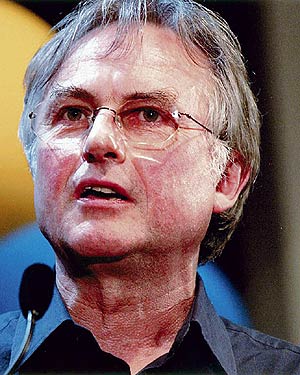
Sir Martin is in the company of £1,000,000 sterling and Mother Theresa and Billy Graham. Indeed, I wonder if that amount is enough to sway anyone, so that he or she is mentioned in the same breath as these fanatics. The point being there is little that is, by definition, about science. The Templeton Foundation and Prize is about promoting notions of the Divine, in whatever loose language you can fathom, using something vaguely non-Divine in approach. If you can anchor your pursuits that effect the world, dealing with sick people (not aiding) like Mother Theresa, or probing the mysteries of the universe with an appreciation for its beauty or possible higher purpose, then you qualify. They’ve melted the solid idea of the theistic god down into liquid form, so it slips through any pretention even when the person awarded the prize is not religious. Like Sir Martin Rees.
If Sir Martin donates it all to Oxfam, I would have little to quarrel with it suppose, except I think any scientist who doesn’t think there’s a conflict between faith and reason or science and religion is wrong. But that’s another discussion. What interests me about this whole episode was not the prize itself but the views that arose concerning the atheist culture wars. I’m interested particularly in ex-Anglican-priest-turned-“agnostic” Mark Vernon’s ever-banal criticisms of Richard Dawkins, as seen here (an ad hominem attack), here (how Dawkins is doing nothing new even though Vernon keeps writing about him), here (when Dawkins praises fellow writer, Christopher Hitchens, Dawkins is promoting hatred), here (Dawkins… groupthink… bus… bad), here (I don’t even know).
I rather enjoyed Dr Vernon’s books 42 and Plato’s Podcasts, so it is disappointing to see this usually clear, clever writer putting on the same performance each time Dawkins is mentioned in an online discussion or in the media. This is especially so when Vernon reflects on Sir Martin’s recent prize and… Richard Dawkins’ stridency. Yes. You obviously made that connection as quickly as I did. Vernon, expert bar none on how Dawkins should conduct himself publicly, has to write something… and it might as well be as Dawkins’ media nanny.
What is remarkable is Vernon’s ability to pull bones from the Rees story to create some fossil of an argument about Dawkins’ stridency. He does this by reflecting on Dawkins’ calling Rees, then head of the Royal Society, a “compliant Quisling” when it came to hosting the Templeton Foundation in the UK. As if uncovering a museum piece, Vernon unveils his newfound argument in the short space allotted him in the Guardian. But at the end, it’s as though we were expecting to discover a newly discovered species (of argument) but were given merely two broken teeth from a creature we’ve all dealt with before.
What’s more disappointing is the teeth barely draw any blood.
Firstly, why is it necessary to raise Dawkins’ past comment, now nearly a year old? Dawkins’ comment was about Rees and Templeton, so Vernon says it appears as “Rees has seemingly hit back”. This, however, makes no sense since Sir Martin did not choose to give himself the prize. It was, um, awarded to him. Maybe we can say he “hit back” by accepting it. But not everyone’s life revolves around Richard Dawkins enough to accept a million-pound prize just to spite the brilliant biologist.
Secondly, Vernon claims that Dawkins was wrong to call Rees a “Quisling”. Such rhetoric (finger wave) will not do! “Quisling”, says Vernon, was “hurled” against fascist collaborators during the Second World War; what was Rees collaborating with by agreeing for the Royal Society to host the Templeton Foundation? Says Vernon: “The Royal Society lent its prestige to the Templeton Foundation by hosting events sponsored by the fund, which supports a variety of projects investigating the science of wellbeing and faith.”
Hm. The science of what? Wellbeing… sure. Kind of. I would just put that down to either health or morality. But faith? Should the Royal Society also sponsor the Aries Rising Druids Society to investigate “the science” of astrology? Or perhaps Darkmoon Bloodstar’s “science” of magic? The point is: It’s not science, so why involve the Royal Society? Remember, the award is not restricted to scientists – though it seems, politically, this is a powerful avenue for the Foundation to push for in order to gain some credence. After all it is the major area fast destroying any pretentions toward knowing what you can’t possibly know.
Vernon I think is using “science” incorrectly when saying “science of… faith”. (I also doubt he means investigating religious belief from a psychological or neuroscientific perspective. If he did, he could’ve said it as I have. If this is what he means, I apologise.) For someone who spends so much time talking about Dawkins, even wanting to subject the poor biologist to unfalsifiable assertions to do with human behaviour based on ancient mythology (no, not astrology – I’m talking about Freudian psychotherapy), Mark Vernon has not read enough Dawkins. Consider this irritating paragraph:
Dawkins and Rees differ markedly on the tone with which the debate between science and religion should be conducted. Dawkins devotes his talents and resources to challenging, questioning and mocking faith. Rees, on the other hand, though an atheist, values the legacy sustained by the church and other faith traditions. He confesses a liking for choral evensong in the chapel of Trinity College. It seems a modest indulgence. The ethereal voices of rehearsing choristers can literally be heard from his front door. But for Dawkins this makes the man a “fervent believer in belief”. And that is a foul betrayal of science.
Notice it has nothing to do with whether god exists or not, whether there is a purpose to our lives, etc. It’s got to do with Dawkins and Rees’ public image and personal habits. We’ll forget that Dawkins regularly speaks on aesthetic appreciation with some other unfeeling, cold, nihilist atheistic scientists (well, according to Vernon’s judgement).
Dawkins spends much time in The God Delusion discussing his appreciation for beauty in the world, even in choral music. Indeed there are several pages where he quotes his appreciation of the Bible as an important work of literature. Anyone can appreciate the beauty of Gothic architecture and the intricacy and brilliance of cathedrals. This does not make anyone “a believer in belief”. Again, like his use of “science”, Vernon does not understand the terms he is using.
The term is from Daniel Dennett’s Breaking the Spell. Writing in the Guardian (of all places!), Dennett explains what belief in belief is. “Sometimes the maintenance of a belief is deemed so important that impressive systems of propaganda are erected and vigorously defended by people who do not in fact share the belief that they think is so important for society to endorse.” Vernon does not himself believe in god but thinks it is important, like Rees, to appreciate that others believe in god. Call it belief squared. (I think “belief in belief” is a catchy but is somewhat obscuring phrase. It doesn't quite capture what Dennett means – or, again, maybe I'm just slow.) Dennett continues:
Today one of the most insistent forces arrayed in opposition to us vocal atheists is the “I'm an atheist but” crowd, who publicly deplore our “hostility”, our “rudeness” (which is actually just candour), while privately admitting that we're right. They don't themselves believe in God, but they certainly do believe in belief in God.
He appears to be telling us about Mark Vernon. But, with regard to appreciating that others believe in god, Sir Martin does fit this. So, he is a believer in belief but not because he appreciates choral music and evensong. Vernon has given us the right conclusion but using the wrong premises. Rees qualifies as a “believer in belief” because he:
also claims to be an “unbelieving Anglican” who goes to church “out of loyalty to the tribe”. He has criticised Stephen Hawking for arguing that we don't need God to explain the origin of the universe, and supports “peaceful co-existence between religion and science because they concern different domains”.
This appreciation or respect for religion because others are religious, however, is exactly what Dawkins was correctly criticising as policy for the Royal Society. Similarly – and again – we must ask for consistency. Would we support those who believed in alchemy as a solution for cures? Would we be happy to say homeopathic parents should not be charged for manslaughter when they implicitly kill their children? These beliefs, like religious faith, also are unwarranted, unsound and have no evidence to support them – they, too have plenty of believers. We do not expect physicians to have an appreciative attitude toward homeopaths, when both are focused on the same area. Why then should a cosmologist have an appreciation toward theologians, also focused on the same area?
No doubt many will claim they are separate spheres, but this is not true. If they are separate spheres, religious institutions wouldn’t be trying to get evolution out of schools; we wouldn’t be having hysteria over pushing the time back as to the birth of the universe. If religion and science were different spheres, I don’t think I would be fighting tooth and nail in my thesis to have policies on the ethics of killing re-considered. If these are separate domains, it is not the scientists up in arms but the faithful. Basically, this discussion wouldn’t need to happen. What can cosmology possibly gain from engaging with Leviticus or Paul’s Letters? What can the Quran contribute to our learning about biology?
Vernon however will have none of this. Respect is needed. Indeed, Vernon proudly proclaims himself as a benefactor of Templeton funding. He calls himself an accommodationist. “I often write about the relationship between science and religion, and have been a Templeton-Cambridge Journalism Fellow, the beneficiary of a first-rate seminar programme organised by Cambridge academics, funded by the Templeton Foundation. But then I love the big questions.”
Right. The big questions. I have and do read some wonderful Christian writers on “the big questions”, like Alasdair MacIntyre, a contemporary moral philosopher who follows Thomas Aquinas very closely. I am currently obtaining a bibliography for my thesis that includes many works, including analyses of Aquinas’ Summa and the positions of the Catholic Church regarding assisted-death. My main reason is not through respect of the God-Did-It formula (explain anything: science, morality and so on, by throwing god somewhere in to your explanation); rather, my reason is out of appreciating the power the formula holds, especially with regard to swaying public policy and opinion on my research area, which is killing and death. I need to know it, inside-and-out so that I can combat it effectively. This means I can engage sociably, amicably and vaguely intellectually (I still don’t understand most of philosophy, because I’m unfortunately not smart enough) without being smug, arrogant and so on. I can do this in my writing and I do it with my opponents.
Why mention “I love the big questions” by associating it with Templeton God-Dit-It engagements? Why mention Dawkins' strident attitude and so on unless Vernon means his appreciation for these sorts of questions somehow makes him better able to engage? There is no evidence to support his attack, nor his view that Dawkins’ attitude is doing anything wrong. This is an annoying paragraph – much like the whole silly article – but it becomes clear why he ended it as he did: to compares himself to Rees. Not in the sense of being as brilliant, but in the sense that both can be appreciative of and toward Templeton policy.
Rees pursues [the big questions], too, through cosmology, a subject that clearly fascinates many for similar reasons. Is there life like ours on other planets? What is the nature of our connectedness with the stars? It is partly for his insights on such matters that he has won the prize. But if he is modest about what can be achieved for religious belief by science, he insists that scientists should not stray into theological territory that they don't understand.
It is Rees' insights, not his evidence or his actual scientific research, that matters: His insights based on his own (very beautiful) writings and communications. It is not his research but Rees' somewhat open-hearted approach to the Divine and majesty within the Universe that won him the prize. Dawkins, remember, can’t appreciate beauty, can’t listen to any kind of music and love anything vaguely religious because he is just a smug, bad person with no social-media skills. If this is Vernon’s opinion, which this piece and those millions of others seem to indicate, then of course Vernon would think that Dawkins is not pursuing the big questions like Rees is.
Again, Dawkins himself has put it beautifully that he considers biology, or rather the study of evolution, to be the most important study of all: It answers “Where did we come from? Why are we here?” It even answers what the “purpose” of life is. None of these questions appear to satisfy many people; some people want grand, mythological narratives of which they are the centre between battling gods and swooping Hans Zimmer soundtracks. Rather, Dawkins would advocate that we consider a warm summer breeze and the sounds of a night garden, the Milky Way and pictures from the Hubble Telescope.
I don’t understand why anyone would want their lives to be out of a story written by Bronze-Age goat-herders. Certainly, because of science-writers like Dawkins and Steve Jones, I am considering studying biology. (Again, I don’t think I can with the brains required and all but I want to.) I agree with Dawkins’ assessment. So, if Dawkins is in the department directly involved in perhaps the most important questions, how does this distinguish him as any different from Sir Martin? Dawkins’ science was through a microscope; Sir Martin’s is through a telescope. Both are wonderful areas, with their own intricacies and theories that display human genius. Both, too, are related.
Vernon goes on to describe some previous prize-winners, like Paul Davies (who actually I really enjoy as a science-writer). “Davies is not [theistic or religious], though he believes it is perfectly valid to pursue questions of meaning in the context of what is being discovered about the cosmos. After all, is it not remarkable that our universe has produced entities within it that ask such questions – namely ourselves?”
Did Dr Vernon, a philosopher, just ask or rhetorically make the Fine-Tuning Argument? I don’t think it needs any more debunking than is already in place. But, let’s remember: Vernon is not a believer. It is doubtful he would be persuaded that there is anything more just because things look remarkably tuned that way. I don’t think it’s remarkable that the universe has produced entities like us since it could not have done otherwise. Vernon is giving a free-willed intention to the Universe. We can say things like “If the amount of carbon was this or that degree off, we never would’ve existed” but why is that useful? It didn’t happen. All those percentages are in place.
Consider: Imagine another universe, very similar to ours. Call it the Fire Universe. On one particular planet, in one particular solar-system, in one particular galaxy, there are conscious life-forms made of fire. They cannot exist on every part of their planet – some parts are too cold; other, ironically, are too hot – but nonetheless, there are certain parts of the planet that are Goldilocks good (i.e. just right). These Fire Beings would no doubt say “If carbon was just one degree off, we never would’ve existed!” But that’s the point! They exist. If the carbon was, say, a degree this way or that, Ice Beings would be there instead posing the same questions. This is not useful for discussions since, to repeat, it didn’t happen. (Notice the irony: Why make life-forms so potentially on the brink of non-existence? Why would a deity make it that life perpetually exists on a precipice. Remember: if all these amazing complicated numbers are just a tiny degree bigger or smaller, we would not have existed. But it also means if they change sometime today or tomorrow, we would cease to exist. I’m uncertain why this is an argument for god’s existence. It seems be the opposite.)
We can therefore point out that Vernon is placating Templeton policy with such a statement. It is not remarkable, Dr Vernon. It simply is. You are not posing a big question as opposed to a banal if not useless one. Ironically, these are exactly the sorts of questions Templeton, being a not-very-well disguised faith-based institution, would be asking: boring, circular and unhelpful for science. Finally, Vernon lops his culture-war grenade into the mix. Out of nowhere comes this sentence, found in the second last paragraph.
That such a highly regarded figure [as Sir Martin] has received its premier prize will make it that little bit harder for Dawkins to sustain respect amongst his peers for his crusade against religion.
He provides no evidence of this. This is something that that silly thing called science can verify. For example: Will Dawkins and other atheist book sales decrease? Will the rhetoric change into the rainbow-unicorn speak that explodes with glitter at the mention of the word “divine” and “remarkable” and “majestic”? Again: Vernon still does not understand that there is little linking science and Templeton save the scientists it has given money to. I’ve noted above that the sorts of questions Templeton tackles are not scientific; rather, it is this kind of hippy-ish, pantheistic wonderment at existence that qualifies one as a potential prize-winner. Templeton won’t give an award to a remarkable scientist who bashes god but, for example, cures cancers. It’s not about the science, it’s about the attitude. For this reason, it has nothing to do with science. Vernon does not appear to understand that. Therefore, it seems unlikely Dawkins will lose respect among his peers because his peers are, um, scientists.
Whether or not they do hold views like Sir Martin’s is beside the point. That’s what will win them the Templeton Prize. It’s not attitude that wins you a Nobel. Vernon’s piece is boring. Very boring. My column is longer than his article, obviously. But this all highlights something quite important that I think needs to be understood about science, attitude, snarkiness and so on. Vernon has made no argument and has contributed very little to the discussion. My aim is to try get Vernon away from talking about Dawkins and back on to talking about Plato. (Frankly, I prefer Plato to Dawkins but then I’m a follower of Socrates. Science is way above me.) That’s where Vernon shines and the more he continues to write nonsense like this, the less I want to read him, no matter his subject matter.