
by Hartosh Singh Bal
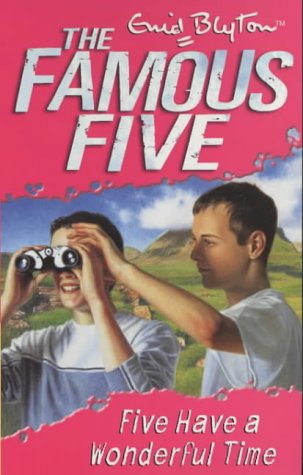
In this world Enid Blyton fitted in admirably, I’d say Enid Blyton was a better children’s writer for those reading her in India than in England. For us the world she described was a land of fantasy as unreal and magical as Narnia or the Shires. Meals of tongue sandwich and lemonade at the bottom of the garden had a magical quality, now rather sadly and blandly dispelled after tasting tongue as an adult. In this magical world I now learn there were undertones of racism, but these were lost on us, a golliwog was just another inhabitant with no existence for us as a caricature. In the same way it was only as an adult that I registered that the Narnia books were an allegory, the Lion as a stand in for Christ was thankfully lost on us in India.
Now, several decades later as a parent I am encountering a set of books whose equivalent I do not recall from my childhood – picture books, meant for an even younger audience. The books I do recall are the cheap and splendidly illustrated children’s books from the Progress Publishers of the USSR that flooded the Indian market thanks to our decision to willingly ally with the Soviets. These are no longer available, and in their stead has appeared a literature I was largely unaware of, such as The Happy Lion, Paddington – The original story of the bear from Peru, Tyrannosaurus Drip and Tiddler – The storytelling fish.
Some of these are classics of the genre, The Happy Lion has been around from 1954. Thankfully, it has escaped the bowdlerization the Enid Blyton books have recently undergone and can blissfully state that the happy lion’s “home was not the hot and dangerous plains of Africa,/ where hunters lie in wait with their guns./ It was a lovely French town with brown-tile roofs and gray shutters./ The happy lion had a house in the town zoo, all for himself…’’ Considering that a great many of the hunters who would have once lain in wait would have been French, leave alone the relative merits of zoos and open grassy plains, I can see how a case for certain changes could be made out.
Paddington was published around the same time. The story of a stowaway bear from Peru who finds his way to Paddington station has become well known enough to have generated its own merchandising. Perhaps it is only my third world sensibility but when Paddington insists on saying he is from `darkest Peru” I cringe. I cannot imagine someone saying `darkest India’ and I am sure `darkest Africa’ would no longer find it to print in our times. Yet, I can’t quite imagine asking for the kind of `rectification’ we have seen with the Enid Blyton books. This constant hankering to change the past to suit our present seems to one of the necessities of our times, but this mania for political correctness seems to ignore the fact that norms are under constant change and we, with all our good intentions, are preparing books in our times that may seem equally problematic when seen from another point of view.
Julia Donaldson, an author who should today rank as the Enid Blyton or J.K. Rowlings of this genre, writes in verse and works with a number of illustrators. As a parent her books have been a constant delight to read out aloud, or were till I came across one rather appropriately named Tyrannosaurus Drip. “In a swamp by the river, where the land was thick with veg/ Lived a herd of duckbill dinosaurs who roamed the water’s edge/And they hooted, “Up with rivers!’’ and they hooted, “Up with reeds!’’/ And they hooted, “Up with bellyfuls of juicy water weeds!/ Now across the rushy river, on a hill the other side, Lived a mean Tyrannosaurus with his grim and grisly bride./ And they shouted, “Up with war!’’/ And they shouted, “Up with bellyfuls of duckbill dinosaurs/ …’’
It isn’t difficult to see where this is going, even in its delightful verse it is rather crude. People who are vegetarians out of conviction rather than custom evoke the image of the early Christians, sanctimonious and insufferable. So it is no surprise the story conjures up a young male born to the Tyrannosaurus family who discovers he is a vegetarian and literally swims across to the other side. A fallen trunk provides a chance for his family to follow and make a meal of the veggie dinosaurs. Just when I found myself hoping they would, the young turncoat tricks his non-vegetarian parents and siblings and sends them tumbling down a waterfall out to sea. With this, it seems to me, however lightheartedly, we are not very far from the Soviets, who thought a young boy who betrayed his father in the name of some abstract principle was the perfect example for young children to follow. A writer, for children or adults, who forgets that we are creatures whose appetites are governed by emotion rather than reason will end up writing propaganda ,which is a shame because Julia Donaldson can be a delightful writer.
A book I enjoy as much as my son is the tale of the storytelling fish Tiddler, who blew “small bubbles but told tall tales’’. Swept up by a fishing net while dreaming up another of his tales, he is discarded far from home. Lost and frightened he hides in the ocean till he hears a shoal of anchovies relating a tale he had once told. He follows his own stories home, stories that have spread because among his listeners there was one, little Johnny Dory who loved hearing and relating them. A few weeks ago I found myself at restaurant ordering fish, and came across Johnny Dory on the menu. Try as I might I could not bring myself to order the dish. My gut was telling me something my mind never would, I was also being served up with a reminder that whatever the genre there is always a difference between a good book and a bad one.