
| ABOUT US | ARCHIVES | LINKS | RSS FEED | MONDAYS | |

3quarksdaily

An Eclectic Digest of Science, Art and Literature

« What is X-Phi Good For? | Main | Laila Lalami to Judge 2nd Annual 3QD Arts & Literature Prize »

February 27, 2011

The Return of Crowds and Power

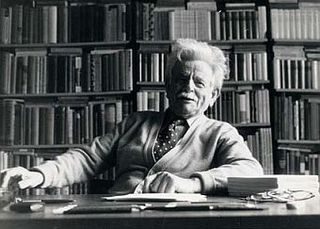
Elias-canetti I've noticed that in response to all the uprisings in the Arab world analysts, pundits and writers reaching for their copies of Elias Canetti's Crowds and Power. Here's Will Self in The New Statesman:

It's been a fantastic three months for those of us gripped by the dynamics of crowds. First, we had student demonstrations here in Britain spiralling out of control; then, we saw Tunisians link arms to push out their corrupt regime; finally, millions took to the streets of Egyptian cities, pitting their sheer weight of numbers against the sclerotic - but still vicious - government of Hosni Mubarak.

Perhaps the most celebrated analyst of the crowd was the Nobel laureate Elias Canetti, whose 1960 magnum opus, Crowds and Power, aimed to do for modern mass movements what Frazer's Golden Bough did for "primitive" ritual. To Canetti, both socialism and capitalism were political systems defined by "the modern frenzy of increase", in which production led to ever bigger crowds of goods and consumers.

This sense of industrialised society as a crowd, at root, directs Canetti to his definition of power as the coincidence of the desires of the ruler(s) and the ruled.

By this view, it's easy to understand the presence of crowds of people on the streets as symptomatic of a disjunction between the two: only when the crowd has been reabsorbed into the social fabric has synchronous equilibrium been achieved. In Canetti's jargon, the crowd in Tahrir Square was "stagnating", whereas the crowds of the quiescent Cairene unemployed before the revolt could be characterised as "rhythmic".

Dubstep revolutions

Canetti showed a nice understanding of how masses of people make their own political weather when he caustically observed that "fire unites a theatre more than a play can" - but his vision was underscored by the apocalyptic mood music of mutually assured destruction. "Rulers tremble today," he wrote, not "because they are rulers but as the equals of everyone else . . . Either everyone will survive or no one."


Posted by Robin Varghese at 11:43 PM | Permalink

Comments

"Canetti showed a nice understanding..."

That's an understatement... "Crowds and Power" reflects, as a broken mirror, peoples behaviour. The puzzling reader can put the parts together...there are a lot of Canetti's describings you can relate to or identify with. For instance this simple phrase of him: hidden in the important hood piece about transformation:
"Every complete unknown language is a kind of acoustic mask; as soon one learns it, it becomes a face, understandable and soon familiar".
It's his philosophical key for awareness. His one and only novel "Auto da Fé"(1935) was his dark (self!)conscious lock without this briljant light reflecting key. He was a remarkable headstrong thinker. Concrete and not losing himself in abstractions... like many (modern) thinkers tend to do.

Posted by: Contextcatcher. | Apr 6, 2011 12:48:46 PM

I'm not sure Self even has C&P on his bookshelf as all the knowledge he demonstrates (and almost all the quotes he uses) can be found in the NYRB review from 1963, published on their website.

Posted by: jez | Feb 27, 2013 2:44:32 PM

Post a comment


Subscribe to this blog's feed  

PayAnywhere with iphone credit card swiper

Android Tablet

Bluetooth Headset

2013 New Style Dresses

Compare Car Rental Prices

DHgate.com Wholesale

3QD on Facebook

3QD on Kindle

3QD by Daily Email

Receive all blogposts at the same time every day.

Enter your Email:


Preview 3QD Email

3QD on Twitter

Miscellany

Lijit Search

AddThis Social Bookmark Button

Add to Google

Recent Comments

Pierre on REFLECTIONS ON WOOLWICH

chris on Race Is Not Biology

Dave Ranning on REFLECTIONS ON WOOLWICH

Sumiran on Friday Poem

prasad on Race Is Not Biology

omar on REFLECTIONS ON WOOLWICH

G on REFLECTIONS ON WOOLWICH

Erich on REFLECTIONS ON WOOLWICH

omar on Race Is Not Biology

Raza Husain on Race Is Not Biology

Raza Husain on Race Is Not Biology

Josef Stern on REFLECTIONS ON WOOLWICH

Colette on POETRY IN TRANSLATION: CORDOBA

Dana on A young Houston couple is planning to give away $4 billion—but only to projects that prove they are worth it. Can they redefine the world of philanthropy?

omar on REFLECTIONS ON WOOLWICH

Dredd on REFLECTIONS ON WOOLWICH

omar on Race Is Not Biology

prasad on Race Is Not Biology

JF on REFLECTIONS ON WOOLWICH

Sundar on REFLECTIONS ON WOOLWICH

omar on REFLECTIONS ON WOOLWICH

musafir on Loneliness, isolation and desperate yearning

carlos on The Gut-Wrenching Science Behind the World’s Hottest Peppers

Dredd on A young Houston couple is planning to give away $4 billion—but only to projects that prove they are worth it. Can they redefine the world of philanthropy?

Dredd on Why Rational People Buy Into Conspiracy Theories

Acclaim For 3QD


"I couldn't tear myself away from 3 Quarks Daily, to the point of neglecting my work. Congratulations on this superb site."—Steven Pinker, Johnstone Professor of Psychology, Harvard University.

"I have placed 3 Quarks Daily at the head of my list of web bookmarks."—Richard Dawkins, Charles Simonyi Professor of the Public Understanding of Science at Oxford University.

"Just wanted you to know I’m one of many who reads and enjoys 3 Quarks....almost daily."—David Byrne, musician, former lead-singer of the Talking Heads, artist, intellectual.

Read more here.

The 3QD Prizes

Subscribe to this blog's feed