
Two of the most famous suicide sites in the world are the Golden Gate Bridge 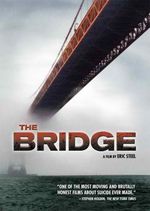
Eric Steel, director of The Bridge sought a permit to film the Golden Gate Bridge, without divulging his real purpose which was to capture suicides. He later managed to capture 23 of the 24 suicides that happened within his yearlong watch. He went on to interview families of the victims, in an attempt to understand their lives before jumping off the bridge. In another controversial move, he didn’t disclose that the suicides had been captured on film.
Aokigahara – Suicide Forest follows geologist Azusa Hayano on a regular suicide watch. He finds an abandoned car near the forest and notes how someone could have gone in there ‘with troubled thoughts’. During his trek, he talks about the history of the place, the men and women who come to hang themselves. He finds a skeleton which he deems to be at least a year old, traces of a human life—food wrappers, crushed soda cans, flowers and food left by relatives and a man in a tent, apparently contemplating suicide.
“I was curious why people kill themselves in such a beautiful forest,” Hazano muses.
Both documentaries try to answer this question, as to why especially vulnerable people are lured to come to these places to commit suicide. The families of the victims in The Bridge speak of problems they have observed, of their loved ones feeling alienated from the world. They try to understand, and bring forth stories, anecdotes, memories. Sometimes their eyes brim with tears. In Aokigahara Forest, Hayano shifts from theorizing about the state of society which leads to annihilation to saying he doesn’t quite get it at all.
Clinical psychologist and suicide researcher Dr. Richard Seiden has talked of the Golden Gate Bridge’s power as a symbol of beauty and grandeur. Aokigahara forest carries with it its own symbols, a Japanese novel speaks of lovers who committed suicide in the place. Perhaps it says much of how different two cultures are with its concept of a suicide place. One seeks to go out into the open and fall into the water, in view of motorists and tourists almost as if mocking their presence, while the other hides in a forest. One can easily go into hasty overgeneralizations here—the Western concept of impudence versus the Asian concept of self effacement.
How are suicides different culturally? The Japanese do not necessarily find it an abnormal behavior, according to findings from a small study by Domino and Takahashi (1991), and say it can be permissible in some situations. The Americans sampled viewed it as a result of psychiatric issues. This often fits our stereotypes–when we think of suicide and suicide-cultures, it is often the Japanese who come to mind, with their history of honor killings. We think of Western suicide as the crumbling of the self, an abnormality in their individualist culture.
Cultural views and triggers may diverge, as well as notions of beauty and fit endings. At its core though, suicide is the annihilation of an organism evolved to survive and to think foremost of survival, a sum of irrationalities that most of us cannot grapple with, and perhaps this is what makes watching the documentaries, particularly The Bridge so disturbing. The act caught in detail, the rather restless walk on the bridge, the climb to the ledge, one leg then another, the moment or so of hesitation (or do we merely imagine it?), the then the awkward graceless dive into the water, and then the little splash. Suicide individuated, a human body falling in real time, someone of our own, and we are made to feel as we’re holding the camera, fixated and yet helpless to do anything.
“If one person smiles at me along the way, I will not jump.” That was written on a note of a man left in his apartment before he went to Golden Gate Bridge.
Sitting down, Hayano looks frail, almost exhausted. Still he sounds more and more an idealist as the documentary goes on, “You think you die alone, but that’s not true. Nobody is alone in this world, we have to coexist and take care of each other,” he says.
The man who left the note jumped. That was not captured on anyone’s camera.