
| ABOUT US | ARCHIVES | LINKS | RSS FEED | MONDAYS | |

3quarksdaily

An Eclectic Digest of Science, Art and Literature

« Quaeries #6: Doctor Smith His Demise | Main | Seven Places in My Heart »

January 31, 2011

The use and misuse of Srinivasa Ramanujan

by Hartosh Singh Bal
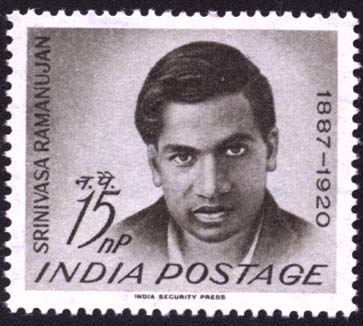
Ramanujan_2 Over the past month there have been two separate reasons to return to the story of Srinivasa Ramanujan. The first was the result of an astounding piece of mathematics by Ken Ono and his colleagues on the theory of partitions, bringing to a conclusion some of Ramanujan’s most interesting work in number theory. The second was thanks to Patrick French’s recent book – India, a portrait – which ends with a short two page biography of Ramanujan. The first Ramanujan is of course the Ramanujan who should matter, the mathematician, the second is unfortunately the Ramanujan who has come to occupy public memory, the metaphor.

It is not clear what French’s Ramanujan stands for in a chapter that seeks to explain the specifics of individual, social and organizational behavior on the basis of particular Indian traits such as religion or caste, but given the title of the chapter – Only in India – it does seem that French believes there was something particularly Indian about Ramanujan’s story.

This belief is not unique to French and has only been compounded by Ramanujan’s own description of the Goddess of Namagiri as the source of his inspiration. The result is that Ramanujan has come to embody certain romantic notion of eastern or more specifically Indian thought. Even those who want to allude to Ramanujan the mathematician do so in such terms. Paul Hoffman, in an otherwise entertaining book on the Hungarian mathematician Paul Erdos – The Man who Loved Only Numbers – writes, "While Hardy and Ramanujan’s partnership lasted, the two men stood the world of pure mathematics on its head. It was East meets West, mysticism meets formality, and the combination was unstoppable." 

Ramanujan’s otherwise excellent biographer Robert Kanigel devotes the entire first chapter of the book – The Man who Knew Infinity – to Ramanujan’s religious and social upbringing.  However important this may have been to Ramanujan the man, the claim that it is central to Ramanujan the mathematician does not stand up to scrutiny.  Ramanujan did not learn his mathematics in a temple. By the time he went to school only a few of the traditional Vedic schools still functioned. They had been largely replaced by schools teaching a curriculum based on European science.

In his 1894 book, The History of Education in the Madras Presidency (the region in the South of India where Ramanujan grew up was a separate administrative unit of British India), S. Satthianadhan quotes an 1822 description by a Collector of Bellary, A.D. Campbell, of the mathematical education that used to be handed out at in these traditional schools in the South of India, `` He (a student) then commits to memory an addition table and counts from one to one hundred ; he afterwards writes easy sums in addition and subtraction of money, multiplication and the reduction of money, measure, etc. Here great pains are taken with the scholar in teaching him the fractions of an integer which descend, not by tens as in our decimal fractions, but by fours, and are carried to a great extent. In order that these fractions together with the arithmetical tables in addition, multiplication, and the three fold measures of capacity, weight, may be rendered quite familiar to the minds of the scholars, they are made to stand up twice a day in rows, and repeat the whole after one of the monitors.’’

Taught in this manner if Ramanujan had survived to become a mathematician, he would have had to rediscover all of mathematics.  Thankfully he was saved this fate, for one that was only slightly better. After the British Governor General in India, William Bentinck, decided against the traditional Indian school system in 1835, a new school system was instituted in the Madras Presidency in 1854.  Sattianadhan’s book describes the ensuing curriculum for the first four standards, the same curriculum that is likely to have been followed in Ramanujan’s times:

I —Notation to thousands, easy addition, and the multiplication table to five times five. English is to be used in all cases.

II —Subtraction, multiplication, and division. The multiplication table to twelve times twelve.

III—Compound rules and reduction, with the ordinary weight, measure and money tables.

IV—Moderately easy practical questions in vulgar fractions and simple proportion.

Clearly what Ramanujan learnt in school did not differ much from what is taught today.  The difference lay in the fact that Ramanujan’s obvious mathematical abilities did not come in for the notice they would have attracted at any other time or place. In his biography of Ramanujan Robert Kanigel describes that by the time he was eleven ``his classmates were coming to him for help’’, a year later he was ``challenging his teachers’’ and by the time he was thirteen her had mastered S.L. Loney’s Trignometry, an English text that some select Indian students encounter even today, but only at the age of sixteen or so.

The reason for neglecting such ability was simple. The system schooling Ramanujan was not designed to detect or produce men of outstanding talent. Satthianadhan writes, ``The Despatch of 1854 marks an era in the history of education in the Madras Presidency. It has been of 1854 called the Magna Charta of English education in India. "We have always looked upon the encouragement of education," say the Court of Directors, " as peculiarly important, because calculated not only to promote a higher degree of intellectual fitness, but to raise the moral character of those who partake of its advantages, and so to supply you (Government of India) with servants to whose probity you may with increased confidence commit offices of trust.’’

In Europe at any point after the Renaissance a student of Ramnujan’s genius would have found a mentor. In British India he was allowed to proceed in much the ordinary fashion. His talent actually became a hindrance. Even when he went to Government College, Kumbakonam in 1904 at the age of 17, he had to drop out a year later after failing English Composition.  He resumed his degree at Pachaiyappa’s College but failed the Physiology examination and was forced to opt out of college for good in 1907. In 1910 he found a job as a clerk before G.H. Hardy rescued him from oblivion in 1913.

Contrast this with the career of the two great mathematicians he is often compared to, Carl Gustav Jacob Jacobi and Leonhard Euler, both marked by a similar ability to reveal formulas of great depth and beauty. Euler was born in Switzerland in 1706. As a student in the University of Basle he drew the attention of another great mathematician Johannes Bernoulli who persuaded Euler’s father to let him study mathematics. The Bernoulli connection later helped Euler obtain a position in St Petersburg when he was barely 20 and at the age of 26 he took up the leading mathematical position in the Academy. Jacobi born in 1804 was the son of a banker, in 1821 he headed to the University of Berlin. After completing his PhD in 1825 he became a lecturer at the age of 21.   Euler and Jacobi were no exceptions, if you compare Ramanujan’s background with that of any other great mathematician of the last 500 years, it is clear that none faced similar intellectual and economic handicaps.

Bereft of the knowledge of what was happening in the world of mathematics and cut off from the company of the kind of mathematicians who would have realized his talent Ramanujan was in effect the equivalent of a brilliant (and that is a complete understatement) high school student in his grasp of mathematical rigor. This was compounded by the fact that he was subsequently shaped by E.H. Carr’s Synopsis of Elementary Results in Pure and Applied Mathematics. It was a book probably handed down to him by college students lodging in his house. A book that is typical of a system meant to train student for examinations, with no proofs for the results it cited. In Europe a boy of his obvious ability would have been asked at the very least to read Gauss’ Disquisitiones Arithmeticae, and would have had a chance to directly engage with the work of several of the great mathematicians of the 19th century.

It was only the genius of Ramanujan that could transmute the handicaps of colonialism into a triumph. Perhaps an equivalent story is one from the Mahabharata, where a tribal boy Eklavya, brought up in an isolated forest far from the capital where the art of archery was taught by the great teacher Drona, set up a bust of Drona and practiced his art with such talent and avidity that he soon outshone the best of Drona’s pupils.

Egged on by his envious students Drona asked for Eklavya’s thumb as his `fee’ for the instruction in archery.  The parallel may not be precise but even so it is not difficult to think of the lack of rigor in Ramanujan’s work as a price extracted for allowing him a glimpse into the world of modern mathematics. It can only be a surmise that born a hundred years later in India Ramanujan may well have been the greatest mathematician of the modern era. But the claim rests not on his being a Tamil Brahmin or an Indian but on his being Ramanujan.   

Hardy himself had once noted, `` He would probably have been a greater mathematician if he could have been caught and tamed a little in his youth. On the other hand he would have been less of a Ramanujan, and more of a European professor, and the loss might have been greater than the gain….’’

The qualifier is in keeping with the romanticism that surrounds Ramanujan. It fits in far too comfortably with notions of the mystic East and the rational West, a comparison that has always worked to the advantage of one side. Ramanujan himself would have not chosen the course of life that was inflicted on him, as his attempts to find recognition show. It is no wonder that more than a decade later Hardy was to term his own observation `ridiculous sentimentalism’.

Left to fend for himself at sixteen by Carr, Ramanujan turned his compulsion into a virtue, arriving at mathematical truth through a process of heuristic reasoning all his own. Imagine what he could have done if Gauss, Euler and Jacobi had been his guides.

Posted by Hartosh Singh Bal at 01:00 AM | Permalink

Comments

Lovely, Hartosh. Thanks.

Posted by: Abbas Raza | Jan 31, 2011 9:33:34 AM

Thank you! A wonderful, illuminating essay -- an opportunity to think about the long reach of colonialism into math. Oh, not to mention, into the lives of those with vast gifts for it.

I have studied the lives and work of European women mathematicians of the last four centuries. Before early modern times, it seems, the best bet for a girl with mathematical talent was the convent life, but that was first choice for poets, artists and physicians, as well. It was a way to be let alone for some hours a day to do these things, and to use real gifts in the service of God and humankind. There was, too, the knowledge that a passionate intellectual life was to be shared with cloistered others -- peers, perhaps mentors, and certainly lovers. A supremely gifted mathematician, Maria Gaetana Agnesi, who lived in the time of Mozart, was a minor aristocrat whose father was well amused by her stunning childish feats, and did not stint on finding her teachers. Once she came of age, he put difficulties in her path, however; a new widower, he required Maria to raise her 20 -- yes, twenty -- younger siblings. When he died, she got herself to a nunnery, fast. People familiar with science history will know her accomplishments to have been tremendous and recognized, her personal history notwithstanding.

To my eye, Hartosh, you are pointing out a taste for tragedy as an almost lip-smacking factor in the older understandings of the life and work of Ramanujan. An orientalizing view of genius that concedes unpropitious circumstances, but that declares the man and his math to be hopelessly Eastern anyway, so that he simply _would_ be bogged down, Raj or no Raj. It's a very subtle point, and I appreciate it.

Posted by: Elatia Harris | Jan 31, 2011 10:38:17 AM

The double edged sword of European colonization! As you rightly point out Hartosh, despite the unnecessary mystification of his mathematical prowess, Ramanujan wouldn't have gone anywhere with "temple mathematics." I guess many Indian intellectuals of that period suffered the same fate - their geniuses had to be cloaked in the patina of eastern exotic spirituality. See this interesting article about the distorted English translation of Tagore's poetry (in which the poet himself was complicit, it seems) for which he first won the Nobel Prize and was later vilified by his western patrons. Yet without these diluted (and bad) translation of his works into English, Tagore wouldn't have become the first Asian Nobelist and also perhaps not the founder of Shantiniketan.

However, India is extracting its revenge in minor ways by the reverse mystification of some western minds - Dalrymple's for example :-)

Posted by: Ruchira | Jan 31, 2011 10:56:58 AM

I will go beyond Hartosh' acknowledgement of Kanigel with praise for his biography of Ramanujan. I found that book (The Man Who Knew Infinity) informative about the man as much as about his work. My memory of Hardy's book on his protege was that it was largely about mathematics. Kanigel at least went to South India in search of his subject's roots and I believe it enhances his writing. I don't know if Hardy did or would have wanted to.

The mentions by French and Hoffman of the Only in India and East meets West variety is part of a familiar attitude toward an unexplored Third World taken for granted. It is an attitude, with dashes of contempt, that typified too the cultural divides among Indians prevalent in my childhood and youth amost two generations ago. At the time religious routine seemed more a part of South Indian upbringing than in the North. I was spared the 'have you said your prayers', but 'have you brushed your teeth' was our comical welcome to a new day. And Ramanujan was invariably mentioned in our father' exhortations to study harder.

To Hartosh' examples I must add David Leavitt's egregious misuse of Ramanujan in his novel 'The Indian Clerk'. When it came out a few years ago I was outraged by Leavitt's conceit of using Ramanujan as a vehicle in his exploration of the gay life of contemporary Cambridge. Kanigel devotes a page or two to this part of Hardy's life and membership in the Apostles, concluding that he was circumspect in the extreme. I haven't read Leavitt's novel. From reading published excerpts though I developed an adverse opinion of its author. In short order I found a passage in Kanigel that was close enough to one excerpt for me to suspect Leavitt of plagiarism. This is not the first offence for Leavitt, who has famously been taken to court by Stephen Spender and found wanting in authorial ethics.

Posted by: narayan | Jan 31, 2011 11:40:37 AM

"Left to fend for himself at sixteen by Carr, Ramanujan turned his compulsion into a virtue, arriving at mathematical truth through a process of heuristic reasoning all his own. Imagine what he could have done if Gauss, Euler and Jacobi had been his guides." Well we don't know the answer to that. Maybe his creative genius would have been stifled by a teacher who knew so much more than him. Sometimes you need to be alone to come up with something really new. This story by Somerset Maugham is a great metaphor for a handicap really being a source of good:
http://www.sinden.org/verger.html

Posted by: Andrew lloyd | Jan 31, 2011 12:28:29 PM

Slightly off topic. Ken Ono on Ramanujan:
http://www.mathcs.emory.edu/~ono/publications-cv/pdfs/127.pdf
via Sarah Kavassalis blog post:
http://blogs.plos.org/badphysics/2011/01/20/ono/

Posted by: gaddeswarup | Jan 31, 2011 3:28:02 PM

Hartosh, this is an excellent essay.
Where do we find the rest of your work?

Posted by: omar | Jan 31, 2011 4:29:34 PM

Hartosh, Thanks for a kick-ass essay! Wonderfully researched, and seamlessly drives the point home. Your writing style is something that I aspire to and I look forward to reading more from you.

Posted by: Aatish | Jan 31, 2011 4:48:40 PM

"... by the time he was thirteen her had mastered S.L. Loney’s Trigonometry, an English text that some select Indian students encounter even today, but only at the age of sixteen or so."

I recall first using S.L. Loney in class 8 in the the early 1980s. A slightly more modern approach to trig. was taught in class 11. I'd say that the Indian student sees basic trig. around age 12-13.

Posted by: Banerjee | Jan 31, 2011 4:58:30 PM

The romantic emphasis on Ramanujan's background as being connected with his genius is understandable enough as an attempt to find an explanation for his talent. Humans seem to prefer a bad explanation to none, especially for something asinexplicable as genius.

"Imagine what he could have done if Gauss, Euler and Jacobi had been his guides."
Perhaps he would have achieved less. The requirement to produce rigorous proofs of his hypotheses would surely have slowed down the rate at which he produced them and so he would have produced less and abandoned some of his ideas.

Posted by: Roger | Jan 31, 2011 5:13:33 PM

Wonderful essay. Such skepticism & such depth of analysis - you must be an excellent mathematician yourself, Hartosh. But, why be skeptical of new (& therefore error-prone) attempts at east-west fusions in literature, arts or maths ? If you look at recent 3QD posts on philosophy (Economist book review) or Classical music, its pretty clear that even today, there is a big lack of understanding, in what the supposed West, knows & accepts of the ancient works of the supposed East. This is more to do with a usage of english, as a communication language, (rather than sanskrit), for east-west collaboration, amongst indoeuropean language speakers today. Brahmins who are taught ancient astrology (eg.Ramanujan) , defacto learn an ancient form of mathematics, some of which is now advertised as "Vedic Maths". Sanskrit was designed by phonetically arranging prakrit sounds. This was a language designed to avoid writing & yet do mental calculations for upto 16 decimal places. People tend to forget that every human sound (sanskrit word ), translated to a number/value, for folks like Ramanujan, who knew sanskrit & astrology. Every sanskrit "Consonant+ Vowel" combination together, forms a unique "number/ value" ! For Ramanujan, Solar Exeligmos = One "Yuga" = KHYUGHRI (sanskrit word for Yuga, used by astrologers) = (kh*u)+(y*u)+(gh*ri) = ( 2*10000)+(3*100000)+(4*1000000) = 4320000 . Chances are that every time Ramanujan went to the temple of Namagiri, he heard the Vedas, as shlokas/musical couplets. While the formulas contained in the Parishtas/Appendix of Atharvedas are today recognised as the source of what we today label as "Vedic Maths", we often tend to forget that every sanskrit word, is guide for what we today label as "Number Theory". Look at it this way - with a sanskrit & vedas base, for Ramanujan, the English Words - God , Religion, Philosophy, Maths & Music - were all one. If non-Sanskrit speakers label such a fusion, Mysticism then, whats wrong with it ? Tell them to listen to Van Morrison's "Into the Mystic" . For you, I'd recommend Van Morrison's " Bright Side of the Road" ( a fusion of Zakir Hussain's percussions & Morrison's lyrics)

Posted by: Ratnesh | Jan 31, 2011 11:48:02 PM

Interesting and enlightening. Thank you!

Posted by: Edwin Kite | Feb 1, 2011 9:57:49 PM

"It was only the genius of Ramanujan that could transmute the handicaps of colonialism into a triumph."

I think it would be accurate to replace colonialism with "India's backwardness".

Posted by: Rahul | Feb 3, 2011 1:29:18 PM

I have some andecdotal information to add about Ramanujam's 'discovery', first by local Madras mathematical elites, and later, at their direction, by G.H. Hardy.

Some of this information is near first hand, for it is from my father and his older brother, both professional mathematicians, and both raised only a few houses away from Ramanujam in the same traditional Vedic community or 'agraharam' in Kumbakonam in South India, albeit in the 1910s/1920s. My grandmother, though, clearly recalled Ramanujam and his family from before the time he became famous i.e. his boyhood and teenage years until the disastrous first year at Kumbakonam College.

The traditional Brahmins of Tanjore district, never very prosperous, lost their royal patronage approximately two generations previously, around the 1830s and 1840s. Many of these families were sliding into or had slid into a genteel but nonetheless real poverty with the gradual sales of their income producing lands through the decades of the 19th c. to make up for that loss of patronage and income.

Western education ('English education' in their argot), introduced at the small town level in Madras Presidency presented itself to them as a very obvious and godsent opportunity, suited to their previous scholarly talents/culture with many of the younger generations after 1860 studying science and the arts in order to secure a government jobs and a secure salary.

Modern mathematics especially was eagerly embraced for its cultural neutrality and its prior prestige in the days of Vedic learning as one of the eight major fields of intellectual study.

By Ramanujam's time, there was a considerable number of accomplished math graduates from Ramanujam's immediate social cohort and peers i.e. Tanjore Brahmins) who occupied key government and academic jobs in Madras Presidency. It was a succession of these individuals (carefully detailed by Robert Kanigel) who kept Ramanujam afloat in his wilderness years and recognized his mathematical talent for what it was. A succession of referrals from these well-wishers, for employment, resulted in his eventually being specifically directed to contact Hardy at Cambridge.

So his roots did matter, IMHO, in his ultimately making contact with and reaching the modern mathematical establishment, in the form of G.H. Hardy.

Posted by: Mani Sitaraman | Mar 1, 2011 3:48:57 AM

Post a comment


Subscribe to this blog's feed  

Nominations Now Open

3QD ADVERTISING

Find the best prices on Las Vegas Show Tickets at Best of Vegas and Orlando Theme Parks at Best of Orlando!

3QD on Facebook

3QD on Kindle

3QD by Daily Email

Receive all blogposts at the same time every day.

Enter your Email:


Preview 3QD Email

3QD on Twitter

Miscellany

Lijit Search

AddThis Social Bookmark Button

Add to Google

Recent Comments

Mnc on Gish Jen to Judge 3rd Annual 3QD Arts & Literature Prize

Raza on CERN People

Frank on Gish Jen to Judge 3rd Annual 3QD Arts & Literature Prize

Anderson on Hugh Kenner on the Pisan Cantos

Michelle M on Gish Jen to Judge 3rd Annual 3QD Arts & Literature Prize

Mary on Gish Jen to Judge 3rd Annual 3QD Arts & Literature Prize

JM on CERN People

Jan on How to Want to Change Your Mind

ajay on Women and Islam: A Debate with Human Rights Watch

Angeleo Mysterioso on Bessie Coleman 1892-1926

Angeleo Mysterioso on Bessie Coleman 1892-1926

Angeleo Mysterioso on Bessie Coleman 1892-1926

dave on Women and Islam: A Debate with Human Rights Watch

Felix E F Larocca MD on the Starry Messenger

sms on CERN People

funny sms on Hugh Kenner on the Pisan Cantos

mkp on In The Name Of The Holy Cow...Yet Again...

Jon Harlow on Gish Jen to Judge 3rd Annual 3QD Arts & Literature Prize

Jon Harlow on Gish Jen to Judge 3rd Annual 3QD Arts & Literature Prize

bjm on Hugh Kenner on the Pisan Cantos

Jesse M. on CERN People

wburrows on Gish Jen to Judge 3rd Annual 3QD Arts & Literature Prize

Abbas Raza on Hugh Kenner on the Pisan Cantos

sf on Gish Jen to Judge 3rd Annual 3QD Arts & Literature Prize

sf on Gish Jen to Judge 3rd Annual 3QD Arts & Literature Prize

Acclaim For 3QD


"I couldn't tear myself away from 3 Quarks Daily, to the point of neglecting my work. Congratulations on this superb site."—Steven Pinker, Johnstone Professor of Psychology, Harvard University.

"I have placed 3 Quarks Daily at the head of my list of web bookmarks."—Richard Dawkins, Charles Simonyi Professor of the Public Understanding of Science at Oxford University.

"Just wanted you to know I’m one of many who reads and enjoys 3 Quarks....almost daily."—David Byrne, musician, former lead-singer of the Talking Heads, artist, intellectual.

Read more here.

The 3QD Prizes

Subscribe to this blog's feed