


| ABOUT US | ARCHIVES | LINKS | RSS FEED | MONDAYS | |

3quarksdaily

An Eclectic Digest of Science, Art and Literature

« perceptions | Main | The Incantatory City: Kuru-Kuru Svaha »

January 17, 2011

Grasping for the Lunatic Fringe

by Akim Reinhardt

Slave Irons It wasn’t so very long ago that some Americans held people as slaves, other human beings as their own private property, as if that person were a horse or a chair, to do with, to use, abuse, exploit, beat, and rape as they pleased.  What’s more, until the late 1840s most Americans thought that slavery was acceptable.  The great majority found themselves somewhere along a spectrum that at one end actually exalted slavery as a positive thing, a benefit to black people they deemed radically inferior, and at the other end said, Well, it’s a real shame, and I certainly don’t condone it or want it where I live, but what’s done is done, and I guess it isn’t the worst thing in the world, and anyway there’s nothing we can do about it now, so that’s that.  And in between those two ends of the spectrum rested any number of justifications and rationalizations that people used to explain, excuse, praise, rationalize, or simply accept the reality of human bondage in their nation.

Abolition Map Black slaves had been owned and held in every English colony prior to the Revolution and in every U.S. state after it, the practice only ending for good in the North during the early 19th century.  Indeed, before the sectional crisis that began to emerge in the 1840s, the acceptance of slavery was so widespread that there was even a small number of black slaveholders, free blacks who themselves had purchased a slave or two.

Headgear Yet here we are, in our post-civil rights world, and we find the idea of slavery to be repugnant, horrific, and wretched.  How could our ancestors have found this acceptable on any level, much less have engaged in it (Obviously I’m speaking as white person here.)?  So it is left to us, as future generations, to try to make sense of it and, inevitably, to judge it.  To cast our squinty gaze upon them and say: What the fuck.  How on earth could you have been so incredibly fucked up?  I just don’t get it.  You people were fucking monsters.

Or there’s the whole process of murdering Indians and stealing their lands.  Let’s judge that one.  Pretty easy from this distance, huh?

What about the Holocaust?  Care to take a whack at whether that was really, really wrong?  Go ahead.  My money says you’ll agree with us.

I study the past.  It’s what I do for a living.  Like any historian, I strive to understand the past in a historical context and on its own terms.  But as a human being, I inevitably use my own Let Us Be Brotherspresentist sense of morality and ethics when passing judgment on it.  And here’s the thing.  Slavery and genocides, those are easy for us now.  Yeah, super wrong, we get it.  But who would you have been back then, in the moment?  We all want to believe that we would have been the person working to free slaves through the underground railroad, or living peaceably with Indians, or smuggling Jews out of Europe.  But guess what?  You wouldn’t have.  Or at least, it’s not very likely.  No, odds are, you would’ve been some douche bag who justified it with mealy mouthed excuses, or laid low and avoided talking about such unpleasantness.  Why?  I’ll tell you why.

                                   
Because when crazy shit is the norm, the lunatic fringe are the ones who embrace the right choice.  If crazy is normal, then the right answer seems crazy.  I’ll say it again.  If crazy is the norm, then opposing it seems crazy.

Are you crazy?  Are you John Brown on the fringe?  I mean really on the fringe.

You know who the abolitionists were?  Not to paint with too broad of a brush here, but a lot of them were religious fanatics.  They were the crazies, the radicals, the ones that everyone else pointed to and said: Hey, you’re really nuts.  What the hell’s wrong with you?  Knock it off already.  Abolitionists were the ones who regular people mocked, jeered, and cursed.  They were the outsiders of their day, the lunatic fringe of the early 19th century.  Slavery was normal, so a society that largely accepted slavery labeled them as crazy.


Of course most of them weren’t actually crazy, they were just the radical fringe.  But even when many Northerners began to contest slavery beginning in the late 1840s, it was largely on economic grounds, not as an issue of morality.  So as a group, moralistic abolitionists who opposed slavery not out of self-interested concerns but because they believed it was the right thing to do, were only a tiny fraction of the national Free Soil Party Handbill population and far removed from the cultural mainstream.  Mostly comprised of  well to do New Englanders, they were a minority even where they lived.
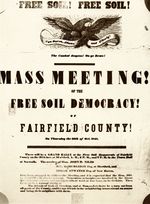
However, it’s not enough to say that early 19th century abolitionists were the radical fringe of their day because they opposed slavery, that they were the righteous ones who were misunderstood and unfairly lumped in with the crazies.  No, you have to dig deeper.  And when you look hard at them, what you find is that while the abolitionists opposed slavery, and they did so on moral grounds, it’s not as if they believed what you believe exactly: that slavery was a contemptuous manifestation of  racism.  No, that’s not what most abolitionists thought.  Abolitionists thought slavery was wrong because it violated their religious convictions, that it was an offense to Jesus.  And the whole racism thing actually didn’t bother them that much.

In fact, most Abolitionists didn’t have much of a problem at all with the racism that underpinned the institution of slavery.  Why?  Because they were racist too.  Most abolitionists did not doubt the inferiority of the black people they wanted to save.  That’s why many of them, when thinking about what to do with all those slaves they wanted to free, advocated repatriation: send all the blacLiberiaks back to Africa.  Someone advocates that now, you think they’re a degenerate racist, and rightly so.  Back then, the send `em all back to Africa crowd were actually the good guys.  Founded in 1816, the American Colonization Society was an alliance of abolitionist Quakers and slaveholders afraid of free blacks influencing their slaves.  From 1821-22, they set up a colony in Africa as a dumping ground for free blacks.  They called it Liberia (sounds like “liberty,” get it?), and they named the capital Monrovia, in honor of then-President James Monroe, himself a god damned slave owner.  And that’s how you get the West African nation of Liberia today.  Seriously.  You can’t make this stuff up.

So let me ask you something.  You think that if you lived back then you would’ve been the one, the one white person who thought slavery was bad because racism is bad?  Yeah?
Sale
You’re flattering yourself.   At best, you would’ve been half a scumbag, someone who thought slavery was awful, and that those poor monkey-like people, so childlike and inferior, should be shipped off to Africa for their own good.  If you were, by the standards of the day, an angel with a penchant for martyrdom, that’s what you probably would have believed.  And much more likely, you would have been three-fourths of a scumbag with one excuse or another.  And who knows, maybe under the right circumstances, you might have even been a full-on scumbag.  You know, the type who defended the institution of slavery and maybe even participated in it some way, perhaps as a slave trader, slave driver, slave catcher, slave overseer, or some such.  Actual slave owner?  Less likely.  They were really expensive.
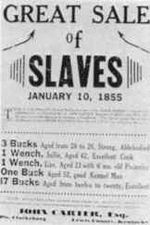
So here we sit in the early 21st century, judging those who participated in or were otherwise complicit in slavery, and rightly so.  What they did was incredibly wrong and unjustifiable by our sensibilities.  But if you were a white Judgmentperson living back then, you’d be somewhere along the spectrum of the day.  So the question then becomes: Who are you now?  What screwed up little spectrum are you sitting along today?

A hundred, two hundred, five hundred years from now they’re gonna be sitting in judgement on your ass.  They’re gonna be shocked at some of the shit you do, that you just take for granted, or maybe feel kinda bad about, but you know, that’s life, everyone does it, and it does kinda work for me, I know, I know, but sigh . . .

What’s it gonna be?  Can you look around and figure out what they’ll judge you for?  What are you doing that will make them call you a savage or a monster?

A few years before I gave up eating meat at age 27, I had a pretty strong feeling that this was one of them.  I was still wolfing dPigown burgers when it occurred to me that in a century or two or five, they’re gonna look back at us and think, what a bunch of savages.  They’re going to understand that for most of human history eating meat was either a necessity and/or just part of the way things went in pre-modern times, and that even in the early stages of industrial development it was still understandable.  And of course there needs to be a transition period for something as culturally intrinsic as eating food.  But still?  During the 21st goddamn century, when meat was a luxury as opposeDebeakingd to a necessity, and absolutely no one in the developed world had a reason beyond, mmm, that sure tastes good, even then they were still killing animals and eating them?  And not just killing animals, but raising them in mass production factory environments that incorporated animal torture techniques to maximize profits, even then they were still eating them because they were yummy?  You know, with a mentality similar to the way slave holders beat slaves because it was such a great stress reliever, or raped slaves because, god damn that feels good, or killed Indians because they wanted their land.

I knew this.  I would take a bite of a ham sandwich and rather un-self-consciously think to myself: Yup.  That’s what they’re gonna think of us.  They’re gonna judge us like we judge slaveholders, Indian killers, and Nazis.

Thoughts like that might eventually encourage a person to change.  Maybe.  And after a few years of thinking these things over, I eventually gave up eating meat.

Well, kinda.

I don’t eat mammals, I don’t eat poultry, and I don’t purchase leather products.  I eat fish, and quite a bit of it.  And perhaps more incriminating in some ways, I eat dairy, which means I’m helping to indirectly support things like the raising and slaughtering of veal calves.

I’m like the guy who thinks slavery is bad, and I eventually free my own slaves if I have any, and then join an abolitionist group.  I’m in the lunatic fringe.  But I don’t completely follow through with a boycott of Southern cotton made from slave labor, even though I know an effective boycott would help cripple the slave economy.  And the reason I don’t follow through is because I really love those good shirts and slacks made with Southern cotton.  My wardrobe’s full of them, and I wear them all the time.  Hell, I walk into a goddamn abolitionist meeting wearing a whole outfit made from Southern cotton, then sit down and talk about how awful slavery is, how we’ve gotta raise money to do something about it.  I roll up the sleeves on my Southern cotton shirt and say let’s get down to work.  Let’s raise enough money to buy these slaves, set them free, and then get them some one-way tickets to Liberia.

That’s who I am.  A fucked up member of the lunatic fringe, a looked down upon minority, who’s doing a really half-assed job of trying to make the world a better place as I understand it. 

Who are you?

Posted by Akim Reinhardt at 12:35 AM | Permalink

Comments

Really interesting piece, Akim!

One possible difference between us and the abolitionists is that we're likely to be making the world rather nastier for our generations of descendants. The oil's running out; the climate may be worsening; nuclear weapons loll inside unstable countries. So, if alternative energy sources are hard to locate, I might be looked back on as someone who knew all about peak oil but still drove in a car, cranked up his boiler and threw away the trash instead of lugging it to the recycling bins. Some who'd thought about the suffering that lay ahead but didn't care enough to do all that much about it.

Posted by: BenSix | Jan 17, 2011 8:29:26 AM

This is just what I have always thought but never wrote down. I feel the same about Israel - Palestinian conflict: we all know there is something very wrong, but say or do nothing, mostly. Also, the fact that we produce things without a single thought about where they will end up after they are used up or outdated - I think, advanced minds would make provisions for that before the start of the production. Etc, etc. I agree, I probably would have been in the wrong on the slavery, and I know that my relatives were silent about the killing of the jews - I probably would have been no different :(

Posted by: right on! | Jan 17, 2011 9:36:23 AM

Ben and Right:

Thanks for the comments. Hopefully the piece isn't too much of a downer; the goal of course is to inspire people to think and act about whatever issues are important to them, not to chide them into depression.

Posted by: Akim Reinhardt | Jan 17, 2011 10:19:32 AM

"It is no measure of health to be well adjusted to a profoundly sick society."

- Jiddu Krishnamurti

Posted by: Dave Ranning | Jan 17, 2011 11:11:40 AM

I love it when someone says in one sentence what it took me about 2000 words to say. :)

Posted by: Akim Reinhardt | Jan 17, 2011 11:28:25 AM

Well said Akim , I was walking through the park today , thinking
of Martin on his day , and I noticed the many dog walkers with their 'property', dogs chained around their neck , gasping against the leash , and I thought it is not so very different than human slavery.

Posted by: billb | Jan 17, 2011 12:37:49 PM

I have no illusions that human beings can be anything other than the homocidal, self-destructive animals that they are. To think that we can be anything else, that we can be better, is indulging in the worst kind of utopian thinking. The best we can hope for is that the story of human civilization is somehow recorded for posterity for future generations of whatever dominant species is at the top of the food chain. Will they understand our story, who we were and what we did? Probably not. It will be nothing but heiroglyphics.

Posted by: CO | Jan 17, 2011 1:03:18 PM

"What’s it gonna be? Can you look around and figure out what they’ll judge you for? What are you doing that will make them call you a savage or a monster?"

Well, let me guess:

1. The idea that everyone should carry guns and if 9 year old girls get killed, that's just too bad.
2. The idea that banks should get a 13 trillion bailout from the government and should now be making record profits and paying record bonuses while working people (aka wage slaves) lose their jobs and homes.
3. The idea that we need to drive 2 ton 12 mile per gallon trucks to get to the mall.
4. The idea that the US needs hundreds of military bases around the world.
5.The idea that the US is a democracy when it is obviously an oligarchy.
6. The idea that people who question 9/11 must be crazy.

Posted by: J.Hawkins | Jan 17, 2011 1:17:29 PM

Wow, CO, that's deppressing...

I'll go with 'right on!' on this one.

Thank you Akim, a stark comparison.. I'd actually say that I'm the one going, "but no wait! meat is delicious, what is wrong with you people?!? You're ruining Thanksgiving!" guess I should apologize to my mom now...

I know you didn't mean to be shaking your finger at the reader (who is 90% likely to be omniverous) but this one'll stick in my head. And good timing too!

Posted by: unfinishedscriptshedscript | Jan 17, 2011 1:25:42 PM

Akim:
Some in the repatriation (back to Africa) movement had better motives than they are given credit for. Many believed that once the slaves were freed, their former owners would quite simply kill them, because slave owners were such assholes, that's the sort of thing you'd expect them to do. So the way the repatriators figured it, slaves not only had to be freed, they had to be given refuge someplace where former slave owners were not the ruling class. The North, which was having a hard enough time assimilating the Irish immigrants, could not be expected to welcome yet another mass of poor, unskilled ethnics that nobody liked much. So there was a certain logic to sending them back to Africa where, it was naively assumed, they would not be murdered for their race or former condition of servitude. The semi-soundness of the repatriators' reasoning is somewhat demonstrated by the fact that when the slaves finally were freed, they did indeed become the victims of a great deal of violence, lynching, and 90 years of Jim Crow -- although not the genocidal elimination that some abolitionists feared.

Posted by: Faze | Jan 17, 2011 3:38:25 PM

For the record and so there's no confusion, I'd just like to add the I'm not drawing direct moral parallels between human slavery and animal cruelty. One of the major points of the article is the relative subjectivity of misery, especially as it is understood by those who are not suffering.

While I'm not a human secularist and I don't always value humans above all other animals, that is a very personal point of view that I'm not proselytizing anyone.

And thank you all for these thoughtful comments. I'm glad you've enjoyed the piece.

Posted by: Akim Reinhardt | Jan 17, 2011 3:54:48 PM

oh but you did draw a direct parallel and I wouldn't apologize for it... you are on the fringe right? It is what is.

Quote Akim: "That’s who I am. A fucked up member of the lunatic fringe..."

It's ok, I eat meat.

No more apologies! :)

Posted by: unfinishedscriptshedscript | Jan 17, 2011 4:35:46 PM

Akim,

This is one of the most thoughtful pieces that i've read in a long while. While we all sit and judge Huck Finn or 'extremism in politics' just as examples of the latest causes du jour, we do so with less and less of an understanding, or even an attempt to care about what the motivations and context are of those who we feel 'superior' to.

I think that the truly dangerous part about discourse today is how easily we toss aside anyone that has a different idea than we. "Oh, X thinks such and such, which i've heard from and therefore nothing that this person can say that i'll think can even be one ounce true."

This reflexive intellectual laziness manifested all across the left and the right is really what is will bring down our society, not the internet, video games, twitter feeds or anything else.

Posted by: perry | Jan 17, 2011 4:56:55 PM

Re: billb

Human slavery is not on par with "keeping a pet". Leashes are necessary to insure the dog does not run free to the point of entering traffic, engage in a fight with other dogs, and simply as a courtesy to those who we share the space with.

Comparing the leashing of dogs with human bondage is actually demeaning to actual slaves, humans who have been taken against their will to live subserviently to a master. Humans retain the capacity to make choices for their own lives and can understand such established orders as traffic and civil behavior, thereby not making the leashing of humans necessary.

As for dog owners who abuse the pets or do not train them adequately, this is a failing of the person and is frowned upon, but does not make the "owning" of dogs akin to slavery.

Posted by: bokononista | Jan 17, 2011 6:06:50 PM

Akim, perhaps you know about this but Thomas Haskell wrote two articles for the American Historical Review in 1985 titled, "Capitalism and the Origins of Humanitarian Sensibility" where he addressed similar stuff to this post. In trying to explain how one goes from wearing a cotton shirt to suddenly understanding that a slave picked the cotton of the shirt that they are wearing, Haskell claims that capitalism was a powerful component in shrinking the world enough for people who didn't see slavery everyday to think it needed to end (at least, that is my remembrance of the articles). It's not clear, though, if that was enough to change anything but he argues that it was a necessary thing to happen in order for abolitionism to finally occur. Haskell is a master of analogy and his big one is to compare abolitionism of the 19th century to vegetarianism today.

I was a teaching assistant in a class once where the prof used this analogy to explain abolitionism and the students had such a hard time with it. They were incredibly defensive about eating meat and so that stood in the way of them imagining life 50 years from now when meat is outlawed because of the vulgarity of killing animals ("because killing animals isn't vulgar" was the argument). Haskell wasn't claiming that eating meat and owning another human were equal. He was trying to show how morality has plasticity and is ever-changing, and how once a morality is deemed "normal" by a society, it is almost impossible to imagine the past as having a morality that is different from your own. If nothing else, vegetarianism is the type of thing someone can point to easily to drive this idea home nowadays. We have to imagine ourselves as abolitionists and not as the apathetic northerner who didn't really care that people were slaves (MLK talked about his disappointment in the "white moderate" in his "Letters from a Birmingham Jail") because the belief in abolitionism emerged as the "normal" morality. To be think anything else is to be immoral now. But morality is as historical as everything else.

So, I guess I am simply saying that Haskell would completely agree with you and he would love your analogy. Christopher L. Brown, when visiting my university after publishing Moral Capital, said something that I will never forget. To paraphrase him, it's the movements that lead to major change that are strange and rare. Major change is the exception. Abolitionism succeeding was a shocking thing when you look back across history. Because, like you say, most people can see what they don't like, they can even articulate it, but they continue to participate in that system or if they stop participating, they don't push anyone else to stop.

Thanks for the post!

Posted by: scatx | Jan 17, 2011 6:33:18 PM

So you don't eat mammals because in 200 years mainstream thinking might establish that it is immoral. Have you ever considered that in 400 years eating fish will be considered immoral?

All in all making an equivalence between slavery and/or the holocaust with ... slaughtering animals is really a stretch but I won't go as far as giving you the pleasure of calling you a fringe lunatic. (I couldn't care less of what you eat or don't eat).

Much can be said about American society's addiction to protein, especially meat. But as an omnivore species, there is nothing wrong in eating some from time to time.

Finally, are you sure your decision not to eat mammals has not more to do with some misplaced anthropomorphism than with morality, in the same way some abolitionists thought slavery was wrong because it violated their religious convictions rather than because it was simply immoral?

Posted by: Emanuelle | Jan 17, 2011 6:42:31 PM

I'd be really happy if future generations regard us as savages. What worries me is that they might envy us.

Posted by: John | Jan 17, 2011 7:10:48 PM

Worst human sins:
1. Putting toxic chemicals into the environment (like mercury)
2. Militarism
3. Spending money to feed pets instead of alleviating human starvation
4. Driving cars instead of mass transportation
5. Creating waste instead of recycling
6. Burning carbon instead of green energy

Posted by: JJ Frank | Jan 17, 2011 7:50:24 PM

Eating fish is already immoral. To eat fish is to participate in an ongoing genocide of wild populations. To eat meat at worst is to raise and slaughter a domesticated animal.

Genocide is worse. A lot worse.

Full disclosure: I eat both meat and fish. But I know which makes me feel worse about myself: fish.

Posted by: wcw | Jan 17, 2011 7:57:42 PM

A whole lot of people think abortion might be the thing we're condemned for by future generations. You know, how we think "well, it's too bad, but you can't force a woman to bear a child she can't afford or doesn't want." (By the way, I'm on the other side of that debate, and quite comfortable with the fact my wife--and I-- had two abortions.)

Posted by: Hal | Jan 17, 2011 8:26:11 PM

"Can you look around and figure out what they’ll judge you for? What are you doing that will make them call you a savage or a monster?"

My first thought to this was abortion. I am not actively anti-abortion - I'm too lazy and cowardly - but I do believe abortion is, in fact, killing your unborn child. I can't help but think future generations will view this as incredibly barbaric.

Posted by: Andrew | Jan 17, 2011 8:27:06 PM

I've had the same thought a about meat eating and slavery for running 40 years (I'm almost 60). And I still eat meat: the "not much" excuse is lamer than lame.

You miss two key points here. First, meating eating isn'mt merely an entrenched cultural practice. It's the hard-wired product of million of years of evolution. Chimps are brutally efficient hunters, and eat meat whenever they can. (Ask a colobus money.) We split from them about six or seven million years ago. Our ancestors since then have been major predators. The vegatable matter component of our caloric intaken went up after the agricultural revolution, to reach 75% or even 85% in some cultures. 10,000 years ago, the meat and fish component was more typically 65% or higher. We no longer need to eat meat, and have the moral capacity to refrain from doing so; but the desire to do it is more like the desire for sex than it is a mere "preference."

Second, future generations will sit in judgment on us, but without having to give up anything for it. They will have meat, but it will be synthetic, and fully as good as the real thing. (Actually, the test tube meat of the future WILL be the real thing. That's 20 or 30 years away at the outside for commercial introduction, and maybe a couple of decades more from worldwide universal use.) The analogy with slavery is surprisingly apt. We in the developed world no longer need slaves to avoid lives of backbreaking labor. And the land the Indians have held for generations is no longer the place where I want to start my hardscrabble farm and grasp at the possibility of of dignified independece. So we can judge. And so will our progeny.

Posted by: Matt | Jan 17, 2011 8:29:17 PM

Abortions is an interesting one. If the future is depopulated, they make look at it as barbaric. If it's overcrowded, they probably won't.
It's also a fairly old practice. But in the olden days (talking Romans), they would have the baby and then just leave it outside. Just using conception or limiting it to the first trimester seems to be a lot more humane.

Posted by: Agorabum | Jan 17, 2011 8:52:16 PM

A brilliant and well written piece. The meat issue I have noticed at least in Australia is the movement away from factory farming towards more ethical farming of livestock being pushed towards being enshrined into law. On another note, on the 'crazy' side is one example, in my own life is that people think I am crazy for not wanting to get a driver's licence, that I actually prefer to use public transport and walking to get around.

Posted by: Paula | Jan 17, 2011 9:12:30 PM

Re Agorabum:
Points well taken. I think though that before Roe and throughout history, there was a far greater degree of taboo and stigma attached to abortion. I do not want abortion to be illegal -as you say, it has been around for a long time. To refine my point, I think what may be viewed as barbaric (perhaps too strong a term) is that a culturally valuable stigma was diminished under the guise of "choice." Hey, I may be completely full of shit on this but it is something I have pondered since the conception of my daughter.

Posted by: Andrew | Jan 17, 2011 9:20:09 PM

or,

ordinary people do fucked up things when fucked up things become ordinary. -propagandhi

Posted by: builder | Jan 17, 2011 9:21:20 PM

Great article. I often tell people of a line in a hymn I've sung at church--to paraphrase: We once thought slavery was a necessary part of life and would never be abolished, but it was.
Now we think that war is a necessary part of life and will never be abolished. Perhaps it will.

Posted by: Lisa | Jan 17, 2011 10:35:30 PM

Things that will (rightfully) be considered barbaric:

1. Death penalty. The way we look at historical public beheadings or other executions will be the way future people look at needless death penalties, which are not performed in self defense so much as in blood lust. Plus, being a minority is an independent variable increasing the likelihood of this penalty. It's even worse than abortion, because the victim is fully aware they will be killed and fight, unsuccessfully to save their lives.

2. Condoning torture as evidence gathering method. The pro-argument, that 'ends justifies the means', coupled with the fact that not even if a victim turns out to be innocent are they ever financially compensated, is a travesty. Torture is wrong, yet many Americans gladly support it.

3. Racial discrimination. To this day, many people have blanket rules about backgrounds, or colors of skin they would allow to join their family or voluntarily hire, regardless of the person's character, intelligence, or skill set.

4. Inhumane meat industry. Regardless of whether you are a vegetarian, the meat industry conditions are absurdly cruel.

Posted by: Salamander | Jan 18, 2011 12:01:04 AM

I see what you did there. I have a few in mind:

- government sanctioned "extraordinary rendition" and torture

- denying other humans life-critical health care, sustenance, or education based on inability to produce payment (as a result of their failure to inherit, swindle, or steal enough to afford it)

- indoctrination of children with Bronze Age fairy tales that teach that most of the rest of humanity (except for a few who belong to the same group that believe exactly as their parents do) are doomed to eternal suffering

- bravely (i.e. from a safe distance) targeting civilians and children for slaughter or mutilation via clusterbombs, landmines, incendiary phosphorus, longrange HE missiles, sniper rifles, and/or robotic aircraft bombers (bonus points for acquiring fabulous personal wealth or status by doing so)

Posted by: melior | Jan 18, 2011 12:12:22 AM

re abortion:

What must certainly seem barbaric and insane to the future is that we full well know HOW to prevent pregnancy . . . and thus prevent the willfull killing of our offspring . . . and yet we still have unwanted pregnancies which we . . . abort.
(Clearly this does not cover rape, which must ALSO be seen as a major aberration . . if we as a species survive.)

Posted by: Chris Gudmann | Jan 18, 2011 12:30:16 AM

I think it was Julian Barnes who said "We shouldn't expect the past to suck up to us."

Posted by: Mike Cope | Jan 18, 2011 12:58:48 AM

Slavery was not "normal" by the middle of the 19th century. Most of the (European) world had gotten rid of it and strongly disapproved of it, and the American South was very much the odd place out in that regard. Abolitionist beliefs were shared by millions.
2. The Holocaust also was an extraordinary event, even given Europe's ugly history of anti-Semitism. It was so extreme on the scale of evil that most people refused to believe it was happening until incontrovertible eye-witness evidence was produced at the end of the war.

Re: indoctrination of children with Bronze Age fairy tales

Can we please can this silly and false meme? With the possible exception of Hinduism whose roots are obscure, no major religion today dates from the Bronze Age. Even Judaism dates fron the first Millennium BCE, (that's definitely Iron age territory), while Christianity is a late Greco-Roman faith (the same culture that birthed our politics and science), and Islam is later still.
Sequing into a larger observation, it's nice to stick whatever one find objectionable into the category of "People will no longer do X in 500 years". But for the most part things that are deeply part of human nature are not going away. We may not have slavery, but does anyone think widespread exploitation and abuse of labor is a thing of the past? I'd love to say we will no longer have wars in 500 years, but history suggests strongly otherwise. and yes, we will still have religion, and government and unequal distribution of wealth too. Oh, and utopianism also.

Posted by: JonF | Jan 18, 2011 8:06:44 AM

On the lunatic fringe. Is this why environmentalists often sound so crazy despite the underlying logic of their cause?

Posted by: Philosopher's Beard | Jan 18, 2011 11:04:53 AM

One of the major points of the article is the relative subjectivity of misery, especially as it is understood by those who are not suffering.

Yes, yes, yes, yes, and yes. Thank you!

As our society matures, we will turn up (through public reason) more and more examples of suffering being forced on unconsenting beings for the pleasure of other beings. We will always deal with them piecemeal, instead of dealing with the root problem, because that is impossible for us to face.

Posted by: Sister Y | Jan 18, 2011 11:37:42 AM

1. Nuclear weapons
2. Corporate personhood

Both are insane, both are actively unjust, both are entrenched. So what are you going to do about them?

Posted by: paradoctor | Jan 18, 2011 11:51:55 AM

Antinatalists provide an exception, of course: they rather hope that future generations won't be around to think of them...

Interesting lists, folks.

Posted by: BenSix | Jan 18, 2011 12:23:21 PM

paradoctor,

Re: 2. Get the Court to overturn this decision:


Santa Clara County v. Southern Pacific Railroad

How? I don't know.

I would also add inhumane animal experimentation to inhumane factory farming and inhumane treatment of animals in entertainment.


Animal Experiments

Posted by: Louise Gordon | Jan 18, 2011 12:33:07 PM

The idea that people are equal, and should be equally respected and equally treated. That's an idea that's going to vanish like a soap bubble within a few generations, especially with the rise of technologically sophisticated dictatorships.

The suggestions that people are making in the above comments are things that they personally believe in but that are currently minority views (vegetarianism, animal rights, etc.)i.e. they believe themselves to be equivalent to anti-slavers in the 18th century.

Instead, try and think of something that you yourself personally believe in and support (i.e. are well adjusted to, and which today's society supports) that is likely to vanish.

Someone once said that anyone who could see the world 200 years later would morally disapprove of it. An American in 1800 would disaprove of America today; an Englishman in 1600 would disapprove of 1800 America etc.

I cannot know what life in 2210 would be like, but I'd guess that we would disapprove of its morality.

Posted by: Glyn | Jan 18, 2011 12:50:52 PM

Prison has got to go.

Also money.

Posted by: Philosopher's Beard | Jan 18, 2011 1:26:41 PM

"Instead, try and think of something that you yourself personally believe in and support (i.e. are well adjusted to, and which today's society supports) that is likely to vanish"

Now this is an interesting question. I like eating meat, but I don't think it will vanish. Animals will be genetically modified, but meat will be available provided the human population is controlled. I love air travel, and I hope this does not vanish. Aviation fuel of the future will likely be bio fuel. In fact, I expect science will be able to replace oil and eventually coal with wind, biofuel, solar and nuclear. I also like cars, so I do not envisage a world where public transit is the only option. Cars will, of course, be electric. (I already own two Priuses). I believe family size will be limited in the future to an average of 1 or 2 children, most likely by parents' choice rather than be government coercion. I prefer paper newspapers and books: these are likely to become quite rare in the future. Finally, I value privacy a great deal and this is likely to become a luxury good, if it is not already.

Posted by: J.Hawkins | Jan 18, 2011 2:08:02 PM

Philosopher's Beard - That's it!

The Prison-Industrial Complex is the closest thing we have today in America to slavery.

I think that's the one that's going to get the boot, it's inefficient, inhumane, and inmates make PENNIES a day if they work. It's self-perpetuating and inhumane AND the whole thing (these days) is a for-profit enterprise.

good call.

Posted by: unfinishedscriptshedscript | Jan 18, 2011 3:11:19 PM

In fact, the domestication of the wolf has been an example of a highly succesful evulutionary adaptation. It is estimated that there are about 9000 wolves left in the US, but over 77 million dogs.

"Well said Akim , I was walking through the park today , thinking
of Martin on his day , and I noticed the many dog walkers with their 'property', dogs chained around their neck , gasping against the leash , and I thought it is not so very different than human slavery.

Posted by: billb | Jan 17, 2011 12:37:49 PM"

Posted by: Andrew | Jan 18, 2011 4:35:22 PM

I find it very hard to believe that future generations, if there are any, will disapprove of abortion, except, as someone already pointed out, to think that preventing them is preferable. I think it's much more likely they'll wonder why, and lament the fact that we didn't, stop procreating so much.
I believe war will be abolished, or at least acknowledged as a crime, if for no other reason than that it's literally the most polluting thing going on.
This article reinforces something I've been thinking, namely that democracy is really absurd, except that it's the fairest, and so makes a great deal of sense. But more people should remind themselves that just because everyone's entitled to their opinion, doesn't mean opinions are all equal.
Of course, everyone's entitled to my opinion.

Posted by: Alice de Tocqueville | Jan 18, 2011 8:20:52 PM

Environment? War?
The evil in those is obvious to us even today. What would be interesting is the evils which we are not aware of today.
Here's a short excerpt from this space in the 23rd century:
"evidence increasingly shows that throughout the 20th century and well in to the 21st, children were forced to sit in rows in groups of 20-40 individuals, in a small space called a classroom, for a full 5-7 hours every weekday, whilst an individual called a teacher stood in front of them. In most countries the law required this from age 5 or 6 till the age of 16, and many parents voluntarily subjected their children to this horrifying practice till the age of 18!"
Or:
It has been revealed that in the early 21st century hundreds of website urls consisted of a string including both letters and numbers. An investigation back in 20&$ concluded that the series of horrific events culminating in the subsiding of Manhattan by 20 feet was triggered by such strings that were in use by the strafidity fazed droils introduced 10 years earlier. Today every 1 year old toddler knows to avoid such strings and is aware of the horrifying possible consequences. Back then who knew better?
Even the infamous 3QD site had to change it's ubiquitious url...

Posted by: Jeremy | Jan 19, 2011 3:07:56 AM

Gay rights, anyone?? Hello?
That's the one that always pops into my mind. I certainly wouldn't put chickens before my gay friends' rights. (But Californians did, if you remember back a little.)
And this seems a much better parallel to slavery to me than some loser college kid's attempt (scatx's comment) to understand the underground railroad and morality's plasticity via tofu. That is very disturbing to me.
It makes me angry that only a tiny handful of the many surviving homosexuals persecuted by the Nazis, for instance, told their stories before dying in the "here and now." Why did so few come forward about the pink triangles? Because their experience was so horrible that many didn't want to further their pain on this earth by coming out and being ostracized by their contemporaries.
Their contemporaries are you and me!
And that makes me ashamed for all of us.

Posted by: laney | Jan 19, 2011 6:02:21 AM

"evidence increasingly shows that throughout the 20th century and well in to the 21st, children were forced to sit in rows in groups of 20-40 individuals, in a small space called a classroom, for a full 5-7 hours every weekday, whilst an individual called a teacher stood in front of them. In most countries the law required this from age 5 or 6 till the age of 16, and many parents voluntarily subjected their children to this horrifying practice till the age of 18!"

Of course, there is also evidence that many children were fortunate enough in the 21st century to avoid the horrors of classrooms and were able to spend their whole day making carpets or scavenging in garbage dumps for pennies a day to help support their families.

Posted by: J.Hawkins | Jan 19, 2011 11:50:21 AM

I'm on the road and have sporadic online access, so I've not been able to respond to these many thoughtful comments in a timely or thorough manner. But thanks to all for your contributions. And in a shameless plug, please feel free to visit my blog at

ThePublicProfessor.com

Posted by: Akim Reinhardt | Jan 19, 2011 1:10:51 PM

Post a comment


Subscribe to this blog's feed  

PayAnywhere with iphone credit card swiper

Android Tablet

Bluetooth Headset

2013 New Style Dresses

Compare Car Rental Prices

DHgate.com Wholesale

3QD on Facebook

3QD on Kindle

3QD by Daily Email

Receive all blogposts at the same time every day.

Enter your Email:


Preview 3QD Email

3QD on Twitter

Miscellany

Lijit Search

AddThis Social Bookmark Button

Add to Google

Recent Comments

jo smith on Physicists Create Quantum Link Between Photons That Don't Exist at the Same Time

jo smith on Mohsin Hamid: 'Islam is not a monolith'

Dr. Smith on Race Is Not Biology

Sundar on Daniel Dennett's seven tools for thinking

Sundar on Daniel Dennett's seven tools for thinking

Sundar on Why race as a biological construct matters

Sundar on Race Is Not Biology

Joel Grant on Why Rational People Buy Into Conspiracy Theories

khaled on Evolution shapes new rules for ant behavior

musafir on Mohsin Hamid: 'Islam is not a monolith'

araldo on Mohsin Hamid: 'Islam is not a monolith'

JM on Physicists Create Quantum Link Between Photons That Don't Exist at the Same Time

SteveRR on Daniel Dennett's seven tools for thinking

jo smith on Mohsin Hamid: 'Islam is not a monolith'

Grace on Daniel Dennett's seven tools for thinking

Elatia Harris on Daniel Dennett's seven tools for thinking

Abbas Raza on Daniel Dennett's seven tools for thinking

Jonathan on Daniel Dennett's seven tools for thinking

Bill on Daniel Dennett's seven tools for thinking

Louise Gordon on The need for critical science journalism

omar on Mohsin Hamid: 'Islam is not a monolith'

Jonathan on Daniel Dennett's seven tools for thinking

Bill on Daniel Dennett's seven tools for thinking

jo smith on Mohsin Hamid: 'Islam is not a monolith'

carlos on Daniel Dennett's seven tools for thinking

Acclaim For 3QD


"I couldn't tear myself away from 3 Quarks Daily, to the point of neglecting my work. Congratulations on this superb site."—Steven Pinker, Johnstone Professor of Psychology, Harvard University.

"I have placed 3 Quarks Daily at the head of my list of web bookmarks."—Richard Dawkins, Charles Simonyi Professor of the Public Understanding of Science at Oxford University.

"Just wanted you to know I’m one of many who reads and enjoys 3 Quarks....almost daily."—David Byrne, musician, former lead-singer of the Talking Heads, artist, intellectual.

Read more here.

The 3QD Prizes

Subscribe to this blog's feed