From The Telegraph:
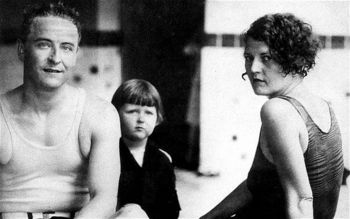 Today, Francis Scott Key Fitzgerald may be one of America’s most celebrated novelists, but during his lifetime, he was best known as a writer of short stories. At the end of the Twenties, he was the highest-paid writer in America earning fees of $4,000 per story (about $50,000 today) and published in mainstream magazines such as The Saturday Evening Post. Over 20 years, he wrote almost 200 stories in addition to his four novels, publishing 164 of them in magazines. When Ernest Hemingway first met Fitzgerald, in Paris in 1925, it was within weeks of the publication of The Great Gatsby; Hemingway later wrote that before reading Gatsby, he thought that Fitzgerald “wrote Saturday Evening Post stories that had been readable three years before but I never thought of him as a serious writer”. Gatsby would change all that, of course, so thoroughly that now we may be in danger of forgetting Fitzgerald’s stories. The haste in which he wrote them, in order to pay for the luxurious lifestyle he enjoyed with his wife, Zelda, means that the stories are uneven in quality, but at their best they are among the finest stories in English. And “Babylon Revisited”, a Saturday Evening Post story first published exactly 80 years ago next month – and free inside next Saturday’s edition of the Telegraph – is probably the greatest. A tale of boom and bust, about the debts one has to pay when the party comes to an end, it is a story with particular relevance for the way we live now.
Fitzgerald’s fortunes uncannily mirrored the fortunes of the nation he wrote about: his first novel, This Side of Paradise, became a runaway bestseller in early 1921, just as America entered the boom period that Fitzgerald himself would name the Jazz Age. He and Zelda became celebrities and began living the high life. They were the golden couple of the Twenties, “beautiful and damned”, as the prophetic title of Fitzgerald’s 1922 novel suggested, treated like royalty in America’s burgeoning celebrity culture. Glamorous, reckless and profligate, the Fitzgeralds were spendthrift in every sense. Much later, Fitzgerald would have to take account of all they had squandered – not only wealth, but beauty, youth, health, and even his genius.
More here.
