
| ABOUT US | ARCHIVES | LINKS | RSS FEED | MONDAYS | |

3quarksdaily

An Eclectic Digest of Science, Art and Literature

« perceptions | Main | The Economics of Nonexistence: Love, Rock and Roll, and the Void »

December 06, 2010

ABP

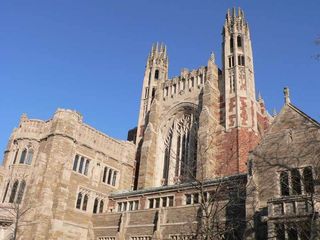
Yale-law-school1 ABP is a house; it is one quarter of a house, the bottom left corner of New Haven’s 111 Howe Street to be precise. ABP is short for Alif, Bay and Pay which are the first three alphabets of the Urdu language. It has been given the name ABP by the three Pakistani undergraduates from Yale University who live there. A name only the friends of the inhabitants know. Three Pakistani undergrads live there but, more importantly, every Pakistani at Yale (and many non-Yale ones) have been in this decadent den to sleep, eat, get help with their Math problem sets, play HALO and watch life pass by. You must understand that ABP is a house full of Pakistanis, and specifically, Pakistani men.

ABP is located on the piece of Howe Street that falls between Elm Street and Edgewood Avenue. Howe Street is an enigma. It is one of those roads that fall on the very boundary between Yale and New Haven. And you can see New Haven’s culture diffusing into Yale’s pretentious Gothic around this point. This is a place where people become darker, don’t wear polo shirts, smoke cheap cigarettes and hang out around gas stations rather than libraries. ABP is right around the corner from Main Garden, Elm Street’s worst Chinese restaurant. It is one of those grubby little affairs whose dirty kitchen you can see through a side door that is permanently open to the street and where nobody speaks English nor does anyone make authentic Chinese food. Everybody is trying to find their own homes and their own identities on Howe Street: two Chinese brothers behind the counter, a few black men near the gas station and a bunch of Pakistanis in an American house.

Once you arrive at ABP you realize that like any respectable counterculture house the proper entrance is at the back. The house has three bedrooms on the ground floor and a common room and a kitchen in the basement. The common room is the place that holds the house together. It has three couches and a table in the middle, cluttered with fast food leftovers, math textbooks, Xbox remote controllers and BlackBerrys. On certain days, the table is cleared to play poker. The couches, all of different sizes and providing different comfort levels, are booked early in the day by people sleeping over. There is a large television facing the table and the couches which is exclusively used to watch cricket and to play HALO. The common room is always slightly dark and very loud. The kitchen is always dirty and never used. Unlike the basement, the upstairs is not a communal space. White broken stairs lead you to a narrow corridor and three very different bedrooms. The first room belongs to Muneeb, more commonly known as Bubbles or Bubbz, and is in total disarray. Muneeb, a generously proportioned guy, is the primary sight of the room and there is not much else to see but litter. The second room belongs to Oosman and serves as the second common room. The third room belongs to Owais, who is the eldest and most religious. His room is meticulously ordered and decorated by calligraphy posters with quotations from the Quran hung on the walls. This is the room you go to find useful but rare things like nail cutters, old textbooks, spare sandals and good advice.

I moved into ABP in the summer of 2010 for a month. This was the time when night began to permanently fall over Pakistan. The government became more corrupt than ever, suicide bombings increased, traffic became more chaotic and even the cricket team started to perform pathetically. We at ABP thought about this. Thought but never talked, except face-to-face, never in a group and hurriedly brushing the topic away or making a crass joke about it as soon as it was brought up. We were in exile, in voluntary exile. We were not immigrants, here to form a new identity. We were still Pakistanis but in a ridiculously strange setting.

At night, we would sit in the common room for dinner. But as we entered we removed our shoes. We removed our jeans. We removed all lies. We put on cloths around our waist in the typical fashion of a Pakistani farmer. We struggled for brotherhood through sincerity and interaction. Unlike a frat, camaraderie is not fostered by Beer Olympics or by paying dues here. You enter by birth. Nobody can give that to you and nobody can take it away. Dinner consisted of frozen bread from the Indian store and pickles from a brand called Mother’s. For some reason, the pleasures of the exiled always hit at their mother issues.

Dinner is followed by a cigarette and a game of cricket. Smoking is taken seriously and the only cigarettes smoked here are Gold Leafs; a brand from back home, cartons of which are especially bought over holidays and brought back to university. Soft folk music plays in the background as we sit on our wooden patio and think of all the places that Gold Leaf must have rested and dream of all the distances it has travelled to come here for us: on chai stained ash trays in smudgy tea houses, between the lips of lovers as yet another dawn breaks and yet another call to prayer descends on the streets, hanging from the windows of countless taxis as they rush off to countless directions. On special occasions, these smoke breaks were accompanied by a joint or a glass of Scotch whisky. Special occasions consisted of Pakistan winning at cricket, somebody telling a good joke about the President’s mother, a bad day at work or a slow night.

One day, while smoking his cigarette Oosman looked at me, smacked his lips and said, “If we were in Pakistan we would be eating barbecued chicken tikkas with spicy sauce.” His impish grin hid many dreams of far away lands. It hid our shared dreams that let us forget. They let us forget that we live in the country that bombs people everyday. They let us forget that our families might die tomorrow, anonymous and innocent. They let us forget physical spaces. They let us live in our own Pakistan, re-imagined and re-created in ABP. I smiled back at him and for a moment we knew. We understood. I thought he understood. We looked away.

Summer passed in shared isolation and in routine. We rarely interacted with the world and the world rarely interacted with us. None of us had a girlfriend. Our white friends were kept strictly out of the house and we had no mutual friends apart from each other. We were all different and even antagonistic personalities. But we were joined by the mysterious link of being a man and being in exile. We held it proudly and it became our life. Amongst throngs of hipsters and nerds and frat boys, we were Pakistani men. Amongst throngs of Americans, we were anchorless ships.

Posted by Haider Shahbaz at 12:22 AM | Permalink

Comments

I lived in apartments like this briefly in college (nobody ever cleaned the kitchen, it was filthy, etc.) and I have to say that it was a bad depressing experience. The fact that strict national (no "whites") and gender (Pakistani "men") apartheid is practiced, that Pakistani = Muslim, just makes it more depressing.

Would you even talk to these guys back in Pakistan? Would you have much in common?

Posted by: Hektor Bim | Dec 9, 2010 2:01:42 PM

Mr. Bim,

Your college experience must have been truly miserable if, after reading that article, the most important thought you could generate is the one above. I don't think I have ever seen anyone miss the point of an essay like you just did. Read the article again.

Also, where does the essay ever mention anything about Pakistani necessary equaling Muslim? In fact, even the word "Muslim" is not mentioned anywhere. And while I can see a reasonable person claiming that gender and ethnic-based exclusion is a bad thing, even if the article had said Pakistani=Muslim, why would that specifically be depressing? The fact that you drew that association (without any prompting from the article) reflects poorly on your pre-existing (and unfortunate) prejudices and opinions and explains why, upon reading an article about Pakistan and Pakistanis, you could only manage to muster a negative comment.

Posted by: FD | Dec 9, 2010 3:56:01 PM

FD,

"Owais is the most religious ... decorated with quotations of the Koran" It is automatically assumed that being religious means being Muslim, at least by the writer.

What precise points was I supposed to get from this piece exactly? And why am I required to post only positive comments? The piece itself is fairly dark: "They let us forget that our families might die tomorrow, anonymous and innocent."

Finally, Owais, people who aren't depressed clean their kitchens. It's unnatural for people to live in filth, especially if they have free time. I don't think the people who live there are actually happy.

Posted by: Hektor Bim | Dec 9, 2010 6:14:22 PM

In my opinion, college men have to be very depressed, or mildly afflicted with OCD, before cleaning house is seen by them as a legitimate way to spend time. And I think this is a remarkable essay -- in a good way.

Posted by: Elatia Harris | Dec 9, 2010 7:07:25 PM

Nice writing. Lived in and around New HAven for the last 13 years and know the address but never ventured inside.

The essay does sound quite depressing and speaks of a lonely existence. Move back to Pakistan guys. I did after 13 years and it am liking it alot even if there are bombs and bullets.

Posted by: ali afzal malik | Dec 28, 2010 6:15:59 AM

Post a comment


Subscribe to this blog's feed  

PayAnywhere with iphone credit card swiper

Android Tablet

Bluetooth Headset

2013 New Style Dresses

Compare Car Rental Prices

DHgate.com Wholesale

3QD on Facebook

3QD on Kindle

3QD by Daily Email

Receive all blogposts at the same time every day.

Enter your Email:


Preview 3QD Email

3QD on Twitter

Miscellany

Lijit Search

AddThis Social Bookmark Button

Add to Google

Recent Comments

Eleutheria on Positive Failure - a review of "The Power" by Rhonda Byrne

Eleutheria on Positive Failure - a review of "The Power" by Rhonda Byrne

Matt on The Science Mystique

Eleutheria on Why is Europe so Messed Up? An Illuminating History

Elatia Harris on I am dust and ashes and full of sin

PeteChapman on I am dust and ashes and full of sin

Raza Husain on the culture animal

Chris on Positive Failure - a review of "The Power" by Rhonda Byrne

DAS on Why is Europe so Messed Up? An Illuminating History

DAS on Is the Brain No Different From a Light Switch? The Uncomfortable Ideas of the Philosopher Daniel Dennett

DAS on the culture animal

Raza Husain on Unknown Mathematician Proves Elusive Property of Prime Numbers

Dredd on NORTH KOREA’S NERVE WAR

Dredd on Unknown Mathematician Proves Elusive Property of Prime Numbers

Raza Husain on Is the Brain No Different From a Light Switch? The Uncomfortable Ideas of the Philosopher Daniel Dennett

Dana on germ houses

musafir on Tuesday Poem

soubriquet on Tuesday Poem

Eli on Unknown Mathematician Proves Elusive Property of Prime Numbers

Jim on Tuesday Poem

Josef Stern on Unknown Mathematician Proves Elusive Property of Prime Numbers

Shelley on Is the Brain No Different From a Light Switch? The Uncomfortable Ideas of the Philosopher Daniel Dennett

Bill on The Beautiful German Language

Eleutheria on The Bystander Effect in Medical Care. Why Do I Have So Many Doctors Not Taking Care of Me?

Eleutheria on Tuesday Poem

Acclaim For 3QD


"I couldn't tear myself away from 3 Quarks Daily, to the point of neglecting my work. Congratulations on this superb site."—Steven Pinker, Johnstone Professor of Psychology, Harvard University.

"I have placed 3 Quarks Daily at the head of my list of web bookmarks."—Richard Dawkins, Charles Simonyi Professor of the Public Understanding of Science at Oxford University.

"Just wanted you to know I’m one of many who reads and enjoys 3 Quarks....almost daily."—David Byrne, musician, former lead-singer of the Talking Heads, artist, intellectual.

Read more here.

The 3QD Prizes

Subscribe to this blog's feed