
| ABOUT US | ARCHIVES | LINKS | RSS FEED | MONDAYS | |

3quarksdaily

An Eclectic Digest of Science, Art and Literature

« One-Stop Living | Main | Life as invention: Colin Marshall talks to blogger, entrepreneur and non-conformist Chris Guillebeau »

October 04, 2010

'Philosophy Killed My Children': A Response

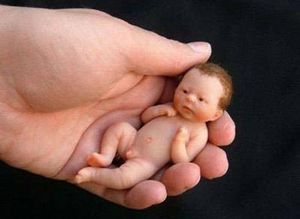
Baby-chocolate My previous article, ‘How Philosophy Killed My Children and Why it Should Kill Yours’, seemed to have generated some debate. Unfortunately, there was much heat but little light shed on taking the subject further from most commentators/critics. Yet, what little light was shed by critics is a welcome furthering of this important discussion. Considering I was made into the title of a Nicholas Smyth post on this website, and considering the excess to which the debate collapsed into denigration, dogma and shouting matches, I wish to respond to some of the claims. In fact, this might take longer than the original piece itself considering the widespread misreading of my argument. 

My argument is quite simple: there is no reason to create more people and every reason not to. I also attempted to severe the link between parenthood – an ethical attitude of helping younger people, wanting to lessen their suffering, and using our own experience to better theirs – and procreation. The latter is my target. Indeed, parenthood need not be tied to procreation. The parenting-attitude can be applied to those who already exist, not requiring us to create human life to care for. No critic highlighted a good argument to create more people, other than emotional reasons which I highlighted is, firstly, unpersuasive and, secondly, is an insult to adoptive parents who can testify to the reciprocated feelings of their adopted children. That is, we may fulfil the desire for parenthood through non-procreative means, adoption being one way.

But adoption, as they say, is one option. As I highlighted, not all of us – including me, given my age, income, etc. – would pass adoption procedures. The information I have obtained from adoption agencies highlights this much. Being unable to adopt should also tell us something important: if adoption agencies won’t let us be parents to these children, what does that tell us about the automatic pass we get to simply use our reproductive organs to make children? If agencies judge us unfit to be parents for those children who do exist, it should smack hard of blatant arrogance to bypass such a well-founded judgement to produce children of our own (I hope adoptive parents will provide some more personal details on this. I prefer hearing from them, rather from adoption agencies). This is why people who argue unless I adopt I should not judge simply fail to make a point: if I cannot adopt because I would not pass first-level acceptance as an adoptive parent, what gives me the right to just breed away? This should immediately tell me I am unfit as a parent, be it for my own or those who exist.

As ‘Namit’, a comrade in this discussion, has pointed out, my main problem is that biological parenthood has been given a ‘free pass’ for too long; it is taboo to judge people who create life. Hence it seems that biological parents, who take my argument on face-value, i.e. accept my premises and conclusion, would no doubt be harsh in their response: after all, there is no return policy when it comes to children. They have already committed an act I think unjustified and indeed immoral; it is an act that you cannot undo. Considering no critic highlighted the failure with the argument, those who are biological parents, taking the trouble to point out I was being ‘stupidly offensive’, perhaps feel this way. However, that is not my problem or a counter-argument: I have yet to be told why we must or should continue breeding or create children (this is a different point to saying people will breed, anyway). What is required is an argument not founded on petty, egotistical notions of immortality, selfishness and prejudice. The vehemence with which some people responded shows me I am tapping into some taboo areas for many people: they don’t like it and they want me to shut up.

An intellectual mentor, Ms Ruchira Paul, has, to an extent, accepted my arguments – indeed, she and others like Nicholas Smyth, say they usually do. This is a pleasant and welcome surprise since I rarely know who agrees with me, but know all too well of the antagonists. Nevertheless, Ms Paul’s argument basically chastises me for judging people who breed. What I would welcome, however, is a judgement on those, like me, who do not and will not. Perhaps Ms Paul sees me as a self-righteous non-breeder, like a self-righteous non-smoker, mocking and deriding those who perform the act I claim immoral. Yet I hope that this is beside the point: I have made an argument, highlighting specifically why I think this is a moral or immoral position, and thus drew from pretty straight-forward premises a conclusion which anyone is welcome to dispute. It has been disputed, but not for any good reason I am able to see. Ms Paul herself is welcome to ‘judge’ me, but I hope on the same grounds I judge procreators: with sound arguments and not emotion (which she has not done, displaying why I call her a ‘mentor’). We are forced into judgement if we find there are no good reasons and perhaps very bad ones for people adopting (excuse the pun) an attitude or performing a set of actions. There is nothing wrong with ‘judgement’ – it is in fact a neutral term, we can judge someone good or bad – but primarily it should be reasoned and clear – not emotional and knee-jerk and snide. I gave my reasons and anyone is welcome to dispute them, but this will not stop me ‘judging’ people and their actions, nor accepting taboo-areas.

A commentator called J. Hawkins seems particularly upset by my criticisms, envisaging everything from child murder to racist sentiments. Mr Hawkins has also not responded to my specific claims, though I would welcome him to dispute my points as I have presented them. He has not pointed out which part specifically is incorrect, nor has anyone else. Mr Hawkins and others have asserted my accusations are incorrect, but have failed to say why – other than something verging on bad taste or knee-jerk responses and working from a misreading of my argument (as I will shortly highlight). Also, Mr Hawkins claims I’ve made a racist argument whereas nowhere in my essay did I highlight a specific ‘race’ of people, be it the children or the adoptees. (See the next paragraph for why I mentioned African children – that is children from Africa, not necessarily black). Also I was taken aback by the automatic assumption that ‘being rich’ or ‘being Western’ means being white – perhaps the majority are, as he indicates, but so what? This is a failure. A very bad and worrying failure on Mr Hawkins’ part: after all I don’t care what your skin colour or nationality is, as long as you are able and willing to aid those who would benefit from aid – also despite their skin-colour. Postulating as he does something about race only reveals his indiscretions not mine, since it is obvious what a stretch it requires to make my argument racist at all. (I mean who says 'rich' loving adoptive parents cannot be black. I certainly did not. But this is entirely beside the point.)

Mr Hawkins and others also take issue with the title. I would like to highlight paragraphs 2 and paragraph 13. To quote from the latter: ‘To not have children is not to kill children; killing is taking away the existence of a living thing, but these beings are neither living nor existing. What is killed is the idea of having children and what is birthed is the ethical obligation we have to look after those who need that love and attention so many of us are willing to suffer for…’ This only shows Mr Hawkins did not, perhaps, read the essay, or perhaps did not retain it: something no critic should ever do when critiquing. By showing this sentence, Mr Hawkins reveals to us he did not read or retain my argument. Though, to give him the benefit of the doubt, perhaps in his anger, he simply forgot. I do not fault him for that. (One commentator, ‘MRM’, had the insight to highlight I specifically refute such a reading) Yes, the title is provocative. Provocative enough to warrant focus and indeed discussion, as people can read what I mean by it. It is in fact a litmus test as to whether people read it through to see that I dispute a face-value reading of the title. Mr Hawkins has failed, too, in this regard and is painting a portrait of me that no one would recognise.

Mr Hawkins, Ms Rachel Charlmers and, on Mr Smyth’s post, ‘aguy109’ have also to some degree made some unnecessary character attacks, accusing me of ‘colonialist attitudes’ and ‘racist’ sentiments; a patronising, white-knight colonialist attitude to ‘those garsh darn African orphans’ (not any commentator’s quotations, but my attempt at a stereotype of an American businessman with a fake heart). Their objection falls flat though because there is nothing colonialist about caring for people who exist who require aid, whether in Africa or America; and secondly, perhaps more importantly, her claim about it being internationalist (for me) is utterly refuted since Africa is my homeland and where I currently live. I write about Africa because that’s where my concern lies, on a domestic level before the universal. ‘Aguy109’ says:

I agree that Moosa's argument … reeks of colonialism:" those poor Africans can't be relied upon to bring up their own children and orphans, so let us Superior First Worlders take those children ourselves" It would make much more sense to fund orphanages in their birth countries, employ local people to bring them up according to their culture and enable them to contribute to the economies of their own countries, than to export them en mass to the West.

This makes no sense to me being an African myself! I am not a ‘first-worlder’, etc., Aguy109’s argument is meaningless to me, since I am talking about action within my own country.

I am not sure how one can be colonialist in your own homeland; though perhaps Ms Chalmers and ‘aguy109’ mean a patronising view of the privileged looking down on the poor. Very much beside my point and, as I highlighted, it does not answer my charge. That is an issue of which I didn’t speak and which requires further elaboration. That is not my concern at present; my concern is how we should conduct ourselves with regard to the question: ‘do we create more people?’ or ‘do we not and help those who exist?’ Several have taken pot-shots at philosophy as a whole. Firstly, to say what I am doing is not philosophy is to ignore the work done by many professional philosophers, whose ideas I have drawn from, like Peter Singer (see his articles at The Stone on some of these issues), John Harris (in his book The Value of Life), Mary Warnock, Julian Baggini (and his article at the Guardian), and David Benatar (in his Better Never to Have Been: The Harm of Coming into Existence); and the older and dead Lucretius and Arthur Schopenhauer. One need only look through articles published in Bioethics, the Journal of Applied Ethics, and the Journal of Medical Ethics, to see these are deep, concentrated areas of philosophical focus. I am uncertain how it could not be: we are talking about the creation of human life, the suffering and poverty of the world, what is moral concerning both and whether we have duties or obligations concerning children existing and non-existing. To dismiss these as not important is to reveal the dogmatic, axiomatic, and irrational attitude I am specifically targeting; to say it is not philosophy, would (1) warrant a definition of philosophy and (2) dismiss the hard work done by many philosophers regarding these questions, some of whom I have mentioned. Indeed, my professor would find this particularly troublesome, considering his own extensive research and writing in these areas – and considering the centre I study at is focused on such questions. Also to say something is purely philosophical is to negate the relationship between one’s beliefs and actions: my conclusions regarding procreating means I will not procreate. This was why I wrote the essay itself, to highlight your thoughts do play a crucial role in how you act. This is obvious but I am targeting thoughts themselves, I want people to reassess what they take to be axiomatic. I also take exception that this does not apply to people’s lives: do I not count as a person? Do the many people, indeed commentators on my previous post, not count when showing that their negative attitude to procreating has an impact on their life? This is nonsense and displays to me the bigotry I was targeting: non-breeders are persons, too. This is not merely conjecture – it details whether we create new people! I struggle to see how anything I have written is purely conjecture when we know for a fact that people do accept my claims and are themselves not going to have children (not because of me, but obviously because they share my views). This strange assertion has no fruit to bear in this discussion. (There is also something slightly ironic with commentators who take the time to point out a piece is meaningless; if it was meaningless, why comment at all?)

Mr Nicholas Smyth has, as I indicated, written an extensive article criticising my views. I am quite delighted to be able to engage in debate with a writer I respect.

Smyth begins by unfortunately distorting my argument. It begins almost as I have stated it: ‘Human society depends vitally on procreation and on parenting. Without these, we literally have no future. Procreation is a given: children inevitably spring up all over the world for reasons that most of us understand quite well. Parenting involves the love and care of children. It does not necessarily involve the love and care of one's biological children.’ - but then goes on to make a claim I do not: ‘Given that countless needy orphans exist all over the world, a well-off person in the industrialized world is acting selfishly by having their own children. They ought to just adopt the less fortunate children.’ In other words, richer people are bad for not adopting the poorer. Perhaps they are, perhaps they are not – I care only about those who want to procreate at the moment and, too, not necessarily ‘rich’ people. And I also did not indicate the ‘industrialised world’, since my argument applies to people who lives in any country and are in a position to help. Indeed, my argument applies to my fellow Africans as it does to my colleagues in Europe and America. Many people can adopt but do not necessarily have to be rich or live in America.

My counter-argument requires quite careful unpacking, so let me start slowly. Firstly, as Smyth has written my argument, it is almost but not completely my point. If we are in a better position to provide nutrition, health, love, care, affection and so on, and we want to give these privileges to a younger person – who we can love, and so on – I would ask what makes a couple create a person to fulfil this role, instead of adopting? (Please note: this is essentially my main argument)

I am not sure whether my argument does mean that if you are in a position to do so, you must: I think that is a separate argument and one I would have trouble legally enforcing (but might morally argue for), given my slight libertarian blood. Some couples might not want children – an argument must be made and I think can be made constructed out of the threads I have begun.

But my argument is targeting people:

(1) who want to procreate,

(2) who do want to look after and love children, and

(3) will pass adoption policies.

I know many couples who fit this role, as I am sure many readers do, too. I do not think forcing a couple who hate children (i.e. do not fulfil 1 and 2) to adopt will be a good thing for the child – albeit they too would be, I think, selfish, unreasonable, etc. (In this way, I thank Ms Paul for getting me to reverse the argument). That is a much more difficult argument to go into and, once again, not what I was focused on. I was focused on the person or couple who fulfil the three properties above: want to procreate, want to love, will pass adoption policies. I have the opportunity now, thankfully, to clarify this, though I assumed many would read this as a choice not enforcement.

The statistics of African children did not mean we should adopt specifically African children as opposed to, say, European (as I highlighted, I know Africa to a small degree because I live there): it meant that there exist children who do require aid, whose lives are dependent on international support, that there is a way we as individuals can actually help on a more successful long-term goal. I was speaking to my fellow South Africans as well as any who happened to read the post. This is a further reason why another commentator, who said that even if the parent dies there are relatives, is still missing the entire point of the essay: it does not answer the charge against people procreating and focusing on those who require help, anywhere in the world.

Smyth believes my position of standing outside the world to be ethically criminal. The title of his essay indicates as much. ‘What is most troubling about it is its uncritical acceptance of a certain form of ethical reasoning, one where our choices are evaluated from a "zoomed out" or objective perspective, one that ignores how and why individual people actually make these kinds of decisions.’

The zoomed-out perspective is, as Peter Singer writes, exactly the goal of ethics and indeed counter’s Smyth’s claim.

Ethics takes a universal point of view. This does not mean a particular ethical judgement must be universally applicable. Circumstances alter causes … What it does mean is that in making ethical judgments we go beyond our own likes and dislikes. From an ethical point of view, the fact that it is I who benefit from, say, a more equal distribution of income and you who lose by it, is irrelevant. Ethics requires us to go beyond ‘I’ and ‘you’ to the universal law, the universalisable judgment, the standpoint of the impartial spectator or ideal observer, or whatever we choose to call it.’ (Peter Singer, Practical Ethics, 2nd edn [New York: NY: Cambridge University Press, 2008], pp. 11-12).

Singer writes this after summarising nearly the whole ground of modern moral philosophy; for example, we can immediately think of John Rawls' ‘veil of ignorance’ or 'original position' when Singer postulates me benefiting from equal distribution of income and you, a richer person, losing by it. I am not sure what I or these ethicists have said that makes, for example, Rawls’ standpoint ‘uncritical’. It is precisely needed (as many essays detail) and, as Singer also indicated, does not necessarily mean it becomes universally applicable. It may be the right thing to do, but it does not mean we are in a position in our specific contexts to do it: you might agree that eating meat is wrong, but be stuck on an island with only chickens.

Smyth’s statement of me is also descriptively not true: I highlighted that parenting is a very human need, but the mistake occurs when people think beings must be created to fulfil that need. But to some degree Smyth is correct: I did not go into the details of why people procreate: I touched on them as you might a stepping stone before it sinks any deeper, precisely because the areas explaining procreating are vast and because I was focused on going somewhere else: should we breed? As Smyth indicates himself: ‘Procreation is a given: children inevitably spring up all over the world for reasons that most of us understand quite well.’

Nevertheless, we can give all sorts of reasons why people breed. I am reminded of Jared Diamond’s wonderful Why is Sex Fun? to answer such questions. Yet, my aim, as should be apparent, would remain: must we breed? Must we procreate? We can have all the explanations it is possible to obtain, but be no where nearer to answering the moral question. It must be asked constantly, beginning and ending, if the couple or individual is in a position to do so.

This was my point. I was not so much ‘ignoring’ the reasons as bypassing them, since as Smyth also indicated they are reasons ‘most of us understand quite well’; as I indicated my targets are those who want to (1) procreate, (2) love, and (3) are able to. They should ask themselves ‘Should we procreate?’ but often they do not. This is the ‘free pass’ of parenthood and one I am unwilling to accept with a shrug of shoulders, saying ‘that’s just what people do’. Smyth might be hinting at other groups, who know nothing else, are not in a position to remain biologically childless, etc., - no doubt then my argument would not so much fall flat as be incomprehensible. This is what Singer means when he says sometimes the right thing to do is not possible in a context. But, these people are not my targets and I would agree with Smyth if he thought I forgot such a fact.

Smyth, however, does not raise this objection. He raises in fact the target of my criticism. He says: ‘To bring out the absurdity of this position, let us begin by imagining a young woman who has decided to have a child. We can imagine that she has committed, with her partner, to conceive via an act of love, to carry the zygote-fetus-child to to [sic] term, to endure the life-changing pain of labour, and to emerge from this experience holding a baby in her arms that she has quite literally grown. And we, (falsely) flying the banner of "philosophy", are now informing her that she might just as well adopt a newborn infant from an orphanage in Africa, that there is no relevant difference in her doing so. For after all, the only important thing is that a child, any child, must be loved and cared for.’ I do not understand what Smyth is trying to point out, unless it is a mistaken view he has of my position. After all, the woman's child already exists. She has already given birth: I am focused on those who want to procreate (but obviously have not done so, or perhaps who have children but are thinking of another). Smyth I think wants to say that by charging in like the Red Right Brigade, proclaiming ‘philosophy’, pointing to the mother’s child and saying ‘There’s a starving child who needs you more’ is nonsense. Yet, as should be apparent, this is not what I am saying. If Smyth is wondering whether we should tell women who want to procreate, ‘out of love’, with their partners (perhaps), that they are being immoral then I agree: we should tell them. Just as we should tell men. However, as soon as they have begun the term into pregnancy, they have already stepped beyond my three-part property of criticism. They have gone from ‘wanting’ to ‘having’ children. Smyth’s examples do not aid his argument. He then says: ‘Moosa's "philosophy", it turns out, is utterly unable to make sense of the importance of this particular kind of relation between parent and child, because it has already "zoomed out" to the big picture and decided that procreation and parenting in general are all that matters, and that any other considerations must therefore be irrational, or worse, "selfish".’ Yet I have already catered for that relation; I have only said we do not need to procreate to have it fulfilled.

He also makes a comment I take exception to: ‘(By the way, I hope that keen feminist ears are paying very close attention here to the deployment of ideology in ways which denigrate certain experiences and perspectives particular to women.)’ The time I mention women is to highlight the need for their choice, their emancipation, that this is another area which traps them. I take particular exception to this glib comment because of my own, very minor, efforts to raise awareness of autonomy for the better sex. I also hoped it was clear that most of my arguments hold for both sexes, even single-parents of either sex – gay, straight, black, white, American, African. It doesn’t matter to me. Smyth also says: ‘What ought to disturb us about Moosa's argument is that at no point does he attempt to address or engage with the reasons parents actually have for wanting to have a child they can call their own.’ What happened to Smyth's proposition of having children for ‘reasons that most of us understand quite well’? (Perhaps Smyth said this as an indication that I was bypassing it, perhaps slightly mockingly restating my position).

Nevertheless, this is true: I do not go in-depth into it because it was not my concern (and because to a degree many know why we breed). The explanations are not justifications for my targets. I have listened to the reasons people procreate; I have asked and spoken to many couples, read numerous reports and arguments. But I have yet to have a reason why we should procreate. At no point does Smyth provide a reason to breed, which I am seeking but which no one has provided. And, furthermore, as I said, adoption is one option (I welcome suggestions of others); an option not all of us would succeed in. Yet, just because we cannot adopt does not mean we should, therefore breed. If anything, it means we should probably not be parents.

Perhaps wanting to adopt could be a reason for us to reach a position in life where an adoption agency can look on us favourably; I certainly want to be in such a position. It is an indication of our own individual accomplishments and the ability to maintain them. As I said, if an adoption agency (possibly a local one, in my case a South African one), rejects your application because you are too young, too poor, too financially unstable, it is hard to say who loses out on working toward being older and wiser, getting more financially stable in your own life so you might share your proceeds with someone else, and so on. As I said, if people are already in this position but who do not want children, perhaps we can make the argument they are being selfish. That is I think a separate essay, perhaps to be penned by someone better than myself. (Indeed, Smyth’s proclaims this to be my argument when it is not)

No one has told me why we should procreate. All arguments regarding my colonial attitude are made nonsense by the realisation that I am talking about my own country and continent and applies to each person within their own (of course it can be made across borders, too); the ‘moral totalitarianism’ fails because Smyth imagines the objective perspective as uncritically premised when in fact it is a conclusion to critical arguments made by most modern ethicists (indeed, how else should we ethically deliberate?); it is judgemental of procreators but I hope that I have clearly outlined why I have made such judgements, based on a rational argument not dismissive self-righteousness; I also hope readers now understand who my targets are, in the three-tiered property (want to procreate, want to love and care, will pass adoption policies); at no point do I refer to murder, races, etc., and this is a complete fabrication of my views. I thank Mr Smyth for at least taking the debate further and giving me the opportunity to clarify my views. I do not expect to have changed anyone’s mind, but I do hope I have made myself clearer. My original argument still stands.

PS: If you feel like I have ignored your argument, feel free to email me. I probably just did not think of it given the vast number of responses. I might not reply immediately. If you take the time out to contact me, I will most likely reciprocate.

Posted by Tauriq Moosa at 12:10 AM | Permalink

Comments

"Intellectual Mentor?" Wow, Tauriq! I felt conspicuously honored already by "Ms Paul." :-)

I am writing not to add or subtract anything to or from this debate. But look at today's breaking news on the Nobel Prize front. Yikes!

Posted by: Ruchira | Oct 4, 2010 10:10:08 AM

"What I would welcome, however, is a judgement on those, like me, who do not and will not." (breed)

I'll repeat what I said in the other comment thread: I, as a parent, have nothing to say but "Thank you." If you say you want to adopt, I have nothing to say except "How can I help?"

One question: most AIDS orphans are over the age of 4. Most adoptive parents prefer to adopt babies. Since the essence of parenthood, according to you, is the nurturing of a younger person, is it wrong to prefer the special relationship that comes with the process of attachment in the human infant? What if there is a surplus of adoptive parents for infants, and plenty of older children available? Is it selfish to hold out for an infant?

When you say that you see "nothing but double-standards, prejudice and immorality" in a pregnant or breastfeeding woman, I see yet another male who defines a woman's moral worth solely by her childbearing status. Doesn't matter how many other people's children she has helped, how many kids she has prevented from becoming orphans - it's all nothing to you.

Posted by: Vicki Baker | Oct 4, 2010 11:29:26 AM

Unfortunately, I have an evil head cold that prevents me from delving into the philosophical meat of this debate. However, I am a prospective adoptive parent and, in this capacity, I can at least speak to the demands of adoption.

After much thought and research, my husband and I ended up in an international program (Ethiopia, to be specific). Why Ethiopia? Why international adoption, you may ask? Individuals and couples looking to adopt domestically in the U.S. are constrained by the laws of the state in which they reside and, in the case of international adoption, the parameters set by foreign governments.

For us, after much soul searching, we came to the conclusion that we would try to maximize our chances of adopting a healthy child. Pre-adoption counseling serves the purpose of helping individuals ascertain what they are ready for and capable of in terms of parenting a child. Difficult conversations to have and thoughts to consider. Yet, from the perspective of child advocates/our agency, they want children to be matched with families who are ready and able to care for them.

What does it mean that we seek a healthy child? Given the constraints on foster care and domestic adoption within NY State (e.g., little support w/ in foster care system, agencies still looking unkindly on trans-racial adoption, and NY state barring the use of intermediaries), we felt our chances of adopting a healthy child were slim to none going through domestic sources. And, truth be told, we didn't want to wait 7 years. Amidst this mess of options, we chose international adoption.

In addition to criminal background checks and medical evaluations required for international adoption, each country has specific criteria for prospective parents (e.g., married|singles allowed, married for x number of years, some connection to the country, under the age of x, no history of psychotherapy, etc.). The criteria vary as do the institutional make-up of a given country and the backgrounds of the children coming into care. For instance, fetal alcohol syndrome (FAS) is a big issue in some countries and not in others.

For us, Ethiopia felt right---having lived in East Africa for a time and having developed some affinity for the cultures that make up Ethiopia as a nation. And, given the make up of the care infrastructure and backgrounds, we felt comfortable.

The questions that are brought up in these threads (e.g., How does one specify age? Or health background?) are questions that my husband and I deal with constantly---in our heads and our hearts. I wonder, will our child someday resent us because they do see our choice in the frame of colonial ills? Will we be able to help our child deal with the potential feelings of guilt (for leaving behind so many) etc.? Adoption, no matter how it is arranged, is an emotionally taxing and physically grueling process, to say the least, and not for everyone.


Posted by: E. C. Meyer | Oct 4, 2010 1:49:44 PM

Tauriq,

I can't possibly respond to all of this, so I'm just going to focus on the meat of it.

First: just citing Singer doesn't help you, here. I could cite 5 philosophers who disagree with him on this point... would this settle our argument? Obviously not. Can you say why an "impartial observer perspective" is required by ethical thought? (Singer's just asserted it in your passage, not defended it, which is his style).

Second, you completely misunderstood my primary example. The woman who "has decided" to have a child has not had her child yet. She is planning to. The child does not exist yet. Can you tell me why she ought to view her possible-child 9 months from now in exactly the same way as she would view an adopted child?

I believe that the only way she can is by viewing all newborn infants as interchangeable, regardless of where they came from. I was very clear on this point, but I can't see where you've begun to address it, here.

So. You want a reason why a person should breed? Because they want to grow a child, and not simply acquire one. There. You will no doubt think this isn't significant enough, but if that's because you think there is no difference between growing and acquiring, then my reason stands. For there is an obvious and fundamental difference here, one which (I repeat) it is totalitarian to ignore.

Posted by: Nick Smyth | Oct 4, 2010 2:35:28 PM

Tauriq,

You write:

"My argument is quite simple: there is no reason to create more people and every reason not to"

Simple, yes, but unsupported, certainly. Your essay relies on the most basic of logical errors - the unstated assumption. If fact, there is every reason to create more people:
1. People are temporary beings. Without replacements, humans die and become extinct.
2. People are, like all living things, a product of genes that operate according to a strong instinct to survive. Genes survive by being replicated in new bodies - ie. in children. Evolution has proceeded according to this instinct for billions of years.
3. To argue that "there is no reason to create more people" is to argue that there is no reason to respect life. There is therefor no reason to care for any living thing and certainly no reason to adopt children. In fact, if life is primarily suffering, one should kill orphans to reduce their suffering.
4. It is valid to hold a personal opinion that human life or life in general involves more cost than benefit. It is not valid to extend this minority opinion to a broad moral principle.

Posted by: J. Hawkins | Oct 4, 2010 2:47:18 PM

I would only add that I would like to hear your detailed reasons for thinking human life is such a negative experience that it would be better for us to go extinct. Would Earth be a better place if music, literature, art and science disappeared and left the world as it was millions of years ago with nothing but giant reptiles tearing each other apart?

Posted by: J. Hawkins | Oct 4, 2010 3:03:54 PM

"You want a reason why a person should breed? Because they want to grow a child, and not simply acquire one. There."

The concept "to grow a child" is identical to (or pretty close to identical to) the concept "to breed", no? If so, the reason given here for why a person should breed is because she wants to - invoking the growing part adds nothing. Then the issue is whether a person's desire, assuming desires are or provide reasons (an assumption many philosophers, at least, would deny), is a sufficiently strong reason to outweigh the considerations of beneficence.


"To argue that "there is no reason to create more people" is to argue that there is no reason to respect life."

This is false. In fact, we can imagine cases in which we decide not to create more people - say, some kind of doomsday scenario or cases of gross overpopulation or severely limited resources - in order to rightfully respect existing people. I think the idea, expressed in the quote, of respecting life as opposed to respecting living creatures lends itself to confusion. Life is a property of living creatures, and we owe those creatures - not life itself - respect. Of course, even if one rejects this, the general point stands that the grounds for respecting existing living creatures are distinct from the reasons for bringing more creatures into existence. That there might be no good reasons to bring more creatures into existence itself has no implications for the reasons to respect already existing creatures.

Posted by: MRM | Oct 4, 2010 3:44:40 PM

"Adoption, no matter how it is arranged, is an emotionally taxing and physically grueling process, to say the least, and not for everyone. "

E.C. Meyer, thanks for that reality check. I wish you all the best, and get better soon.

J. - I wish we could get over the "human beings might go extinct unless I have a kid" thing. Let's be honest and admit that the risk to human civilization right now is more from overpopulation than underpopulation. I think you're right to resist being forced into a perp walk with the Pope, rampant consumerism, etc for having just one kid, but let's be realistic about what the real threats to civilization are.

MRM "If so, the reason given here for why a person should breed is because she wants to - invoking the growing part adds nothing." Uh, do you know much about the physiology of birth and about infant development? The assertion is being made that adoption is enough like breeding so as to make no difference. This is less and less true as the child become older. People who have the skills and wherewithal to parent an infant may not have what it takes to parent an older child, who is much likelier to be high-needs due to disordered attachment. So most parents prefer to adopt babies, and I'm not going to call them selfish for doing so. Are you?
The other complication with adopting a baby is that a baby is almost always available for adoption because its mother has given the child up. So you always have to live with the fact that the moment of your greatest joy may have been the hardest day of some other person's life. Almost always this scenario is the best choice that both parties could have made in the circumstances, but one can't help wishing that those circumstances were different - that no woman has to bear and give up a child, due to moral coercion, lack of access to birth control, or poverty.

Posted by: Vicki Baker | Oct 4, 2010 4:50:44 PM

I am a white Australian, so if you'd like to have a very long conversation about how it is possible to have colonialist attitudes and behave in colonialist ways in one's homeland, I have a couple of dozen thick reference volumes here, plus all my life's experience to share.

You haven't engaged with the substance of my criticism, which is that adoption as it is practised in Africa and Asia and Australia and America, is frequently immoral and illegal. Women are coerced into relinquishing children; children are kidnapped. Of course not all adoptions involve crimes, but many, many, many do.

By advocating adoption you tacitly approve these crimes. When you say that adoption is preferable to breeding, which you consider an immoral act, it is analogous to my saying that I consider illegal arms trading to be preferable to owning a gun, which I consider to be ethically dubious. Your proposed cure is worse than the problem you propose to solve.

Those links again, in case you are interested: Sometimes Adoption Gets All Fucked Up. Angry Adoptee. How to suppress arguments about transracial and transnational adoption. The Girls Who Went Away. Bringing Them Home.

A passage from this post is still, I think, especially relevant:

- Do you believe that there is such a thing as an ethical international adoption?

Sure! For instance, let’s say an American woman who speaks Spanish and who lives in Arizona falls in love with a widower who lives in Mexico. They decide to get married and to make their home in Arizona. After marriage, the woman adopts her new husband’s child from his previous marriage, and they all live happily ever after in Arizona, regularly traveling back and forth across to see the child’s relatives on both sides of the border.

Does that sound exceptional? Yes, that would be. And an ethical international adoption is supposed to be exceptional, for special circumstances. It is not supposed to be a baby factory that provides supply to meet demand or a highly developed network of unwed mothers’ homes, healthcare providers, government offices and adoption agencies that enables brutal patriarchies to victimize vulnerable women in a systemic way.

Note that the woman who wrote this is herself an adult international and transracial adoptee.

If my argument came across as ad hominem, I apologize. I do admire your courage in putting forward such deeply unpopular opinions. My concern is that you are conducting thought experiments about adoption when you appear to have little information about or experience with what it is like to adopt or be adopted, or to relinquish a child.

Posted by: Rachel Chalmers | Oct 4, 2010 7:25:15 PM

MRM,

Tauriq asked for a reason. I gave him one. He did not ask for "a reason that is sufficiently strong to outweigh reasons of beneficence". I gave him one in order to see how he might make sense of it. I hope he responds.

The concept "to grow a child" is identical to (or pretty close to identical to) the concept "to breed", no?

Absolutely not. I could breed insects in my garden for years and never remotely develop the kind of relation that human gestation produces. A mad scientist might even breed children in test tubes, given sufficiently advanced technologies. Why would anyone think that, for the purposes of this argument, the two are interchangeable?

The invocation of "growing" in the context of this argument is to contrast it with acquiring, which is clearly different, and this is a difference (I say again) that Tauriq's perspective cannot make sense of. If he cannot, then we go back to square one. Which is sort of where I'm urging us to go, here: a place uninfected by the assumption that agent-relative reasons don't exist.

Posted by: Nick Smyth | Oct 4, 2010 10:32:26 PM

A question for Tauriq Moosa. Let's say during the adoption process, you find out that the child you want to adopt has a mother who loves him dearly, but who is very poor. She surrendered the child for adoption in the hopes that he would have a better life. With some assistance from you, maybe even less than the amount you would pay in adoption fees, she could feed and educate the child through high school. What would you do?

What if you found out that the demand for adoptive children was driving a black market in babies? What would you do?
As we stated in our comments to the Hague regulations, Ethica believes that as long as the market for international adoption is significantly more lucrative for in-country providers, there is little reason to encourage the development of social services, child welfare and domestic adoption infrastructures, all of which are granted higher priority in child placement under the Intercountry Adoption Act than international adoption. But for the money that accompanies international adoption, it is doubtful that services for which payment is permitted under the regulations would be available to the same degree when parents choose not to relinquish, or to relinquish to local guardians or adopters. Moreover, the implementation of the Hague Convention does nothing to address the disparity between international adoption fees sent to a country and the fees charged by that country to adopt domestically, not to mention the lack of assistance available to families to keep those families intact. As a result, when unethical agencies and facilitators and desperate parents are faced with the choice between money that international adoption brings and family preservation or other local alternatives, it is the money that causes international adoption to be favored. Hague or not, the economic realities of international adoption practice create an unlevel playing field within sending countries and turns the subsidiarity principles of the Hague Convention upside down.

Please read more about the ethics of adoption here: http://www.ethicanet.org/adoption/adoption-fraud

Please do not take the fact that we raise these issues as a personal attack on you. Nor does it mean that it is not highly ethical and praiseworthy to parent an already born child that needs your care rather than create a new person. But as a prospective adoptive parent, how concerned/informed are you about the issues raised at ethica.com? To what extent do you feel a need to commit to remedying these problems?
Please read the following link and understand why we raise the issue of whether uncritical promotion of adoption is always in the best interest of children:
http://www.ethicanet.org/fighting-for-"orphans"

Posted by: Vicki Baker | Oct 4, 2010 11:19:15 PM

My argument is quite simple: there is no reason to create more people and every reason not to.

This looks like one of those is-ought issues. Surely "we want to" counts as a reason? Otherwise, is there a reason to have sex? Is there a reason to eat cake? Is there a reason to live? What are you trying to achieve with your life, overall, against which we can measure reasons?

Or are you suggesting that people never want to specifically breed instead of adopt? I'll note that most mothers choose the pain and dangers of pregnancy and birth over adoption.

Being unable to adopt should also tell us something important: if adoption agencies won’t let us be parents to these children, what does that tell us about the automatic pass we get to simply use our reproductive organs to make children?

I think it tells us that adoption agencies assume that there are fewer people who would make good adoptive parents than would make good natural parents. No doubt those who do qualify end up just as good at parenting as natural parents, but apparently some qualification is needed.

Posted by: Sagredo | Oct 5, 2010 12:34:26 AM

I guess the main issue with Tauriq's position (as presented here, anyway) is that it cannot adequately answer those who simply want to breed as opposed to adopt, as several commenters here have pointed out. Not everyone is a consequentialist, either. And some people (myself included) think that in order to be labeled immoral, one has to actively cause harm as opposed to merely not helping those whose problems they did not cause, such as other people's biological children. One can acknowledge that adoption is a morally superior course of action and at the same time admit that their own wishes prevent them from adopting, whether these wishes are for a mini-me or a life free of the demands of childcare (unsurprisingly, some breeders are unable to even acknowledge that their course of action is not the most moral). But this is not the whole story. By creating people, you cause all the harm in their lives and do not benefit them at all; it's not like that third or fourth child you never had is missing out on anything. This is what makes breeding immoral, on my view.

And, of course, I think people who have no desire to parent should be able to voice their opinion on the subject of genecism. Just because someone is asexual, it doesn't mean they cannot point out the
bigotry in someone else's a priori decision to not
even consider marrying a black person, no matter how great a spouse s/he would make.

Posted by: Another CM | Oct 5, 2010 9:38:08 AM

I lost a comment earlier that I apparently cannot recover (iPads are not as magical as Apple would have you believe). But the gist of it was that I disagree that Ruchira can be appropriately characterized as a mentor, as all I've seen her do is make unwarranted assumptions and jump to conclusions (such as that "you non-breeders" all share the same views about positive obligations, for example), try to insinuate that antinatalists are trying to disguise their lifestyle choices as ethical positions and alluding to misogyny, which I, as a woman and feminist, find laughable and desperate. Breeding is not about women and vice versa, and by trying to make it look like Tauriq is attacking women, you only expose your own prejudice. And by passing judgment on other people's arguments (so far as to label them moronic), while sanctimoniously chastising them for passing judgment exposes you as the hypocrite that you are.

Rachel and Vicki -

It is fallacious to pretend that Tauriq is advocating all modes of adoption uncritically. Most of the unethical international adoption practices are driven by the fact that people view adoption as a second best alternative to breeding. Or they want babies, healthy children, children without the emotional baggage of abuse and neglect, etc.. Eliminating the attitude that one must breed to be fully human, or if one can't, then get a baby and pretend it came out of them, would go a long way towards eliminating unethical adoption practices. Perhaps it would also make adoption more rare, but then it would make breeding more rare and hence lower the number of prospective adoptees. There are all kinds of ethical adoption - from foster care, adopting older children whom you can actually ask if they want to be adopted or not, adopting internationally from countries where adoption is stigmatized. You mentioned Eastern Europe, Rachel, but hardly any of the locals there adopt. The stigma is so huge that it's a crime in Russia to reveal that someone else's child is adopted. For orphaned and abandoned children there, international adoption is virtually their only hope of finding a home.

Posted by: Another CM | Oct 5, 2010 10:14:25 AM

Another CM, since we're all about free choice here, maybe we should let Tauriq choose his own mentors?

I'm not "pretending" anything, I just wonder if Tauriq has considered all of the angles and I honestly want to hear what he has to say on some of the points I raised. We should always be aware of the fact that in a complex system, you can never do just one thing. Our actions may have consequences we don't intend. On an individual level, I agree that adoption, especially of an older or special needs child is always morally praiseworthy over and above the common level of altruism. On the social level, I agree with you that the best policies will always lead to less opportunities for adoption. I think adoptive parents have a responsibility to work to decrease the need for adoption, along with every one else.

RE: Eastern Europe - there was a very successful program in Romania for rehabilitating institutionalized orphans in domestic foster care - not just matching kids with well-intentioned adults, but with lots of training and support. I can't find any information on it on the Internet - maybe it died from lack of funding. Did you read the quote from ethicanet.org above? Lack of support/funding in the country of origin is not an excuse to pour more money into international adoption in preference to building up child welfare programs in the culture of origin.
As for Russia, it's a moot point for anyone in the US since they have suspended adoptions after an adoptive mom put her son on a plane back to Russia. Before that there was the Russian orphan beaten to death with a wooden spoon, and a few more incidents like that.

Posted by: Vicki Baker | Oct 5, 2010 11:39:20 AM

Thank god for iPads not being as magical as Apple would have us believe. We were therefore given only the "gist" of how hypocritical I am.

Posted by: Ruchira | Oct 5, 2010 11:45:26 AM

I just received an email at work entitled "some good news from (Joan Smith). They just had a health baby boy.

How disgusting!

Posted by: J.Hawkins | Oct 5, 2010 12:29:11 PM

By creating people, you cause all the harm in their lives and do not benefit them at all

That has got to be the most confused thing I've read in ages. Surely harms and benefits are the same kind of thing... how could creating persons make one responsible only for the harms they suffer, and not for the benefits they enjoy?

Furthermore, this language of "genecism" is also incredibly confused. The intended analogy to racism and sexism is strained to the point of lunacy. Racism is wrong because discrimination occurs for no good reason... to say that a mother giving preference to something she conceived and gave birth to herself is acting "for no good reason" is crazy... obviously her reasons for her preference are that she spent 9 months being pregnant and caring (in the most intimate way possible) for her child.

I am personally struck by the inability of some people to see this basic point.

Posted by: Joe | Oct 5, 2010 12:35:40 PM

People who refuse to create children responsible for denying their potential children all the interesting and joyful experiences of life. This could be considered selfish and immoral.

Posted by: J.Hawkins | Oct 5, 2010 12:47:08 PM

I shudder to think what Another CM says to her parents when she meets or calls them?

Another CM, how often do you blame your parents for causing you all the harm and suffering without your consent? Don't say that I am asking a personal question or making an unwarranted assumption . You have repeatedly accused biological parents of causing harm and suffering to their children without benefiting them at all. Our ethics are not created out of thin air. They arise, at least partly, out of our personal sense of right and wrong.

Posted by: Ruchira | Oct 5, 2010 12:52:22 PM

Vicki -

fair point about asking questions about adoption. That comment was mostly for Rachel, who talked about "crimes" and "accomplices" in the other thread.

I did read the quotation in your other post (the URL you posted at the end isn't working). I suppose if one wanted to effect long-term social change, one would choose not to adopt from countries with shady IA practices, even if it would be worse for child welfare in the short term.

As for pouring money into bailing out parents who cannot afford to raise their children: procreation is one of those actions that have consequences, both for the person created and the rest of society. If we acknowledge that, it becomes far from clear that people are entitled to reproduce. Perhaps you are in favor of complete redistribution of resources, but if you are not, then your position seems to be that breeders should be given preference in receiving aid (either domestically or overseas) when it is their own irresponsible behavior that caused the problem. This obviously doesn't apply to those who were truly coerced or raped and denied an abortion. Supporting a child is usually understood as supporting the people who produced it, as well, just because the child has formed an attachment to them already (and regardless of the quality of that attachment). But let's face it, this is not about the best interests of the child. If that were the main concern, we would have parental licensing at the very least, and children would be removed from unfit parents before they could form an attachment to them. The problem is a combination of several factors: society views reproduction as something that requires zero qualifications, people are having children they cannot adequately care for (and even if no one were poor, there would still be abusive/neglectful parents), and of the people who want to raise children, most prefer breeding to adoption. This is aside from the general harm to the people created.

Joe -

I will again make a reference to David Benatar's book. I don't want to completely derail the thread with this discussion, so I recommend you click on "Look Inside" and do a search for "the asymmetry of pleasure and pain". The main argument begins on page 30, and perusing the subsequent few pages should answer your question. I also recommend that you check out antinatalism.net if you have further questions.

to say that a mother giving preference to something she conceived and gave birth to herself is acting "for no good reason" is crazy...

No one is saying that. But what about before she conceived and gave birth? If it was her decision to make a new, related person because she a priori decided that already existing children aren't worthy of satisfying her emotional needs, then it is discrimination for no good reason.

Posted by: Another CM | Oct 5, 2010 4:02:27 PM

" Eliminating the attitude that one must breed to be fully human," Therein lies the nub of this abysmal, whacky argument. Organisms have been reproducing for 4 billion years, now Tauriq has found a couple of people who think reproduction is sinful because babies emit smelly gases which foul the environement (which they certainly do). So after 4 billion years reproduction is just an "attitude" or maybe (as suggested by the photo of a moustached Victorian gent with his well clad offspring that adorned the first post) a bourgeois social construct. If you accept that as a premiss for your argument then you are ... somewhat mistaken.
Nobody here is arguing that family size should not be limited, but your ideological condmenation of the desire to have ANY kids is totally ridiculous. I gather that during the early days of Christianity there was a set that believed in total abstinence from sex for all its members. The sect soon died out, guess why... Since then only Catholic priests are required to be celibate, a restriction that has turned many of them into pederasts. I wonder what the psychological consequences would be for your army of non reproducing adopters.
And, when I said your argument reeks of colonialism, I don't think that your personal ethnic origin has any bearing on that. Africa's problems simply wont be solved by mass emmigration of children, or of adults.
As for the notion that one could export masses of children without creating a disgustingly cruel baby market, that is way beyond naive. Baby farming already exists in the Congo, where armed groups carry out mass rapes and return later to harvest the chidren for use as foot sodiers and prostitutes. I'm sure they'd be ready to boost production to provide stock for your little high-morality start-up.

Posted by: aguy109 | Oct 5, 2010 8:10:40 PM

aguy109,

I agree. I made exactly the same point about the difference between limiting family size and calling all parents "immoral". Tauriq's "argument" is both absurd and unsupported. It was not worth posting on 3QD. It might be good enough for Salon.

Posted by: J.Hawkins | Oct 5, 2010 8:44:55 PM

Mr Aguy109

"now Tauriq has found a couple of people who think reproduction is sinful because babies emit smelly gases which foul the environement (which they certainly do)"

Excuse me, but how did I 'find' anyone? What a silly thing to say. And I would also ask you if you think I support such a position and where I have stated something like this in my own pieces.

Reproduction becomes a choice, unless you think you *must* bow to the whim of your reproductive organs every time you want to mate? And presumably we are not 'choosing' when we use contraceptives? We can choose to reproduce or not, I am saying we should not. And you have not said why we should create children to look after and why we should rather focus on children related to us instead of children WHO EXIST. Do you not think that children who exist deserve love, attention and care? If you do, why should someone breed if they CAN provide for an existing child?

"Nobody here is arguing that family size should not be limited, but your ideological condmenation of the desire to have ANY kids is totally ridiculous. I gather that during the early days of Christianity there was a set that believed in total abstinence from sex for all its members. The sect soon died out, guess why.."

Yes. I already DEALT with our extinction in the first article. I am not sure why this is a problem...? Who cares if they died out (Are you referring to the Shakers? They were not an early Christian sect, they were an early American Christian sect begun in 1747 by Ann Lee - only a few left), but did we do the right thing in helping our fellow EXISTING creatures? Why SHOULD we create more people? It's not strange until someone can provide an answer, which you have not done except asserted its 'totally ridiculous'. Why is it totally ridiculous? What's so special about our species that we should rather create more of it instead of caring for those who already exist as part of it?

'I wonder what the psychological consequences would be for your army of non reproducing adopters.'

I seem to be doing fine. My friends, do too. People I have engaged seem like well-functioning humans, considering they passed adoption policies. I am somewhat shocked that you think decent people who care about children are mad because they do not breed. That strikes me as perfectly unjustified arrogance. Please explain why people are mad to not breed and care about the existing, instead of obsessing over make-believe children who do not exist?

'And, when I said your argument reeks of colonialism, I don't think that your personal ethnic origin has any bearing on that. Africa's problems simply wont be solved by mass emmigration of children, or of adults.'

Who said emigration? I said quite explicitly, sir, that it is a problem for my fellow South Africans. Shall I point you to the paragraph? To pull a quote from the appropriate paragraph 13: 'my argument applies to my fellow Africans as it does to my colleagues in Europe and America. Many people can adopt but do not necessarily have to be rich or live in America.' And par. 18: 'I was speaking to my fellow South Africans as well as any who happened to read the post.'

Emigration?? In the same country? That defeats the definition.

'As for the notion that one could export masses of children without creating a disgustingly cruel baby market, that is way beyond naive.'

I agree. But I am not sure where I suggested we do such a thing, especially that we should not be critical about it.

Posted by: TM | Oct 5, 2010 9:01:49 PM

Mr J. Hawkins

Why do you find it necessary to write: 'Tauriq's "argument" is both absurd and unsupported. It was not worth posting on 3QD'?

Is that meant to hurt my feelings? Because so far your emotional assertions like these are not impressive and I would like to actually engage in a discussion with you.

Would you care to tell me why we should *not* care about children who exist? Why we should rather create children to look after and ignore those who exist?

Posted by: TM | Oct 5, 2010 9:07:45 PM

TM

This is a false dichotomy. We can only care for existing children or create new children, but we can't do both? If I am a little emotional, perhaps it is because I resent being called immoral for having a child. I do not call those who choose not to have children immoral.
Now I have a question for you. Please explain to me why "there is no reason to create new children and every reason not to". Do you mean that no couple anywhere on Earth should have even a single child?

Posted by: J.Hawkins | Oct 5, 2010 9:29:23 PM

It is not at all a false-dichotomy since this is precisely the choice people have to make. A false dichotomy, as you know, implies there is some other way. What is this other way? Either you care about children that exist or you want to create a child to exist. And if you create a child to exist, I am asking why create a child to love when children exist?

We cannot very well look after children who do not exist. We can only look after children that DO. Let me repeat: children who exist.

This INCLUDES biological children of course, since they have been CREATED (to be loved in many instances). But my target is those who WANT TO CREATE A CHILD to love, when there ARE CHILDREN WHO EXIST. The former does not exist, the latter DOES EXIST.

Excuse the capital-letters, this editor does not allow me to bold, so I make look like a mad person (though I think to you, I'm probably passed that point! :) )

OK. Let me say again: we by definition can only care for children who exist. This is an obvious point. I hope you agree with me? (This means biological and adoptive children, since in both cases, they must exist to be loved.)

Second, to fulfill their desire to love a child, people CREATE children. I am asking WHY CREATE children to love when there ARE children to love.

Remember, the non-existent children, do not lose out. They do not exist. My third biological child will be as happy or sad as my first because she does and will not exist (all things being equal including proper contraception).

Please let me know if you understand what I'm saying here, even if you do not agree, I do want you to at least understand this very simple point. Remove yourself from my 'judgement' - you may have committed an immoral act, to me, but it does not necessarily make you a bad person, I don't know you, etc. - and just focus on this tiny argument here.

Do you follow what I'm saying?

(Will reply to your questions once you have understood, though not necessarily agree with, my argument)

Posted by: TM | Oct 6, 2010 3:08:11 AM

TM

"A false dichotomy, as you know, implies there is some other way. What is this other way? Either you care about children that exist or you want to create a child to exist"

You are obviously trapped in dualistic thinking, something philosophers are susceptible to. There is "some other way". It is to have one or two children of you own and also care for children in need. Millions of people do so, by contributing to organizations like Oxfam, for example. Many people who adopt also have their own children. Please post back as soon as you understand this.

Posted by: J.Hawkins | Oct 6, 2010 12:03:58 PM

"Second, to fulfill their desire to love a child, people CREATE children."

So people do not create children to love, specifically, their own natural children?

Posted by: Sagredo | Oct 6, 2010 3:01:06 PM

@ Mr Hawkins:

Please see how I dealt with this objection in my first essay. (It was toward the end, written in bold. I called it the 'cop-out'.)

Secondly, please let me know if you understand my argument - even if you do not agree with it. Do you agree we care (and should care) about children? In order to care and love these children must exist?

I think we should care about children and the only children we can care about are those that exist. Be they biologically related to us or not. I am agreeing we should care about children if they are own - that is obvious since this children exist.

I then ask, why do we create children at all. I am not asking you to choose between your own children and others, because as I am showing in my example, my children do not lose out because they do not exist. Obviously, by simply existing, your children are the same as any other and worth caring for (in fact more so, because we can engage in arguments about why being biologically related means we do have a special obligation toward them.)

Please let me know if you understand this part. I hope we are getting nearer to our main disagreement. I do hope you will answer my questions, now?

Posted by: TM | Oct 6, 2010 4:19:35 PM

There's a communication barrier here because obviously no parent can or should look at their child and say "What a mistake". However selfish the original motivations, most people feel that the experience of parenthood has made them better, less selfish people. So think about it in another way. What if Tauriq were your child, saying to you, I think it is better to adopt than create a new person when there are so many children already here who need care. What would you say? Would you try to argue him out of it?

Posted by: Vicki Baker | Oct 6, 2010 4:21:24 PM

@ Mr/Ms Sagredo

Why quote the sentence, negate it and turn it into a question? I do not understand.

My quoted sentence appears to plainly say people create children to love. And you saying 'their own natural' is one or two words too long.

My dispute is not that parents shouldn't love their children. As I have highlighted, I think parenting an important and moral thing to do: rewarding, fulfilling, reciprocal, etc. I am only asking why CREATE children instead of focussing on children that DO exist.

Perhaps you can say WHY we should create children to love, when there are children who exist that need it?

Posted by: TM | Oct 6, 2010 4:24:50 PM

@Ms Baker: An excellent vantage point, Ms. Baker. Wish I had thought of it myself. Curse my small male-brain.

Posted by: TM | Oct 6, 2010 4:26:56 PM

TM, do people create children specifically to have their own natural children to love?

Or are they interested in loving any child, regardless of natural parentage?

Posted by: Sagredo | Oct 6, 2010 4:31:06 PM

I didn't talk about "crimes" and "accomplices", I talked about crimes and accomplices. Here's a great deal more information, from Foreign Policy magazine.

Posted by: Rachel Chalmers | Oct 6, 2010 6:45:56 PM

Another CM,

Thanks for the reference to Benatar's book. I am happy to discover that it relies on precisely the same kind of god's-eye-view, "objective" perspective that others have identified and effectively criticized in this overall position. Benatar accuses us of mass self-deception in regards to the actual value of our lives: in fact, in order for his argument to work, he needs to argue that our own judgments about the value of our lives are totally irrelevant to the question of our lives and their value. So, when a person endures suffering and finds meaningful value in it, they are in fact just wrong, no matter how sincerely or deeply they feel this. Wow.

Even more controversially, he requires the thesis that there is such a thing as value without intelligent agents around to judge it or perceive it. This is implicit in his contention that "the ideal human population of planet earth is zero". What is this spooky, mysterious "value" that exists without people to perceive it? Does it matter that almost no-one in philosophy today thinks that such value exists (Parfit may be a counter-example)?

Finally, everywhere I can see, Benatar equates "bad" with "suffering" or "pain". This, again, is extremely suspect, and only goes through if pain is unconditionally bad. Yet, suffering can be noble, exemplary, even necessary for the achievement of good ends. It follows that suffering is only conditionally bad (if it is bad) because its badness depends on considerations external to the suffering itself.

There. I've listed reasons for my rejection of this ridiculous position. Now, would you please read Bernard Williams, Nietzsche, RM Hare, G.E. Moore, David Wiggins, Alasdair MacIntryre, Aristotle, Kant, Mill, or perhaps even the late Philippa Foot, and tell me why you disagree with them on their idea that human life can be worth living?

Oh, wait, you're not going to do this at all, are you? No, you're not. Ideologues don't tend to actually put the work in. They're too busy seeing the world through a ridiculously simplified lens and lecturing others without turning their own microscope upon themselves.

Posted by: Joe | Oct 6, 2010 7:01:02 PM

@Joe

After listing various philosophers, you ask 'Another CM':"why you disagree with them on their idea that human life can be worth living?"

If I may briefly interject - I am not sure that's the point (certainly not of my argument and I don't think of Another CM's either). The point is we do and we want those who exist to *also* live lives ... with the least amount of suffering. This means that instead of creating a child to care for, we can focus on those who exist. Why create a child? Precisely the appreciation for our mortality means we must use the precious time we have to aid those of us who need it. Why create someone when there probably is a child that we can aid right now? I certainly engage with this point precisely because of the poverty and negligence I see here in Africa, precisely because my friends in squatter-camps deserve to also be in environments conducive to their health, personal growth, etc. My friends who are orphans, who beg on the streets have no one to care for them - no one - but people I know, not rich but certainly not poor, are having their 5th child. Do you see the disparity? (Remember at some point the 5th child did not exist: what if, instead of creating their 5th child they adopted one of my orphaned friends? They are amazing kids, certainly better than I was at that age! Imagine they decided we are not going to breed, we are going to adopt. Does their biological child lose out? NO! Because s/he does not exist when they decide not to bring him/her into existence.)

Just with regard to MacIntyre: being a Thomist, he asserts the Thomistic-framework as one in which we can talk about a narrative-self. I love MacIntyre myself though I disagree with his solutions. I quite like his idea about the narrative-self, though he tended to abandon it - not deliberately but probably through reaching a saturation point - in the two follow ups to 'After Virtue'. We can ask of the same perspective, why is MacIntyre correct but not, say, Rawls or Singer (Rawls' original position is well-outlined in 'Theory of Justice' and elsewhere in essays)? MacIntyre's danger leads into what Isaiah Berlin called 'positive liberty' which claims to know what is best for you and kind of force you into it (Berlin claimed it was the root of all totalitarianism). What we need is 'negative freedom' - the freedom from..., the ability to choose.

All that anti-natalism asks is to reflect on your choice of procreation. Should you do so? If you do, what are your reasons? If you want to love, why can you not love a child who does exist (eg people wanting a child instead looking after an orphan who needs basic nutrition and health, etc.). Remember, a child does not lose out if it does not exist; thats why it is not a choice between one child and another, since that would require both to exist. If that was the scenario I would agree you should choose the one related to you and that you love. But the point is, we are asking you to consider *before* any procreation, *before* the biological child exists. The child does not exist but you want to make one. In such a state, s/he does not lose out on you forfeiting breeding and focusing simply on caring for an existing child.

'Does it matter that almost no-one in philosophy today thinks that such value exists'

With regards to Benatar, because no one has provided a good enough answer. One who comes close is my professor, Anton van Niekerk at Stellenbosch (the other major philosophy department here in the Southern tip of Africa, so Prof Benatar's counterpart). Until such time as that happens, it doesn't matter that no one accepts it - they have yet to give a good reason. Anyway, Benatar's arguments are quite intricate and far beyond me. I am still trying to understand it. I hope we don't get too bogged down by someone else's argument (we would lose the thread!). You should also look at his correspondence with his critics on his website if you are interested. They raised similar points to your very sharp ones (bad = pain etc.) I would ask you to remember that Benatar fully embraces, as I do, negative utilitarianism: negation of suffering. Taken to the extreme, that view does say the best state is to have no sentient being. That does not mean murdering - since that would CREATE suffering - but it does mean choosing not to breed, in which no one is hurt if the choice is consensual. (after all, the child my adoptive parent friends chose *not* to have is hardly crying or having temper tantrums because, well, he or she does not exist)

'Oh, wait, you're not going to do this at all, are you? No, you're not. Ideologues don't tend to actually put the work in. They're too busy seeing the world through a ridiculously simplified lens and lecturing others without turning their own microscope upon themselves.'

Though you directed this at 'Another CM', I don't think this was necessary. This is an open forum for discussion. You don't need to drive invective to make a point - if that's what drives your point, its not a point worth making. You made some excellent points up to this which is unfortunate because you don't want to appear like an angry teenager.

Posted by: TM | Oct 6, 2010 7:35:36 PM

TM, you claim that people breed simply because they want a child, any child, to love.

This strikes me a dubious. I think more often people breed because they want specifically their own natural child to love.

Posted by: Sagredo | Oct 6, 2010 8:07:23 PM

TM to J. Hawkins:

Why do you find it necessary to write: 'Tauriq's "argument" is both absurd and unsupported. It was not worth posting on 3QD'?

Is that meant to hurt my feelings?

TM to Joe:

This is an open forum for discussion. You don't need to drive invective to make a point - if that's what drives your point, its not a point worth making. You made some excellent points up to this which is unfortunate because you don't want to appear like an angry teenager.

Tauriq, these are some of words you used in your original essay to describe those of us who have created children and those of us who would like to (surely a significant percentage of the human race, including many of the people who read 3QD):

flagrantly stupid
self-centered
selfish
ludicrous
lazy
fence-sitting
apathetic
irrational
stupid
bigoted
double standards
prejudice
immorality

Your own invective and your own preaching from on high about how the rest of us should behave -- from big things like deciding whether to have children to smaller things like how to present ourselves on the internet -- set the tone for this debate. If you treat other people with such superior, sneering scornfulness, you shouldn't be surprised if you get some invective in return.

Posted by: JanieM | Oct 6, 2010 8:45:45 PM

Wow, look what happens when I take a vacation. Coupla thoughts.

1.) A test -- not the only one, but a good one -- of principles, once a childless couple reaches the decision that adoption is the sole means of forming a family allowed, is this: if you became pregnant, accidentally of course, would you terminate the pregnancy to proceed straight to adopting your actual first child?

2.) Much has been written here about whether you can/should/would decide to love a child you "grew" better or worse than one you acquired. That's an extremely naive focus. The real decision to make before opting to parent is whether you can _raise_ a child. If you are an adoptive or a bio-parent, you are gonna have to be in those trenches, raising (and not philosophizing about) a child who may be ill, unintelligent, hard-hearted and unaccountably filled with malice, whether you gave birth to it or found it by the wayside or adopted it in the most transparent fashion from the most desperate country. I would hope all prospective parents would give more thought to their rightness for the job than to whether their children had a certain pedigree. If you want to help children who are already here, you slight them hideously if you adopt them for any other reason than because you intend love, vigilance and commitment. Better have the skills, no? And if your sole mission is the philosophically driven one to help children who are already here, you can -- and should -- make a life of that without parenting.

Posted by: Elatia Harris | Oct 6, 2010 9:26:14 PM

Tauriq,

Your case for loving an "existing" child is philosophically solid. It is hard to argue with the ethics of that. The problem in my opinion, is not so much "should" it happen but rather "is it likely" to happen?

Parenthood and loving a child are tricky things. Indeed, they are emotional experiences not guided entirely by our well thought out sense of right and wrong.

As I have agreed with you before, it is entirely "natural" to learn to love a child that is not your own. Millions of adoptive parents have done and still do that. You will also notice that many adoptive parents are older who have first tried to have a "natural" child before they decide that since nature would not co-operate, they will love an existing child. For the overwhelming majority of parents though, child bearing often happens 1.by accident 2. due to a desire to cement a liaison or 3. under cultural pressures of wanting to be like everyone else. All these may be foolish reasons but believe me, when it comes to parenting these motivations will take precedence over careful analysis of the world population or the value of the human race.

More often than not, most people do not think about loving a child until a child happens. The child is often the reason for the love in the first place. Even though we can surely love an existing child of someone else like our own, the problem is that for most of us in our childless state, the idea is so nebulous that we are unlikely to go out look for that "existing" child, whom we might learn and choose to love.

Parenthood is a highly unpredictable experience. You don't really know what you are getting into until you are in it. I have seen parents of all sorts. There are those who are rich in material goods but poor in their emotional capacity to care or share. Poor parents often have stable loving families through co-operation, bonding and the ability to endure. I also know several couples one of whom (usually the male) who did not want a child initially. But when a child came along, either by accident or because the other partner was adament in having one, the reluctant parent surprised everyone by becoming the more devoted of the two. Conversely many lovey-dovey marriages where both partners are equally eager to "start a family," do not survive the stresses of child rearing.

In fact, if adoption of "existing" children is to be encouraged through education or even legislation, based on a moral high ground and you want the system to work, your most dependable pool of prospective parents are likely to come from the "already willing" parents - those who have had at least one natural child and have enjoyed the experience in the trenches.

Posted by: Ruchira | Oct 6, 2010 10:43:15 PM

Yo, Elatia! Didn't see that you had already dropped by and said what I was trying to convey. And as usual, you said it better and in fewer words :-)

Posted by: Ruchira | Oct 6, 2010 11:01:12 PM

@ Sagredo

An excellent point. Thanks.

Posted by: TM | Oct 7, 2010 6:34:07 AM

@ JanieM

A fair point though I do hope I have at least justified why I have said them, specifically saying as I did to Mr Hawkins that it does not make him a bad person - only to have committed an ACT that I conclude immoral, etc.

I also wonder why you think I'm coming from on high when I am encouraging the spread of care for children in the world. That shouldn't need to be said. I am asking why create children and the only answers are either selfish or ARE fallacious (double-standards, etc.)

My justifications were made, and I did not simply *assert* them. Calling my ideas racist, etc., is plainly invective since there was no justification for it - even mildly I would accept a justification if it was given. However, if you want to call me bigoted, cold-hearted, etc. fine but at least justify why you are saying it. I don't mind that; what I *do* mind is the usual internet-attitude of writing from the knee, as it were, as it jerks out against the things that upset us.

I don't mind how many people are against me but I do want a sound reason for saying 'I want to care for a child but that child must be genetically related to me'. That, as I said, is plainly prejudiced because why is a child who is genetically-related more worthy of care than an unrelated.

Posted by: TM | Oct 7, 2010 6:45:27 AM

@ Elatia

'The real decision to make before opting to parent is whether you can _raise_ a child.'

Exactly. Hence why I wrote about it up above: if you can't pass adoption agencies policies to look after a child, for example, what gives you the right to think but you can be a parent as long as its your own - the policies mostly are saying you can't be a parent AT ALL TO ANY CHILDREN. (See par. 3 above Elatia where I did already deal with this)

'I would hope all prospective parents would give more thought to their rightness for the job than to whether their children had a certain pedigree.'

Well-said.

'If you want to help children who are already here, you slight them hideously if you adopt them for any other reason than because you intend love, vigilance and commitment. Better have the skills, no? And if your sole mission is the philosophically driven one to help children who are already here, you can -- and should -- make a life of that without parenting.'

I am not sure if you are aiming this at me. Anyway, I agree with you again. One wonderful commentator I have had the pleasure of corresponding with - who disagreed with me - pointed out how we can use our professional skills aimed at helping - so if we cannot adopt, we can at least for example volunteer or do pro bono work aimed at making their lives better. The entire basis of my piece is what can we do to help existing children - and I think one way of slighting them is to say I would rather create one, who matches my eye colour and sofa, instead of looking after you because you are unrelated to me.

As I said, adoption is one option. I would welcome other ways to help children who exist. As I also kept stressing, not all of us would pass adoption protocol.

Posted by: TM | Oct 7, 2010 6:56:46 AM

@ Ruchira

"The problem in my opinion, is not so much "should" it happen but rather "is it likely" to happen?"

The former we can ask ourselves, the latter we can statistically calculate. I am dealing with the former, when we fit my three-tiered approach. The latter is not entirely important to my ethical argument - which you graciously said is sound.

This does not mean I am ignoring the stats - how can we? - but my point is: when we *are* in a position to choose, what should we choose?

"All these may be foolish reasons..."

I don't think they are reasons so much as explanations. Which is not really part of this, my initial, focus of my essays.

'when it comes to parenting these motivations will take precedence over careful analysis of the world population or the value of the human race.'

Agreed. But as I keep stressing, those of us in a position to choose - which I think a lot of people are - must reflect on this choice. (Sure some might get knocked up, etc. but that removes them from my three-tiered targets. The issue then, for example, can go back to Ms Harris' first question).

'More often than not, most people do not think about loving a child until a child happens. The child is often the reason for the love in the first place. Even though we can surely love an existing child of someone else like our own, the problem is that for most of us in our childless state, the idea is so nebulous that we are unlikely to go out look for that "existing" child, whom we might learn and choose to love'

An important and eloquently stated point. Thanks.

'In fact, if adoption of "existing" children is to be encouraged through education or even legislation, based on a moral high ground and you want the system to work, your most dependable pool of prospective parents are likely to come from the "already willing" parents - those who have had at least one natural child and have enjoyed the experience in the trenches.'

Nice. It is certainly a start. (I do not think I could, as I said, make it law NOT to breed but that's the point. I expect people to be adult about this and think for themselves instead of being commanded by legality. Perhaps 'the moral law within me' comes closest.)

Posted by: TM | Oct 7, 2010 7:06:03 AM

Tauriq has some interesting points here, though histrionically made and one-sided (very much in the style of Peter Singer). Leaving aside the author's narrow-minded analysis of parents' private motivations and their right to them, the basic problem with his utilitarian argument is that children are not fungible in the way he suggests. There is no 1-to-1 substitution effect of biological to adopted children since there are not in fact nearly enough adoptable children available. Most "orphans" e.g. in the poor world, still have one parent, and most of the rest have other relatives who would prefer to care for them. Their problem is mainly poverty, not a lack of care-givers. Our moral duty is clear: to alleviate that poverty, not to try to take away their children.

I have discussed the topic in a slightly different way, distinguishing between the having-of-children as a private lifestyle choice that society should take no interest in promoting, and the interests of children-once-born, which is of general moral concern to society.
http://thephilosophersbeard.blogspot.com/2010/03/are-children-public-goods.html

Posted by: Tom | Oct 7, 2010 9:38:12 AM

@ Tom

Thanks for saying my points are 'interesting'.

I am interested in why you think my view is narrow-minded when I have specifically structured the argument around arriving at a place where it seems people CAN choose whether to procreate. As I indicated, being in an environment where it is simply not conducive to thinking morally about breeding is not my target: my targets are those who can and will and want to love children - if you are able to decide that, I am asking why procreation is the right choice. As I also indicated, whatever the motivations ARE, they do not count as a reasons if you are a potential parent in the sense I have stressed (you are in a position to choose whether you want to create a child or adopt, and you would count as a good parent either way: so which do you choose).

I assume you comparing this writing to Peter Singer is NOT a compliment? :)

'There is no 1-to-1 substitution effect of biological to adopted children since there are not in fact nearly enough adoptable children available'

An excellent point. However, my point was not between two children - whether biological or created. They exist. My point was, it is in actual fact a *potential* '1' or 'potential child space', if you like. A space in your life that you want occupied by a child. The child has not been born yet: that place can be filled up by a child. And if we are in a position to decide: should we create that child to fill that space or adopt. I am asking why create (remember, if we are in position to choose this; not those circumstances or environment where people cannot choose).

'Most "orphans" e.g. in the poor world, still have one parent, and most of the rest have other relatives who would prefer to care for them. Their problem is mainly poverty, not a lack of care-givers. Our moral duty is clear: to alleviate that poverty, not to try to take away their children.'

Absolutely. I did indicate adoption is one option. Indeed, another commentator mentioned some amazing articles regarding situations just like these. The best option instead of adopting these 'orphans' is to aid the families themselves: whatever remains of them. My interest, especially in home-country, are those orphans without anyone. Quite literally. So when I know of my friends who, in order to feed themselves, beg at traffic-lights and I see an aunt, whose not necessarily rich but certainly comfortable, having her 5th child, I see something gone wrong. What will the process be if, hypothetically, we could get my friend into my aunt's home? That would be further thinking, difficult, full of loopholes and probably corruption; the point I am making is my aunt must make that option a serious consideration and outline why she decides to have her 5th child instead of caring about a child who has no parents.

Indeed, my entire point in raising these questions is to ask ourselves: how can we help. Adoption is one option; we can volunteer; we can turn our professional lives - or aspects of it - to helping them, etc. But at no point can we say, 'now I will have a child' as if you have balanced out whatever moral feeling you have for others. If you ARE going to have a child and you ARE in a position to adopt... why not adopt? Or volunteer? Or get to know some kids at orphanages, etc. You might say, as others have, that we can still have a child and then volunteer, work pro bono. But that still misses the point: you are filling that 'potential child space' (that space in your life in which you want a child) by creating a child, when you could be loving an existing child, thus further aiding the world. Why create children?

As I indicated, why create children when there are children and you are in a position to pass adoption protocol, want to have children, etc. Why is your potential biological child (who does not yet exist) more worthy of love than an existing child.

'children-once-born' (isn't that JUST children, i.e. existing children) are precisely my focus. I see disparity when people want their third or fourth kid, but ignore children who do exist.

'Their problem is mainly poverty, not a lack of care-givers'

Lack-of-caregivers falls into the machine that creates the cycle of poverty; having more children than we can support, generation after generation, is a problem. But as I say, these environments are NOT MY TARGET. My target are my fellow, not-poor, fairly comfortable fellows, in Africa or America who want children - and I am asking them to consider adoption.

Whatever happens therein is the next step.

'since there are not in fact nearly enough adoptable children available'

Let's say all children get adopted and every child has a parent. Does that mean we continue breeding? To me: no, it does not. Breeding will happen, as we know, but even then, the choice remains. I have the potential to fill a spot in my life with a child, do I create him/her? No. There is no reason to create life: I don't think people really understand the immensity of what they are doing when they create life. You say I am narrow in my considerations of why people breed - as I indicated, I am not and it is not my point or my targets of criticism in these essays - but I would indicate, by definition, too many people (that I know, I unfortunately cannot point to statistics since I don't think such a question has been asked) do not realise what it means to create human life. I don't know myself, but I do know you are bringing a being into this world ... for what reason? Just because you WANT TO? Just because you feel like it? What a silly claim to match up to the immensity of being alive, a question no one is asked before coming into existence (remember again, my targets are those who can ask themselves this question, like my aunt or friends who are capable of looking after children, are loving people, etc.). Anyway, this might be leading onto a much broader and deeper topic. I don't really see what is so important or special about the human race that it must continue on and on and on. None of us will be here to see it continue inevitably, and none of my non-existent children are losing out since they do not exist.

Posted by: TM | Oct 7, 2010 11:50:44 AM

I wonder TM have you considered the biological imperative for 'loving' one's own biological child, as well as the value of the gestation period?

Posted by: Chris | Oct 7, 2010 2:37:17 PM

@ Chris

Sorry. I don't understand the question?

Who cares about the gestation period? My point is not to even reach that point - but then I am not understanding your question.

Remember, I am talking about putting potential children above existing children. Once gestation starts its no longer an abstract concept but a physical entity, so its not part of my target (to an extent).

Posted by: TM | Oct 7, 2010 6:22:28 PM

TM, what I mean is that perhaps some people in considering raising children see value in the period, and in the experience, of growing a child, and perhaps view this as an important step, personally, in becoming a parent.

Also, I don't accept that philosophical arguments trump biological imperatives, whether they are explained or not.

Posted by: Chris | Oct 7, 2010 7:08:06 PM

Tauriq and others,

By way of an analogy, why do we value the potential of falling in love with that captivating unknown other, when it would be as well -- provided we are capable of love -- to select someone who is known to us, someone who needs to be loved, and love _that_ person instead? Everyone needs to be loved, right? And, just as there is a "child space" in the lives of some couples (or individuals without partners), there is a "mate space" in the lives of some. Yet we may hope it will be filled by a person we don't know yet, one who inspires us romantically, when many persons known to us would make good partners and are available. What are we waiting for? Why not do the reasonable thing? In many cultures, choosing from among an existing network a "right enough" life partner whom one does not at first love, whom one will probably not in the end hate, is definitely the way to go.

Yes, I know it's not a perfect analogy, and I know why not. Arranged marriage/adoption can't be perfectly compared with love marriage/creating a child of that union. The point I want to make is that the reasonableness of what we do -- across the boards -- bears very little looking into except as a philosophical exercise. And an interesting one at that, for which I appreciate and congratulate you. But if we were reasonable, we would never change careers provided we already made a decent living and were not horribly miserable, we would never persist in apparent folly until the right filament for the light bulb were found, and we would never have dogs or cats in the house. Paul Farmer has said, after all, that significant leaps in health care could be made in LDCs if only organizations like his own Partners in Health had the North American pet grooming budget.

Your point as I understand it -- that qualified people with a "child space" might more reasonably and compassionately fill it by adopting than by breeding -- makes perfect sense. Some people will embrace it from ethical principle, others from other kinds of pragmatism. But as long as scientists live and die in pursuit of distant possibilities, and writers stake their lives on sentences coming out a certain way (not some other way), and people of breeding age pair off for mad love, you're going to have fewer takers than you might wish. It will have nothing to do with flaws in your logic, but with the applicability of that logic to the rights of others to make emotional decisions. The creation of a large family in China is severely disincentivized, as we know, but couples back away from doing so there not because it's unethical to go ahead with it, but because it's ruinous. If a similar control is in our future elsewhere, it will not be owing to an improvement in our ethics.

Posted by: Elatia Harris | Oct 7, 2010 7:41:08 PM

@ Tom

Thanks for replying.

'TM, what I mean is that perhaps some people in considering raising children see value in the period, and in the experience, of growing a child, and perhaps view this as an important step, personally, in becoming a parent.'

To be crass: so what? Some people see value in torturing children, too. Some see value in depriving women of their liberty. And so on. Just because people find value in something does not make it right.

'Also, I don't accept that philosophical arguments trump biological imperatives, whether they are explained or not.'

I would hope with this remarkable assertion you would justify it.

Biological imperatives, ones that have been with us through our entire history, are both good and bad: compassion and kindness and love are obviously seen everywhere. But no one disputes that biological imperatives, as seen in the ‘animal kingdom’ too, are murder, theft, rape and so on. Biological imperatives are descriptive explanations for actions; they can tell us why a creature is doing something.

But we value compassion over theft yet both are based on biological imperatives, both can be put into, for example, a Game Theory explanation of action.

Both groups – the good and bad – are ‘natural’, imperatives we can use to better our lives - perhaps they make us feel better. Certainly it is a biological imperative that gets chimpanzee tribes to murder others, just as it is natural for us to go to war. Our biological imperatives are meaningless: murdering and loving occur wherever we care to look in the world - among our cousins the chimpanzees for example - but does that make it right?

Biological imperatives are descriptive, not normative. I am talking about what we should do.

To dismiss philosophical focus and say biological imperatives trump moral focus would mean every act of murder, to you, is justified because it was a biological imperative. Of course you don't think this, but why? I hope not just because its illegal but also because its deeply immoral (or evil, if you want).

Posted by: TM | Oct 8, 2010 5:27:14 AM

@Elatia

Once again, just because we won't bring emancipation to all our species in our lifetime, just because we won't solve poverty, just because we won't free our sisters from oppressive, barbaric societies, does that mean we should not do all we can anyway? An aspect of the human condition is fighting against the dying light of our goals and prospects, ideals that shimmer in some hazy wind of reality.

Just because we are not reasonable in some areas means nothing to me: we can be reasonable if we stopped holding on to axiomatic assumptions, which I think can be undermined by scrutiny. And more importantly, nothing I have said takes away from all that emotion and feeling that people have. And contrary to your view that not a lot of people will follow me, I have had personal correspondence that I have. Even some comments indicate as such. I am not aiming to change the world, only those who are willing to listen. But just because our sisters won’t all be liberated in our lifetime, just because our gay comrades are consistently violated in their freedom and autonomy, does not mean we throw up our hands and say: ‘Ah, but we’ll never be reasonable.’

This sounds like copping-out and does my sisters in Saudi Arabia and Afghanistan an injustice; it does my gay-rights comrades no good. Similarly, by the very fact that I have changed people’s minds within two weeks, tells me the opposite of your findings and indeed, assertions.

'If a similar control is in our future elsewhere, it will not be owing to an improvement in our ethics'

I would ask you to consult Susan Neiman's 'Moral Clarity' which will thoroughly disprove this claim. Think of the Enlightenment, my dear Elatia! :)

Posted by: TM | Oct 8, 2010 5:36:25 AM

I'm just saying that when a person becomes decides to become pregnant it's entirely possible that they are not only thinking I want to have a person to love, regardless of how I arrive there. In fact, it might seem to some that the nine month gestation period is as important a part of the relationship they hope to form as what happens afterwards. I don't know, I'm just guessing, I have no children.

Posted by: Chris | Oct 8, 2010 10:49:20 AM

TM,

It seems to me that most people take the following to be a reasonable view (RV) (though they might not put it in these terms):

(RV) Having children, that is, reproducing, (under the right circumstances) is an important human good or an important constituent of a fulfilling human life.

(Note RV does not state a necessary condition for a good or fulfilling human life.)

One who believes RV might also accept your argument about the moral status of procreating. That is, one could accept RV and believe that, given the number of orphans, one ought to become a parent by adopting and not reproducing. According to this view, if the situation with orphans changes, the moral situation involving reproducing will change as well.

One could also accept RV and accept a stronger version of the argument against procreating. The stronger view says that procreating is wrong because it harms the creature that is created. The reasoning behind this, which you've explicitly alluded to, is that someone who creates a human being is responsible for the harm and suffering they experience - these are not outweighed by the joys and pleasures the creature experiences. This view is stronger because it suggests that there are no circumstances under which procreating is permissible. The position of someone who accepts RV and this stronger view is that it is lamentable that human lives contain harm and suffering, for that fact makes it wrong to pursue an important human good.

You seem to accept both the weak and strong version of the argument against procreating. However, you also seem to reject RV. I'm wondering why you reject it.

Posted by: MRM | Oct 8, 2010 11:14:36 AM

@Chris

That is a reasonable question, sir. However, as I indicated, that does not trump the creation of human life, bringing into an existence a being, its mortality and suffering. The comparison simply makes no sense. But even, should you reject it on that level, it simply means filling a ‘child-space’ in your life by creation instead of adoption. And why? Why must someone’s genetic relation trump someone’s moral relation?

The point is that, whilst you have highlighted an important fact, it is not a moral counter. (During my studies in developmental psychology we dealt with a lot of pregnant women, potential parents, etc., and they did in fact state as you have the wonder and happiness of growing a baby)

Posted by: TM | Oct 8, 2010 11:30:21 AM

@MRM

This is an excellent question, well-phrased and nicely put. Thanks for this.

I reject RV perhaps because I have no reason to think it true or perhaps good. I am interested in analysing RV (if you want to take this further, I would greatly welcome inter-email correspondence. I have been very impressed with your comments and could certainly learn a lot from you.).

RV, as you have stated says: ‘Having children, that is, reproducing, (under the right circumstances) is an important human good or an important constituent of a fulfilling human life.’

Why is reproducing an important human good? Because it makes people happy? This is not a good enough reason because there are many immoral things (murder, theft, etc.), as you know, that also make people happy. But more importantly, there are ways to fulfil the child-space by focusing on children who exist. You might say ‘Well, why should people dismiss aspects like growing a child, which they can’t get from adoption in favour of an adopted child?’ I would answer: because we sacrifice various things in our lives for the sake of others: our time, our efforts, even our anatomy. Will I get paid by donating blood or a kidney? – no, since I am not doing it for money but because these things are unnecessary for my fulfilment - they are luxuries rather than necessities (I don’t need my extra kidney; my blood will be replaced) but, for someone else, they are necessities. Shaving off luxuries and unnecessary aspects, of our lives, for the good of others, is part of being adult, grown-up. Do we need to eat meat? Not by the health-standards I have read, considering we can obtain them elsewhere (and people do live lives happily without meat and I know someone might tell me otherwise, but that is beside the point for now). Similarly, people do and can live fulfilling lives by sacrificing aspects of blatant selfishness like growing a child instead of adopting one.

That is why I reject RV.

I am undecided about the responsibility regarding one’s biological child’s suffering. It is hard to disentangle, considering that there is no reason for the child’s existence save your choice to have him/her (everything being equal, i.e. was not a drunken accident, you are not a slave-girl, etc.). The problem I am trying to highlight is that people do not think it a choice at all – but some kind of right, imperative or perhaps duty. It is not; our duty is to those who exist. Is every part of the person’s suffering their parents' fault? I tend to think so, but I have not fully formulated a proper understanding of this complex issue. Perhaps we can say something along the lines of: the only reason they are suffering is because they exist. The only reason they exist is because of parents’ choice to procreate, but the choice is not considered a choice: it is considered a duty, a right, etc. Perhaps this is a reason people take serious offence to my criticism: for a long time, people have thought procreating a duty (as I highlighted in my first essay, with the anti-Adam and anti-Eve). Being told it is not a duty, but a choice and a choice wrongly made for too long, is not something we can easily accept. But in the same way we began realising animals are not here for our benefit, and started caring about their rights, I think we can do the opposite for potential beings: they have no rights, no pains, no joy, nothing is lost by the lack of existence.

Anyway, before I begin to waffle, I will leave it there. I would appreciate your thoughts on the matter? Do you accept RV? Do you think parents are fully-responsible for their children’s suffering? I can’t help but think so: you are essentially giving a death-sentence (even if it is long and at times has joy) to a being who was never asked before hand, and who was to an extent immortal and pain-free in their non-existence, merely for your own egotistical reasons. I am busy with a fully-fleshed thought experiment in a follow up that I hope will highlight this more.

Posted by: TM | Oct 8, 2010 12:00:19 PM

Tauriq,

Thanks for replying. I admire your counter-arguments without being convinced by them that they have addressed the issues I raised, which is not the same as saying you are wrong. Only that you are concluding that I am in error based on a few misunderstandings. That has led you to use my words as a point of departure for making arguments that are sound, but that little I wrote or meant can -- in my opinion -- give rise to.

It's true, women and girls in Afghanistan are in a bad way, and we cannot just "do nothing" because, over the short term, their freedoms will likely not expand, regardless of our furious or feckless efforts. Some other day, I'll tell you how much I've done to help Afghan women over the last 9 years, and you can judge whether my efforts have been sufficiently idealistic in the face of their terrifying prospects. Then, there's the meat I haven't eaten. I could go on, but like most of us, I am capable of actions that are both reasonable and idealistic at the same time: fighting for someone else's rights; refusing to saunter down the carnage-strewn path, etc. It does not follow that conceding that becoming a bio-parent is -- still -- a human right is the same as holding onto axiomatic assumptions which would yield to scrutiny if I let them. That's as off the wall as my suggesting you support mandatory abortion for all pregnant women as long as orphan children could be found for their "child spaces."

Whether one adopts or breeds or mindfully does neither thing, it's an emotional issue, meaning the forces of unreason are at work, like it or not. If reason, idealism and moral clarity were the major factors in the decisions all young adults arrived at, worldwide, about including children in their lives, well then...lots of statements would be made. And fewer children? I'm not so sure. Moral clarity varies rather from culture to culture, as do decisions based on what is reasonable or idealistic. Although, if you can find a reason to encourage late 20th c. developments in Western philosophy only as being right for everyone, you are being more prescriptive and assumptive than I take you to be.

Finally, saying people will always be unreasonable is not something I said, so I wasn't copping out that way, as your q-marks suggest. However, people always will be unreasonable, so your observation had predictive accuracy. They will always be reasonable, too. The combination of these two propensities creates terrorism, peace treaties, FGM, numeracy and literacy for village girls in South-Central Asia, diets that cause cancer in ourselves and suffering in animals, and saintly acts too astonishing to cite, too horrible and too beautiful and necessary. Moral clarity that admits of any ambiguity might acknowledge this. Would that still be moral clarity? I believe it would, once we take into consideration that Peter Singer, for instance, is morally quite clear about areas that would leave equally ethical people of two minds.

I'm sure you have made people think with this essay, and that's good. If some have written to you to say they're thinking to adopt rather than conceive, that's great. I was not trying to take that away from you. And, people do -- over time -- see an ethical position emerge from a pragmatic one, and fuse with it, as they see the pragmatic aspect of a fundamentally ethical about-face. Consider the turning tide against capital punishment in many countries. While it is more ethical that the state refuse to take life, calling legal murder by its right name, it is also more pragmatic, there being so many new technologies available to disprove guilt, decades after a hideous crime has been committed by someone other than the one who has been sentenced to death for it. I don't believe our ethical shifts depend entirely on either personal or historical enlightenment, but arise from many factors, including, of course, exhortations like your own.

Posted by: Elatia Harris | Oct 8, 2010 12:13:55 PM

I think TM that I'm disagreeing with the nature of the choice that you're describing. It seems to you the choice is: I/we want a child, my/our options are to produce one biologically or to adopt an existing child. I'm not sure that there are at least two different choices, (1) I want a child (2) I want to produce a child biologically and experience all that it entails, and they don't produce the same result.

Posted by: Chris | Oct 8, 2010 1:29:37 PM

@TM

You write: "Why is reproducing an important human good? Because it makes people happy?"

The truth of RV, if it is true, is probably partially based on the idea that (under the right circumstances) having a child and raising it brings happiness. But I think it's too reductive to say that happiness is the sole ground of RV. I suspect the basis of RV is deeper than that, something having to do with the value of certain kinds of relationships in human lives. There are two relevant relationships here, the one between the parents and the one between parent and child. It's true that adopting a child can in many ways play the same role as reproducing with respect to these relationships, but I don't think it can do so completely.

Perhaps this point is better illustrated by looking at friendship. I think we could substitute friendship for reproduction in RV and still say something true. Part of the value of friendship is that it makes people happy, but that's not all of the value.

This is not to say that the values involved here cannot be outweighed in certain circumstances by considerations of beneficence. Perhaps they can be outweighed. However, I am urging that even if they are, there is no reason to reject a view like RV (whether we use reproduction, friendship, the appreciation of beauty, exercising our cognitive capacities, or some other good).

You ask: "Do you accept RV? Do you think parents are fully-responsible for their children’s suffering? "

Yes, I think RV's true. No, I don't accept the view that, simply by virtue of creating a child, parents are responsible for all of their child's suffering. (I think Elizabeth Harman's response to Benatar shows that his version of this view doesn't work.)

You write: "I can’t help but think so: you are essentially giving a death-sentence (even if it is long and at times has joy) to a being who was never asked before hand, and who was to an extent immortal and pain-free in their non-existence, merely for your own egotistical reasons."

I'm not sympathetic to this claim. The term "egotistical" is unclear. However, on any straightforward rendering of the term, I suspect it's rare for someone to reproduce for egotistical reasons, i.e., for purely self-regarding reasons. I suspect, for instance, that there are many parents who reproduced out of love for their partners and out of a desire to love a child. I confess that your reasoning here again strikes me as unjustifiably reductive. (As an aside: I suspect you were simply being uncareful, and not asserting a view you would defend, when you described a non-existent creature as "to an extent immortal.")

Posted by: MRM | Oct 8, 2010 6:11:22 PM

Folks seem not to agree on how to measure value. For instance, perhaps each human life is an experience of more joy than suffering. If so, should we not pack the world with as many people as will live? Or perhaps it's the average level of joy that matters, in which case it's better to have fewer happier people.

But what about other beings? Surely they should be included in these calculations too? But should we say one cat, one rat, one spider is worth as much as one human? Or should we weight them by some measure of intelligence? (And do the same among humans too?)

In any case, people's behaviour seems to reflect certain evolutionary imperatives much more than abstractly reasoned imperatives like these. Better adjust one's ethical system to accommodate, in my view, than take arms against oneself.

Posted by: Sagredo | Oct 8, 2010 8:27:12 PM

TM et al -

As an adoptive (and adopted) parent, I'm reading this thread with intense interest.

Although I am not an academic, and therefore may be entirely out of my league, TM's arguments resonate quite deeply with me.

Although either/both of us are biologically able to procreate, my (same-sex) spouse and I have opted to adopt a child domestically. As T has quite aptly pointed out, why should we create another being with whom to share our family, our home, learning and life when so many beings already exist?

Without turning children into vicims, the equation seems rather elementary: you need + we have = let's share.

I do know you are bringing a being into this world ... for what reason? Just because you WANT TO? Just because you feel like it?.

First, I daresay that many people do not give child birth/raising due consideration.

People mindlessly copulate - children are conceived and become a un/pleasant side-effect of fleeting ecstacy (I am NOT suggesting that the sole purpose of intercourse is procreation). Present company excluded for obvious reasons, broader society does not generally pause to extensively examine their motivations for doing anything.

Second, is it too presumptuous to compare the "acquisition" of a child to the "acquisition" of the family dog?

In the Western world, 'child' has become status symbol, accessory and external indicator of one's social position. No one wants to admit that their 'precious gift from god' is simply an exercise in self-centred egoism. We therefore feign self-righteous indignation when this notion is dragged out into the light of healthy debate.

That is all.

P.S. TM, instead of capitalising you can use html tags to manipulate text.

Posted by: Ellis | Oct 12, 2010 3:53:34 AM

TM et al -

As an adoptive (and adopted) parent, I'm reading this thread with intense interest.

Although I am not an academic, and therefore may be entirely out of my league, TM's arguments resonate quite deeply with me.

Although either/both of us are biologically able to procreate, my (same-sex) spouse and I have opted to adopt a child domestically. As T has quite aptly pointed out, why should we create another being with whom to share our family, our home, learning and life when so many beings already exist?

Without turning children into vicims, the equation seems rather elementary: you need + we have = let's share.

I do know you are bringing a being into this world ... for what reason? Just because you WANT TO? Just because you feel like it?.

First, I daresay that many people do not give child birth/raising due consideration.

People mindlessly copulate - children are conceived and become a un/pleasant side-effect of fleeting ecstacy (I am NOT suggesting that the sole purpose of intercourse is procreation). Present company excluded for obvious reasons, broader society does not generally pause to extensively examine their motivations for doing anything.

Second, is it too presumptuous to compare the "acquisition" of a child to the "acquisition" of the family dog?

In the Western world, 'child' has become status symbol, accessory and external indicator of one's social position. No one wants to admit that their 'precious gift from god' is simply an exercise in self-centred egoism. We therefore feign self-righteous indignation when this notion is dragged out into the light of healthy debate.

That is all.

P.S. TM, instead of capitalising, you can use html tags to manipulate text.

Posted by: Ellis | Oct 12, 2010 3:55:40 AM

There will be feigned self-righteous indignation at the thought of exposing breeder's true reasons for birthing their own unnecessary consumers, but I believe the issues we're skirting are 'vanity and egoism'.

Posted by: Ellis | Oct 12, 2010 10:09:12 AM

Would you care to hear the perspective of someone who did adopt for precisely the reasons TM is talking about?

Posted by: Ellis | Oct 21, 2010 11:18:29 PM

@Ellis

I certainly would! You are also welcome to email me to relate your experience.

Best,

T

Posted by: TM | Oct 25, 2010 4:49:39 AM

Post a comment


Subscribe to this blog's feed  

PayAnywhere with iphone credit card swiper

Android Tablet

Bluetooth Headset

2013 New Style Dresses

Compare Car Rental Prices

DHgate.com Wholesale

3QD on Facebook

3QD on Kindle

3QD by Daily Email

Receive all blogposts at the same time every day.

Enter your Email:


Preview 3QD Email

3QD on Twitter

Miscellany

Lijit Search

AddThis Social Bookmark Button

Add to Google

Recent Comments

Richard H. Randall on Obama must Make Fighting Climate Change National Project, or Die the death of a thousand Scandals

seth edenbaum on The First New Atheist? Kierkegaard

waqnis on Mortify Our Wolves

nogodrod on KFC smugglers bring buckets of chicken through Gaza tunnels

waqnis on Here’s how to change the world

Fernando on Mortify Our Wolves

seth edenbaum on The case against empathy

Dredd on Mortify Our Wolves

Max on Here’s how to change the world

Rohana on Mortify Our Wolves

Raza Husain on If Only We Had A Leader Like Chavez, Who Solved Real Problems -- Instead Of Debating Fake Ones Like The Deficit

mirel on If Only We Had A Leader Like Chavez, Who Solved Real Problems -- Instead Of Debating Fake Ones Like The Deficit

araldo on Here’s how to change the world

Elatia Harris on Here’s how to change the world

Sundar on Here’s how to change the world

araldo on Here’s how to change the world

prasad on Here’s how to change the world

araldo on Thursday Poem

Raza Husain on Here’s how to change the world

prasad on Here’s how to change the world

Raza Husain on Here’s how to change the world

prasad on Here’s how to change the world

Jim Sanders on the hudson review

Ian Kaplan on Stephen Wolfram: Dropping In on Gottfried Leibniz

Sundar on Here’s how to change the world

Acclaim For 3QD


"I couldn't tear myself away from 3 Quarks Daily, to the point of neglecting my work. Congratulations on this superb site."—Steven Pinker, Johnstone Professor of Psychology, Harvard University.

"I have placed 3 Quarks Daily at the head of my list of web bookmarks."—Richard Dawkins, Charles Simonyi Professor of the Public Understanding of Science at Oxford University.

"Just wanted you to know I’m one of many who reads and enjoys 3 Quarks....almost daily."—David Byrne, musician, former lead-singer of the Talking Heads, artist, intellectual.

Read more here.

The 3QD Prizes

Subscribe to this blog's feed