
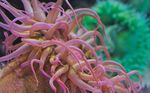
At first glance, a sea anemone doesn’t seem much like a human. It’s a creature from the tidal zone, affixed to the rock or coral below, and without most of the anatomical features associated with humankind: It has no arms, legs, ears, eyes, or nose. It almost seems more like a plant than an animal. Anemones don’t even have a brain; instead their nerves form a network distributed throughout the body; each nerve cell can communicate with its neighbors, but no central structure controls the entire organism. But a study published last month shows that anemones share one trait with humans: They, like us, are susceptible to jet lag. Like humans, anemones have a strong circadian rhythm, an activity cycle kept on a roughly 24-hour period by built-in biological clocks.
more from Dave Munger at Seed here.