
August 09, 2010
'The Thing Itself' : A Sci-Fi Archaeology
Mid-way through H.G.Wells’ The Time Machine, the protagonist stumbles into a sprawling abandoned museum. Sweeping the dust off ancient relics he ponders his machine's ability to hasten their decay. It is at this point that The Time Traveller has an astounding revelation. The museum is filled with artefacts not from his past, but from his own future: The Time Traveller is surrounded by relics whose potential to speak slipped away with the civilisation that created them.
Having bypassed the normal laws of causality The Time Traveller is doomed to inhabit strands of history plucked from time's grander web. Unable to grasp a people’s history – the conditions that determine them – one will always misunderstand them.
Archaeology derives from the Greek word arche, which literally means the moment of arising. Aristotle foregrounded the meaning of arche as the element or principle of a Thing, which although indemonstrable and intangible in Itself, provides the conditions of the possibility of that Thing. In a sense, archaeology is as much about the present instant, as it is about the fragmentary past. We work on what remains through the artefacts that make it into our museums, our senses and even our language. But to re-energise those artefacts, to bring them back to life, the tools we have access to do much of the speaking.
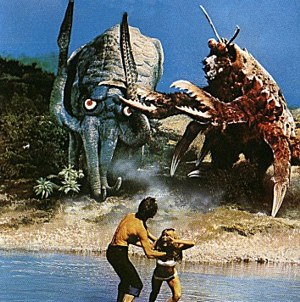
Like the unseen civilisations of H.G.Wells’ museum, these Things in Themselves lurk beyond the veil of our perceptions. It is the world in and of Itself; the Thing as it exists distinct from perceptions, from emotions, sensations, from all phenomenon, that sets the conditions of the world available to those senses. Perceiving the world, sweeping dust away from the objects around us, is a constant act of archaeology.
Kant called this veiled reality the noumenon, a label he interchanged with The-Thing-Itself (Ding an Sich). That which truly underlies what one may only infer through the senses. For Kant, and many philosophers that followed, The Thing Itself is impossible to grasp directly. The senses we use to search the world also wrap that world in a cloudy haze of perceptions, misconceptions and untrustworthy phenomena.
In another science fiction classic, Polish writer Stanislaw Lem considered the problem of The Thing Itself as one of communication. His Master’s Voice (HMV), written at the height of The Cold War, tells the story of a team of scientists and their attempts to decipher an ancient, alien message transmitted on the neutrino static streaming from a distant star. The protagonist of this tale, one Peter Hogarth, recounts the failed attempts at translation with a knowing, deeply considered cynicism. To Peter, and to Stanislaw Lem himself, true contact with an alien intelligence is an absolute impossibility:
“In the course of my work... I began to suspect that the ‘letter from the stars’ was, for us who attempted to decipher it, a kind of psychological association test, a particularly complex Rorschach test. For as a subject, believing he sees in the coloured blotches angels or birds of ill omen, in reality fills in the vagueness of the thing shown with what is ‘on his mind’, so did we attempt, behind the veil of incomprehensible signs, to discern the presence of what lay, first and foremost, within ourselves.”
Stanislaw Lem, His Master's Voice
In HMV and Lem’s better known novel, Solaris, the conviction that an absolute true reality exists under the dust of perception leads humanity down ever more winding labyrinths of its own psyche. For Stanislaw Lem the human mind exists in a perpetual state of archaeology, turning away from Itself in search of truth, but time and again finding Itself confronted as the very Thing that underlies the reality it is trying to decipher.
To transcend phenomena, to clear away the dust, one must, according to Kant, think. Thus his Thing Itself, derives from the Greek for 'thought-of' (nooúmenon) and further implies the concept of the mind (nous). Kant’s Thing Itself is accessed through pure thought. A clear enough mind, devoid of the bodily shackles of pain, pleasure or emotion, might see without seeing, sweeping away the perceptual cobwebs by guile alone. What Plato referred to as the only immortal part of the human soul, reason, becomes through Kant the dominant principle by which The Thing Itself may be reached.
In the short space I have allotted myself here, I have not the time, or the guile, to fully analyse the Kantian noumenon. Needles to say, countless thinkers, from Nietzsche to Wittgenstein, Hegel to Agamben, have grappled with the suppositions and presuppositions made to cohere and then crumble by Kant’s addiction to reason. What interests me about science fiction, and most readily about the works of Wells and Lem, is the attempt made to search for 'The Thing Itself' beyond the mind; beyond the human altogether.
Science fiction allows the creation of an imaginary set of conditions by which the human being may break their most burdonsome shackle: their own mind. Human timescales, bodies, forms of thinking and perception: each of these must be circumvented if one is ever able to grasp The Thing Itself. Kant’s principle of noumenon embodies a discourse on the limits of perception that has remained relevant to philosophy for millenia. The paradox of the archaeology – the arising – of an underlying reality is the defining principle of a thousand sci-fi tales.
For Stanislaw Lem our limitations become obvious once we are confronted with the existence of an intelligence which is not human. Lem’s novels seek to connect us with the absolute ‘other’: that most alien of Things, ourselves. Reality, for Lem at least, is composed in an indecipherable language. Humanity lives in an eternal stasis, unable to circum-navigate the new realities it constantly 'discovers' for itself. And in the end we find ourselves limited by the brains that think us, unable to distinguish the twinkle-twinkle from the little star:
“There exist, speaking in the most general way, two kinds of language known to us. There are ordinary languages, which man makes use of – and the languages not made by man. In such language organisms speak to organisms. I have in mind the so called genetic code. This code is not a variety of natural language, because it not only contains information about the structure of the organism, but also is able, by itself, to transform that information into the very organism. The code, then, is acultural...
Now to go straight to the heart of the matter, we begin to suspect that an ‘acultural language’ is something more or less like Kant’s ‘Thing-in-itself’. One can fully grasp neither the code nor the thing.”
Stanislaw Lem, His Master's Voice
Posted by Daniel Rourke at 12:05 AM | Permalink
TrackBack
TrackBack URL for this entry: http://www.typepad.com/services/trackback/6a00d8341c562c53ef0133f2de53d6970b
Listed below are links to weblogs that reference 'The Thing Itself' : A Sci-Fi Archaeology:


Comments
Daniel, I like your link between sci-fi and the 'beyond', for more reasons than simply (though not least) that your take on this elusive beyond is non-trivial. Would seem to be a logical connection, no? I wonder, however, if just this risk of rendering it contrived, might be what prevents others from exposing a link whose acknowledgment is (long) overdue. (Or maybe I’m not well-read in this area – very likely, in fact!) Your ideas of a contingent archaeology and its ongoing, inevitable renewal reverberate some of Deleuze’s theories of the plane of immanence (esp in ‘What is Philosophy?’) and of the conditions for creative production (esp w/Guattari in ‘A Thousand Plateaus’). It seems you’ve incorporated/referenced them in your writing previously, so I won’t re-’serve’ what you might understand even better than I do! Taken with your ideas of sci-fi as a possible ‘coagulated’ beyond, D&G’s ideas of becoming-being vis-à-vis the noumenon seem to excavate (in the spirit of your archaeological theme) a similar ‘beyond’ that on the one hand, respects the potential plenitude of an ostensible tabula rasa, and on the other hand, makes the Kantian impasse of venturing beyond-mind a bit less impossible.
Thanks for this piece. I enjoyed the read.
Posted by: juli | Aug 9, 2010 7:07:26 AM
Thanks for the great comment. Lots to think about.
I must get back to D&G, it's been a while. I've had my head deep in other writers, most especially Michel Serres and Bruno Latour. Their insistence on a world free from nature/culture distinctions does fishtail with some of the work of D&G, but for what it's worth, I think Stanislaw Lem does a better job of capturing their philosophy (even though his work pre-dates much of theirs by 20-30 years).
If you are interested in following this discussion further, this article was re-published at io9.com (a popular science and sci-fi blog). Let the debate rage onwards!
Posted by: Daniel Rourke | Aug 10, 2010 9:45:17 AM
So far, pre-dating has yet to occlude subsequent theoretical intercourse, and not least with sci-fi writers, whom I think we naturally expect (how about an oxymoron?) to pre-date the over-complicated drawl of citation-laden academia. :) To be fair, though, I think that creative pieces gestate in a perpetual penchant for play to which ‘scholars’ seem (intentionally) allergic; so writers like Lem are able to enact prescient discourse that critical theory glimpses at those select moments it dares to be poetic.
I like 'fishtail', what indeed they appear to do (or favour doing, anyhow) w/D&G's work! Though have never read Serres closely, but Latour - his Aramis takes the cake for me.
Thanks for the link to i09. I like the idea of facilitating a hit-field elsewhere!
Posted by: juli | Aug 12, 2010 9:00:02 AM
Having just read The Time Machine, I think I was struck more by the images of nature than I was of the Eloi and Morlocks. The future races had lost the knowledge to control fire and were amazed and frightened in equal amounts by the traveller's matches. He himself then managed to lose control of them setting fire to the forest, whilst Weena also got swept away by quite a placid river.
The change from day to night (which was brilliantly captured in the short cartoon playing before Toy Story 3) also brings about significant events in the story, while the much neglected latter part in the distant future also focuses heavily on the unmoving sun and change in breathable atmosphere.
In fact, the only evidence that the Time Traveller brings back to the present, aside from his unbelievable tale and a few scratches, are two wilted flowers.
I don't really know much about the literary figures you're quoting above, but much before the latter-day green movements, to me the story says more about how we can try and fail to harness the elemental forces, stressing that they are the only things that were here before us and will be here after we have gone.
elixirix
Posted by: elixirix | Aug 15, 2010 8:56:09 AM
Isn't the point of the comparison gleaned from SciFi the opposite of the one you say? Don't alien races and futures give us a comparison by which we can perhaps be reminded of just how connected we are to our current reality, how we do understand and comprehend things.
The alien object does not tell us what all objects are like. It gives us a comparison where we might realize what a complex and certain relationship we have with objects that are not alien.
This talk of the thing itself makes it look like the layers of human meaning cover something more meaningful, when they are obviously the only meaning anything has. It is such an odd way of talking about things - that makes it look like the only relationship we have is an inferior one. But "inferior" here has zero meaning, because there is absolutely nothing with which to compare. Life is like this, reality is like this, it is as solid and we are as connected to it as it is and we are.
Posted by: Tom Henry | Aug 20, 2010 12:43:34 PM
Thanks for your comments, and apologies for my late response.
elixirix: I definitely agree. Time, on the grander scale (nature?), has little relationship to time at the human scale. H.G. Wells was writing only a few decades after Darwin had rocked the establishment. It was understanding Earth as a geologic entity that finally convinced Darwin, and then the world, that it was old enough for beings like us to emerge from beings like bacteria. Interesting then that Wells chose a post-human world where bacteria (and all microbial life) had become extinct.
The time traveller remarks that the decay of the museum would be far greater were it not for this fact. Nature then is the great survivor, but also is something that could be altered irrevicably even at human timescales.
Your label then for 'elemental forces' is actually an umbrella term for two, distinct but related, effects:
As you suggest, Wells seems to wield tremendous fore-thought with regard these two distinctions. In truth, I think even our modern understanding of the 2nd realm is far from complete.
Tom Henry: I agree with you if 'reality' is just the thing that surfaces through language. Then perhaps all 'reality' is is an emergent property of that language (and our culture).
I think that 'meaning' is only comprehensible as a human Thing. Where I don't agree with you is that that is all there is. What sci-fi does well is wrap human concerns in a fiction that refers beyond the human. Thus 'Things' get split into two camps. Whereas in one our language is capable of grasping at Things (it might even construct Them in their entirety), in the other language becomes only a barrier to truly considering those Things.
In a sense I think we believe the same Thing about the world. My interest lies in asking the question:
...and considering that the process of asking that question might be more interesting than any possible answer one might find.
Posted by: Daniel Rourke | Aug 23, 2010 7:56:36 AM
Post a comment