| ABOUT US | ARCHIVES | LINKS | RSS FEED | MONDAYS | |

3quarksdaily

An Eclectic Digest of Science, Art and Literature

« White Fright: Glenn Beck's Large, Vague, Moist, and Undirected Rally—the Waterworld of White Self-Pity | Main | Steven Gubser on String Theory »

August 31, 2010

The Secret History of Psychedelic Psychiatry

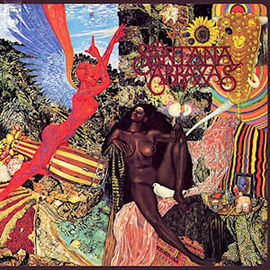
270px-SantanaAbraxasMo over at Neurophilosophy:

ON August 15th, 1951, an outbreak of hallucinations, panic attacks and psychotic episodes swept through the town of Saint-Pont-Esprit in southern France, hospitalizing dozens of its inhabitants and leaving five people dead. Doctors concluded that the incident occurred because bread in one of the town's bakeries had been contaminated with ergot, a toxic fungus that grows on rye. But according to investigative journalist Hank Albarelli, the CIA had actually dosed the bread with d-lysergic acid diethylamide-25 (LSD), an extremely potent hallucinogenic drug derived from ergot, as part of a mind control research project.

Although we may never learn the truth behind the events at Saint-Pont-Esprit, it is now well known that the United States Army experimented with LSD on willing and unwilling military personnel and civilians. Less well known is the work of a group of psychiatrists working in the Canadian province of Saskatchewan, who pioneered the use of LSD as a treatment for alcoholism, and claimed that it produced unprecedented rates of recovery. Their findings were soon brushed under the carpet, however, and research into the potential therapeutic effects of psychedelics was abruptly halted in the late 1960s, leaving a promising avenue of research unexplored for some 40 years.

The secret history of psychedelic psychiatry began in the early 1950s, about 10 years after Albert Hofmann discovered the hallucinogenic properties of LSD, and lasted until 1970. It was uncovered by medical historian Erika Dyck, who examined the archives from Canadian mental health researchers and conducted interviews with some of the psychiatrists, patients and nurses involved in the early LSD trials. Dyck's work shows early LSD experimentation in a new light, as a fruitful branch of mainstream psychiatric research: it redefined alcoholism as a disease that could be cured and played a role in the psychopharmacological revolution which radically transformed psychiatry. But, despite some encouraging results, it was cut short prematurely.

Posted by Robin Varghese at 12:52 PM | Permalink

Comments

Sign me up!

Posted by: odysseus14 | Aug 31, 2010 3:20:36 PM

Me, too!

Posted by: Alice de Tocqueville | Sep 1, 2010 12:28:04 AM

Post a comment


Subscribe to this blog's feed  

PayAnywhere with iphone credit card swiper

Android Tablet

Bluetooth Headset

2013 New Style Dresses

Compare Car Rental Prices

DHgate.com Wholesale

3QD on Facebook

3QD on Kindle

3QD by Daily Email

Receive all blogposts at the same time every day.

Enter your Email:


Preview 3QD Email

3QD on Twitter

Miscellany

Lijit Search

AddThis Social Bookmark Button

Add to Google

Recent Comments

SteveRR on Daniel Dennett's seven tools for thinking

jo smith on Mohsin Hamid: 'Islam is not a monolith'

Grace on Daniel Dennett's seven tools for thinking

Elatia Harris on Daniel Dennett's seven tools for thinking

Abbas Raza on Daniel Dennett's seven tools for thinking

Jonathan on Daniel Dennett's seven tools for thinking

Bill on Daniel Dennett's seven tools for thinking

Louise Gordon on The need for critical science journalism

omar on Mohsin Hamid: 'Islam is not a monolith'

Jonathan on Daniel Dennett's seven tools for thinking

Bill on Daniel Dennett's seven tools for thinking

jo smith on Mohsin Hamid: 'Islam is not a monolith'

carlos on Daniel Dennett's seven tools for thinking

freddie on Daniel Dennett's seven tools for thinking

Eli on "Everybody Hurts" by Sachal Studios, Lahore, Pakistan

Jalees Rehman on The need for critical science journalism

Dredd on Why Rational People Buy Into Conspiracy Theories

Dredd on Why Rational People Buy Into Conspiracy Theories

Scrutineer on Why race as a biological construct matters

prasad on the culture animal

Mitt Romney's Dog on Why race as a biological construct matters

Elatia Harris on The Moral Status of Rocks

prasad on The Moral Status of Rocks

Raza Husain on The Moral Status of Rocks

Fred on Unknown Mathematician Proves Elusive Property of Prime Numbers

Acclaim For 3QD


"I couldn't tear myself away from 3 Quarks Daily, to the point of neglecting my work. Congratulations on this superb site."—Steven Pinker, Johnstone Professor of Psychology, Harvard University.

"I have placed 3 Quarks Daily at the head of my list of web bookmarks."—Richard Dawkins, Charles Simonyi Professor of the Public Understanding of Science at Oxford University.

"Just wanted you to know I’m one of many who reads and enjoys 3 Quarks....almost daily."—David Byrne, musician, former lead-singer of the Talking Heads, artist, intellectual.

Read more here.

The 3QD Prizes

Subscribe to this blog's feed