
| ABOUT US | ARCHIVES | LINKS | RSS FEED | MONDAYS | |

3quarksdaily

An Eclectic Digest of Science, Art and Literature

« Of Ants and Men (part 1) | Main | life without incandescence »

August 02, 2010

Brave New World?

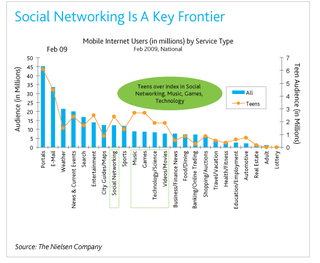
Screen shot 2010-07-27 at 1.36.54 PM Recently, my husband received an email from a very casual acquaintance and wondered where this person lived. He Googled them, found their address and was presented, by Google Street view, with a picture of their house, and all within the space of 2 minutes. This exercise caused me to comment to him, "it must be really different dating these days" - we've been together 15 years - "it's so much harder for anyone to lie anymore." I think about the tall tales I was told during my dating years, and that doesn't include the stories I didn't come to realize were exaggerations, at the very least. But now, you can Google someone and find out where they work, their political affiliation, see photos of their house, maybe their wife and kids! And that's before you follow them on Twitter or friend them on Facebook.

It is true that human beings will always manage to adapt their behavior somewhat to the new technological circumstances, and I imagine that this new potential transparency doesn’t mean that men and women no longer lie about aspects of their lives on dates (or at any other time). However,  I think it’s also true that the next generation will grow up in a world that is a radically different social experience. Whether its dating, working, college acceptance or friendship, the internet and social media are changing everything. It is now almost a given that part of a job interview process (and in some cases a college interview process) will include a review of an applicant’s digital profile. This raises the issue of digital memory; the web forgets nothing, no matter how much you want it to. The New York Times ran a piece recently about this very issue and nascent attempts to address this using, amongst other tools, an expiration date for certain digital content. Even if some of these methods are implemented, there is no doubt that our children are growing up in a world where it is increasingly difficult to run from a checkered past and remake a less than desirable reputation.

Will our children understand loneliness in the sense that previous generations did? In the world of texting, Facebook, Foursquare, etc., continuous connectivity to many other people is now the norm, however superficial these relationships may or may not be. If this kind of connectivity isn’t sufficient, there are various services, both paid and free, that are connecting people with new potential “friends”, or at least acquaintances: www.rentafriend.com, a relatively new service, allows users to do just that, rent a friend for an hour or so. Craigslist, long a means for people to connect for casual hookups, or to advertise a yard sale, also has a section called Strictly Platonic, which enables users to find someone to connect with for everything from phone chats regarding, “jobs, men, losing weight, goals we hope to accomplish”, to finding someone to go to the theater with.
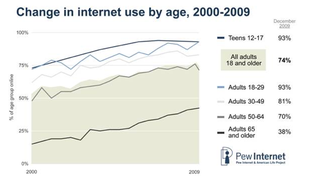
Screen shot 2010-07-27 at 1.38.39 PM I don’t want to debate the pros and cons of this new digitally facilitated connectivity. Apart from anything else, it just is what it is. This is the future that children are growing up in, and if anything, it is almost certainly only the tip of the iceberg.  Rather, the debate needs to be structured around what new life skills need to be taught in anticipation of this digital social revolution. I've written before about the importance of teaching children how to use social media safely and about maintaining their digital reputations. Perhaps, such a class should be part of every school’s curriculum, just as sex education should be. Children, even ones younger than teens, need to understand that it is likely that what they put out on the web today will follow them for many years, through college applications, job applications and dating.

We’re already seeing schools having to expand and refine their concepts of bullying to encompass and deal with digital bullying and this will only become more prevalent as the venues for social interaction grow in number and technological sophistication. Teaching children about plagiarism becomes a far murkier prospect when the web itself does not always have well-defined, or at least well respected, rules and protocols for attribution. If nothing else, the universe of available texts to copy and paste from is now so enormous that it is impossible for teachers to effectively police plagiarism in the way it was when it was pretty obvious that something had been lifted from one of the few standard textbooks. It is often not even clear what the original attribution of a text or graphic should be.

However, it’s not all doom and gloom and children need to understand the possibilities that are open to them; they can benefit from virtual college instruction; they never need to lose touch with a friend from high school (or anywhere); they can vet potential schools and employers just as they themselves can expected to be vetted, and of course so much more. They can be educated consumers, students, employees, charitable donators, homeowners. There really is nothing that can be bought today, at least in the Western world, that can’t be researched prior to purchase. Most restaurants have entries on sites such as Yelp, where other patrons can weigh in on their positive and negative experiences. Of course, all these opinions have to be taken with a grain of salt, but that’s really my point, children need to be taught how to do this.

There is so much information available on the Internet, that what children need to be taught, more than anything, is how to question information sources; how to critique the information presented to them. I’m not sure that this is something that most schools  have ever done well. I know that my children are being taught to bring an extremely critical eye to any information presented them; to question motivations and biases. But a public school curriculum, increasingly focused on “teaching to the test”, is necessarily devoting less time to this kind of critical thinking, not more. As we have had all too ample proof of very recently in the case of Shirley Sherrod and the NAACP video, on the Internet, it is particularly easy to see and read things out of context and draw incorrect conclusions. As they move into the digital arena at increasingly younger ages, it is more important than ever that children are taught to be critical, discriminating consumers of content and information.

As the digital world around them changes, at an almost dizzying pace, children and teens need to be equipped to manage their place in this world, whether it’s maintaining the integrity of their digital reputation or learning how to filter and critique the deluge of information available to them. Given how technophobic, or at the very least, techno-ignorant, so many adults are, I don’t think that parents alone can be entrusted with this task; it has to be front and center in a elementary through high school education. This is really the only way to properly equip our children to deal with this Brave New World.

Posted by Sarah Firisen at 08:18 AM | Permalink

Comments

Much has been added to school agendas, but no more hours weeks, days in which to cram it all.

Please, not one more thing for schools to add to their curriculum. So much social education (sex ed, no bullying, consumer ed., computer literacy, and so on) has already made it nearly impossible to have adequate time to teach school's traditonal material: reading, writing, math, science. Not to mention neither time nor $$ for arts, music, physical education. Wher will dollars & time come from??


Posted by: Marian | Aug 2, 2010 12:21:35 PM

Your opinions are old and dated. The new generation of young internet savvy children will define their own rules and relationship with the internet.

Posted by: smiles | Aug 2, 2010 3:15:08 PM

If every word you write and every picture you take and post to the internet may be scrutinized by potential employers, tenure review committees, law enforcement officials and credit rating agencies, not to mention prospective spouses for all time, then it is obviously foolhardy to post anything at all.

Posted by: J.Hawkins | Aug 2, 2010 3:36:44 PM

Love the post - great observations - not just for the schools and the children but for everyone.

The new socialised world will be complex, will be difficult to navigate and will require an entirely new set of skills than the world we were brought up with. Whereas in the past we valued individual knowledge, I wonder if in the future we won't instead value the ability to connect with people and cultivate an collaborative knowledge store that can be leveraged to drive value (in whatever form that needs to happen)

Does the threat of full transparency mean that you can/should no longer post anything? Absolutely not - in the new world, having nothing online is just as bad as having damaging information - rather the skill set for managing what's shown and how it's shown will need to be developed.

Keep up the great posts!

Best Regards

Boris Pluskowski
http://www.completeinnovator.com

Posted by: Boris Pluskowski | Aug 2, 2010 4:04:50 PM

"in the new world, having nothing online is just as bad as having damaging information"

If all our lives must become open books then privacy is truly dead.

Posted by: J.Hawkins | Aug 2, 2010 4:19:50 PM

"Will our children know loneliness?" Um, yes of course they will. The age of the internet offers people shallower connections, not better ones. It actually creates loneliness rather than alleviates it. All it offers is a facade, an illusion of being surrounded by "friends." But all it really offers is the ability to be surrounded by more shallow acquaintanceships, which in the end are hollow, leaving people craving intimacy even more, or worse--not being able to handle with it.

Posted by: Yawn | Aug 2, 2010 5:51:25 PM

"If every word you write and every picture you take and post to the internet may be scrutinized by potential employers, tenure review committees, law enforcement officials and credit rating agencies, not to mention prospective spouses for all time, then it is obviously foolhardy to post anything at all."

Au contraire. Everyone should post something inappropriate as soon as possible. If everybody immediately did something transgressive on the Internet, even mildly so, then they couldn't single anybody out and pick us off one by one, pitting us against each other, preventing our social bonding, cutting off our potential. So, if you like being free even just a little bit, do the opposite of the party line, find a little courage and preemptively neutralize their "advantage" in exercising social control over us. (It's fun, it's over in a second, and then you're free of this ridiculous burden they want you to bear in addition to all of the others.)

Posted by: Frances Madeson | Aug 2, 2010 5:58:44 PM

The author comes to an interesting conclusion...that parents cannot be trusted to provide their children with the proper tools for the coming digital world. Personally, I don't think it has so much to do with parents (or teachers) possessing advanced knowledge of such things, than with parents being present with their children and their digital activities. Does the author believe that a teacher can be more present than a parent, I wonder? My solution has been to place our one and only computer in the middle of the house where one's activities must be shared. The result has been that learning to navigate the rapidly-changing cyber-world has been a mutual endeavor--I learn as much from my children as they from me, and an on-going conversation about it is the norm. Certainly this is a hundred times more expedient on so many levels than any public school experience could be.

Posted by: lambness | Aug 3, 2010 11:03:46 AM

@Yawn: Spot on.

Posted by: modefier | Aug 5, 2010 8:54:04 PM

Post a comment


Subscribe to this blog's feed  

Nominations Now Open

3QD ADVERTISING

Find the best prices on Las Vegas Show Tickets at Best of Vegas and Orlando Theme Parks at Best of Orlando!

3QD on Facebook

3QD on Kindle

3QD by Daily Email

Receive all blogposts at the same time every day.

Enter your Email:


Preview 3QD Email

3QD on Twitter

Miscellany

Lijit Search

AddThis Social Bookmark Button

Add to Google

Recent Comments

Gordon on Jonathan Haidt Decodes the Tribal Psychology of Politics

fa on Gish Jen to Judge 3rd Annual 3QD Arts & Literature Prize

Elatia Harris on Smells (and the people who write about them)

rjm on Gish Jen to Judge 3rd Annual 3QD Arts & Literature Prize

Rohan Maitzen on Gish Jen to Judge 3rd Annual 3QD Arts & Literature Prize

ray Butlers on Tax Justice: The Next Great American Movement

Pepito on Becoming Condoleezza Rice

Jaya Aninda Chatterjee on Gish Jen to Judge 3rd Annual 3QD Arts & Literature Prize

Steve on Becoming Condoleezza Rice

ed rackley on That's not music – that's just noise!

Philosopher's Beard on Gish Jen to Judge 3rd Annual 3QD Arts & Literature Prize

DS on Gish Jen to Judge 3rd Annual 3QD Arts & Literature Prize

Michael Cunningham on Suicide as Scene and Spectacle: Notes on The Bridge and Aokigahara - Suicide Forest

Bilal Tanweer on Gish Jen to Judge 3rd Annual 3QD Arts & Literature Prize

Nithin on Gish Jen to Judge 3rd Annual 3QD Arts & Literature Prize

omar on Learning Urdu

Ankur on Learning Urdu

hairlessOrphan on That's not music – that's just noise!

Namit on Gish Jen to Judge 3rd Annual 3QD Arts & Literature Prize

hairlessOrphan on That's not music – that's just noise!

Ankur on Learning Urdu

Frank on Smells (and the people who write about them)

Nick Smyth on That's not music – that's just noise!

Jeff Strabone on Tax Justice: The Next Great American Movement

panopticonopolis on Tax Justice: The Next Great American Movement

Acclaim For 3QD


"I couldn't tear myself away from 3 Quarks Daily, to the point of neglecting my work. Congratulations on this superb site."—Steven Pinker, Johnstone Professor of Psychology, Harvard University.

"I have placed 3 Quarks Daily at the head of my list of web bookmarks."—Richard Dawkins, Charles Simonyi Professor of the Public Understanding of Science at Oxford University.

"Just wanted you to know I’m one of many who reads and enjoys 3 Quarks....almost daily."—David Byrne, musician, former lead-singer of the Talking Heads, artist, intellectual.

Read more here.

The 3QD Prizes

Subscribe to this blog's feed