
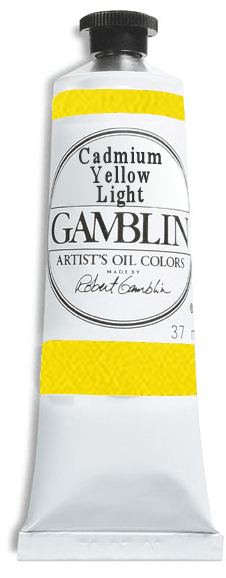
I had reason to think of this last month when McDonalds recalled over 13 million Shrek-themed drinking glasses after discovering in them high levels of cadmium, element forty-eight. Cadmium can undoubtedly be one of the most beautiful elements—it has a long history in art as a pigment, and helped old masters produce vibrant colors no other substances of the time could. Even today, some shades—like cadmium yellow—retain the name.
But as the famous biologist Edward O. Wilson once said “In the natural world, beautiful usually means deadly.” Wilson was referring to how the brightest colored snakes, frogs, and insects usually harbor the deadliest venoms. But his wisdom applies equally well to the periodic table. Cadmium is one of the more poisonous elements on the table, and has one of its most notorious histories. Yet we keep making the same mistakes with it again and again. In fact, the first widespread recall of consumer goods with cadmium also involved drinking glasses. (Plus ça change…)
Cadmium sits below zinc on the periodic table, which means pure cadmium looks and acts like zinc, including having the same shiny finish as zinc. So, in the 1940s, some manufacturers decided to plate drinking glasses with cadmium and sell them in department stores.
This was bad enough—some atoms of cadmium would naturally slough off every time somebody filled the glass—but became a big problem when summer rolled around and people began drinking fruit juices like lemonade. These acidic juices scraped cadmium atoms off the cup’s surface in droves, and people around America fell ill with intense pain and diarrhea. McDonalds didn’t line its Shrek glasses with cadmium—it was used in the brightly colored paints on the outside, calculated to attract children’s attentions. But in recalling the line, the fast-food company cited the same fear of children ingesting cadmium while they drank.
There are restrictions on the use of cadmium in toys, but not many. And there are plenty of other chances, for children and adults, to be exposed to cadmium on a daily basis. Besides paints, cadmium finds widespread use in batteries and as a rust-proof lining in electronics. These uses for element forty-eight have declined recently, but certainly haven’t stopped, and many old cadmium-rich electronic items still lie around in offices and garages today. Shortly after 9/11, some public health officials suggested the lung ailments that rescue workers at Ground Zero developed might be traced to cadmium, since computers and other electronics were vaporized when the twin towers fell. Their troubles were traced to smoke and dust inhalation instead, but workers tested for the element did have elevated levels. And it’s telling how quickly the officials fingered cadmium as the culprit, because the danger persists.
For whatever reason, the United States is much more nonchalant about cadmium than other gorgeous poisons. We don’t tolerate mercury, that alluring liquid metal, in fish or consumer goods like thermometers any more. And we severely restrict the use of another element with a history strikingly similar to cadmium. Lead also makes bright paints, and it has many uses in electronics, like solder. It’s also, of course, quite harmful, especially to children, who show impaired mental development after exposure to lead. (Coincidentally, McDonalds has also faced problems with lead in its toys—the recall of 100,000 Chicago Bears bobblehead dolls in 2002.)
But while lead paint and lead gasoline have disappeared from the consumer market, cadmium has faced no such backlash. Indeed, there’s almost no discussion of it, despite repeated recalls of consumer goods with cadmium in the past year and the availability of alternatives, like lithium batteries, for many applications. The European Union recently banned cadmium in all electronics, and it might behoove the U.S. to do something similar, and to further restrict its use in toys and dishes. Unlike with brightly colored snakes, people unfortunately don’t have an inborn, instinctual fear of beautiful elements like cadmium. That doesn’t mean they’re not as deadly.