
Blame the Victims and Make Them Feel Guilty – Part 2
Part 1 of “Blame the Victims and Make Them Feel Guilty” can be found HERE.
{Synopsis of Part 1}
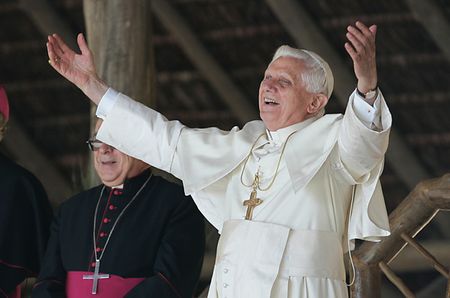
Benedict XVI, Supreme Pontiff of the Catholic Church, visited the United States in April of 2008. He addressed the sexual abuse of children in the American Catholic Church, but never once, in his public homily at The Nationals Stadium in Washington, D. C., did he say or indicate that the abuse was committed by members of the clergy and religious congregations.
Two months later, George Weigel, Catholic theologian, public intellectual, and official biographer of Pope John Paul II, gave an interview on Book TV's “In Depth,” aired on C-SPAN 2.
“I was not so much disappointed with Weigel, as bewildered by his complete lack of understanding the nature and consequences of child sex abuse; he does not understand what is involved in treating victims of child sex crimes; and he doesn't have any semblance of insight into the psychology of the perpetrators of child sex crimes.”
Weigel failed to see that what he calls, “grave errors of judgment,” and “irresponsibility” on the part of many bishops “…are really manifestations of criminal behavior, psychopathy, behavioral and mental disorders, narcissism, selfishness, a sociopath's belief that rules don't apply to them, sinful disregard for the spiritual well being of the faithful, sinful failure as shepherds who should protect their flock from harm, and pure self interest.”
He goes on to say, with little subtlety, that victims of clergy sex abuse are crippling the Catholic Church in America, driving it toward bankruptcy, and will bring about the end of all catholic education, hospitals, and social programs in the United States. The victims may very well end up burdening the U. S. tax payers with huge social costs or may cause national social programs to reduce services.
George Weigel doesn't stop there. He burdens the victims with more guilt, because they are helping their undeserving attorneys get rich. He would like victims to feel guilty about using the U. S. civil tort justice system, in order to get compensation for their losses. He says the victims are using an unfair justice system that doesn't work because citizen juries (the conscience of the court) do not work. He suggests that it is typical for millions of dollars to be awarded for frivolous claims, and cites a complete untruth and fabrication to support his view.
Weigel makes a not-too-veiled and sickening proposal that some victims may not be worth the money, and shouldn't get a monetary damage award, if society determines that they are so damaged they can't be 'fixed' by a monetary judgment.
I did not say this in Part 1, but I say it here: Weigel seemed to me to prefer that the Church efforts, particularly financial, to help victims should be reserved for those who still love the Church. In my view, this is offering help only to those who pass a loyalty test, and discards those so ravaged by the clergy that they lost their faith in the Church and in their religion. The most severely injured get the least help – maybe none.
The Crisis of Clergy Sex Abuse of Minors is Over?
Let's look at what George Weigel has to say about the current state of clergy sex abuse in the Catholic Church. This is from an interview with the Italian publication, La Stampa, April 4, 2010.
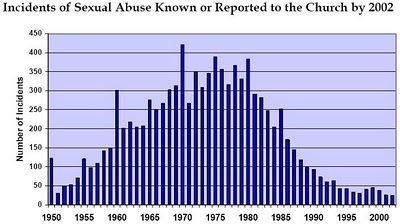
In 2002, the press did an important job of bringing to light situations of clerical sexual abuse and some bishops' mishandling of that abuse that had too long been hidden. The Church, which had begun to address these problems seriously in the early 1990s, then accelerated its efforts to discipline abusers and to create safe environments for young people throughout American Catholicism. Those measures have worked. [Emphasis mine] There are 68 million Catholics in the United States, and there were only six credible reports of the sexual abuse of a young person in the Church last year; [Emphasis mine] that is, of course, six too many, but it completely falsifies the picture the press has painted of an ongoing crisis of sexual abuse and cover-up in the Catholic Church in the U.S.
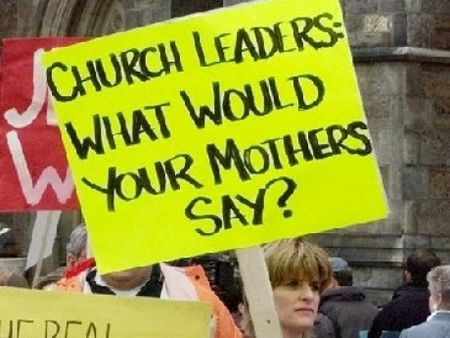
It is impossible to overstate the effectiveness of the press “in bringing to light” the horrors of clergy sex abuse in the Catholic Church, and the attending despicable behavior of the Church management. Weigel acknowledges this, which makes his second sentence peculiarly out of place and contradictory. What is a fact is that anything done by the Church to address these problems, properly, was as a direct result of the action of victims, their supporters, their advocates, Government prosecutors, and the press. To the extent that “Those measures have worked,” it was because the pastors, bishops and Cardinals were dragged by their heels, kicking and screaming, to account for themselves and to do what was proper for the victims.
Weigel has a good number of facts and statistics at his disposal to support his claim that the Catholic Church in America, today, is the safest place for children, compared to any institution of its kind. “[T]here were only six credible reports of the sexual abuse of a young person in the Church last year [in 2009.]” This is welcomed news and should be celebrated, as far as it goes. The Church can take little credit for this, in referring to its own initiatives. Let's ask a few questions about this statistic.
What would be the number of credible cases, today, if victims, their supporters, their advocates, prosecutors, and the press did not mount a courageous, persistent, and costly battle with the Church for last thirty years? Would this low rate of reports of clergy sex abuse continue without the pressure from victims, their supporters, their advocates, the prosecutors and the press?
How much has the harassment and continued abuse of victims, by aggressive lawyers for the Catholic Church in America, contributed to the low numbers of reports of clergy sex abuse of minors?
What about the remaining 90 percent of victims of sex crimes who do not report what happened to them? What is the estimate of non-reporting victims who will develop PTSD and/or serious symptoms later in life? How many will recover repressed memories much later in their lives? What pastoral care, promised by the Pope, is offered or given to these victims? What pastoral care, promised by the Pope, is offered to victims who cannot find relief in criminal or civil courts because of statutes of limitation?
Now that there is a lessening of new reports, what Church resources will be devoted to the healing, recovery, and integration of survivors? Will the Church in America help all victims find justice, and end the Church's lobbying against removal of statutes of limitation? If statutes of limitation are not eliminated, what will the Church in America do to help those victims find justice?
Does the Church in America see that there is an ongoing crisis, at many levels, for victims of clergy sex abuse?

The Dallas Charter – Done Deal?
From La Stampa:
Cardinal Ratzinger's support of the bishops of the U.S. in their post-2002 efforts to put this awful problem behind us was a large part of the U. S. bishops' success.
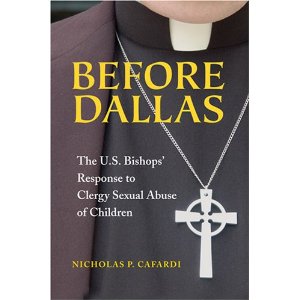
As I stated above, to refer to this as a success for the bishops is ludicrous. The anchoring event in 2002 is the adoption of guidelines for dealing with clergy sex abuse. These guidelines were adopted by the United States Conference of Catholic Bishops (USCCB), in their annual meeting in Dallas, TX. This has become known as the Dallas Charter. To quote from the Dallas charter:
The Charter for the Protection of Children and Young People is a comprehensive set of procedures established by the USCCB in June 2002 for addressing allegations of sexual abuse of minors by Catholic clergy. The Charter also includes guidelines for reconciliation, healing, accountability, and prevention of future acts of abuse.
The Charter directs action in all the following matters:
Creating a safe environment for children and young people
Healing and reconciliation of victims and survivors
Making prompt and effective response to allegations
Cooperating with civil authorities
Disciplining offenders
Providing for means of accountability for the future to ensure the problem continues to be effectively dealt with through a national Secretariat of Child and Youth Protection and a National Review Board
The Charter is a great document. I agree with Weigel when he says the guidelines are unparalleled in their seriousness compared against guidelines of any comparable institution. I encourage people to read it.
Scanning the guidelines, you might ask yourself why, for almost 20 years, the United States Conference of Catholic Bishops (USCCB) refused to adopt the same guidelines when presented to the USCCB by Fr. Thomas Doyle and others. There is an account of this in the book “Sex, Priests, and Secret Codes: The Catholic Church's 2,000-Year Paper Trail of Sexual Abuse,” by Thomas P. Doyle, A. W. R. Sipe, and Patrick J. Wall, (2009), Volt Press. The USCCB made an outcast of Fr. Doyle over his proposal of guidelines, and bishops were advised to shun him. In 2002, they adopted his guidelines, but, uncharitably, made no RECONCILIATION (their word, not mine) with Fr. Doyle, gave him no credit, and initiated no rehabilitation of his name among the bishops.
If they are excellent, you might ask yourself why they are still voluntary, and not mandatory. Weigel likes to refer to the implementation of the Dallas Charter. The bishops have not implemented anything. The Dallas Charter is a voluntary, optional, non-compulsory set of guidelines for the bishops and Cardinals of the Church in America to consider. At what point do we stop trying to praise little progress, and stop talking about the bishops' success. As long as the Dallas Charter is optional, there is no taking the USCCB seriously. Then ask yourself why the guidelines apply to priests and not to bishops.
The Charter calls for the establishment of specific programs and responsibilities for the dioceses. Additionally, it prescribes a regular auditing of these programs and responsibilities. Sound good? So far, yes. Some dioceses, while voluntarily adopting these optional guidelines, have objected to, and blocked, comprehensive auditing of programs and responsibilities. They would allow only the auditing of the existence of the programs and responsibilities. They did not allow an audit of performance outcomes. Translation: Is any good being done in the diocese? Answer: We will never know. Still sound good? I think not.
Bishops Dragged Kicking and Screaming
Let's get back to Weigel's lauding of Cardinal Ratzinger, who was named Prefect of the Congregation for Doctrine of the Faith (CDF, and formerly the Holy Office) by Pope John Paul II in 1981. The Prefect made CDF the repository and clearing house for all matters of clergy sex abuse of minors in the Catholic Church. Ratzinger was promoted to vice-dean of the College of Cardinals in 1998, and dean in 2002. Weigel says,
Cardinal Ratzinger's support of the bishops of the U. S. in their post-2002 efforts to put this awful problem behind us was a large part of the U. S. bishops' success.
I am very fond of the image of the bishops being dragged to the table by their heels, all the while kicking and screaming. Where was Ratzinger's support of guidelines, for handling clergy sex abuse of minors, between 1981 and 2002? Had he acknowledged the work of Fr. Doyle and others in formulating the guidelines, proposing them to the USCCB, and eventually having his work adopted by the USCCB?
Can Weigel not see some manner of inequity? Can he not see the irony in the adoption of guidelines they rejected? Can he not be self-conscious about not speaking to Ratzinger's support of pre-2002 efforts by the USCCB? Can he not see that there would be no success for the bishops to claim as their own, if victims had not stood up the Church at great personal sacrifice? Can he not see that none of the victims, along with many Catholics who were not victims, can accept that “…this awful problem [is] behind us[?]”
We have to ask Weigel if this continued passive aggression, delay, stonewalling, blocking are the post-2002 efforts supported by Ratzinger. We have to ask why bishops who behaved in this way were not taken out of their job. Need we ask Weigel why these guidelines are only OPTIONAL guidelines?

Pope Benedict XVI Gives Marching Orders
As of this writing, the specific directives that Pope Benedict XVI gave his bishops for dealing with clergy sex abuse are, for the most part, exactly what was required. There are other matters that are not covered and should be covered, but here is what he told his bishops to do in the Pastoral Letter of the Holy Father Pope Benedict XVI to the Catholics of Ireland, March 19, 2010. Addressing the people of the Catholic Church in Ireland, he tells them what he expects the bishops to do.
…[T]he bishops will now…carry forward the work of repairing past injustices
…and confronting the broader issues associated with the abuse of minors in a way consonant with the demands of justice and the teachings of the Gospel.”
…
The Church in Ireland must first acknowledge before the Lord and before others the serious sins committed against defenceless children.
Such an acknowledgement, [must be] accompanied by sincere sorrow for the damage caused to these victims and their families[.]
Such an acknowledgement must lead to a concerted effort to ensure the protection of children from similar crimes in the future.”
…
Only decisive action carried out with complete honesty and transparency will restore the respect and good will of the Irish people towards the Church to which we have consecrated our lives.
…
“To priests and religious who have abused children… God’s justice summons us to give an account of [y}our actions and to conceal nothing. Openly acknowledge your guilt, submit yourselves to the demands of justice….“
The Pope addressed the bishops, directly, in 2006. The following is from the Address of His Holiness Benedict XVI to the Bishops of Ireland on Their Ad Limina Visit, October 28, 2006:
In your continuing efforts to deal effectively with this problem, it is important to establish the truth of what happened in the past,
…to take whatever steps are necessary to prevent it from occurring again,
…to ensure that the principles of justice are fully respected and, above all,
…to bring healing to the victims and to all those affected by these egregious crimes.
While these pastoral letters were addressed to the people and bishops of Ireland, they are equally applicable to other dioceses. There is no debating what Pope is telling his bishops to do, and that these are the precise things they should be doing. Determine the truth of the past; acknowledge, publicly, the serious sins of the clergy; acknowledge the damage to the victims; show sincere sorrow for the damage suffered by the victims; ensure the demands and principles of justice, and submit oneself to justice; bring healing to the victims and their families; stop at nothing to ensure the protection of all children in the future; restore good will of the faithful with decisiveness, honesty, and transparency. It doesn't get more clear or more simple.
So where does this leave us? Credible charges against clergy, on its face, is a trickle; the Church in America has guidelines; and the Pope made it very clear what he expects from his brother bishops. At this point, it is tempting to agree with George Weigel that the battle is won, and the clergy sex abuse crisis in the Church is over. Except that it is not over, and deeds are still short of the carefully chosen words.
How can the crisis be over when so many are still suffering? How can the crisis be over when the Church in America perpetuates the abuse heaped on the victim with its bulldog lawyers? How can the crisis be over when the Church in America is spending millions of dollars on lobbyists to prevent access to justice for victims who fall outside the statutes of limitations in the civil justice system, particularly in New York State. How can the crisis be over when so few bishops demonstrate that they understand the nature of the suffering, or the nature of the clergy who is a child sex abuser, or what is required to bring healing to the victims of clergy sex abuse.
The Pope Addresses the Victims
In the March 19, 2010 pastoral letter, mentioned above, Benedict XVI gave a more detailed description of the nature of clergy sex abuse than in any prior papal document. Yet, he barely scratched the surface. It was clear to me that his own understanding was terribly inadequate, prior to this. You would think that he already had a pretty good understanding of childhood sex abuse.
To the victims of abuse and their families
…
Your trust has been betrayed…
…your dignity has been violated….
…when you were courageous enough to speak…, no one would listen.
Those…abused in residential institutions…felt that there was no escape…
…you find it hard to forgive…the Church.”
The Pope's understanding improved a little 2008 to 2010, and it appears he has begun to appreciate the gravity and nature of the problem. Judging from his words, alone, one has to ask if the Pope was mindful of what really happened to the victim members of his flock. In keeping with his own words of admonishment, he could have acknowledged their feelings of guilt, shame, and responsibility, successions of failed relationships, problems with authority and in the work place, substance abuse, enormous rage and anger, self-destructive behaviors and suicide, higher risk of serious illness, mental disorders including depression, bipolar, anxieties, phobias, dissociation, insecurities, loss of self-esteem, deterioration of self-confidence. To this list can be added the entire list of problems associated with Post-traumatic Stress Disorder (PTSD), not already covered here.
Was the pope mindful of what is required for the healing, recovery, and integration of victims of clergy abuse? Judging from his words alone, he does not understand, fully, what is involved in the victims' journeys toward healing and mental health. It requires a safe place, telling their story to others who have experienced similar abuse, listening to the stories of others, and integration of their personalities and social experiences on all levels.
In Part 3, on August 16, 2010, I will discuss the causes of clergy sex abuse. In particular I will describe the George Weigel theory on the etiology of clergy sex abuse, and the Pope's published statements on the causes. I will give my view as well.
In Part 4, on September 13, 2010, I will end with a discussion on what to do about solving present problems, and problems that will remain with the Church indefinitely.
Thank you very much for reading, and please feel free to comment and participate in a discussion, here at 3Quarksdaily.com.