
| ABOUT US | ARCHIVES | LINKS | RSS FEED | MONDAYS | |

3quarksdaily

An Eclectic Digest of Science, Art and Literature

« Monday Poem | Main | Humane Terror, Sacrificial Horror: Suicide Bombing and Contemporary Global Politics »

May 24, 2010

Psychological Science: Sigmund Freud - “A Dream of Undying Fame”

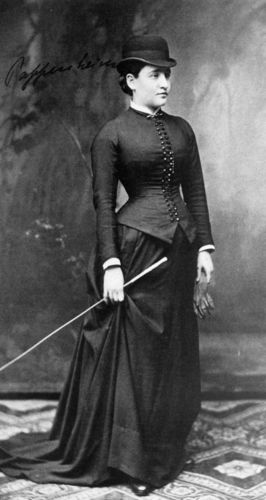
Pappenheim_1882 Anna O. was the pseudonym of a patient of Josef Breuer, who published her case study in his book Studies on Hysteria, written in collaboration with Sigmund Freud. Her real name was Bertha Pappenheim (1859?1936), an Austrian-Jewish feminist and the founder of the Judischer Frauenbund (League of Jewish Women)

Psychological Science: Sigmund Freud - “A Dream of Undying Fame”

Norman Costa


I invited Louis Breger, PhD to join me in this article devoted to a discussion of Sigmund Freud. After my two-parter, “Sigmund Freud – Personal and Scientific Coward?” [PART 1, PART 2], I received an email from Dr. Breger. A friend directed him to 3Quarksdaily.com, and my second article. He had a few things to say about my article, including a couple of critical comments.

I recognized, immediately, that Breger knew a great deal about Freud – far more than I. Breger has been Freud_darkness_cover Professor of Psychoanalytic Studies in the Humanities and Social Sciences Division of the California Institute of Technology, Pasadena, California, from 1970 to the present, (currently, Emeritus Professor.) In 1990, with a group of colleagues, Dr. Breger created the Institute of Contemporary Psychoanalysis (ICP) where he was the Founding President from 1990 to 1993.

My interest in Freud is highly circumscribed. Breger is best described as a lifelong scholar of Freud and psychoanalysis,  as well as a practitioner, a trainer, and a teacher. Breger directed me to his two books on Freud. The first is an analytical biography, “FREUD: DARKNESS IN THE MIDST OF VISION”, John Wiley & Sons, 2000.  The second is “A DREAM OF UNDYING FAME: HOW FREUD BETRAYED HIS MENTOR AND INVENTED PSYCHOANALYSIS,” Basic Books, 2009. The more recent book, included in the title of this article, deals with the territory covered in my writing, and so much more.
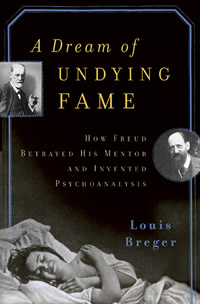
Dream_cover After looking at the encouraging reviews of his books [DREAM, DARKNESS], I read “A DREAM OF UNDYING FAME.” It is an excellent, and very readable book. I recommend it to all interested in Freud, and the history of psychoanalysis. I've not yet read the biography, but I will.

Well, I couldn't let him get away after offering only a few comments. He has too much to tell us on the subject. He possesses a great deal of knowledge, and deeply informed views from a lifetime of work. So I asked Dr. Breger if he would contribute to my Monday Musings column on 3Quarksdaily.com. Very graciously, and generously, he agreed to write something for my readers. What follows is a discussion of his latest book and my two-part article on Freud. I will have a few comments following his well done and informative piece.

YOU WILL NOT BE DISAPPOINTED.

  Freud_002


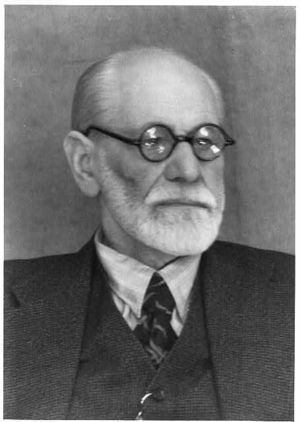
Sigmund Freud
A Discussion of my book: A Dream of Undying Fame: How Freud Betrayed His Mentor and Invented Psy3choanalysis, and two articles by Dr. Norman Costa

Louis Breger, Ph.D.

“If his inmost heart could have been laid open, there would have been discovered that dream of undying fame; which dream as it is, is more powerful than a thousand realities.”

-Nathaniel Hawthorn
Fanshawe, 1828


“The expectation of eternal fame was so beautiful, as was that of certain wealth, complete independence, travels, and lifting the children above the severe worries that robbed me of my youth. Everything depended upon whether or not hysteria would come out right.”

-Sigmund Freud
Letter to Wilhelm Fliess, 1897

Louis_Breger_271_x_250 I take the title of my new book from the Hawthorne quotation, paralleled, in a striking way, by Freud himself in a letter to his friend  Wilhelm Fliess – his “only other” and closest confidant through the 1890s -- because it captures the essential motivation behind Freud’s drive for “eternal fame.”  Let me begin with “the severe worries that robbed me of my youth.”

When Freud was a one year old, his mother gave birth to her second son, who died eight months later.  He thus lost her, first to a sibling replacement, and then to her grief over the death of her new infant.  Maternal losses were repeated over the next years with the births of five sisters and one brother so that, by the time he was ten, his mother had gone through seven pregnancies and there were six living siblings.  It is hard to imagine that she had much time to tend to the young Sigi.  In addition, his nursemaid, toward whom he felt real affection, was caught stealing and sent to jail.  She vanished suddenly from his life in a way that a two-year-old would have no way of understanding.  As if these traumatic losses of love and care were not enough, when he was three-and-a-half, his father went bankrupt and the family – who had been living in a one room apartment in the small town of Freiberg – was forced to move and he lost his uncle and aunt figures, his first playmates, and his familiar home.

His father never got back on his feet financially and the family lived in near poverty for many years.  As Freud himself put it: I know from my youth that once the wild horses of the pampas have been lassoed, they retain a certain anxiousness for life.  Thus, I came to know the helplessness of poverty and continually fear it.  All of these events constituted a powerful set of traumas, compounded by the Antisemitism that was always prevalent in the Austro-Hungarian Empire.  All of this left the young Freud in a very helpless and vulnerable state.
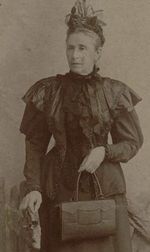
Amalie_Freud2 These were the memories and emotions that he was recovering in his self-analysis in the late 1890s, but they were too much to assimilate, especially in a self-analysis with no helpful or supportive other person.  It was at precisely this point that he turned away from his personal traumas and invented the theory that he later elaborated into the Oedipus complex.  As he put it:  A single idea of general value dawned on me.  I have found, in my own case too, the phenomena of being in love with my mother and jealous of my father, and I now consider it a universal event in early childhood.  He goes on to tell Fliess that, Later...my libido toward matrem was awakened on the occasion of a journey with her from Leipzig to Vienna, during which we must have spent the night together and there must have been an opportunity of seeing her nudam...you yourself have seen my travel anxiety at its height. 

This passage is revealing in several ways.  It is not an actual memory but a construction: we must have spent the night together and there must have been an opportunity of seeing her nudam.  This contrasts with his report about his nursemaid, where there are actual emotionally laden memories.  As he wrote, she provided me at such an early age with the means for living and going on living.  As you see, the old liking is breaking through again today.  In addition, there are the Latinisms – matrem and nudam – which distance the report from his feelings.  And, there is the leap from this personal “memory” – which may not even have happened -- to a universal law.  Finally, there is the reference to his travel anxiety.  If all anxiety is, at base, a fear of castration, as he later posited in his Oedipal theory, he might have been afraid that the powerful locomotive would harm him.  Not so.  He was afraid that the train would leave without him, that he would be separated from the parents that he depended on.  This travel anxiety lasted all his life and, even as a famous and powerful adult, he would have to get to the railway station well in advance so that he wouldn’t be left behind.

Anyone who experiences traumas such as these adapts to them as best as his childhood capacities allow.  Freud mainly withdrew into the world of books and reading; in the small apartment -- populated by his failed father, his nervous, demanding mother, and all those noisy babies -- he escaped into his mind.  As he put it in a later essay, I used to find, the present time seemed to sink into obscurity and the years between ten and eighteen would rise from the corners of my memory, with all their guesses and illusions, their painful distortions and heartening successes -- my first glimpses of an extinct civilization, which in my case was to bring me as much consolation as anything else in the struggles of life.

He immersed himself in this ancient world and was particularly drawn to military heroes: Hannibal, Napoleon, Alexander the Great, Cortez, and Oliver Cromwell. These identifications lasted all his life; they foreshadowed his drive to achieve fame as a scientist, lay behind his sweeping theoretical pronouncements, his style of doing therapy – the analyst as all-knowing authority – and the way he shaped the psychoanalytic movement.  He made it into something of a cult, with himself as leader, surrounded by his loyal lieutenants.
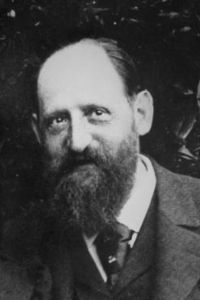
Breuer_001


And where did Josef Breuer fit into all this?  Breuer – 14 years older -- was a highly successful Viennese physician and brilliant scientist.   When Freud set up his new medical practice, the older doctor saw the promise in this gifted young man, took him under his wing, gave the impoverished Freud a monthly stipend – which Breuer never expected to be repaid -- and they became friends and co-workers.  The most significant gift that Breuer gave to his struggling young protégé, however, was his description of a young “hysterical” woman –  Bertha Pappenheim, later “Anna O.” – whom he had treated some years earlier.  Breuer and Bertha together developed what she named the “talking cure”, later called by Breuer the “cathartic method”, which launched psychoanalysis.
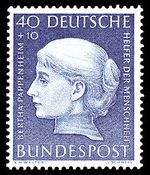
220px-DBP_1954_203_Pappenheim_postage_stamp In the mid-1890s, Freud persuaded Breuer to collaborate on the Studies on Hysteria, a book that is the real beginning of psychoanalysis, both as a method of treatment and a theory.  A close reading of the Studies reveals the differences between Freud and Breuer.  Freud is looking for a grand theory that will make him famous and, because of this, he is always fastening on what he thinks will be a single cause of hysteria, such as sexual conflict.  He also finds it difficult to deal with the deaths and losses that so many of the patients have experienced since they resonated too closely with his own traumas.  What is more, he ignores or minimizes the contributions of others in the field.  Breuer, on the other hand, writes about the many factors that produce symptoms, including traumas of a variety of kinds.  He also gives others, such as Pierre Janet, credit and argues for “eclecticism”; he is open to many different ways of understanding and treating hysteria.  Despite his considerable accomplishments, he was known for his “excessive modesty,” the welfare of his patients was more important to him than recognition or fame.

In the lectures delivered at Clark University in 1909, Freud was still giving Breuer credit as the originator of psychoanalysis.  But, in 1914, with an international psychoanalytic organization in place, he turned on his former benefactor and spun out a tale so that he could take sole credit.  In his essay On the History of the Psycho-analytic Movement, he speculated that, toward the end of Breuer’s treatment of Bertha Pappenheim, she displayed an erotic transference and Breuer could not handle this and fled from her.  This tale was elaborated over the years by Freud and, later, by Ernest Jones in his authorized biography of the Master.  More recent research has revealed that it never happened.  Bertha did not have a sexual transference and Breuer did not flee.  In fact, he remained involved in her treatment for several additional years.  The point of Freud’s story is to make Breuer seem like a coward while Freud, had he been the physician, would have been a hero and not run away.

Freud’s betrayal of his kindly benefactor was the first of many incidents in which he turned on friends and fellow psychoanalysts and spread rumors that maligned them when they did not hew to the party line: when they disagreed with him or raised questions about his theories.  Alfred Adler, Wilhelm Stekel, C. G. Jung, Otto Rank, Sandor Ferenczi, and a number of others were all treated this way; they became the objects of his unending hatred.  He also had to break away from Breuer because his modesty did not qualify him as a heroic model and, perhaps of greater significance, he was a reminder of the time in Freud’s life when he was dependent on this older man.
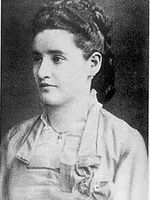
Anna-o-bertha-pappenheim_002_222_x_296 Now, to turn to Dr. Costa’s two articles, which overlap in several ways with the ideas presented in my two books on Freud.  His most important argument is that Freud was wrong to abandon the seduction theory: the belief that “hysteria” was the result of patients, mostly women, being sexually molested as children.  For actual sexual abuse, Freud substituted his concept of sexual or libidinal drive, which he later elaborated into the theory of the Oedipus complex.  He argued that his patients had not been molested but that their accounts of such experiences were the result of their fantasies and wishes.  This led to a denial of women’s experience and a blaming of them – or their “drives,” “Id,” and “pleasure principle,” -- all of which set psychoanalytic theory and therapy on misguided paths for a great number of years.

I agree with Dr. Costa that the abandonment of the seduction theory was a gigantic mistake, but would expand his critique in several ways.  Costa is right to emphasize the damage done by discounting patient’s accounts of sexual abuse, and of downplaying the extent of such abuse, which we now know is widespread.  But this is not the only kind of childhood experience that leads to neurosis.  Freud himself suffered a series of overwhelming events as a young child, centered on maternal loss.  And others suffer abandonment and neglect, physical and emotional abuse, emotional mis-attunement, as well as the traumas that can lead to PTSD:  wars, natural disasters, poverty, discrimination, and debilitating illnesses.  What Freud abandoned was not just “seductions” but reality, all the things that happen to people, especially when they are small and vulnerable, that they are unable to cope with, and that leave their scars – in the form of anxiety, depression and other symptoms -- on the adult personality.

Dr. Costa calls Freud a “scientific coward” for his turn away from sexual abuse and I agree with him.  He contrasts Freud’s work with that of his contemporary Pierre Janet, who did a form of psychotherapy with similar patients and never discounted the importance of trauma and what he labeled “double consciousness,” which we would now call “dissociation.”  Janet is little known today and Costa gives him his due while Freud worked hard to ignore or downplay his contributions.  Costa is also right to see Freud as enormously ambitious and to note how this led him to change his theories, not on the basis of new evidence, but because it would make him appear to be a great man.  He also says that, “Freud and his theories became a cult of discipleship,” -- as I document in my books, and as Erich Fromm pointed out 50 years ago -- despite the claims of Freud and later psychoanalysts that they were “scientists.”
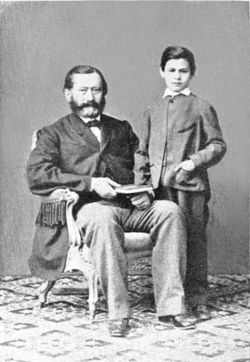
Josef_freud_and_son_sigmund


Now for some points where we do not completely agree.  Costa has the germ of an absolutely essential idea: that the abandonment of the seduction theory came out of Freud’s self-analysis.  Unfortunately, since he is focused solely on sexual abuse, he believes that Freud must have been sexually molested by his father.  The only evidence for this is one remark that Freud made in a letter to his friend Fliess that, if hysteria was due to sexual molestations, his own neurotic symptoms – which were considerable -- and those of his siblings, must have been due to sexual abuse by their father.  This was a typical Freud speculation – his work is full of such “constructions” and “reconstructions” – that fit the ideas he was playing with at the time but had no basis in reality.  Neither he, nor his sisters and brother, ever showed any signs that they were sexually abused.

Once again, it is important to emphasize that there are many kinds of trauma and abuse in childhood and Freud’s exclusive focus on sexuality – whether real or imagined – came out of his search for a single, sweeping theory that would make him famous.  As I have pointed out, Freud did get very close to his traumatic early losses in his self-analysis, but they were too overwhelming to deal with -- they made him feel like the poor, helpless little boy he had been -- and he fled to theories that made him into Oedipus: a powerful man and the son of a king.  In addition, his conception of a sexual drive as the sole cause of neurosis was at the heart of a grand theory that he believed would make him famous.

As an aside, I do not find Dr. Costa’s speculations about Freud’s identification with Hamlet persuasive, though the related point that Freud was more a writer of literature than a scientist is worth stressing.

One final point concerns the evaluations of Freud’s theories by his colleagues and, particularly, by Breuer.  Dr. Costa accepts Freud’s story that his colleagues completely dismissed his ideas and repeats the story that Breuer was “especially cruel” because he told Freud privately that he “didn’t believe” his theory of sexual causation.  Freud was the kind of thin-skinned man who required complete agreement; anyone who raised questions or disagreed in the slightest was seen as an enemy.  As Sulloway and others have documented, the truth was that there was a mixed reaction to Freud’s early contributions: some in the field were critical and some valued them.  It was just a few years later, in 1904, after all, that Freud drew together a group of followers and began what would become organized psychoanalysis, which rapidly expanded into a worldwide movement.

As to Breuer, a close reading of the Studies, and Hirschmüller’s biography, reveals that Breuer always valued Freud’s contributions, including the role of sexuality and sexual repression.  He just didn’t believe that this was the only cause of neurotic symptoms.  As he said in a 1907 letter to a colleague, “Freud is a man given to absolute and exclusive formulations: this is a psychical need which, in my opinion, leads to excessive generalization.”  Similar assessments were voiced by the Swiss psychiatrist Eugen Bleuler and the American psychologist/philosopher William James.

Freud made many valuable contributions that still inform our understanding of psychological disturbance and its treatment.  At the same time, his work is marred in the ways that both Dr. Costa and I have described.  It is the task of contemporary workers in the field to take a more balanced and critical approach to both theories and treatment methods. 

References:

Breger, Louis.  Freud: Darkness in the Midst of Vision.  New York: John Wiley & Sons, 2000.

Breger, Louis.  A Dream of Undying Fame: How Freud Betrayed His Mentor and Invented Psychoanalysis.  New York: Basic Books, 2009.

Breuer, Josef. & Freud, Sigmund.  Studies on Hysteria.  The Standard Edition of the Complete Psychological Works of Sigmund Freud, Vol. 2, 1895.

Cranefield, Paul F. “Josef Breuer’s Evaluation of His Contribution to Psychoanalysis.” International Journal of Psycho-Analysis, 39, 1958.

Freud, Sigmund. Five Lectures on Psychoanalysis. Standard Edition, Vol. 11, 1910.

Freud, Sigmund.  Some Reflections on Schoolboy Psychology.  Standard Edition, Vol. 13, 1914.

Freud, Sigmund.  On the History of the Psycho-Analytic Movement. Standard Edition, Vol. 14, 1914.

Fromm, Erich. Sigmund Freud’s Mission: An Analysis of his Personality and Influence.  New York: Grove Press, 1959.

Hirschmüller, Albrecht. The Life and Work of Josef Breuer: Physiology and Psychoanalysis. New York: NYU Press, 1989.

Masson, Jeffrey M. (ed. and trans.) The Complete Letters of Sigmund Freud to Wilhelm Fliess: 1887-1904.  MA, Harvard University Press, 1985.

Sulloway, Frank J.  Freud, Biologist of the Mind: Beyond the Psychoanalytic Legend. New York: Basic Books, 1979.
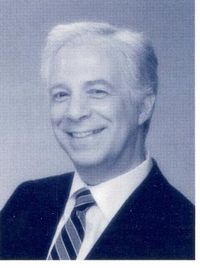

COSTA_Norman_photo In my psychological science series on 3Quarksdaily.com, I explore fundamental principles of science. Psychological test theory, definitions of measurement, the philosophy of science, systematic observation, and mathematical argument were some of the topics. Dr. Breger's writing, here, and my articles on Freud, bring us to another fundamental issue.

The scientist interacts with [experimental] research in a way that 'disturbs' the process, and leaves an indelible mark upon the results. This was formalized in Heisenberg's Principle of Uncertainty for quantum mechanics. The Uncertainty Principle has not been formalized for psychological science. By analogy, though, it is not difficult to see how the makeup of the scientist influences the  research for good and for ill.

In studying research methods we learn the dispassionate ideal of scientific inquiry. Science is a methodical, incremental plodding toward a fuller understanding of nature, including ourselves. Speculative liberties given to the scientist are minimal at best.

The reality is that science can be jumpy, speculative, and discontinuous. The choice of a research area can be motivated by a life long passion or curiosity, professional competition, burst of creative energy, need for adulation or power or financial independence. These do not proscribe good research or good science, necessarily. Good science can come out of idiosyncrasy, deficit, insecurity, ambition, and overcompensation – even neurosis. Science and the search for knowledge can be very messy.

But, if we abandon the ideals of systematic observation, loyalty to our recorded data, organizing information into a body of knowledge, and respect for our colleagues, we can end up wasting our time, or worse. We can take ourselves and others down a path that could be disastrously harmful to all of us.

I hope you learned at least as much as I had. Please contribute your own thoughts in the comments, below.

Thank you Dr. Breger for being very generous with us.

Posted by Norman Costa at 12:20 AM | Permalink

Comments

Norman, you have found a distinguished guest blogger. Dr. Breger's reputation is huge, and I speak as a former California Freudian -- a former Californian in any case.

There's no need for me to remark that my reading isn't as deep as Dr. Breger's. Of course it isn't. But I take issue somewhat with how Freud's relationship with his mother is represented here. Certainly his childhood was extremely difficult, but few people of whom one hears in a big way are products of uneventful ones. Among the very first Freudian observations that I remember reading is -- I'm paraphrasing -- about those children in whom mothers place enormous hope and confidence, whether it is justified or not. These often become, he found, successful adults. And did his mother not address him as her "goldener Sigi"? And make sure that he had, for his studies, the utmost in privacy that the strained and numerous household could afford him? I'm sure it was all hideously anxiety-producing, but it doesn't sound as if a distant or distracted mother was running things.

Amalia Freud-Nathanson lived to be very very old -- Freud outlived her by only 8 years. But she had even as a young woman a case of tuberculosis to manage, and, for all the financial restraints she dealt with, she removed herself to a clinic for a spell every year. I think having a chronically ill mother, and being the vessel of all her hopes, deserves to be counted in enumerating the sorrows of young Sigi.

Posted by: Elatia Harris | May 24, 2010 2:54:27 AM

I find Dr. Costa’s own ‘project’ on Freud’s intrepidity --- when facing his own struggle with fame and power --- enormously valuable.
We --- those who still reluctantly embrace ‘Freudianism’ for its own sake --- live in an isolated and somewhat esoteric world, where the psychiatric trend is neuroscientific in orientation.
Psychotherapy has abandoned its healing claims to pharmacotherapy and, even the psychoanalytic movement, with the impact of ego psychology and narcissism à la Heinz Kohut, has been transformed in something entirely different from what Freud conceived in his hesitantly penned ‘Project’.
Whenever we read Dr. Costa’s essay with Dr. Berger’s comments we share a sense of intellectual revitalization.
Well done!

Posted by: Felix E F Larocca MD | May 24, 2010 10:49:28 AM

It would be interesting to know how much of the impact Freud had in America was due to his nephew Edward Bernays, "the father of public relations", who promoted his uncle there, partly to boost his own reputation.

My entirely layman's perception is that Freud's thinking and psychoanalysis never took off in quite the scale in Europe as it did in America, and even then much of the impact came by way of America.

alip

P.S. One thing that has always bothered me in Freud's reading of Oedipus is that he brushes off the fact that it is only Oedipus' separation from his parents that makes the tragedy possible (in an almost Westermarckian way).

Posted by: alip | May 24, 2010 11:22:36 AM

Let me respond to some of the points raised about my post so far. Ms. Harris raises two important issues that are addressed in my two books on Freud but left out of the article for reasons of length. Yes, Freud's mother did have T.B. when he was a child and was absent for various periods of time. He reports a terrifying nightmare from age 8 about seeing her dead which I think derives from this and reinforced his anxiety about maternal loss. About being her favorite -- her "golden Sigi" -- that was a mixed blessing. First, it did not occur until later childhood when his primary anxiety about loss was already solidly in place. And, next, in the oft-quoted "my golden Sigi" the emphasis should be on the "my"; he was, what we would now call, a narcissistic object for her, valued for his achievements while she was probably unaware of his deeper emotions. By the way, he did not get his own room in the family apartment until he began work at the University.

As to Freud's fame in America -- a country he hated ever since his 1909 visit -- it pre-dated Edward Bernays work, though it is interesting that they were both talented at public relations.

Posted by: Louis Breger | May 24, 2010 12:07:57 PM

Thank you Dr. Breger! Freud's remark about a mother's confidence and hopes energizing a child to grow up to be a success seems different in this light. For one thing, he did not say "happy" or "emotionally healthy" -- only "successful." In a family led by a worse than indifferent breadwinner, however, of an age to be the grandfather of his own children, it does not automatically make Freud's mother a narcissist that she figured him for the one who would learn and earn enough to get everyone out of trouble. I understand you are basing what you say on lots of data not set out here, but in your book -- which I look forward to reading. But that Freud had a fire in his belly does not by itself make him the narcissistically impaired son of a narcissist. Or...?

Posted by: Elatia Harris | May 24, 2010 1:19:04 PM

So Freud was a charlatan, though an immensely talented one. I am struck by the resemblances to a Hasidic rabbi: the same demand for charismatic adoration, what we might call "the guru complex."

As for his lust for eternal fame, well at least he got a hundred years, though it is hard to imagine what difference that makes. Eternal fame? The scientist's fantasy of life after death. Talk about the future of an illusion; at least Pascal's version would have been something you could experience.

Posted by: Luke Lea | May 24, 2010 2:44:55 PM

The phrase, 'a dream of undying fame,' puts me in mind of Isaac Asimov, in _Dune_, who has a character make the following observation.

"Greatness is a transitory experience. It is never consistent. It depends in part upon the myth-making imagination of humankind. The person who experiences greatness must have a feeling for the myth he is in. He must reflect what is projected upon him. And he must have a strong sense of the sardonic. This is what uncouples him from belief in his own pretensions. The sardonic is all that permits him to move within himself. Without this quality, even occasional greatness will destroy a man."

Posted by: Elatia Harris | May 24, 2010 7:18:13 PM

Well, Elatia, Lincoln was a man who aimed for greatness, knew he did, and achieved it. Was he sardonic? Among other things. In any event it is not his undying fame that matters, which is in the nature of a by product, but rather his example of what a less-than-perfect human being can be capable of if he puts his whole heart, mind, and soul into it. He wanted to be remembered, and told his best friend as much, but he wasn't trying to fool anybody.

Posted by: Luke Lea | May 24, 2010 8:44:43 PM

This is of little consequence, but Isaac Asimov didn't write Dune, though I can't remember who did now.

Posted by: Alice de Tocqueville | May 24, 2010 10:36:27 PM


Alice de Tocqueville:

It was Frank Herbert. The Dune folks sued Lucas, successfully, for using elements of Dune in Star Wars.

Anyway, there was one article where I meant to refer to the philosopher-mathematician Leibniz, but called him Leipzig.

In another I wanted to compare scientific psychology to physics. Instead I compared scientific psychology to psychics.

Posted by: Norman Costa | May 24, 2010 11:05:34 PM

I was wondering where the conflation of Isaac Asimov and Frank Herbert began... Who could be that screwed up? Reading carefully, now I see.

Posted by: Elatia Harris | May 25, 2010 12:32:35 AM

In the context of Freud's 1896 "seduction theory", Louis Breger writes: "I agree with Dr. Costa that the abandonment of the seduction theory was a gigantic mistake, but would expand his critique in several ways. Costa is right to emphasize the damage done by discounting patient’s accounts of sexual abuse..."

But it was *Freud* who, on the basis of preconceived theory, insisted that the patients had been sexually molested in infancy. In fact they resisted his attempts to pressure them into "reproducing" supposedly repressed memories from early childhood:

"Only the strongest compulsion of the treatment can induce them to embark on a reproduction of them..." Moreover, they "assure me emphatically of their unbelief" (Freud 1896, Standard Edition, vol 3, p. 204).

See:
http://www.esterson.org/Masson_and_Freuds_seduction_theory.htm

http://www.esterson.org/Mythologizing_psychoanalytic_history.htm


Posted by: Allen Esterson | Jun 4, 2010 6:04:47 AM

Dr. Esterson's book "Seductive Mirage: An Exploration of the Work of Sigmund Freud" is one of the best works that criticizes Freud from a scientific point of view. In his current comment, he makes an important point; since we know that, once in the grip of a theory that he thought would make him famous, Freud did not hesitate to force it on his patients. His case of Dora is a good example of this. So we don't know how many of his early patients were actually traumatized by sexual abuse, though, as we know now, it is much more prevalent than many wish to recognize. I think the more important point is that when Freud "abandoned" the seduction theory, the crucial turn was away from the reality of his patient's experience, whether sexual abuse or any of the many harmful things that people experience in childhood that are the precursors of later anxiety, depression and other symptoms.

Posted by: Louis Breger | Jun 4, 2010 3:47:39 PM

When Sigmund was three years old, the family moved to Vienna.

Believing in the genius of his first child, the parents surrounded him special attention to the detriment of other children, which left its imprint on his mental condition contributed to the development of delusions of grandeur, as reflected in the words of Sigmund Freud: "A man in his childhood infinitely beloved mother, for life in stores a sense of the winner, the faith in success, which often actually promotes success. "Whole family had seven children, but only for the eldest, parents not only obtain a separate room, but there was a kerosene lamp, while the rest were living in overcrowded conditions and used candles.

Posted by: Michael Newman | Oct 16, 2011 5:25:24 AM

Note that this Jewish upbringing as a child with childhood instilled the idea of ​​his superiority over others, very often leads to the fact that in the event of failure in life his troubles are attributed to "the machinations of the anti-Semites."

Posted by: Psychologist_Lover | Oct 16, 2011 5:27:39 AM

Post a comment


Subscribe to this blog's feed  

PayAnywhere with iphone credit card swiper

Android Tablet

Bluetooth Headset

2013 New Style Dresses

Compare Car Rental Prices

DHgate.com Wholesale

3QD on Facebook

3QD on Kindle

3QD by Daily Email

Receive all blogposts at the same time every day.

Enter your Email:


Preview 3QD Email

3QD on Twitter

Miscellany

Lijit Search

AddThis Social Bookmark Button

Add to Google

Recent Comments

Louise Gordon on Why race as a biological construct matters

Louise Gordon on The stories of two Palestinian villages: From Al-Araqib to Susiya

musafir on a pretty funny book

freddie on The stories of two Palestinian villages: From Al-Araqib to Susiya

freddie on The stories of two Palestinian villages: From Al-Araqib to Susiya

Junaida on Tuesday Poem

rafiq on Tuesday Poem

Raza Husain on the culture animal

Nebor on Tuesday Poem

Eleutheria on I am dust and ashes and full of sin

carlos on I am dust and ashes and full of sin

Joe on the culture animal

Sundar on the culture animal

Eleutheria on Positive Failure - a review of "The Power" by Rhonda Byrne

Eleutheria on Positive Failure - a review of "The Power" by Rhonda Byrne

Matt on The Science Mystique

Eleutheria on Why is Europe so Messed Up? An Illuminating History

Eleutheria on I am dust and ashes and full of sin

Elatia Harris on I am dust and ashes and full of sin

PeteChapman on I am dust and ashes and full of sin

Raza Husain on the culture animal

Jacky Corey on The Bystander Effect in Medical Care. Why Do I Have So Many Doctors Not Taking Care of Me?

Chris on Positive Failure - a review of "The Power" by Rhonda Byrne

DAS on Why is Europe so Messed Up? An Illuminating History

DAS on Is the Brain No Different From a Light Switch? The Uncomfortable Ideas of the Philosopher Daniel Dennett

Acclaim For 3QD


"I couldn't tear myself away from 3 Quarks Daily, to the point of neglecting my work. Congratulations on this superb site."—Steven Pinker, Johnstone Professor of Psychology, Harvard University.

"I have placed 3 Quarks Daily at the head of my list of web bookmarks."—Richard Dawkins, Charles Simonyi Professor of the Public Understanding of Science at Oxford University.

"Just wanted you to know I’m one of many who reads and enjoys 3 Quarks....almost daily."—David Byrne, musician, former lead-singer of the Talking Heads, artist, intellectual.

Read more here.

The 3QD Prizes

Subscribe to this blog's feed