
March 18, 2010
the mundaneum
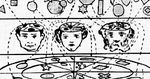
ON THE NIGHT OF JUNE 1, 1934, a Belgian information scientist named Paul Otlet sat in silent, peaceful protest outside the locked doors of a government building in Brussels from which he had just been evicted. Inside was his life’s work: a vast archive of more than twelve million bibliographic three-by-five-inch index cards, which attempted to catalog and cross-reference the relationships among all the world’s published information. For Otlet, the archive was at the center of a plan to universalize human knowledge. He called it the Mundaneum, and he believed it would usher in a new era of peace and progress. The Belgian government, however, had come to view Otlet and his fine mess of papers, dusty boxes, and customized filing cabinets as a financial and political nuisance. Thirteen years earlier, Otlet’s Mundaneum—then called the Palais Mondial—had occupied 150 gleaming rooms in the Palais du Cinquatenaire in Brussels. Thousands of visitors a day filed through, marveling at the seven-foot-high card-catalog cabinets lining the walls of an eighty-foot-long room. Otlet and other scholars delivered lectures on topics such as “The Problems of Language” and “The Necessity for Dental Hygiene” in a thousand-seat auditorium. Scores of workers operated the Mundaneum’s search service, which employed the card catalog to answer questions from the public.more from Molly Springfield at Triple Canopy here.
Posted by Morgan Meis at 10:04 AM | Permalink


Comments
Fascinating.
Posted by: Brian D'Amato | Mar 18, 2010 12:53:40 PM
Superb link. Thank you for letting us know.
Posted by: jean-paul | Mar 18, 2010 6:25:18 PM
This is moving (and fascinating and superb, Brian and j-p.) I would love it to be reassembled in physical space.
Many years ago, I was researching a Quattrocento sage, Poliziano. It was thought, at the time, he knew all there was to know -- he had a library of 500 books, he knew them front to back and back to front. That was knowledge, as the most erudite of his contemporaries conceived of it.
It would not be a bad idea, to posit a difference, now, between knowledge and ephemera. But who could take that on?
Posted by: Elatia Harris | Mar 18, 2010 7:28:57 PM
Beam up Molly Springfield to the mothership!
Posted by: Elatia Harris | Mar 18, 2010 9:49:56 PM
Morgan,
Thanks for the post. Paul Otlet must have been fascinating. Of course, the same can't be said of the Belgian bureaucrats and politicians. Speaking of the Belgian bureaucrats, I remember a national research survey done about 40 years ago:
Q. How many books did the average adult American read during the past year.
A. The average adult American had not read any. [At least half of the adult population had not read a single book.]
I wouldn't be surprised if the same were true of those Belgian politicians and bureaucrats.
Posted by: Norman Costa | Mar 19, 2010 1:08:25 AM
Post a comment