| ABOUT US | ARCHIVES | LINKS | RSS FEED | MONDAYS | |

3quarksdaily

An Eclectic Digest of Science, Art and Literature

« The magic, mystery and melancholy of Five Leaves Left: Colin Marshall talks to three scholars of singer-songwriter Nick Drake | Main | Monday Poem »

March 01, 2010

The Blight of Hindustan

By Namit Arora

Savi4 An egalitarian ethos is not a prominent feature of Indian civilization. The Indians have long held it to be self-evident that all men are created unequal. The anthropologist Louis Dumont considered hierarchy to be so central to the Indian identity, whether in the family, the workplace, or the community, that he went as far as calling the Indians homo hierarchicus. Indeed, a host of hierarchical relationships—framed by traditional norms of deference, authority, and obligation—shape most Indians throughout their lives. In the Indian social realm, the primary institution of hierarchy is caste, or jati, of which thousands exist today. But where does caste, a blight of modern India, come from?

The Origins of Caste

How the institution of caste took root and spread is still a hotly debated question among scholars, but its story begins c. 1500 BCE with the arrival of the Indo-Aryans into what is now Pakistan. Data from disciplines like linguistics, philology, and archaeology strongly suggests that these bands of nomadic pastoralists came from further west. Upon arrival, they encountered long settled rural communities, which were perhaps divided into subgroups based on occupation, much like guilds—in the sense that the subgroups were not hierarchical, hereditary, or endogamous. The Indo-Aryans, whose culture became dominant, introduced into the region their social pyramid with three classes, or varnas: the Brahmins (priests and teachers), the Kshtriyas (warriors and rulers), and the Vaishyas (traders and merchants). They added a fourth varna after their arrival: the Shudras (laborers and artisans). All four varnas appear in the earliest known Indo-Aryan text, the Rig Veda, and were no doubt a feature of the emerging Vedic society.

As the settled indigenous communities became part of the early Vedic society, they also adopted its principle of hierarchy, turning their own occupational subgroups into castes, or jatis. The principle of hierarchy, proposed Dumont, had to do with ritual ‘purity’ and ‘pollution’ that members of each occupational subgroup were assigned at birth. The highest ‘purity’ points went to those with religious, intellectual, and administrative pursuits, the lowest to workers associated with dead bodies, human waste, tanneries, butchery, street cleaning, and such—most of these were in fact deemed too low to be part of the varna system at all, i.e., they were considered outcastes. Stated differently, ‘purity’ became a means of codifying social power relations using Brahminical ‘knowledge’.

Savi1 As this new social order spread in the first millennium BCE, it encountered more settled peoples as well as forest dwelling clans. Whether by force, persuasion, or mutual advantage, more groups were brought into its fold. They too found themselves plugged into its hierarchy, perhaps loosely at first, and gradually gave up their more egalitarian ways. In doing so, they used the same principle of relative ‘purity’ to make jati and varna decisions for various units within their own societies, and by extension, to divide power and resources.[1] To sweeten the deal, the Vedic social order became flexible enough to absorb indigenous gods into its ever-growing pantheon—including perhaps even gods like Shiva and Krishna—giving rise to a syncretic religious culture. In some cases, a whole endogamous tribe could become one jati, often regarded as outcastes. The Laws of Manu, written about 2,000 years ago, mentions many such communities: the Medas, Andhras, Chunchus, and Madgus who live off ‘the slaughter of wild animals’, the Pukkasas by ‘catching and killing [animals] in holes’, etc. 

Many modern thinkers, including Tagore, have argued that while not at all perfect, this was back then a practical way of bringing together highly diverse peoples, through which ‘men of different colors and creeds, different physical features and mental attitudes settled together side by side.’[2] By assigning religious, political, and economic power to three different classes—the Brahmins, the Kshtriyas, and the Vaishyas—the system prevented their concentration in a single dominant racial or ethnic group, thereby creating a basis for cooperation and avoiding far greater friction, open slavery, and even genocidal wars.

Savi5 Over time the institution of caste grew rigid and restrictive, becoming, as BR Ambedkar said, not a division of labor but a division of laborers. Social mobility got severely curtailed and the upper castes conveniently linked one’s place in the hierarchy to karma and destiny; even their epics and mythologies helped perpetuate the new social order (though it would be foolish to read them as doing nothing more, or to not contain contradictory views). The Ramayana contains strong expressions of hierarchy, the Bhagavad Gita extols the sanctity of caste, and The Laws of Manu attempts to codify its operation, declaring a crime against a Brahmin much worse than one committed against a low caste person. The caste system eventually took on beliefs and social practices that have trampled on some of the most basic tenets of human dignity and inflicted untold misery, humiliation, and injustice on too many for too long. Its victims include the Dalits (‘the oppressed’)—formerly ‘untouchables’—numbering one out of six Indians. Injury and prejudice are in fact so integral to the functioning of the caste system—doesn’t the absolute ‘purity’ of one caste require the absolute ‘impurity’ of another, and all that this entails?—that it’s hard to imagine what a plausible defense of it by an insider or a cultural pluralist might look like.

The caste system also worsened the plight of women beyond the inequities inherent in all patriarchies. The desire to preserve upper caste ‘purity’ created anxieties over miscegeny, including an extra horror of and penalties for hypogamy, where an upper caste woman marries a lower caste man. This demanded more stringent control over female sexuality, which in turn encouraged the custom of female child marriage. ‘Women’s cooperation in the system was secured by various means: ideology, economic dependency on the male head of the family, class privileges and veneration bestowed upon conforming and dependent women of the upper classes, and, finally, the use of force when required.’ [3]

The Anatomy of Caste

Castes are not a feature of Hindu society alone. A de-facto caste hierarchy also exists among the Christians, Muslims, and Sikhs of India. While caste is today most visibly associated with India, forms of it have either existed or still exist elsewhere, including in Japan, Korea, Europe, Hawaii, Arabia, and Africa, some with strikingly parallel notions of ‘purity’ and ‘pollution’. In The Indians, Sudhir and Katharina Kakar point out that psychological training to associate ‘purity’ with clean and ‘pollution’ with dirty begins early on in Indian households:

For the upper-caste child, a dalit is a member of a group that is permanently and irrevocably dirty. The child’s knowledge is not anthropological or religious-textual but a knowledge-feeling that is pre-verbal and has, so to speak, entered the child’s very bones. Many a time while growing up, the child has sensed the sudden kinesthetic tension in the body of his mother, father, aunt, uncle, when a dalit has come too near. He has registered their expressions of disgust, unconsciously mimicking them in his own face and body at any threatened contact with an untouchable. Given the child’s propensity to place himself at the center of all experience, he effortlessly links the family’s disapproval and revulsion toward the untouchable to those times when he has been an ‘untouchable’ himself, that is, the times ... above all, when he has been filthily, gloriously dirty.

Regarding others as impure and dirty, and therefore subhuman, is also commonplace outside the context of caste. It is a universal trick designed to withhold empathy from and to dominate antagonistic groups, especially during ethnic conflicts. As the Kakars write,

‘Dirty nigger’ and ‘dirty Jew’ are well-known epithets in the United States. The Chinese regard Tibetans as unwashed and perpetually stinking of yak butter, while Jewish children in Israel are brought up to regard Arabs as dirty. In the Rwandan radio broadcasts inciting the Hutus to massacre the Tutsis, the latter were consistently called rats and cockroaches, creatures associated with dirt and underground sewers, vermin that needed to be exterminated.’
Savi2 Many historians have criticized Dumont’s pioneering analysis of Indian caste, accusing him of overstating the power of the Brahmins and of the ‘purity’ principle in shaping caste, which implies that Indian society was static, homogeneous, and integrated rather than what it has been: dynamic, notoriously diverse, and fragmented. They claim that norms, inter-caste relations, and social practices were always fluid, with the Brahmin not the only reference point. Today’s caste system, they argue, was heavily shaped by the social, administrative, and economic changes that began in early colonial times—until then, a lot of Indians ‘were still comparatively untouched by the norms of jati and varna as we now understand them.’ [4] Census classifications and differential state policies also hardened caste identities in modern times. Further, social mobility has existed all along—a lower caste group could change its way of life and move up within a generation or two, a process called sanskritization.

Notably, Marxist historians like Irfan Habib have argued that ‘purity’ was a rationalization for class interests and existing social exploitation, [5] and further, that the material impact of colonialism and capitalism is what turned caste into the potent force that it became in modern India. Caste endogamy and heredity were shaped, too, by its function as a provider of community and a means of preserving specialized artisan skills and knowledge; Habib argues that thrusting lowly status on some castes, such as iron smiths, carpenters, and weavers, can easily be explained by the primary desire to keep their wages low, and their low ‘purity’ score may have arisen out of this desire. Others note that Dumont conveniently ignored the individualistic and egalitarian aspects of Indian life that have coexisted all along. But Dumont’s theory, though badly dented, still remains indispensable.

The Persistence of Caste

Over the ages, many Indians have rejected the caste system—the Jains, the Buddhists, the Carvakas, Basava, many Bhakti mystics, Phule, Ambedkar, Periyar—but it has survived them all. Others, such as Gandhi, Vivekananda, and Ram Mohan Roy, did not reject it but advocated major reform. Gandhi, in particular, naively defended the idea of caste itself, imagining it could be made free of discrimination through education and ‘upliftment’, clashing bitterly with Ambedkar, an ‘untouchable’ who wrote The Annihilation of Caste. Under British rule in the early 20th century, most Indian nationalists loudly debated the problem of caste and what to do about it, including the debate on what was worse: Western racism or Indian caste. Gandhi, Lajpat Rai, Tagore, and Bose condemned the practice of untouchability while calling it better than Western racism. This came out especially in response to the question posed in 1929 by an American journalist: ‘Is the plight of the untouchable as hard as that of the Negro in America?’ No, argued most Indian leaders, citing the dehumanizing Jim Crow laws and the lynch mobs to make their case, but their stance was also shaped by their desire to deflate ‘superior’ westerners all too convinced of the white man’s burden. Ambedkar however argued the reverse, invoking not the de jure but the de facto position of the ‘untouchables’. [6]

Savi6 The Indian constitution outlawed caste discrimination sixty years ago, and affirmative action has had a salutary impact in recent decades. However, in this deeply conservative country, passing legislation is one thing, enforcing the laws and changing minds is quite another. Caste still has a tenacious hold on too many Indians who, in the words of the Marathi poet Govindaraj, ‘bow their heads to the kicks from above and who simultaneously give a kick below, never thinking to resist the one or refrain from the other.’[7] Discrimination in housing, marriage, and employment is commonplace. Especially outside the major cities, caste-based oppression is still rife, ranging from psychological abuse to bonded labor to rapes and murders that frequently go unpunished.

The trends however look promising. In recent decades, those on the lowest rungs of the social pyramid have been politicized and have made their presence felt in the Indian democracy, even commanding high political offices. Some have chosen the path of militant resistance, many have converted to other religions, others are navigating new avenues of social mobility offered by the modern economy, and a few have even chosen art and literature to tell their own stories, bearing witness to their slice of life in India. Intellectuals like Kancha Ilaiah, author of ‘Why I Am Not a Hindu’, are contesting the dominant historical, cultural, and religious narratives of India. More than ever, the Dalits now understand that ‘Freedom is never voluntarily given by the oppressor; it must be demanded by the oppressed.’[8]

_______________________

Notes:

1. Romila Thapar, The Penguin History of Early India, pp 62-68.
2. Rabindranath Tagore, Selected Essays, Rupa; From essay titled Race Conflict, p 343.
3. Uma Chakravarti, Beyond the Kings and Brahmanas of ‘Ancient’ India, Tulika Books, 2006; from the chapter titled Conceptualizing Brahmanical Patriarchy in Early India, p 140.
4. Susan Bayly, Caste, Society and Politics in India: from the Eighteenth Century to the Modern Age, Cambridge, p 25.
5. Irfan Habib, Essays in Indian History: Towards a Marxist perception, Tulika Books, 1995.
6. Slate, Nico, Race, Caste, and Nation: Indian Nationalists and the American Negro, 1893-1947, Paper presented at the annual meeting of the American Studies Association, Oct 12, 2006
7. Sudhir and Katharina Kakar, The Indians: Portrait of a People, Penguin Viking, 2007, p 27.
8. Quote by Martin Luther King, Jr.

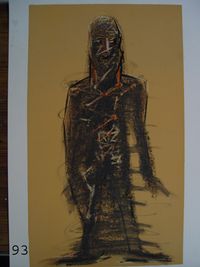
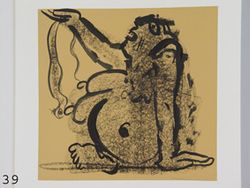
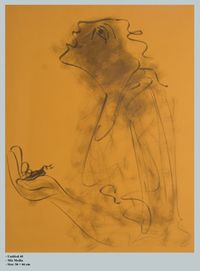
All paintings are by the Dalit artist Savi Sawarkar (source).

__________________________

More writing by Namit Arora?
__________________________

Posted by Namit Arora at 12:35 AM | Permalink

Comments

Isn't the Aryan invasion theory pretty much discredited now? How does that play into your comments on Indo-Aryan culture?

http://www.archaeologyonline.net/

Posted by: Kate | Mar 1, 2010 9:55:35 AM

This essay is both enlightening and important to a better understanding of a part of the world about which most Americans are fatally ignorant. Little do most of us realize that the voting electorate in the world's largest democracy is larger than the entire population of the US.

It was my good fortune as an undergrad to have two courses during the same quarter focused on what was called the History (or) Politics of South Asia, in order to encompass both India and Pakistan in the survey. (I tried but failed to get away with a single term paper to serve both courses but it didn't work. The Congress Party was a good subject for Poly Sci but I had to take a different tack for the history course.)

I was surprised to hear in both classrooms that no one of any importrance favored doing away with the caste system. As a young veteran of the US civil rights movement I was shocked. My view of the caste system assumed it was, like apartheid, yet another manifestation of generic racism dooimed to eventual obsolescence.

It was patiently explained to me that enlightened people were okay with the system but worked very hard to abolish "disabilities" of the system, a careful distinction new to me.

Now, over forty years later, I'm curious to know if and whether that view of castes has changed. And if so, how?

Posted by: John Ballard | Mar 1, 2010 10:55:21 AM

Class, racisim, wealth - all are tools to turn those who are 'unfamiliar' into the other in order to bolster a spurious sense of self.
This was a very interesting, open and honest account of the caste system.

Posted by: Sue Hubbard | Mar 1, 2010 3:50:48 PM

A very nice overview Namit. I look forward to you really zooming into one (or more) of the many themes you touched in this essay in your writings to come.

All I have to say about affirmative action is: VP Singh! Hai Hai!! :)

Posted by: Sid | Mar 1, 2010 4:10:12 PM

Here's a program that brings community health services to the poorest in rural India and at the same time raises the status of lowest caste women by giving them basic medical training: a win-win. It's the Comprehensive Rural Health Project in Jamkhed, founded by Raj and Mabelle Arole. From a 2008 article in National Geographic:
http://ngm.nationalgeographic.com/2008/12/community-doctors/rosenberg-text

Posted by: Marilyn Terrell | Mar 1, 2010 9:51:04 PM

Kate,

> Isn't the Aryan invasion theory pretty much discredited now?

Um, no. Don't get me started on this. There is genuine scholarly debate over various aspects of the Aryan Invasion Theory (spoken more often now as the Aryan Migration Theory), but it is about as discredited as Darwinism is versus Creationism.

For those who aren't aware, a sustained effort, largely led by Hindu chauvinists (mostly in the US), has championed a competing theory in recent decades — the Out of India Theory, which has it that the home of all Indo-European languages—not to mention the Rig Veda with its nomadic pastoralist character—is the Indian Subcontinent, and that the still undeciphered Harappan script is really a precursor to Sanskrit.

This has little support in evidence-based scholarship, yet lots of unsuspecting people are falling for it. That site linked by you cites NS Rajaram as an authority, but did you know that he was shamed for forging a Harappan seal to 'reveal' a horse on it? This thread is not the place for that debate, to the extent it is a real debate, and I won't get into it here. I've written about it on my own blog and plan to write an expanded article here on 3QD.

Posted by: Namit | Mar 1, 2010 11:42:48 PM

Namit, what are your thoughts on the fact that Nepal, (another caste system) recently democratically elected a communist party? Is this an attempt to throw down the caste system, or only to make reforms within the confines of it?

Posted by: Selina | Mar 2, 2010 1:14:17 AM

Thanks, John. You raise interesting points. I think it's true that for most people in the middle/upper tiers, the caste system is not too oppressive, and even a source of community, identity, and customs. Leaving aside the mavericks, most of them see few reasons to rebel against the caste system even today. Gandhi didn't either, though he worked tirelessly to alleviate what you call its "disabilities". But I think he got it wrong. The trouble is, in the words of Ambedkar, that there can be no caste system without outcastes, or a bottom rung and a rationale and means to keep that rung in place. To speak of removing that rung is to speak of removing the caste system. I think this sense has grown in the last 40 years. Yet I recall Lilly Harper's words from the PBS series I'll Fly Away: "progress simply means progress has been made."

Also interesting is the frequent comparison of the caste system with Apartheid. While the inner experience of the victims is surely quite similar, the difference is of course that Apartheid was a political system, and was dismantled at the stroke of a pen. The issue with the caste system, as you know, is not legislative reform, but changing minds—always the hardest.

Posted by: Namit | Mar 2, 2010 1:42:38 AM

Thank you Namit, for this article. Unfortunately, a few Indians (notably upper-caste, and living in the US) who feel the need to "explain" caste in a way that does not degrade their cultural identity, like to promote the view that caste was a wonderful thing until the British invaders came along and messed it all up. This is the equivalent of saying that racism, if practiced properly, can be a darn good thing.

There is another group of loons amongst Indian academicians (based out of the US and Belgium) which maintains that caste didn't even exist until the British came along! This claim, as if it needed any demolishing, has been decisively demolished by a recent genetic study:

“The caste system is not recent,” said Dr. Thangaraj. “The social stratification existed right from early human divergence, some 50,000-60,000 years ago when initial settlement happened in India.”

This genetic study also lends strong support to the migration-from-Europe theory, though the lunatic fringe has predictably managed to draw exactly the opposite conclusion from it!

Posted by: Timely article | Mar 2, 2010 2:04:30 AM

Timely,

The jati-based caste system is old but not that old. I don't see how Dr. Thangaraj's study leads to such a conclusion. His quote strike me as a bizarre non-sequitur about hunter-gatherers.

Posted by: Namit | Mar 2, 2010 2:54:06 AM

You're right Namit... the time-scales seem to be off by a factor of 10. Seems to me that Dr. Thangaraj is mixing up the endogamy of early tribal societies with the social stratification of the pastoral societies that came much later. I guess the pertinent point is that the endogamy remained intact even in the pastoral phase, when the multiple "tribes" (formalized as jatis) lived and worked together in the same areas.

Posted by: Timely article | Mar 2, 2010 3:35:21 AM

Many thanks, Namit, for your reply. I also received a thoughtful email from Ruchira Paul of the 3Quarks community which promises another enlightening conversation. Your input would be a welcome addition, I'm sure, if your time and inclination allows.

Your point that there can be no caste system without outcastes is a tautological reality that never enters some minds. That old polarity of opposites, so alien to Western thinking, can save us a lot of oh-shit moments when we sometimes quit talking.

Maybe a non sequitur, but I remdember one of my professors making passing reference to some academic authority he referred to as "an Untouchable from Calcutta with degrees from Columbia and Harvard..." Wow! Speaking of cognitive dissonance!

Posted by: John Ballard | Mar 2, 2010 10:45:06 AM

Very insightful article, thanks!

Just to clarify, are you suggesting that the Indo-Aryans introduced the caste system?

>> Upon arrival, they encountered long settled rural communities, which were perhaps divided into subgroups based on occupation, much like guilds—in the sense that the subgroups were not hierarchical, hereditary, or endogamous.

Can you shed a little more light on this (i.e. hierarchical subgroups didn't exist before the arrival of Indo-Aryans)? Is this an assumption or a fact based on some (archeological or otherwise) evidence?

Posted by: Vishal | Mar 2, 2010 1:27:35 PM

Schools in the US got desegregated only in 1965 or thereabouts. Schools in India were desegregated in 1947. I don't see how Hindustan is more blighted than America except if one dons an American exceptionalism that American sins are somehow lesser.

Posted by: Arun | Mar 2, 2010 7:59:09 PM

Vishal,
The Indo-Aryans introduced the varna system and its principle of hierarchy. I'm suggesting that the innovation of jati, which is what really defines the Indian caste system, used the same principle of hierarchy and happened in the Subcontinent. This, and the view that the local population likely did not have an entrenched hierarchy, is based on today's scholarly opinion deriving from the analysis of textual sources, but this is not wholly settled.

Posted by: Namit | Mar 3, 2010 12:51:29 AM

Um, I am no hindu nationalist, but it does not appear to me that the aryan migration theory or whatever is a settled matter (i.e like darwinism vs. creationism) as you make it out to be. Also, your commentary regarding the origins of the varna system is by no means factually established either. I am assuming that the rural settled communities you refer to are the harappans-whose script has still not been deciphered. I wonder what the scholarly texts you refer to are?

Note that recent genetic studies of populations in India indicate that the aryan migration theory is problematic at best and cannot be reconciled with this evidence. There is a discussion of this evidence in the link below (along with a reference to the study in Nature).

http://varnam.nationalinterest.in/2009/09/the-aryan-dravidian-divide-myth/

Also, there is no reason to invoke an Aryan migration theory to explain the caste system. Most feudal societies essentially had caste type hierarchies including explicit slavery (e.g in Korea as late as the 17th century), which in India became associated with religion as well. In other words, migration theories are not essential to explain caste.

Posted by: kris | Mar 3, 2010 5:02:43 AM

Perversely, caste/jati may be responsible for the stability of India's democracy. In the absence of other organizing principles (religion is too poisonous, the Marxists have waited and waited in vain for class-based consciousness to arise, there are no competing ideologies, etc.) caste/jati has served to provide both an organizing principle and also the set of competing interests that keep a democracy from becoming a majoritarian dictatorship. Political participation as measured by going to vote is highest in the weakest sections of Indian society because getting someone from your caste/jati elected is seen to open the doors to social advancement.

Posted by: Arun | Mar 3, 2010 9:58:50 AM

Kris,

It's good to keep an open mind about the homeland of the proto-Indo-European (IE) language and its speakers. You may know that there are competing theories among scholars (Kurgan hypothesis, Anatolian hypothesis, etc.)—all have major gaps, none can explain all of the data from various disciplines. But this does not mean that evidence exists for the IE homeland being in the Indian Subcontinent. If the latter is not a legitimate candidate based on data, then the IE language was brought in from elsewhere. Btw, the Nature study by Dr. Thangaraj et al seems to be the same one that "Timely article" linked to, and as s/he notes, the time scale is off by 50,000+ years. Further, it has more to say about recessive diseases than the advent of caste or Indo-Aryans much later.

If you haven't read it, you may find profitable a book by Edwin Bryant, The Quest for the Origins of Vedic Culture: The Indo-Aryan Migration Debate. Bryant not only has a sophisticated sense of history, his synthesis and exposition of a vast range of topics—such as 19th-century historiography in Europe and India, Vedic philology, Avestan studies, historical Indo-European linguistics, South Asian and Central Asian linguistics and archaeology, anthropology, astronomy, postcolonial studies, Hindu nationalism, etc.—is a real achievement. He even evaluates the claim of Hindu chauvinists—that India is the IE homeland—without condescension and based on evidence. And one of his key conclusions is that though gaps exist in the current migration theories, "there has been almost no convincing evidence brought forward in support of a homeland this far east".

Posted by: Namit | Mar 4, 2010 9:48:51 PM

So sad to see a whole huge article on caste system, and only one tiny paragraph at the end on how things are improving. Bad.

Posted by: Someone | Jul 21, 2010 11:33:31 AM

Hai Namit, I am impressed with the approach you have used in this article. Really it is must for us to know why and what of our social structure and to react against such unjustice.Really a cultural awareness is essential for a good dawn in India and to make it a develope country. we have to accept what is good and to leave behind what is bad aspect of our socity. that's all. in hope to recive another good approach from your side.

Posted by: Dr.Rashi | Aug 19, 2010 5:44:50 AM

Nothing new at all in this article on caste. But the usual denials about the Aryan invasion theory are amusing when even Romila Thapar and others agree that there is no archaeological or other evidence for it. Plus, the attempt to pass off credible critiques of the invasion theory as creations of Hindu chauvinists is laughable. Genetic evidence (which is what will eventually silence the professional invasionists or migrationists) is beginning to show that the theory is only an invention of far-left scholars of JNU and the US academe.

What's intriguing is how Arora has an article on the bane of Hinduism but then writes a positive article on "early Islam". I wonder if Arora plans to write anything about the bane of Islam anytime soon? "Scholarship" of this kind is not credible - it is very selective and reeks of bias.

Posted by: Sree | Sep 6, 2010 8:45:42 PM

I read recently Aryan invasion theory has been debunked by harvard university after extensive research in Indus valley Mohenjodero and Harappa.

Posted by: Rajeshwar | Oct 16, 2010 11:53:26 AM

There was not a single mention of the link between caste and wealth. The Brahmins as a community were never powerful and never wealthy. Except for one or two rulers in the entire history of India the community lived frugally from the munificence of other communities. After the British conquest they happened to read English and get administrative jobs in Government. To twist the whole story and paint the Brahmins and others as villains who have actually committed no crime is very fashionable these days. Brahmin bashing is to just garner votes and serves nothing else. As a whole the entire essay is a travesty of truth.

Education and money are the great levellers. That is what is happening now in India. There are many caste Hindus who are economically weak and thus they are socially also backward. Finally it's all money honey.

Posted by: KK | Nov 28, 2010 6:19:40 AM

I wish Education and Money were the only two levelers in India. The truth is Reservations has made the playing field totally lop sided. A Scheduled Caste IAS Officers son qualifies as Scheduled Caste despite having had Education, Money and oppertunity like all others. Scheduled Caste now is the priviledged class since it does not have to have Merit or Qualifications to Man the responsible positions of the State and Central Government. One might say this is justice after centuries. This is as immoral as the Caste System was. Eye for an eye will surely make India go blind sooner than later.

Posted by: sukhbir | Jan 20, 2011 5:50:16 PM

I would like to tell you that while your article is excellent in summing up the facts on Indian society from the pre-Aryan times till now using the analysis of Modern Western Scholars on Sociology, History, Economics, etc., it lacks in a treatment of Indian thought from ancient times on issues like division in the society apart from the thought of Hindu lawmaker's and authors of the Epics and Puranas. Indian Philosophy emerged with the Upanishads where moorings on caste and gender equality can be seen, and then the two non-Hindu religio-philosophical schools (Buddhism and Jainism) which emerged took these issues more seriously and started practising their ideals of equality in real life. (The Carvaka school’s literature is too scanty, being only available from their mutilated representations in Hindu and Buddhist works, to tell on the social views of this school apart from some guesses we can make on implications of the schools views on metaphysics and epistemology.) The history of India from roughly the fifth century B.C.E. to roughly the seventh or the eighth century C.E. is one of constant interaction (often peaceful) of ideas between orthodox and liberal minded people and there is enough reason to assume that things were far volatile then in the society with regards to caste and gender discriminations than in the mediaeval and colonial times. I believe modern Western sociologists and historians often tend to ignore this interaction part of Ancient Indian Intellectual History. Whatever conclusions they have come to (starting from colonial times) on our contemporary society is absolutely correct or largely correct, but if they need to write on the history of caste-related thought in India, they need to study deeply the philosophy and social thought related to Buddhism, Jainism, the period of Hinduism known as counter-reformation (products of which among others has Mahabharata which has extant talks on social issues and contains heterogeneous and often mutually contradictory views on matters related to social equality, but most often has debates penetrating deep into the matter but concluding in a slightly orthodox-tilted answer to a social issue). Honestly, the door which was opened by William Jones for the East and which enabled the World to get the writings of Schopenhauer, Emerson, Thoreau, Max Muller, Romain Rolland, etc. was often made closed by some biased misinformed opinions of Euro-centric thinkers and you see a continuous misinterpretation of Indian thought in both the Continental school members like Hegel and Marx and Anglo-American Analytical school members like Russell. Amartya Sen's book "The Argumentative Indian" has tried to present (though somewhat superficially) this forgotten rational side of the History of India. It was a sad turn of history which ousted the dominant anti-caste religion of India, Buddhism, from India which allowed Hindu orthodoxy to run unchecked and liberal thoughts arising within the Hindu fold failed to be assertive enough except for the short span of a century in North India and Bengal when the Bhakti movement (aligned with the Islamic Sufi movement) brought some relief from extreme oppression. As someone belonging to the elite class of India, you have made yourself fully acquainted with Modern Ideas and then your conscience is making you think on India's miserable discrimination, and naturally to be critical of it. But why don't you think that your kind of conscience and your exposure to liberal thought (or at least some kind of liberal thought) was to be found in at least some of your forefathers and what we see today in the Indian society may not have accumulated straight from the time that the Aryans came to India but maybe from a much later period (possibly two thousand and a few hundred years after arrival of the Aryans to India). It is an irony that the land which showed maximum discrimination in the society in the whole world produced people for the first time in whole history of Humankind who thought of others (including subhuman creatures) as nothing but an extension of one’s self. Why I say this in connection with an article designed to bring awareness amongst modern Indian elites on discrimination existing in the Indian society in the most cruel form is that the elites of India can be more easily made liberal by showing to them the thoughts of the most liberal among their own forefathers than by mere criticism of a modern Indian or a modern Westerner who these elites may feel to belong to the 'opposite camp'. While you think that Rammohan Roy, Tagore and Gandhi did not completely criticize caste but wanted to make the best reformations possible within the existing framework, in reality they did decry on caste and at least Tagore was greatly in favour of total rejection of caste but these three people all believed in a cure of problems from within our minds and not in bloody revolutions. When we (whether a member of the class of elites or a member of the class of non-elites) criticize the dominant elites' attitude, don't you think our criticism should also include and stress on the sayings of these liberal forefathers of the Indian elites and show that they are falling short of their worthy forefathers? If someone thinks all the Hindu philosophers and authors of the epics and Puranas to be intellectually dishonest for not rejecting age-old orthodoxy right away, at least we should speak of Buddha, Mahavira, and many Buddhist, Jain thinkers and Bhakti-Sufi practitioners so that an elite Indian need not feel that eye-opening has to happen only by getting schooled in Modern (and albeit Western) ideology.

Finally, two words on your statements on IIT graduates and engineers from elite classes and on reservation. When you say that the notion of excellence in education of techies and MBAs completely ignore knowledge in the Arts and Social Sciences (in which I agree completely with you, but would like to add the Fundamental Sciences and Natural Philosophy also just in light of what is happening today), do you also agree that today's researchers on Social Sciences also ignore what was called Arts and which was often elitist in thought (though not elitist in social views)? In other words, do you recognize that today's Social Scientists may also be lacking in talent compared to giant thinkers of the periods from the Enlightenment to the Early/Mid Twentieth Century, that they also may be somehow lacking an overall view of the entire human society which is essential to give a call to one section of the society for the betterment of another? Finally, while you are absolutely correct about the plight of the lower caste people in the rural areas (who may be rightly called by the strong word 'dalits'), don't you see that many of these lower caste people in urban and semi-urban areas who have been made 'aware' by politicians have started to show enmity to everyone from the elite class irrespective of his or her personal inclination towards the liberal or the conservative views on social equality, and while this is natural, it is not healthy and it also needs to be tackled and ignoring this would be equally dangerous? Also, you need to make a note that many of the urban scheduled caste members who are taking the privilege of the reservation system have been liberated one or two generation back and as such needs no more help. As long as we discuss about these pitfalls of human misuse of the reservation system and suggest remedies to that, we cannot claim loudly that reservation is nothing but a means to remove some age-old evils of our society. Also we need to note that many of these now educated and privileged urban scheduled caste members show the same attitude towards the uneducated and under-privileged rural scheduled caste members as is to be seen in the upper caste people. The factor of misuse of the reservation system is still, by large, minor compared to the gross miseries still arising from caste discrimination, but still we cannot ignore this factor when we give a message to the elites to say that their view of reservation and its need should be informed.

I say all this to tell you that in reality, I see now that the Indian society is getting polarized into a uncannily orthodox, irrational section consisting of the 'elite's and another section extremely critical of the former which consists of the enlightened members of the lower classes and few elites who want to mark themselves as conscientious and are not afraid to be labelled as radical. We must realize that whether things continue in this way for eternity or a war is waged between these two opposing classes, the best thing to happen is to really have a softening of the minds of each and everyone amongst us and finally to see reality in a truly knowledgeable way or at least to act with kindness.

Posted by: Anonymous | Mar 16, 2011 2:40:06 AM

Anonymous,

Thank you for your thoughtful comment. I don't disagree with much of what you say. I will try to respond to a couple of points you have raised. In your first paragraph, I think your central argument can be captured by this sentence:

When we (whether a member of the class of elites or a member of the class of non-elites) criticize the dominant elites' attitude, don't you think our criticism should also include and stress on the sayings of these liberal forefathers of the Indian elites and show that they are falling short of their worthy forefathers?

I agree and have written elsewhere that the best kind of social change is the one that uses internal resources, familiar cultural exemplars, and appeals to one's own higher cultural ideals. I think Ambedkar did this well with his emphasis on the ideal of equality in Buddhism and his own conversion to it. But this becomes more challenging if the dominant elites have no interest in so many of the ancient Indian exemplars you mention. Do they care much for Mahavira and the Bhakti poets anymore? So while, as you suggest, this strategy should be used whenever possible, we have to acknowledge its limits, and mix it up with the best new exemplars, inspirations, and strategies drawn from today's world. I suspect you see it the same way.

On your second para, I have written about reservations elsewhere (here and here) and don't have much new to add right now. I think we have to begin any debate on reservations by temporarily separating the idea of reservations from its current practice. We have to first figure out if it makes sense, why, and how much (I like Jayati Ghosh on this). Once we know our common ground, we can talk about implementation, such that the abuses and corruption are minimized and the beneficiaries are not just the relatively privileged members of the lower castes (the creamy layer clause already exists). I also think that speaking of reservations as a benefit for the lower castes alone is less than helpful. These are our fellow citizens, and when they benefit, we benefit too. It is no less a policy designed to benefit the upper castes, and helps them become part of a more inclusive society. I doubt that this view is about to become wildly popular though!

Also we need to note that many of these now educated and privileged urban scheduled caste members show the same attitude towards the uneducated and under-privileged rural scheduled caste members as is to be seen in the upper caste people.

It is well known that hierarchy persists in the mind up and down the chain in India. There is always someone beneath you. This parallels the experience of African-Americans, who too discriminated based on skin color among themselves. The goal of reservations is not to make enlightened thinkers, but to make more equitable a society's access to its rewards and privileges. In parallel, we have to target the value system that supports hierarchy in the mind, whether among the upper or lower castes. However, the upper castes have fewer excuses for holding on to that idea, and I personally prefer to focus on them. That said, as I wrote in one of the linked articles above,

... it is very important that Indians see reservations as only one in a bag of tricks to achieve greater social and economic equality. The stubborn persistence of inequalities that derive from illiteracy, hunger and malnutrition, lack of healthcare and sanitation, uneven economic development, and lax law enforcement suggests that India is nowhere close to realizing Ambedkar’s inspiring vision of democracy.

In your last para, the polarization you mention rings true. I too wish the "softening of the minds" and kindness would happen somehow on both sides. But you'll agree that we are in no position to advocate patience and perseverance to those who have suffered for so long. Raising a ruckus is sometimes helpful to get noticed. Few pernicious ideas can be defeated without a bitter fight.

Posted by: Namit | Mar 16, 2011 10:05:06 PM

Namit,

In human history, not negligible in number were people who wished to argue for the sake of argument even when their topic of argument was something pertaining to human morality or other issues connected to the human society and not metaphysics or epistemology. These people were justly criticized. While I have a conscious desire not to indulge in the pleasure of arguing and try to guard myself from retorting to each and every statement I find disagreeable, I feel that this time I need to say something about some of your comments.

You said that Ambedkar spoke of Buddha and himself converted to Buddhism. Honestly, I have very little knowledge about Ambedkar. But one basic difference I have noticed between social activists of modern time and Buddha or Mahavira is that for the latter two, there was a search for some metaphysical truth which brings liberation of our mind and preaching that truth and the path to attain it to people. Now the path which they found and preached entailed non-discrimination and therefore they preached that also and saw that all the disciples follow the same. In their case, they were awakened by their own misery which was not due to the cause of any social injustice which they had been facing but due to the realization of the common fate of death which at one time or another any human being irrespective of his or her social position has to face. Once afflicted by this misery, Buddha is said to have noticed other kinds of misery on leaving his regal home like the miseries of poor farmers who he felt were exploited (an easy source of this information is Asvaghosa's Buddhacarita if you would not want to read Buddha's life from the Pali cannon). On the other hand, the social activists of modern times often have an origin for their thought in Enlightenment Period Social Philosophers Russeau and Voltaire and their followers in the Nineteenth centuries. While the best thinkers of the Enlightenment period who dealt not only with Social and Moral Philosophy but also with Metaphysics and Epistemology came to the conclusion that agnosticism would be the best stance a rational being would choose, many others felt no need for any metaphysical and epistemological explorations at all and they decided that desire is normal and therefore equality should be imposed on the society externally. This is a great deviation from Buddha and Mahavira, though not from Charvaka. I would say Gandhi on the other hand when he praised the Bhakti and Sufi movement leaders did it much more with a true appreciation for what these people stood for. But as you have rightly pointed out, Gandhi also was not fully aware that these Bhakti leaders' way is not suitable for modern world and he had failed to realize that when post- Industrial Revolution ways gets established in a country where the essence of spiritualism was already almost lost in the ill-doings of a hierarchical society, the same hierarchy gets so much deeply entrenched that only attempting to go back to our spiritual purity and preaching that to everyone may not work very effectively. But that does not mean that modernity for Indians (and Asians at large) would have to necessarily exclude even the best part of the prevalent thoughts of our ancient times.

I would say with some hesitation that post-Tagore I do not see a single person who can help us combine our pre-modern values with contemporary Western values without any contradiction and I myself go through a lot of struggle in this process of modernization without any guidance and feel I am losing something in the process of gaining something else not because it is inevitable but just because of my sheer inability to see how to keep both at the same time. This arises from the fact that Tagore and most of his lofty contemporaries had not seen through the end of the Second World War and the post-War developments and though they had seen the First World War and post-war movements like Dadaism or Nazism or Fascism (sorry to utter the last two with the first one but I think the complexity of the first is connected to the complexity which gave rise to the last two), typical reactions (in different directions) of the turbulent twentieth century, they had not been able to fully overcome the trauma and say something which would help us understand all the post-Second World War developments. The transition from the time of Immanuel Kant to a division of the Anglo-American Analytical and the Continental Schools of Philosophy (the first coupled with Science and virtually divorced from the Arts and the latter its opposite) shows a great human tragedy where Science, Mathematics, Logic, Epistemology got completely dissociated from fields which would discuss on subtleties of our feelings (anubhuti) and ideas of social justice. In India, the situation is worse since there is no one like Russell or Bergman in our country to whose call the whole nation or a very large section of it responds to like they did in case of Gandhi. (I cannot say that Satyajit Ray reached even a tenth of the Bengali population, leave aside the Indian population.) In such a situation, while we may feel a very strong need to 'focus' on certain issues because some things have been wrong for 'so long', we should also not forget the less immediate but the true goal and remember even if we achieve something by hitting the powerful yet blind people, it is perhaps our failure that we could not find a better way of enlightening them instead of hitting them.

With regards to your words that enlightening the lower castes would enrich the upper castes also, I would agree completely. But by enlightenment I do not understand just the ability to study applied science and technology and get good jobs and gain thereby an apparently coveted lifestyle. And while I see that a class has suffered so long and further delay in their emancipation would be a great threat, I feel a greater threat would be awaiting entire mankind if the excessive specialization of our minds (I am talking of the numerous office goers all over the world) to allow us to do our specific jobs more effectively and the great degradation of our tastes cannot be reversed. In other words, I believe that if all the oppressed persons of today become like today’s privileged people so that the World has none who is oppressed, if everyone would become specialized in some field of applied science or technology (whether engineering or biotechnology or medicinal technology or management science or something else), and their culture would remain the mechanical one as it has become now, then the World would perhaps be a place that would be worse than the Eighteenth Century World where hierarchy was a bitter reality but at least few people had imagination and thought and something which can be called culture. I think once one starts hating the mechanical life which has become the norm from the late twentieth century, slowly one regains his or her real self and then naturally becomes eager to remove social discriminations also.

Having said all this, I would like to confess that I am a very indecisive person and sometimes I think that my mental process of attaching values to certain ideas (like, ‘fights should be best fought internally, not externally’ or ‘Being mechanical is even worse than being vicious’ ) is perhaps coming from self-love or something very subjective and not due to my respect for objectivity and reason and therefore I would someday face a situation stressing the need for reevaluation of these ideas. If you would still feel that your discussion with me has made you think again on something, even if that thing is of very little significance, I would be happy.

Posted by: Anonymous | Mar 17, 2011 2:35:06 AM

Christian and islamic reforms of Indian ideology and civilisation is what you are referring to. According to the colonial school book, white invaders came from europe enslaved the DARKIES, and introduced vedic culture to the indians. The caste was created by those tribes from europe called aryan imposed themselves at the top and kept the darkies in the bottom. THIS IS WHAT YOU ARE REFFERING TO 100%. Christianity and islam are from the ONE abrahamic sect of the mniddle east, they are ONE FAITH. They promote that they came from NOAHS TWO LIGHT SKINEND SONS, and that everyone else came from Noahs son HAM, and they are all dark skinned and where CREATED to be slaves to europeans and arabs. The whole slave trade was BUILT on this religous assertion of jews, christians and muslims. They invade india, they realise india is older than persia, greece, egypt and rome, so begins the ARYAN tales, the reverse migration, from europe to india, when it was from india to europe. In christianity and islam and jews, they could NEVER accept migration from india, because it goes against their own beleifs. So the european and arab led wars, invasions and genocide, plundered and enslaved the world, for europeans and arabs or christians and muslims, to enslave the pagan world. Both islam and christians then invaded india, plundered it, destroyed the social set up, and THIS IS WHERE CASTE BECOME RIGID. Caste became rigid when society was being attacked from outside. Now the christians and muslim in india run with the educaiton that brahmins where bad, hinduisn wrong, and to do that, they created new ideology with buddism, and sikhism, to attack hinduism. In the same way christian attack muslims vice versa. So they created a false education colonial eucation, which educates people in ARYAN TALES, aryan invasion, white invasion, how caste was created to oppresss. How brahmins ensalved, ALL LIES, they dont mention the african slave trade of arabs and europeams, the genocide of the known world, the false aryan tales created to support islamic and christian beleifs, how 80% of indian wealth from every caste was diverted to europe, the biggest transfer of wealth in human history. But do people talk of that? Tue bggest transfer of wealth in history from india to europe, the hundreds of millions starved to death by europeans. None of that at all!!... But you get idiots like this fool. who thinkgs he KNOWS, because hes read a christian and islamic version of india! Wow ITS like a jew reading a book about jewish history written by a nazi!

Posted by: oneDHARMA | Apr 30, 2012 5:09:08 PM

THEIR IS NOT ONE GENETIC SOURCE THAT CONFIRMS THE CHRISTIAN ARYAN THEORY....

SO it looks like your so called THESIS is DEEPLY DEEPLY FLAWED


No trace of “demographic disruption” in the North-West of the subcontinent between 4500 and 800 BCE; this negates the possibility of any massive intrusion, by so-called Indo-Aryans or other populations, during that period.

- U.S. anthropologists Kenneth Kennedy, John Lukacs and Brian Hemphill.

When Homo sapiens migrated out of Africa, he first reached South-West Asia around 75,000 BP, and from here, went on to other parts of the world. In simple terms, except for Africans, all humans have ancestors in the North-West Indian peninsula. In particular, one migration started around 50,000 BP towards the Middle East and Western Europe: “indeed, nearly all Europeans — and by extension, many Americans — can trace their ancestors to only four mtDNA lines, which appeared between 10,000 and 50,000 years ago and originated from South Asia.”

-Lluís Quintana-Murci,Vincent Macaulay,Stephen Oppenheimer,Michael Petraglia,and their associate

''No foreign genes or DNA has entered the Indian mainstream in the last 60000 years''. American Journal of Human Genetics 2011.


''Indian genome is more diverse than Europeans, Central Asians and East Asians'' IBM Genographic project 2011

Posted by: oneDHARMA | Apr 30, 2012 5:21:21 PM

"The genetics proves that castes grew directly out of tribe-like organizations during the formation of the Indian society."

"Impossible to distinguish between castes and tribes since their genetics proved they were not systematically different."

-"Reconstructing Indian Population History" 2009

The Y-chromosomal data consistently suggest a largely South Asian origin for Indian caste communities and therefore argue against any major influx, from regions north and west of India, of people associated either with the development of agriculture or the spread of the Indo-Aryan language family.”

Sanghamitra Sahoo, T. Kivisild and V. K. Kashyap. - 2006.

“lack of clear distinction between Indian castes and tribes.

- Twenty authors headed by Kivisild - Archaeogenetics of Europe - 2000

Posted by: oneDHARMA | Apr 30, 2012 5:26:24 PM

Reich et al:

wxamined six Indo-European and Dravidian speaking groups (caste or tribe), andfound that their founder event dated back to about thirtygenerations back (p. 1 pdf). Each generation is considered about18 to 20 years. Hence these castes were founded about 600years back. This figure is consistent with findings from historythat endogamous caste system started only during the latemedieval period in India (Basham:
“It was only in latemedieval times that it was finally recognized that exogamy andsharing meals with members of other classes were quiteimpossible for respectable people.”)


The islamic invasion had such a degrading impact on indian soceity that all castes went into defense mode and cut everyone else off. It from this moment that caste became rigid. Caste in north india became more rigid than the south as the north west of india was the only access into india. The term dalit was created in a christian missionary school. Ambedkar didnt know of the plunder of india he was not alive for the 300years of european occaption and islamic rule.

The word dalit is the word to define the poor indians that where PLUNDERED BY ARAB AND EUROPEAN ARMIES........today THE pagan hating christian and islamic elite, and the colonially funded english media still spout the hatred of islamic mullahs and christian priest against brahmin.

Posted by: oneDHARMA | Apr 30, 2012 5:35:41 PM

You mention at the beginning of your piece that there are references to the caste system in the Rig Veda. Could you specific where exactly, or from where you picked up this information?

The reason is, according to Dr. Ramvilas Sharma, a well-known Hindi thinker, literary critic,historian and linguist, the Rig Veda is refreshingly free of any reference to caste. He says that the writers of the richas (stanzas) of the Rig Veda came from every strata of society, including women, and they exhibit no sense of caste identity. They ploughed their own fields, made their own weapons and interacted with each other on equal terms. Not only with each other, but also with the gods such as Indra, as if they were talking to a familiar and respected friend.

Dr. Sharma, places the Rig Veda, as a text created by a society that was pre-feudal. Feudal relations had not not emerged and most resources were commonly held or exploited by society. All the citizenry were armed, there were no separte arms-bearing sections of the society (the kshatriya class).

It was only after the coming of agriculture that society managed to have sufficient food-security and free time to develop conventional civilization. Agriculture also generated wealth which tended to get concentrate on a few hands which then gained control over more and more land, the basic source of wealth in an agrarian society. This gradually progressed to feudalism and the notion of superior-inferior, which blossemed into the caste system.

Dr. Sharma explains this is nothing unique to India and has happened everywhere else in the world.

With mercantile capitalism taking root in business centres like Agra and Delhi during the Mugal era, large facotries where people produced for the consumption of the elite were already coming up and here people from all castes worked for wages, and this interaction was already undermining the caste system.

Had not the colonial interlude happened, caste would have been replaced by class consciousness in these large cities and manufacturing centre. The British destroyed these manufacturing centres and deindustrialised India and people either died in large numbers in the resulting famines or returned to villages to subsist on land and this infused a new life into the caste system.

Dr. Sharma squarely blames the British for the hardening of the caste system.

Dr. Sharma also debunks the notion of Aryans having come from somewhere else into India. He is no Hindu chauvanist but a staunch and inveterate opponent of Hindutva, so his words need to be taken with seriousness.

He marshalles a phalanx of argument based on linguistics and ancient history to prove that the Aryans were original inhabitants of the Indus-Saraswati river valley and they were forced to spread outward from there by some natural calamity such as a flood or earthquake which dried up the Saraswati river.

He traces the presence of certain Sanskrit words like mater, pater, etc. in languages around the world and establishes that words of this such type are more frequently encountered in languages that were closer to the Punjab area, which proves that they were taken forward by people moving from Punjab outwards, and not the reverse, had which been the case, this linguistic evidence would have been the opposite.

He also presents another argument in support of Aryans being original inhabitants of India. Cart with spoked wheels were a speciality of the people of India. In all other ancient civilizations, there were carts with solid wheels.

He traces the spread of the spoked wheel carts from Punjab to to other parts of Europe.

Dr. Sharma argues that the colonial-imperial regime needed to justify the colonial subjugation of India by establishing by false scholarship that India has always been under foreign yoke throughout history,first the Aryans came from the North, then the Muslims and finally the British.

Dr. Sharma has meticulously traced the development of this myth by quoting historical resources and underlines the need to bury this false notion in the interest of truth and for correctly understanding ancient historical trends.

Posted by: Kabir | Apr 25, 2013 1:35:34 AM

The Vedic Sanskrit word 'aryan' meant 'noble' and did not have any racial or tribal connotations.

19th century European chauvinism located proto Indo-European culture and language in Eastern Europe, but as time has gone on, linguistic evidence has been moving this homeland further and further east, closer to India than to Europe. It was probably somewhere in Central Asia.

Posted by: RW | Apr 25, 2013 6:21:07 AM

These were (originally) symbolic designations of the stages of spiritual refinement. They were not intended as social categories. And they were not intended to be hereditary. Things changed as the yugas [cycles of time] descended toward mental darkness. People in the higher [classes] wanted to make sure their children were accepted as members of their own [class]. Thus, ego-identification caused them to freeze the ancient classifications into what is called the ‘caste system.’ Such was not the original intention. In obvious fact, however, the offspring of a brahmin may be a shudra by nature. And a peasant, sometimes, is a real saint.
- Paramahansa Yogananda

Posted by: RW | Apr 25, 2013 7:26:38 AM

Post a comment


Subscribe to this blog's feed  

PayAnywhere with iphone credit card swiper

Android Tablet

Bluetooth Headset

2013 New Style Dresses

Compare Car Rental Prices

DHgate.com Wholesale

3QD on Facebook

3QD on Kindle

3QD by Daily Email

Receive all blogposts at the same time every day.

Enter your Email:


Preview 3QD Email

3QD on Twitter

Miscellany

Lijit Search

AddThis Social Bookmark Button

Add to Google

Recent Comments

Dave Ranning on REFLECTIONS ON WOOLWICH

Sumiran on Friday Poem

prasad on Race Is Not Biology

omar on REFLECTIONS ON WOOLWICH

G on REFLECTIONS ON WOOLWICH

Erich on REFLECTIONS ON WOOLWICH

omar on Race Is Not Biology

Raza Husain on Race Is Not Biology

Raza Husain on Race Is Not Biology

Josef Stern on REFLECTIONS ON WOOLWICH

Colette on POETRY IN TRANSLATION: CORDOBA

Dana on A young Houston couple is planning to give away $4 billion—but only to projects that prove they are worth it. Can they redefine the world of philanthropy?

omar on REFLECTIONS ON WOOLWICH

Dredd on REFLECTIONS ON WOOLWICH

omar on Race Is Not Biology

prasad on Race Is Not Biology

JF on REFLECTIONS ON WOOLWICH

Sundar on REFLECTIONS ON WOOLWICH

omar on REFLECTIONS ON WOOLWICH

musafir on Loneliness, isolation and desperate yearning

carlos on The Gut-Wrenching Science Behind the World’s Hottest Peppers

Dredd on A young Houston couple is planning to give away $4 billion—but only to projects that prove they are worth it. Can they redefine the world of philanthropy?

Dredd on Why Rational People Buy Into Conspiracy Theories

JonJ on Daniel Dennett's seven tools for thinking

JonJ on Race Is Not Biology

Acclaim For 3QD


"I couldn't tear myself away from 3 Quarks Daily, to the point of neglecting my work. Congratulations on this superb site."—Steven Pinker, Johnstone Professor of Psychology, Harvard University.

"I have placed 3 Quarks Daily at the head of my list of web bookmarks."—Richard Dawkins, Charles Simonyi Professor of the Public Understanding of Science at Oxford University.

"Just wanted you to know I’m one of many who reads and enjoys 3 Quarks....almost daily."—David Byrne, musician, former lead-singer of the Talking Heads, artist, intellectual.

Read more here.

The 3QD Prizes

Subscribe to this blog's feed