| ABOUT US | ARCHIVES | LINKS | RSS FEED | MONDAYS | |

3quarksdaily

An Eclectic Digest of Science, Art and Literature

« A Dialogue on the Death Penalty | Main | No Matter What, We Pay for Others’ Bad Habits »

March 29, 2010

Joothan: A Dalit's Life

By Namit Arora

A review of a memoir by an ‘untouchable’ starting in the 1950s in rural Uttar Pradesh, India. 

(This review was judged Top Quark in the 3 Quarks Daily 2011 Arts & Literature Contest. Read more about it here.) 
JoothanIndia I grew up in the central Indian city of Gwalior until I left home for college. This was the 70s and 80s. My father worked as a textile engineer in a company town owned by the Birla Group, where we lived in a middle class residential quarter for the professional staff and their families. Our 3-BR house had a small front lawn and a vegetable patch behind. Domestic helpers, such as a washerwoman and a dishwashing woman, entered our house via the front door—all except one, who came in via the rear door. This was the latrine cleaning woman, or her husband at times. As in most traditional homes, our squat toilet was near the rear door, across an open courtyard. She also brought along a couple of scrawny kids, who waited by the vegetable patch while their mother worked.

My mother often gave them dinner leftovers, and sometimes tea. But unlike other domestic helpers, they were not served in our utensils, nor did the latrine cleaners expect to be. They brought their own utensils and placed them on the floor; my mother served them while they stood apart. When my mother turned away, they quietly picked up the food and left. To my young eyes this seemed like the natural order of things. These were the mehtars, among the lowest of the so-called ‘untouchables’. They worked all around us, yet were ‘invisible’ to me, as if part of the stage props. I neither gave them much thought during my school years, nor recognized my prejudices as such. I, and the kids in my circle, even used ‘untouchable’ caste names as playful epithets, calling each other chamaar and bhangi.

It’s possible that I first reflected on the idea of untouchability only in college, through art house cinema. Even so, upper caste Indian liberals made these films and it was their viewpoint I saw. It is hardly a stretch to say that the way even the most sensitive white liberals in the US knew and described the black experience of America is partly why one had to read Frederick Douglass, Zora Neale Hurston, Ralph Ellison, Richard Wright, James Baldwin, and other black authors. A similar parallel holds for Native Americans, immigrants, and women, as well as the ‘untouchables,’ now called Dalits (‘the oppressed’), numbering one out of six Indians. In recent years, they have begun to tell their own stories, bearing witness to their slice of life in India. Theirs is not only a powerful new current of Indian literature, it is also a major site of resistance and revolt.
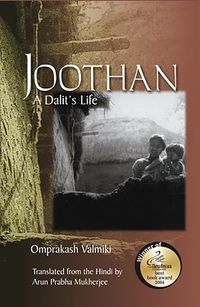
Valmiki Joothan by Omprakash Valmiki is one such work of Dalit literature, first published in Hindi in 1997 and translated into English by Arun Prabha Mukherjee in 2003 (she added an excellent introduction in the 2007 edition). It is a memoir of growing up ‘untouchable’ starting in the 1950s outside a typical village in Uttar Pradesh. Told as a series of piercing vignettes, Joothan is also a remarkable record of a rare Indian journey, one that took a boy from extremely wretched socioeconomic conditions to prominence as an author and social critic.

§

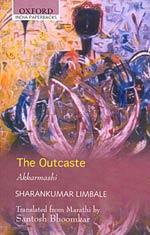
TheOutcaste Valmiki was born into the Chuhra caste (aka Bhangi), whose ordained job it was to sweep the roads, clean the cattle barns, get shit off the floor, dispose of dead animals, work the fields during harvests, and perform other physical labor for upper caste people, including the Tyagi Brahmins. The Tyagis didn’t address them by name, only called out, ‘Oe Chuhre’ or ‘Abey Chuhre.’ It was alright to touch cows and stray dogs but touching a Chuhra inflicted instant ‘pollution’ on the Tyagis. During his boyhood, his entire family worked hard, yet they ‘didn’t manage to get two decent meals a day,’ not the least because they often didn’t get paid for their labor and instead ‘got sworn at and abused.’

The Chuhras were forced to live outside the village reserved for upper caste people. A high wall and a pond segregated their brick houses in the village from the Chuhra basti, or cluster of shanties. Upper caste men and women of all ages came out and used the edge of the pond as an open-air lavatory, squatting across from the Chuhra homes in broad daylight with their private parts exposed. ‘There was muck strewn everywhere,’ writes Valmiki. ‘The stench was so overpowering that one would choke within a minute. The pigs wandering in narrow lanes, naked children, dogs, daily fights, this was the environment of my childhood.’
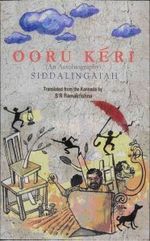
Ooru-keri1 In the rainy season, these narrow lanes of the basti filled up with muddy water mixed-in with pigs’ excrement; flies and mosquitoes thrived. Everybody’s arms and legs became mangy and developed itchy sores. There was one drinking well in their basti for about thirty families, and despite a guard wall around it, it became full of long worms during the rainy season. They had no choice but to drink that water, as they were not permitted to use the well of the upper caste folks. Their homes were made of clay that sprang leaks all over. During heavy rains, the ceilings or walls often collapsed, as it did for Valmiki’s house more than once. One season most of their homes collapsed; as always, there was no outside help or insurance, and they had to rebuild on their own.

What Valmiki had going for him was a headstrong set of parents, determined to give him a better future. In 1955, despite Gandhi’s work on ‘upliftment’ and the new anti-discrimination laws on the books, his father had a hard time getting him admission into a primary school. When the boy finally got in, he was not allowed to sit on the benches but on the floor, away from the upper caste boys, at the back by the door, from where he couldn’t see the blackboard well. Other boys hurled epithets and beat him casually, turning him into a cowering introverted kid. Even the teachers looked for excuses to punish him, he writes, ‘so that I would run away from the school and take up the kind of work for which I was born.’ In fourth grade, a new headmaster arrived, who thrashed him almost daily and one day asked him to take a broom and sweep all the rooms and the playground in school. The hapless boy spent two full days sweeping, hoping it would soon be over.
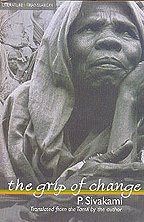
GripChange

The third day I went to the class and sat down quietly. After a few minutes the headmaster’s loud thundering was heard: ‘Abey Chuhre ke, motherfucker, where are you hiding … your mother …’ I had begun to shake uncontrollably. A Tyagi boy shouted, ‘Master Saheb, there he is, sitting in the corner.’

The headmaster had pounced on my neck. The pressure of his fingers was increasing. As a wolf grabs a lamb by the neck, he dragged me out of the class and threw me on the ground. He screamed: ‘Go sweep the whole playground … Otherwise I will shove chillies up your arse and throw you out of school.’

Frightened, I picked up the three-day-old broom [now only a cluster of] thin sticks. Tears were falling from my eyes. I started to sweep the compound while my tears fell. From the doors and windows of the schoolrooms, the eyes of the teachers and the boys saw this spectacle. Each pore of my body was submerged in an abyss of anguish.

 As it turned out, his father was passing by that day and saw him sweeping the grounds. Sobbing and overcome by hiccups, the boy told him the story. Father snatched the broom and with eyes blazing, began to scream, ‘Who is that teacher, that progeny of Dronacharya, who forces my son to sweep?’ [1] All the teachers stepped out, including the headmaster, who called his father names and roared back, ‘Take him away from here … The Chuhra wants him educated … Go, go … Otherwise I will have your bones broken.’

Stepchild On his way out, his father declared in a loud voice, ‘I am leaving now … but this Chuhre ka will study right here … In this school. And not just him, but there will be more coming after him.’ His father’s courage and fortitude left a deep and decisive mark on the boy’s personality. His father knocked on the doors of other upper caste men he had worked for, hoping they would support him against the headmaster, but the response was the opposite. He was plainly told: ‘What is the point of sending him to school?’ ‘When has a crow become a swan?’ ‘Hey, if he asked a Chuhra’s progeny to sweep, what is the big deal in that?’ When his father had all but given up, one village elder yielded to his tearful beseeching and intervened to get the boy reinstated. A close call, else he would have ended up illiterate like the rest of his family.

Most of his family worked at harvest time. For a hard day’s labor, which included harvesting lentils, cutting sheaves of wheat in the midday sun, and transporting them via bullock carts, each person got one out of 21 parts produced—about two pounds of wheat—as wages. For the rest of their labor in the cowshed, they got paid in grain and a leftover roti each day (‘made by mixing the flour with the husk since it was for the chuhras’), and at times scraps of leftovers from their employer’s plates, or joothan.

The Hindi word joothan, explains Mukherjee, ‘literally means food left on an eater’s plate, usually destined for the garbage pail in a middle class, urban home. However, such food would only be characterized ‘joothan’ if someone else besides the original eater were to eat it. The word carries the connotations of ritual purity and pollution as ‘jootha’ means polluted.’ Words like ‘leftovers’ and ‘leavings’ don’t substitute well, ‘scraps’ and ‘slops’ work better, though ‘they are associated more with pigs than with humans.’ Joothan is also unfit for consumption by anyone in the eater’s family or in his own community. Mukherjee writes:
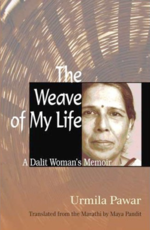
UrmilaPawar

The title encapsulates the pain, humiliation and poverty of Valmiki’s community, which not only had to rely on joothan but also relished it. Valmiki gives a detailed description of collecting, preserving and eating joothan. His memories of being assigned to guard the drying joothan from crows and chickens, and of his relishing the dried and reprocessed joothan burn him with renewed pain and humiliation in the present.

The word actually carries a lot of historical baggage. Both Ambedkar and Gandhi advised untouchables to stop accepting joothan. Ambedkar, an indefatigable documenter of atrocities against Dalits [and an ‘untouchable’ himself], shows how the high caste villagers could not tolerate the fact that Dalits did not want to accept their joothan anymore and threatened them with violence if they refused it.

Valmiki describes one such incident, among the most powerful in the text. His community looked forward to marriage feasts in the village when they would gather outside with big baskets. After the guests had eaten, ‘the dirty pattals, or leaf plates, were put in the Chuhras’ baskets, which they took home, to save the joothan sticking to them.’ At the end of one such marriage feast, Valmiki’s mother requested the Brahmin host for additional food for her children, only to be humiliated and told to mind her place, be satisfied with what she already had collected, and to get going. Valmiki writes:

That night the Mother Goddess Durga entered my mother’s eyes. It was the first time I saw my mother so angry. She emptied the basket right there. She said to Sukhdev Singh, ‘Pick it up and put it inside your house. Feed it to the baratis [marriage guests] tomorrow morning.’ She gathered me and my sister and left like an arrow. Sukhdev Singh had pounced on her to hit her, but my mother had confronted him like a lioness. Without being afraid.
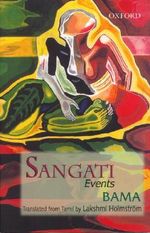
Sangati His family fell on even harder times when his oldest brother and wage earner got a high fever, and without access to a clinic, died. Valmiki had finished fifth grade but their deepening poverty—they didn’t even have enough food—meant that he could not continue with school. He dropped out and began tending buffaloes in the field, watching with a heavy heart his schoolmates going to school. Over the protests of others, his brother’s widow pawned the only piece of jewelry she had, a silver anklet, to pay for Valmiki’s school—yet another close call.

Back in school, Valmiki continued to face severe discrimination. Though he consistently did well in his studies, his memories of school are suffused with pain and humiliation: from taunts and beatings by schoolmates and teachers in a ‘terror-filled environment’, to his exclusion from extracurricular activities like school plays; during exams, he was not allowed to drink water from a glass when thirsty. He had to cup his hands, and ‘the peon would pour water from way high up, lest our hands touch the glass.’ At times, he writes, ‘I feel I have grown up in a cruel and barbaric civilization.’ He does remember fondly a couple of boys who befriended him and didn’t let caste come between them.

Remarkably enough, Valmiki was determined to make full use of the school library; by the time he reached eighth grade, he had read Saratchandra, Premchand, and Rabindranath Tagore, and relates this poignant vignette.
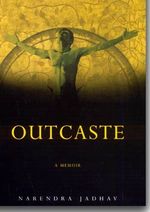
Outcaste_BIG

I had begun to read novels and short stories to my mother in the faint light of the wick lamp. Who knows how often Saratchandra’s characters have made a mother and son cry together? This was the beginning of my literary sensibility. Starting from Alha, the Ramayana and the Mahabharata to Sur Sagar, Prem Sagar, Premchand’s stories, Kissa Tota Maina … whatever I found, I, the son of an untouchable illiterate family, read to my mother.

He studied in the light of a lantern in his intensely noisy neighborhood. ‘I was the first student of my caste,’ writes Valmiki, ‘not just from my basti but from all the surrounding villages of the area, appearing for the high school exams,’ and he felt the pressure that came from their pride in him. His graduation became an occasion for a feast in his community. He remembers that even one of the Tyagi Brahmins came to his basti to offer congratulations, and later took him home and fed him lunch in their own dishes while sitting next to him. Valmiki’s example inspired other children to show more interest in education, and for a while he even ran evening classes in his basti.

§
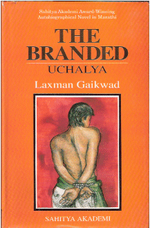
TheBranded

Unlike in the dominant Hindu tradition—which Valmiki pointedly denigrates and wants no part of—widow remarriage was even in the 60s an accepted norm in his community. He describes in some detail how their gods were utterly different from Hindu gods and how different their religious rituals were. [2] He also describes lots of family drama and interpersonal politics in his community, not shying from reproach where it is due, especially on their rank superstitions. He writes about their jobs, suffering, and everyday struggle for dignity, acknowledging that the women had an ever rawer deal than men.

Many Hindi writers and poets had written about the charms of village life, observes Valmiki, but its ‘real truth,’ depicting the ‘terrible suffering of village life has not even been touched upon by the epic poets of Hindi.’ He also recounts other changes that were beginning to take place. The young men of his community had begun to refuse to work without wages. This soon escalated into an open confrontation with the upper caste men who couldn’t tolerate their nerve, and even got the local police to beat them up. Valmiki calls this a turning point of sorts; young men began departing from their basti to nearby towns and cities.

Ambedkar2 Valmiki too left to pursue college education in the city of Dehradun, where his brother and uncle worked. They all shared a single room in a Bhangi basti. It was here that he encountered the works of Ambedkar, which shook him up; he ‘spent many days and nights in great turmoil.’ He grew more restless; his ‘stone-like silence’ began to melt, and ‘an anti-establishment consciousness became strong’ in him. Ambedkar’s books, he writes, ‘had given voice to my muteness,’ and raised his self-confidence. His rage grew sharper and he became more active in college events, until his penury made him quit college and seek technical training in an ordnance factory, with its promise of a shop floor job that would judge him only for his work. But quitting college made no dent whatsoever in his love of reading.

After a year of training, he got posted to the city of Jabalpur in 1968, moving in the ensuing years to Bombay and Chandrapur, Maharashtra. The last third of his memoir is on this phase of his life. Now he really came into his own: he met a bunch of Marxists, read Chekov, Turgenev, Dostoevsky, Hemmingway, Zola, and other Western writers. He joined a local theater group, saw Vijay Tendulkar’s plays, ‘read the entire works of Tagore and Kalidasa,’ was drawn to the Buddha’s teachings, and discovered Marathi Dalit literature, the most sophisticated in all of India, which energized him and forged his literary consciousness. He began to publish poems and write a column in a local weekly, later also plays and short stories. Almost two decades later, he published Joothan. In its last two paragraphs, he anticipates his critics:
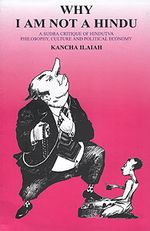
Ilaiah

Times have changed. But there is something somewhere that continues to irk. I have asked many scholars to tell me why Savarnas [caste Hindus] hate Dalits and Shudras so much?  The Hindus who worship trees and plants, beasts and birds, why are they so intolerant of Dalits? Today caste remains a pre-eminent factor in social life. As long as people don’t know that you are a Dalit, things are fine. The moment they find out your caste, everything changes. The whispers slash your veins like knives. Poverty, illiteracy, broken lives, the pain of standing outside the door, how would the civilized Savarna Hindus know it?

 Why is my caste my only identity? Many friends hint at the loudness and arrogance of my writings. They insinuate that I have imprisoned myself in a narrow circle. They say that literary expression should be focused on the universal; a writer ought not to limit himself to a narrow, confined terrain of life. That is, my being Dalit and arriving at a point of view according to my environment and my socioeconomic situation is being arrogant. Because in their eyes, I am only an SC, the one who stands outside the door.[3]

Valmiki’s narrative voice brims with a quiet sense of outrage at what he had to endure as a human. Indeed, I’m inclined to see his memoir as a form of Satyagraha: in reflecting back to others their own violence and injustice, it attempts to shame them into introspection. This is the kind of book that becomes ‘the axe for the frozen sea inside us.’ More Indians ought to read it and let its hard edges get to work inside them.

***
(Also consider reading my companion piece, The Blight of Hindustan, which provides a brisk overview of the Indian caste system—its origins, spread, and some historical attitudes and debates.)

_____________________

Notes:
DalitAesthetic 1. Arun Prabha Mukherjee notes that ‘Valmiki places his and his Dalit friends’ encounters with upper caste teachers in the context of the Brahmin teacher Dronacharya tricking his low caste disciple Eklavya into cutting his thumb and presenting it to him as part of his gurudakshina, or teacher’s tribute. This is a famous incident in the Mahabharata. By doing this, Dronacharya ensured that Eklavya, the better student of archery, could never compete against Arjun, the Kshtriya disciple. Indeed, having lost his thumb, Eklavya could no longer perform archery. In high caste telling, the popular story presents a casteless Eklavya as the exemplar of an obedient disciple rather than the Brahmin Dronacharya as a perfidious and biased teacher. When Valmiki’s father goes to the school and calls the headmaster a Dronacharya, he links the twentieth-century caste relations to those that prevailed two thousand years ago.’
2. Kancha Ilaiah attempts a more systematic exposition on the sociocultural differences between the caste Hindus and the Shudras and Dalits in his trenchant book, ‘Why I Am Not a Hindu’.
3. SC stands for Scheduled Caste, the neutral-sounding administrative term for the lowest castes, including the ‘untouchables’.

__________________________

More writing by Namit Arora?
__________________________

Posted by Namit Arora at 12:10 AM | Permalink

Comments

Here are a couple of Gandhi quotes taken from “Castes of Mind” by Nicholas Dirks, Princeton Uni. Press , 2001 (page 234).

"When, years later, Gandhi defended himself against attacks by Ambedkar over his views of caste, he wrote that “Caste has nothing to with religion. It is a custom whose origin I do not know and do not need to know for the satisfaction of my spiritual hunger. But I do know that it is harmful both to spiritual and national growth.” At roughly the same time, he stated that “Caste has to go”"

These statements of Gandhi do not seem to be well known. The references that Dirks gave are: Gandhi, Collected works, vol. 63, p.153, vol. 62, p.121

Posted by: gaddeswarup | Mar 29, 2010 2:30:56 AM

FYI, the comments glitch on 3QD (and many other Typepad blogs) is now fixed. Thanks, Robin.

Posted by: Namit | Mar 29, 2010 7:00:31 PM

What a story. Thank you, Namit. The author of _Joothan_ is not a whole lot older than I am, and I am trying to think if an African American child who entered my grade school in Texas in the 60s would have been brutalized in a similar manner. It's impossible to say, for no such child ever came to that school, in my time there, and I cannot say for sure that the racism, casual yet systematic, that was everywhere then would not have made that child's life all but unendurable. Namit, the story you tell of being, as a child, an observer and unwitting participant in this system is one guaranteed to make most Southerners over 40 highly uncomfortable.

Posted by: Elatia Harris | Mar 29, 2010 7:39:57 PM

Dear Namit Arora:
Thank you for your wonderful reading of Joothan, as well as your earlier piece on untouchability. Both will be helpful to my students. I also appreciated the fact that you wrote about your childhood experiences in Gwalior (I, too, am from M.P.). It still amazes me how naturalized the daily exploitation going on around me was and how my own consciousness failed to register it. Analyses like yours can help.

I really like the quote, "the axe for the frozen sea inside us." Ambedkar was the axe for Valmiki's "stone like silence," and Valmiki can be the axe for us.
Could you tell me where that quote is from? I really like it.
I would also like you to know that I have just published another translation with Samya and hope that one day you might review it too. It is a novel by Marathi Dalit writer SharanKumar Limbale and is entitled "Hindu."

Posted by: Arun Mukherjee | Mar 29, 2010 9:44:00 PM

One more comment to add to my previous post. I am grateful that you reviewed the Indian edition as the American editor's changes rankle me a lot. But that would be another story.

Posted by: Arun Mukherjee | Mar 29, 2010 9:47:39 PM

Ms. Mukherjee,

Thank you for your remarks, but above all for translating such works and making them accessible to new audiences. I particularly enjoyed your introduction to Joothan. Not only are such translations long overdue for their own sake, but they also provide a necessary corrective to the urban, English-speaking upper caste narrative of India that now gets the most airtime in India and abroad.

I would love to hear more about the American editor's changes that rankle you. Do share what you can on this public forum. I'll definitely consider reviewing your translation of Limbale's work. For others reading this, here is a short review of it.

That quote is by Kafka, on the books we ought to read, from a letter to Oskar Pollak, Jan 27, 1904:

‘Read the kind of books that wound and stab us … that affect us like a disaster, that grieve us deeply, like the death of someone we loved more than ourselves, like being banished into forests far from everyone, like a suicide. A book must be the axe for the frozen sea inside us.’

Posted by: Namit | Mar 29, 2010 10:53:16 PM

What a heroic life! Extremely painful to read, but at the same time encouraging because of Valmiki's courage, determination and ultimate triumph over forces that might have destroyed him.

Posted by: Louise Gordon | Mar 29, 2010 10:57:00 PM

Thanks for sharing this story Namit - its heartrending !

Posted by: Manisha Verma | Mar 30, 2010 1:31:34 AM

Nice one. your collection should be appreciated. However it might have pretty beuty in this blog if you involved Bhotmange's slaughtering contradiction.

Posted by: Vivek Nimje | Mar 30, 2010 2:57:51 AM

Powerful stuff. Elatia is right. Those over forty, particularly from the South, even now are prone to turn away in denial rather than confront those same demons in their own DNA.
And yes, it's in the social gene pool. I see it manifest in the vile selfishness being stirred up by voices claiming to be Conservative but ignorant about the respectable, humane roots of real conservatism.

Xenophobia mistakes atavism for Conservatism and anti-immigrant sentiments result. Recent evidence is enshrined in the new health care reform legislation specificzlly writen to insure "illegal aliens" are denied even the crumbs of our over-larded system. Parallels with this story are conspicuous in America. Those who read this story with smug assurance that it is about some other culture do so in shame and denial.

Posted by: John Ballard | Mar 30, 2010 10:40:32 AM

In the USA:


American Pictures

Posted by: Louise Gordon | Mar 31, 2010 1:17:23 AM

Dear Namita Arora,
Thanks a lot for sharing the review of this heart-touching Autobiography..I am really amazed to see your collection of the different books by the Dalit Authors.
Keep it up.
Moola Ram

Posted by: Moola Ram | May 14, 2010 4:53:39 AM

Wow...that was quite a read, made me cry with shame, almost.

I have a different narrative,that has some parallels, of growing up in the 80's in a middle class family of a Public Sector company township...of lost chances, and unrecognised achievements, only because of the caste my family bore, Brahmins....

Now we were (supposedly) the enlightened 'modern' ones that didn't quite believe in the barbaric idea of untouchability.....yet, my mother never could convincingly(still can't) explain why the domestic help was never allowed in our kitchen, and had to enter the house from the rear door....why the utensils used for worship or the family altar would never be cleaned by the maid, and why 'certain things' never change ?

At school, of course, things were decidedly civilized...we only became conscious of existence of caste, when the teacher passed around a sheet for us to fill one day in class (apparently, for the census or some such statistical endeavour)
But affirmative action aka 'reservation' was a bad word amongst us....we were kids that grew up during the 'Mandal Commission Riots'...never quite got why the college students were immolating themselves on TV, until the teachers told us that was because they wanted 'true equality of opportunity'......i still don't subscribe to the idea of caste based reservations (I wholeheartedly vote for the idea of economic reservations..for in the current generation, money is the only caste) but my derisive view of the 'positive discrimination' in the current socio-political setup,though always tempered with the burden of history, has decidedly become less derisive, and perhaps more understanding, if not sympathetic altogether.

I always knew that my ancestors left us with a shameful legacy as far as social evils go...but i also thought it unfair, to expect the current generation (and many more to come) to pay for their father's sins.....I realise that it is our cross to bear, and perhaps, engineer a social situation that might make it less of an inconvenience to generations to come....perhaps reservation will become a really 'bad word' amongst non-dalits, and dalits, in future.....

Posted by: Aadarsh Kadambi | Aug 4, 2010 5:30:34 AM

Long time man!

Posted by: Vineet Singh | Aug 8, 2010 8:22:28 AM

Post a comment


Subscribe to this blog's feed  

PayAnywhere with iphone credit card swiper

Android Tablet

Bluetooth Headset

2013 New Style Dresses

Compare Car Rental Prices

DHgate.com Wholesale

3QD on Facebook

3QD on Kindle

3QD by Daily Email

Receive all blogposts at the same time every day.

Enter your Email:


Preview 3QD Email

3QD on Twitter

Miscellany

Lijit Search

AddThis Social Bookmark Button

Add to Google

Recent Comments

Stuart Mathieson on REFLECTIONS ON WOOLWICH

Kai Matthews on The Moral Status of Rocks

Norman Costa on Dear Guardian: You’ve Been Played

Dave Ranning on REFLECTIONS ON WOOLWICH

Joel Grant on Why Rational People Buy Into Conspiracy Theories

musafir on REFLECTIONS ON WOOLWICH

Norman Costa on Race Is Not Biology

Geoff on REFLECTIONS ON WOOLWICH

Kai Matthews on Why Rational People Buy Into Conspiracy Theories

fallensparks on REFLECTIONS ON WOOLWICH

jon s on Race Is Not Biology

musafir on REFLECTIONS ON WOOLWICH

musafir on Faith Healing

Dave Ranning on REFLECTIONS ON WOOLWICH

Geoff on REFLECTIONS ON WOOLWICH

Luke Lea on Race Is Not Biology

fallensparks on REFLECTIONS ON WOOLWICH

Luke Lea on Race Is Not Biology

jo smith on REFLECTIONS ON WOOLWICH

jo smith on Guy de Maupassant

Geoff on Jeremy Scahill & Noam Chomsky on Secret U.S. Dirty Wars From Yemen to Pakistan to Laos

Jim on Friday Poem

JF on REFLECTIONS ON WOOLWICH

Jesse on REFLECTIONS ON WOOLWICH

Kenan Malik on REFLECTIONS ON WOOLWICH

Acclaim For 3QD


"I couldn't tear myself away from 3 Quarks Daily, to the point of neglecting my work. Congratulations on this superb site."—Steven Pinker, Johnstone Professor of Psychology, Harvard University.

"I have placed 3 Quarks Daily at the head of my list of web bookmarks."—Richard Dawkins, Charles Simonyi Professor of the Public Understanding of Science at Oxford University.

"Just wanted you to know I’m one of many who reads and enjoys 3 Quarks....almost daily."—David Byrne, musician, former lead-singer of the Talking Heads, artist, intellectual.

Read more here.

The 3QD Prizes

Subscribe to this blog's feed