 Games and the idea of play have been obsessing me lately. Having recently exited academia—for a short while, at least—I've been able to give a little more time to this pastime. Wanting to go beyond my adoration of the intriguing, endless theme of wordplay, I thought a brief reflection on play and its various other sorts was in order.
For most of us, play starts in the cradle. If we're lucky, we keep it going a little longer, and perhaps make it part of our very selves and our lives. My recent fascination with play goes 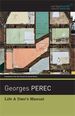 back to an Indian-summer day last autumn, when I picked up a copy of George Perec's Life a User's Manual. During an afternoon stroll I stopped in at 192 Books and was drawn to the cover—a perfectly sound reason to purchase a tome such as this. Soon after finishing that, once my misty eyes cleared, I devoured Species of Spaces. Perec's job as a crossword puzzle craftsman and master word player would suggest that I'm wholly underqualified to even begin talking on the subject, but it was his work that got me thinking about play in a serious way.
Because I so often find myself posting on holidays, I'd also like to make a nod to this (now past) Valentine's Day. One of my most beloved mentions of play occurs in the lighthearted yet entirely heartfelt context of a Queen song, “Play the Game”:
Open up your mind and let me step inside
Rest your weary head and let your heart decide
It's so easy when you know the rules
It's so easy all you have to do
Is fall in love
Play the game
Everybody play the game
Of love
Love is a game, life is a game—and only those who step up to play, regardless of whether they win or lose, will really feel any of it.
Role play
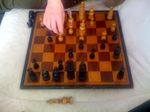
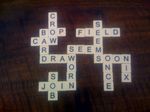
Of course, in any game, knowing the rules is key. To fast-forward from last autumn to these deep winter days, this Sunday in itself might be a better pretext than my crush on cher Georges to inspect various aspects of play. I've been out of town for a conference that just ended on Saturday, so my Sunday 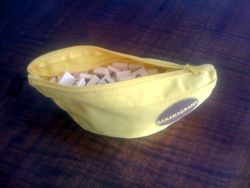 was spent recovering and relaxing with family. I played three games of chess, tried to tune out the noise of the video games being played in the background for much of the day, and was also introduced to a (very) distant cousin of Scrabble called “Bananagrams.” After all that, we went in search of a film to unwind with. Half the family was bored by the first five minutes of Some Like it Hot, and, scanning the miniscule DVD library here, the only thing we could all agree on was Midnight Cowboy. I remebered it being a rather depressing flick, but couldn't help laughing aloud when, after the mod party scene when Joe Buck and his newfound lady friend are in bed and he's suffering from performance anxiety (or just hasn't come down from the pill he took from a stranger earlier that night), the chick suggests a round of Scribbage to help him get his mojo back. He played nude, she donned a fur coat. Nedless to say, the game therapy worked, and n'er a cuter couple has ever gone down in history as such sexy Scribbage players.
 I do hope you'll forgive me for playing it by ear as I write my way through this piece. Much as I love intense research, Sunday nights and early Monday mornings aren't the best time for it, and as we all know, all work and no play….
“Plays well with others”
Anyway, all this proved to me that games and play help people relate to one another, and often bring out certain aspects of character we wouldn't otherwise notice. While my recent game binge was somewhat revelatory, in that the words I played in Bananagram likely revealed some subconscious trains of thought, I had a similar day of play last September that was even more enlightening. I was visiting my aunt and uncle, and made a point of going because I knew my grandmother would be there as well. It's not often that three generations of women can get together, so of course one of the first things we sat down to do was play a round of mill, also known as Nine Men's Morris. Looking at scrapbooks and old family photos and  documents might be educational, but there's nothing like a tri-generational stab at play. My aunt had taught me that game when I was little and in the intervening years I'd forgotten all but the very basics. My grandmother had never played it. This made for some interesting exchanges, and in the end I saw us all switch places, in a way: my aunt began more and more to resemble my father (the professor) as she methodically walked her mother (my grandmother) through the goal and tactics; my grandmother reminded me of myself as a little girl, frustrated and overwhelmed by too many new rules being imposed on her, not sure of how to go about the whole thing, and not sure she even wanted to try; my own attitude toward this playful reunion reminded me of the kind of woman I hope to be when I'm my grandmother's age—the kind of woman who doesn't much care what anyone thinks, doesn't worry too much about taking risks, and prizes enjoyment above all else.
Play down your weaknesses
The Olypics have just begun, and catching snippets of the women's mogul competition reminded me that I've always wondered why this series of such grueling events is known as the Olympic Games. As a species, humans play sports and they play instruments, but can playing hockey really be anything like playing the piano? Shouldn't we have a different verb for such different activities, as so many other languages do? Of course, curling is such a funny sport (the tourney type is even know as a round-robin tournament, a giggle-inducing name if ever I've heard one) I think in it's particulare case we can just let it go….
While the Olympics are a fairly ideal way for one nation to meet and compete with one another, yet  another theater in which international differences play out is in war. I recently watched the eye-opening Frontline documentary “Digital Nation,” and learned that the U.S. army is virtually using video games to recruit potential soldiers in Philadelphia. War games indeed.
And discussing this kind of killer instinct the other day with an acquantance of mine, he recounted that people who are good at playing tennis often have the sort of skills required to be successful traders. I thought the idea that someone with instinctual prowess on the court would be more likely to play well in the pit of the financial trading floor was interesting.
Just playing around
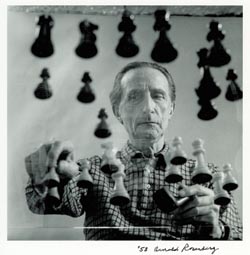 Duchamp was one of the twentieth century's most famed players. In art as in chess as in life, he knew the rules and knew equally well how to bend and even break them. If only contemporary art could take itself as lightly as he seemed to. And no treatment of play can get away with not mentioning Johan Huizinga's Homo Ludens, the first real treatise on play.
There are countless other tidbits I'd like to work in—musical terms like scherzo and other joke- and game-based art terms—but it's getting late and I need my rest in order to be fresh for the games that await me tomorrow. Signing off, I'll leave the last words to Freddie:
When you're feeling down and your resistance is low
Light another cigarette and let yourself go
This is your life
Don't play hard to get
It's a free world
All you have to do is fall in love
Play the game
Everybody play the game….
Thanks for reading—and previous Lunar Refractions can be found here.
