
| ABOUT US | ARCHIVES | LINKS | RSS FEED | MONDAYS | |

3quarksdaily

An Eclectic Digest of Science, Art and Literature

« The Playboy Book | Main | Basil Beattie: Paintings from the Janus series II 2010 »

February 07, 2010

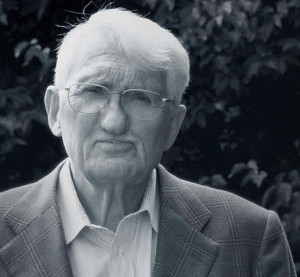
Eduardo Mendieta Interviews Jurgen Habermas

Habermas_A2_5-300x277 Over at The Immanent Frame (excerpt can be found here):

EM: Over the last couple of years you have been working on the question of religion from a series of perspectives: philosophical, political, sociological, moral, and cognitive. In your Yale lectures from the fall of 2008, you approached the challenge of the vitality and renewal of religion in world society in terms of the need to rethink the link between social theory and secularization theory. In those lectures, you suggest that we need to uncouple modernization theory from secularization theory. Does this mean that you are taking distance from the dominant trends in social theory in the West, which began with Pareto, continued through Durkheim, and reached their apogee in Weber, and thus also from its explicit and avowed Eurocentrism?

JH: We should not throw out the baby with the bathwater. The debate over the sociological thesis of secularization has led to a revision above all in respect to prognostic statements. On the one hand, the system of religion has become more differentiated and has limited itself to pastoral care, that is, it has largely lost other functions. On the other hand, there is no global connection between societal modernization and religion’s increasing loss of significance, a connection that would be so close that we could count on the disappearance of religion. In the still undecided dispute as to whether the religious USA or the largely secularized Western Europe is the exception to a general developmental trend, José Casanova for example has developed interesting new hypotheses. In any case, globally we have to count on the continuing vitality of world religions.

In view of the consequences of which you speak, I consider the program of the group around Shmuel Eisenstadt and its comparative research on civilizations promising and informative. In the emerging world society, and concerning the social infrastructure, there are, as it were, by now only modern societies, but these appear in the form of multiple modernities because the great world religions have had a great culture-forming power over the centuries, and they have not yet entirely lost this power. As in the West, these “strong” traditions paved the way in East Asia, in the Middle East, and even in Africa for the development of cultural structures that confront each other today—for example, in the dispute over the right interpretation of human rights. Our Western self-understanding of modernity emerged from the confrontation with our own traditions. The same dialectic between tradition and modernity repeats itself today in other parts of the world.

Posted by Robin Varghese at 06:35 PM | Permalink

Comments

…has limited itself to pastoral care, that is, it has largely lost other functions:

I wonder what he means by this (as if this wasn't enough). There are also catechetics, ritual reinforcement and evangelism, all of which are pretty active programs in any church I am aware of. What am I missing? Crusades?

Posted by: Carlos | Feb 7, 2010 10:49:58 PM

Post a comment


Subscribe to this blog's feed  

3QD ADVERTISING

Find the best prices on Las Vegas Show Tickets at Best of Vegas and Orlando Theme Parks at Best of Orlando!

3QD on Facebook

3QD on Kindle

3QD by Daily Email

Receive all blogposts at the same time every day.

Enter your Email:


Preview 3QD Email

3QD on Twitter

Miscellany

Lijit Search

AddThis Social Bookmark Button

Add to Google

Recent Comments

Al on Franzen, Wallace and the Question of Realism

aguy109 on Reacting to Reactionary Muslims

aguy109 on The Pathology of Stabilisation in Complex Adaptive Systems

Ken Pidcock on How to win a fight against twenty children

Erich on How to win a fight against twenty children

reader on How to win a fight against twenty children

Carlos on Franzen, Wallace and the Question of Realism

Janet Kerr on Olivia Chaney -Aupres de ma Blonde

omar on Reacting to Reactionary Muslims

j_93 on Sanctions Don’t Promote Democratic Change

droog on How to win a fight against twenty children

Mike Cope on Sanctions Don’t Promote Democratic Change

Dredd on Sanctions Don’t Promote Democratic Change

Louise Gordon on How to win a fight against twenty children

Seyma on Snowboarding at Night

aguy109 on Whitney Houston: Didn't we almost have it all

aguy109 on Matzo ball memories

j_93 on Reacting to Reactionary Muslims

Mike H. on Whitney Houston: Didn't we almost have it all

Jim on the tyrant's wife

Evert Cilliers on Why Is the Amazing Movie Directed by Angelina Jolie not on the Oscar List?

modernguy(NeanderthalGuy) on Why Is the Amazing Movie Directed by Angelina Jolie not on the Oscar List?

aguy109 on Reacting to Reactionary Muslims

Orla Schantz on Bubbles: Spheres, Volume I: Microspherology

Kabir on Reacting to Reactionary Muslims

Acclaim For 3QD


"I couldn't tear myself away from 3 Quarks Daily, to the point of neglecting my work. Congratulations on this superb site."—Steven Pinker, Johnstone Professor of Psychology, Harvard University.

"I have placed 3 Quarks Daily at the head of my list of web bookmarks."—Richard Dawkins, Charles Simonyi Professor of the Public Understanding of Science at Oxford University.

"Just wanted you to know I’m one of many who reads and enjoys 3 Quarks....almost daily."—David Byrne, musician, former lead-singer of the Talking Heads, artist, intellectual.

Read more here.

The 3QD Prizes

Subscribe to this blog's feed