
Psychological Science: Measurement, Uncertainty, and Determinism – Part 2
by Norman Costa
Part 1 of this article can be found HERE.
Other articles in Norman Costa's 'Psychological Science' series can be found HERE.
The [Sad] Story So Far
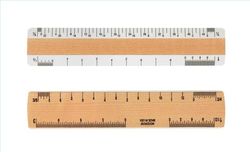
Few ideas are as fundamental to psychological science, and all science, as the concept of measurement. Science does not exist without measurement. Yet, many psychologists who would identify themselves as scientists do not seem to understand the most fundamental definition of measurement: Measurement is a comparison to a standard. This does not speak well for those who are responsible for scientists-in-the-making at the undergraduate level and especially at the graduate level.
Standards of measurement are inventions of the human mind, they are arbitrary, and they require only consensus and demonstrated utility. Over time, standards are improved, changed, or even discarded. For example, standards of measuring time have evolved from naturalistic observation of the cycles of day and night, to using the oscillating properties of the cesium atom. Standards for measuring psychological depression have evolved from vague and general descriptions to a tallying of specific behaviors that can be observed.
Science is an approach to understanding nature and ourselves that has method and content. Science as method is the systematic observation of phenomena and the recording of data. Without measurement, there is no recording of data from observation. Measuring, comparing to a standard, takes place on many levels from the most simple to the very complex. The most basic comparison to a standard is determining that a phenomenon is present or not present. Other comparisons allow us to determine similarity or dissimilarity. If a decision is made that something is dissimilar to a standard, then we might determine how dissimilar, and in what direction, like more or less. Science as content is the organization of this information into a body of knowledge. For example, we have the science of metallurgy, the science of biology, and the science of verbal learning.
So where is this academic exercise leading us? I thought you would never ask. It is leading us to the next important topic associated with measurement: Error, more specifically, errors of measurement. One of the biggest mistakes that scientific psychology makes, however, is confusing the notion of errors of measurement with Werner Heisenberg's 'Uncertainty Principle.' Do you want to know why physicists laugh themselves silly when psychology presents itself as a science? Do you want to know why many scientists in other fields regard scientific psychology as an oxymoron? Please read on.
Scientific Psychology Suffers from Penis [Physics] Envy
In the very first class of my first semester of teaching undergraduate Psychological Research Methods, I assigned an article titled, “A Possible Solution For The Problem Of Time In Quantum Cosmology,” By Stuart Kauffman and Lee Smolin , with an introduction by John Brokman. The most obvious question is why I should assign such an off-topic reading in a class on research methods in psychology. The answer to that question lies in the instructions I gave to my students. I asked them to focus NOT on the substantive issues of quantum physics, but on the nature of science, and the scientists themselves. What could they learn, I asked them, about science and scientists, who they are and what they do, from reading the article?
[INSERT FOLD ABOUT HERE]
At the beginning of the very next class we discussed the article, and my students did not disappoint. I can still see one of my students in the next to the last seat of the row against the wall, to my right. He offered one of the best observations made in that class on the nature of science. He said that he thought the findings of science were well defined and agreed upon, yet this article showed that science was no such thing. In fact, there was a lot of disagreement on what was true and what was not. I can still see his face because it was a look of confusion, dismay, and great disappointment. He thought that by this time, they [the scientists] would have figured things out and come to a conclusion.
Others noted that some scientists seem to like each other and some didn't. A few observed that big egos were involved, and there was not a little political posturing going on. All of the scientists appearing in the article seemed to be very sure of themselves as they differed greatly with each other. They seemed to be very competitive. Scientists seemed to argue a great deal.
My contribution to the discussion was to point out that part of being a scientist, as could be inferred from the article, was to publish and publicize their findings. Depending upon the venue, they might write an article, read a paper, travel to conferences and get someone else to pay for it, challenge other's results, defend their own, discuss topics on a panel, call each other nasty names, hurl insults and invectives, and even punish other scientists they didn't like. There are scientists who are saints, but many manifest themselves as petty, jealous, and vindictive in their scientific life.
I like comparing scientific psychology with psychics because it dispels many false notions of science and makes room for psychology in the pantheon of science. For example:
- It dispels the notion that 'real' science is exact, objective, and dispassionate; Also, it blunts the objections of those who dismiss psychological science as inexact, subjective, and self-absorbed.
- It dispels the notion that there is such a thing as an exact science; Rather there are sciences that deal with relatively smaller errors of measurement (physics,) and others that deal with relatively larger errors of measurement (econometrics.) Psychology lies between the two in terms of the size of errors of measurement.
- Few scientists are objective and dispassionate in the absolute; Rather, science, by the way science is conducted, is self-correcting, in the long run, and keeps scientists on the straight and narrow.
- Scientists are not free of biases, preconceptions, misconceptions, and personal agendas; Rather, these can fuel the energy, motivation, and creativity of scientists.
- No scientific knowledge is absolute, unchanging, or final; Rather, all scientific knowledge is proximate and provisional, and only represents the best we can produce to this point in time. We can count on better data in the future superseding present-day knowledge.
A colleague of mine argues with me that psychology ought to get over its physics envy and stop trying to bolster itself with an eternal reference to physics. She is correct, but, I think it still has benefits in understanding science in general, as I stated above. However, she has a very good point because scientific psychology keeps getting some things wrong when we try to piggy-back on physics. I've already discussed in Part 1 how psychology's attempt to gain the respect and recognition of the more successful sciences led us to an embarrassing failure to come up with a consistent and workable definition of measurement. Measurement is not the only embarrassing blooper in a comparison of psychological science to the more successful sciences.
Uncertainty About Heisenberg's 'Uncertainty Principle'
This one is really embarrassing. Scientific psychology likes to quote the great Nobel Laureates in physics, Werner Heisenberg and Percy Bridgeman, in the belief that both are relevant to scientific psychology, and that both contain important foundations to the philosophy of science for psychology. In the case of Bridgeman and his discussion of the hypothetical construct and operationalism, he is very relevant. However, many in scientific psycholoogy profess a belief in hypothetical constructs on Sunday, and then behave as if they don't really matter on Monday. At that time we return to behaving as if our hypothetical constructs (like mental health, intelligence, job satisfaction, or social anxiety) have an actual existence in a reality that is apart from the human mind's ability to create them, conceptualize them, and use them to think and communicate. We keep trying to have our cake [hypothetical constructs] and eat it [Plato's Ideal Forms,] too.
In the case of Heisenberg's 'Uncertainty Principle,' scientific psychology keeps referencing it as if it were a known, fundamental principle of measurement in psychology. Psychologists who reference Heisenberg in their work believe that his 'Uncertainty Principle' can be restated thusly: The act of measuring a phenomenon changes that which is measured. There are three reasons it is completely wrong to reference Heisenberg in any context of measurement in psychology:
1. Heisenberg's 'Uncertainty Principle' applies ONLY to quantum physics and not to any other scientific discipline. It is not a scientific principle that can be generalized, applied, or extended to any science or field of measurement.
2. Scientific psychology, at times, mistakenly equates probabilities associated with errors of measurement in psychology, with the uncertainties associated with quantum phenomena. They are two completely different ideas.
3. Scientific psychology assumes a deterministic model of nature [at least that part of nature to which psychology devotes its time and energy], and is an anathema to quantum physics' probabilistic view of nature.

The first thing we should do is look at what Heisenberg actually said about the concept of uncertainty. Then we can determine what he meant and how it is appropriated, without justification, by scientific psychology. Here is a quote from “The Physical Principles of the Quantum Theory”, By Werner Heisenberg, 1930, Translated by Carl Eckart and F. C. Hoyt, and published by Dover Publications, Inc. in 1949. Pp.20.
Ҥ 2. ILLUSTRATIONS Of THE UNCERTAINTY RELATIONS
The uncertainty principle refers to the degree of indeterminateness in the possible present knowledge of the simultaneous values of various quantities with which the quantum theory deals; it does not restrict, for example, the exactness of a position measurement alone or a velocity measurement alone. Thus suppose that the velocity of a free electron is precisely known, while the position is completely unknown. Then the principle states that every subsequent observation of the position will alter the momentum by an unknown and undeterminable amount such that after carrying out the experiment our knowledge of the electronic motion is restricted by the uncertainty relation. This may be expressed in concise and general terms by saying that every experiment destroys some of the knowledge of the system which was obtained by previous experiments. This formulation makes it clear that the uncertainty relation does not refer to the past; if the velocity of the electron is at first known and the position then exactly measured, the position for times previous to the measurement may be calculated. Then for these past times ∆p∆q is smaller than the usual limiting value, but this knowledge of the past is of a purely speculative character, since it can never (because of the unknown change in momentum caused by the position measurement) be used as an initial condition in any calculation of the future progress of the electron and thus cannot be subjected to experimental verification. It is a matter of personal belief whether such a calculation concerning the past history of the electron can be ascribed any physical reality or not.”
Let's go point by point in understanding the 'Uncertainty Principle' and how it does not belong in discussions of psychological measurement. First, it applies only the phenomena of quantum physics. “The uncertainty principle refers to the degree of indeterminateness in the possible present knowledge of the simultaneous values of various quantities with which the quantum theory deals[.]…” There has been NO work, of which I am aware, that either generalizes the 'Uncertainty Principle' to the social sciences, or has created a similar principle that applies to the social sciences.
Second, scientific psychology equates probabilities associated with errors of measurement in psychology with the uncertainties associated with quantum phenomena. “…Thus suppose that the velocity of a free electron is precisely known, while the position is completely unknown. Then the principle states that every subsequent observation of the position will alter the momentum by an unknown and undeterminable amount such that after carrying out the experiment our knowledge of the electronic motion is restricted by the uncertainty relation….” The important words in this quote are, “…alter the momentum by an unknown and undeterminable amount…”. In fact, the amount of change will NEVER and CAN NEVER be known. In psychological science we have a concept called the measurement method effect. Simply, different methods employed to measure the same phenomenon, may produce different results. A related concept used in Item Response Theory in psychological testing is measurement invariance. Psychological science and statistics assume that measurement method effects can be determined; Or, at the very least, there is no philosophical or scientific reason why they could not be determined. We are talking apples (undeterminable measurement effect in quantum physics) and oranges (measurement method effect in psychology), here.
Still wanna know why physicists are still giggling at scientists in psychology, smirking in their condescension, and being patronizing to psychology as a science?
Third, scientific psychology assumes a deterministic model of nature, that is an anathema to the probabilistic view of nature in quantum physics. This is the most subtle, and yet most profound, difference between probabilities associated with errors of measurement for scientific psychology, and the probabilistic model of nature in quantum physics. For Heisenberg and all of quantum physics, UNCERTAINTY IS A PROPERTY OF NATURE. For scientific psychology, uncertainty is a function of the limitation of our measurement tools, not a property of nature.
Albert Einstein, himself, believed that the uncertainties associated with quantum phenomena were merely a function of the technology and engineering of measurement devices. The limitations of today's technology and engineering that produce uncertain results, will give way to tomorrow's technology and engineering and produce results without uncertainty. Einstein's view of the world was a deterministic one: Knowledge of an outcome is certain, provided all factors and antecedents are known. For quantum physics, outcomes are uncertain (probabilistic) because uncertainty is a property of nature, not a function of inadequate measuring. Einstein's objection to this is captured in his famous statement, “God does not play dice.” In fact, God does play dice. God spends the whole damn day playing dice. Paradoxically, Einstein, the man who gave birth to quantum physics, could not accept Heisenberg's 'Uncertainty Principle' and was forever bypassed by science and left to doter in the backwater of physics.
For scientific psychology, however, we have only a deterministic model of nature. Uncertainty in our science is a function of our technology and cleverness. Unlike quantum physics we claim no property of nature that is defined by indeterminability. We have no philosophical or scientific foundation to assume otherwise. It is long, long past the time that psychosocial researchers STOP using references to Heisenberg's 'Uncertainty Principle.' We are still fooled, largely by ourselves, that probabilities from errors of measurement in psychology are the same thing as the uncertainties and probabilities discussed by Heisenberg. We continue to reference quantum uncertainty till the cows come home, as if Heisenberg really meant it to generalize to psychosocial areas of research.
We think we are congratulating ourselves with how clever we are. So we strut our stuff in public like the cock of the walk, so other scientists can see that we are just as well equipped as those physicists. We puff up our chests thinking they are admiring our credentials. They are, but ours are so diminutive they have to pull out their binoculars.
God! This is really embarrassing!

Follow-up Care for Scientific Psychology
Perhaps my colleague is right. We don't need to quote physics and physicists to prop up our sense of our selves as scientists and psychology as a science. WHAT WE NEED TO DO, however, is to get right the fundamentals of science and the philosophy of science for the social sciences.
We need to stop inserting a reference to the 'Uncertainty Principle,' in the introductions to our technical papers, as if it were a demonstrated proof of our claims that the act of measuring something changes that which is measured in psychological research. The burden is on the teachers of psychological research methods, text book authors, and review editors of technical publications. It must be acknowledged that the 'Uncertainty Principle' belongs ONLY to quantum physics. Similarly, we have to dispel any notion that probabilities associated with errors of measurement in psychology have any connection to quantum uncertainty. Finally, we have to face the fact that psychological science is predicated upon a deterministic view of nature – at least until it can be demonstrated that a different view is more appropriate.
The 'Uncertainty Principle' does have some value foR scientific psychology. I use it as an analogy in teaching psychological research methods, but I emphasize it is only an analogy. The idea that the act of measuring can change that which is measured, is worthy of discussion in psychological research. There are times when I think it might apply, and other times not. For example, I may want to determine to what extent a new employee is satisfied with the employer. I might give the employee a paper questionnaire and ask for a satisfaction rating, from 1 to 10, with 1 representing 'Very Dissatisfied', and 10 representing 'Very Satisfied.' The employee might never have considered the idea of satisfaction with the employer before responding to the questionnaire. So the act of measuring employee satisfaction changed the person completing the questionnaire. On the other hand, I might observe, unobtrusively, various behaviors of the employee that indicate level of satisfaction. In this case, the entity being measured is unchanged.

The concept of uncertainty is still a very powerful philosophical construct for all of science. I was watching a video program on quantum physics that was intended for a non-scientific audience. Heisenberg's 'Uncertainty Principle' was discussed in the program's content. Afterward, the physicist Leon Lederman, Nobel Laureate and former head of Fermilab, discussed uncertainty as a fundamental principle of how people should view the world, in general. He was arguing for a sense of humility and perspective vis a vis the natural world, knowledge, and our relationships with each other.
All of this begs some serious questions. Let me take a stab a few.
Q. Should scientific psychology be content to view the world as deterministic – is the deterministic model sufficient for scientific psychology?
A. I DON'T KNOW. A deterministic model impels us to continually improve, in an iterative process, the conceptualization of our hypothetical constructs and the operational definitions we use to measure them. In this sense, the iterative process is continually trying to improve our record of measurement error. This is not a bad model. Is there a better one? Maybe, but let's understand what we are dealing with and what can be supported by science.
Q. Is it true that for scientific psychology the act of measuring changes that which is measured?
A. I DON'T KNOW. Sometimes it seems that way and sometimes it doesn't, as I explained, above. We don't have a developed philosophical or scientific formulation to support this notion, once we drop Heisenberg. If it is true, then we need to develop it independently for scientific psychology.
Q. Will physicists come to love us, respect us, and embrace us as scientists on an equal footing?
A. WHO CARES! This assumes we do what is necessary to get the science right.
Thank you for reading. I hope you will take the time to comment and contribute to a discussion.
I'll see you on February 1, 2010 with a new article.
Norm Costa