

| ABOUT US | ARCHIVES | LINKS | RSS FEED | MONDAYS | |

3quarksdaily

An Eclectic Digest of Science, Art and Literature

« The Balls Of Obama -- Big But Soft? | Main | Polański's latest thriller »

September 28, 2009

Lunar Refractions: Hasten Slowly

BA-VA.02.detail

A Good Beginning...

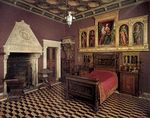
ValtellinaExcited as I was for autumn to arrive, it’s gotten off to an awful start. After spending three days bedridden with the first all-congesting cold to hit me this season, my head is still in a fog as thick as the one that shrouded the whole city this morning. But this season’s less-than-auspicious opener did afford me one thing I almost never grant myself: many hours of calm, quiet time to rest. This is something that comes hard to me, as I tend to fill what little down time I find doing anything but relaxing. Because I felt wretched enough that none of my usual pursuits—drawing, reading, strolling—were possible, I was left only one option: to just lie there and think.

BA-VA.01

After a few minutes indulging my mind’s fickle tides and following little thoughts to the most varied places imaginable, sleep swept in. This happened repeatedly, offering several veritable voyages as I lay cushioned between the conscious and unconscious. Early this afternoon brought me back to an episode from this past summer, walking through Milan’s little-known yet magnificent Bagatti Valsecchi Museum.
BA-VA.02

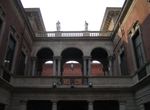
My visit was brief, as I’d gotten sidetracked on several tiny lanes before finally finding Via Gesù 5. I’d been additionally delayed in the museum’s two courtyards—ringed with intriguing inscriptions—so only made my way up the grand main stair with forty-odd minutes left before closing. It happened to be Friday, 31 July; the museum would be closed the entire month of August, and I was there for a whirlwind four-day work trip, so knew it was now or never.
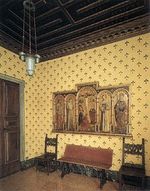
DedalusAlthough my eyes were welcomed by an unimaginable wealth of beautiful flooring, sumptuous wall coverings, paintings, and finely worked furniture, I quickly realized what I’d need to focus on—the inscriptions. While the family bought and renovated the building in the late nineteenth century, they looked to the high Renaissance for inspiration, hence each room had an even more antique feel. The several mottos and phrases carved round the courtyards’ friezes were mere appetizers for the feast of lettering to be found inside—on the lintels above most doorways, on everyday objects, on library bookshelves, on the hearth, and even above the bathtub. One ceiling inscription read PRINCIPIUM EST PLUSQUAM DIMIDIUM SED NOSCE TE IPSUM ET CONSULE ANTE FACTUM, “A good beginning is half of the work, but know yourself, and think, before acting.” That phrase drew me into the so-called Room of the Labyrinth, where several other sayings were strung one after the other, all painted in gold atop a dark blue background, winding round the passages of a classical labyrinth:

DILIGENTIA AUGET OPUS, “Diligence increases the value of the undertaking.”

QUOD DIFFICILIUS HOC PRAECLARIUS, “That which is more difficult is more worthy of honor.”

LABOR IMPROBUS OMNIA VINCIT, “Hard work conquers all.”

VIRTUS IN ACTIONE CONSISTIT GLORIAMQUE PARIT, “Virtue lies in action, and leads to glory.”

RARA QUIDEM EST VIRTUS QUAM NON FORTUNA GUBERNET ET EST VIRTUTIS OPUS NON AD IACTANTIAM SED AD PATRIAE DECUS FAMAM EXTENDERE FACTIS, “Rare is the virtue not sustained by Fortune, and it is the task of virtue to increase, through action, it’s own name—not for the sake of vainglory, but for the reputation of the homeland.”

SIC ITUR PER ANGUSTA AD AUGUSTA, “Thus one goes from difficulty to august achievement.”

I particularly appreciated that last bit, as it seemed to be the labyrinth itself speaking to those who negotiated its twists and turns. It’s also curious to note that this well-lettered room is officially known as the passaggio del labirinto in Italian, the “Passageway of the Labyrinth,” which is more fitting both because it hasn’t the right size nor clear function to be considered a real room, and also because the idea of passage is so key to the concept of a labyrinth.

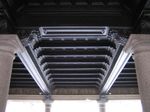
I’m tempted to think this particular image—the decorated ceiling of the Passageway of the Labyrinth—came to mind partially because I’d been staring up at the relatively unadorned, plain white ceiling of my bedroom. I’ve no good image of the ceiling inscription the above mottos were taken from because, unfortunately yet understandably, photography isn’t allowed. You’ll just have to visit for yourself—and if you do, it’s worth knowing that the Bagatti Valsecchi Museum is one of four house-museums in the Historic House Museums of Milan network; each is quite different, and all are worthy of a visit. But it’s also curious that while most rooms and passages in this luxuriant residence were richly decorated and inscribed, this was the sole area to include a ceiling inscription. As I lay supine thinking
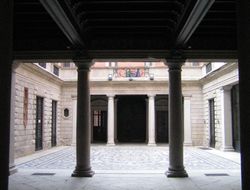
BA-VA.03

back to each space, it occurred to me they’d have done better to decorate the ceiling of a bedroom, where it could be fully appreciated, rather than that of a corridor most people would spend little time in. And if they were to insist on sticking with the corridor, why not make it an inlaid floor decoration, thereby sparing many a neck ache over the centuries? But I suppose that, after Chartres and Amiens and countless other famous labyrinthine floors, they sought something more original. Also, by having the viewer/reader look to the heavens, this particular labyrinth does take on a more lofty, intellectual, and spiritual sense than one might otherwise expect; those three aspects are further echoed in the content of the quotes. After whirling imaginarily about from my early twentieth-century railroad apartment in New York to a lavish nineteenth-century palazzo in Milan and on back to the dark interiors of Renaissance-era Lombardy, my semi-feverish mental trip let me down as suddenly as it had swept me up, and I returned to bed.

Keep Your Eyes on the End
Manutius.pm

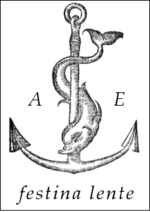
As one of the inscriptions in the library exhorts all researchers, RESPICE FINEM, “Keep your eyes on the end [goal].” This pairs well with one of the first inscriptions in the grand salon, FESTINA LENTE, “Hasten slowly.” These phrases are rich enough to warrant fuller treatment in a following post, so with that, I’ll sign off, inviting you to explore the countless other inscriptions found throughout the Bagatti Valsecchi residence either in person or on their site.


For those of you who might want one more, I offer this last thought, writ large on the wall of the library: NEC SCIRE FAS EST OMNIA, “It isn’t possible to know everything”—just in case you aspired to!

BA-VA.03-detail

Thanks for reading; previous Lunar Refractions can be found here.

Posted by Alta L. Price at 04:58 AM | Permalink

Comments

Evocative and wonderful -- missed this in my time in Milan. As always, reading Lunar Refractions takes me back to an era of deeper engagement than I can now lay claim to with the visual world. Here's a link to a site for a museum in Parma where type, if not text, rules.

http://www.mb-museobodoniano.it/museo.htm

Posted by: Elatia Harris | Sep 28, 2009 10:40:53 AM

Elatia -

Thanks as always for reading, and especially for the link to the Bodoni Museum. I've never had the fortune of visiting Parma, but have many type colleagues who've raved about that collection. Someday....

- Alta

Posted by: Alta Price | Sep 28, 2009 12:29:40 PM

Very much enjoyed this essay. Wonderful use of the labyrinth as a metaphor for life's travels - physical, intellectual and otherwise.

Posted by: Kristin Stein Saroyan | Sep 28, 2009 1:58:11 PM

... very enjoyable, brought to mind the wonderful work by Xavier de Maistre, "Voyage Around My Room" ...

Posted by: Jacky | Sep 29, 2009 3:54:02 AM

Post a comment


Subscribe to this blog's feed  

PayAnywhere with iphone credit card swiper

Android Tablet

Bluetooth Headset

2013 New Style Dresses

Compare Car Rental Prices

DHgate.com Wholesale

3QD on Facebook

3QD on Kindle

3QD by Daily Email

Receive all blogposts at the same time every day.

Enter your Email:


Preview 3QD Email

3QD on Twitter

Miscellany

Lijit Search

AddThis Social Bookmark Button

Add to Google

Recent Comments

Dredd on The Moral Status of Rocks

sjg on Why Rational People Buy Into Conspiracy Theories

Dredd on Why Rational People Buy Into Conspiracy Theories

Louise Gordon on Why race as a biological construct matters

Louise Gordon on The stories of two Palestinian villages: From Al-Araqib to Susiya

musafir on a pretty funny book

freddie on The stories of two Palestinian villages: From Al-Araqib to Susiya

freddie on The stories of two Palestinian villages: From Al-Araqib to Susiya

Junaida on Tuesday Poem

rafiq on Tuesday Poem

Raza Husain on the culture animal

Nebor on Tuesday Poem

Eleutheria on I am dust and ashes and full of sin

carlos on I am dust and ashes and full of sin

Joe on the culture animal

Sundar on the culture animal

Eleutheria on Positive Failure - a review of "The Power" by Rhonda Byrne

Eleutheria on Positive Failure - a review of "The Power" by Rhonda Byrne

Matt on The Science Mystique

Eleutheria on Why is Europe so Messed Up? An Illuminating History

Eleutheria on I am dust and ashes and full of sin

Elatia Harris on I am dust and ashes and full of sin

PeteChapman on I am dust and ashes and full of sin

Raza Husain on the culture animal

Jacky Corey on The Bystander Effect in Medical Care. Why Do I Have So Many Doctors Not Taking Care of Me?

Acclaim For 3QD


"I couldn't tear myself away from 3 Quarks Daily, to the point of neglecting my work. Congratulations on this superb site."—Steven Pinker, Johnstone Professor of Psychology, Harvard University.

"I have placed 3 Quarks Daily at the head of my list of web bookmarks."—Richard Dawkins, Charles Simonyi Professor of the Public Understanding of Science at Oxford University.

"Just wanted you to know I’m one of many who reads and enjoys 3 Quarks....almost daily."—David Byrne, musician, former lead-singer of the Talking Heads, artist, intellectual.

Read more here.

The 3QD Prizes

Subscribe to this blog's feed