
March 23, 2009
The Next Great Discontinuity
Part One: Grapholectic Thought and the Fallacy of Misplaced Concreteness
“There are things,” Christoph Martin Wieland... contended, “which by their very nature are so dependent upon human caprice that they either exist or do not exist as soon as we desire that they should or should not exist.”
...We are, at the very least, reminded that seeing is a talent that needs to be cultivated, as John Berger saliently argued in his popular Ways of Seeing (1972) “…perspective makes the single eye the centre of the visible world.”
John A. Mccarthy, Remapping Reality
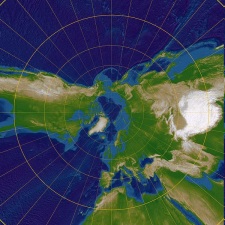
From the Greco-Roman period onwards humans have perceived themselves at the centre of a grand circle:
-
The circle is physical: a heliocentric vision of the cosmos, where the Earth travels around the sun.
-
The circle is biological: an order of nature, perhaps orchestrated by a benign creator, where the animals and plants exist to satisfy the needs of mankind.
-
And according to Sigmund Freud, in his Introductory Lectures on Psycho-Analysis, the circle is psychological: where a central engine of reason rules over the chaos of passion and emotion.
The history of science maintains that progress – should one be comfortable in using such a term – contracted these perceptual loops. Indeed it was Freud himself, (the modest pivot of his own solar-system) who suggested that through the Copernican, Darwinian and Freudian “revolutions” mankind had transcended these “three great discontinuities” of thought and, “[uttered a] call to introspection”.
If one were to speculate on the “great discontinuities” that followed, one might consider Albert Einstein’s relativistic model of space-time, or perhaps the work carried out by many “introspective” minds on quantum theory. Our position at the centre of the cosmos was offset by Copernicus; our position as a special kind of creature was demolished by Darwin’s Theory of Evolution. From Freud we inherited the capacity to see beneath the freedom of the individual; from Einstein and quantum theory we learnt to mistrust the mechanistic clock of space and time. From all we learnt, as John Berger so succinctly put it, that “…perspective makes the single eye the centre of the visible world.”
Of course my mini-history of scientific revolution should not be taken itself as a “truth”. I draw it as a parable of progress, as one silken thread leading back through time’s circular labyrinth to my very own Ariadne. What I do maintain though, is that all great moves in human thought have come at the expense of a perceptual circle. That, if science, sociology, economics - or any modern system of knowledge - is to move beyond the constraints of its circle it must first decentre the “single eye”.
Scientific rational inquiry has revelled in the overturning of these “great discontinuities”, positioning each of them as a plotted point on the graph we understand as “progress”. We maintain, without any hint of irony, that we exist at the pinnacle of this irreversible line of diachronic time, that the further up the line we climb, the closer to “truth” we ascend.
“...Reason is statistically distributed everywhere; no one can claim exclusive rights to it. [A] division... is [thus] echoed in the image, in the imaginary picture that one makes of time. Instead of condemning or excluding, one consigns a certain thing to antiquity, to archaism. One no longer says "false" but, rather, "out of date," or "obsolete." In earlier times people dreamed; now we think. Once people sang poetry; today we experiment efficiently. History is thus the projection of this very real exclusion into an imaginary, even imperialistic time. The temporal rupture is the equivalent of a dogmatic expulsion.”
Michel Serres, Conversations on Science, Culture and Time
According to Michel Serres “time” is the common misconception that pollutes all our models. In the scientific tradition knowledge is located at the present: a summation of all inquiry that has lead up to this point. This notion is extraordinarily powerful in its reasoning power, bringing all previous data together in one great cataclysm of meaning. It has spawned its own species of cliché, the type where science ‘landed us on the moon’ or ‘was responsible for the extinction of smallpox’ or ‘increased the life expectancy of the third world’. These types of truths are necessary – you will not find me arguing against that – but they are also only one notion of what “truth” amounts to. And it is here perhaps where the circumference of yet another perceptual circle materialises from out of the mist.
Progress and diachronic time are symbiotically united: the one being incapable of meaningful existence without the other. Our modern notion of “truth” denies all wisdom that cannot be plotted on a graph; that cannot be traced backwards through the recorded evidence or textual archive. Our modern conceptions are, what Walter J. Ong calls, the consequence of a 'grapholectic' culture – that is, one reliant on the technologies of writing and/or print. Science, as we understand it, could not have arisen without a system of memorisation and retrieval that extended beyond the limits of an oral culture. In turn, modern religious practices are as much a consequence of 'the written word' as they are 'the word of God'. The “truth” of science is similar in kind to the "truth" of modern religion. It is the "truth" of the page; of a diachronic, grapholectic culture – a difficult "truth" to swallow for those who maintain that 'dogma' is only a religous vice.
Dialectic cultures – ones which are based in oral traditions – do not consider history and time in the same way as grapholectic cultures. To the dialectic, meaning is reliant on what one can personally or culturally remember, rather than on what the extended memory of the page can hold in storage. Thus the attribution of meaning emerges from the present, synchronic situation, rather than being reliant on the consequences of past observation:
“Some decades ago among the Tiv people of Nigeria the genealogies actually used orally in settling court disputes have been found to diverge considerably from the genealogies carefully recorded in writing by the British forty years earlier (because of the importance then, too, in court disputes). The later Tiv have maintained that they were using the same genealogies as forty years earlier and that the earlier written record was wrong. What had happened was that the later genealogies had been adjusted to the changed social relations among the Tiv: they were the same in that they functioned in the same way to regulate the real world. The integrity of the past was subordinate to the integrity of the present.”
Walter J. Ong, Orality and Literacy
In the oral culture “truth” must be rooted in systems that are not time-reliant. As Karen Armstrong has oft noted, “a myth was an event which in some sense had happened once, but which also happened all the time.” Before the written tradition was used to brand Religious inclinations onto the page the flavour of myth was understood as its most valuable “truth”, rather than its ingredients. The transcendence of Buddha, of Brahmā or Jesus is a parable of existence, and not a true fact garnered from evidence and passed down in the pages of a book. Meaning is not to be found in final “truths”, but in the questioning of contexts; in the deliberation of what constitutes the circle. If we forget this then we commit, what A. N. Whitehead called, the fallacy of misplaced concreteness:
“This... consists in mistaking the abstract for the concrete. More specifically it involves setting up distinctions which disregard the genuine interconnections of things.... [The] fallacy occurs when one assumes that in expressing the space and time relations of a bit of matter it is unnecessary to say more than that it is present in a specific position in space at a specific time. It is Whitehead's contention that it is absolutely essential to refer to other regions of space and other durations of time... [Another] general illustration of the fallacy of Misplaced Concreteness is... the notion that each real entity is absolutely separate and distinct from every other real entity, and that the qualities of each have no essential relation to the qualities of others.”
A. H. Johnson, Whitehead's Theory of Reality
Our error is to mistake grapholectic thought - thought maintained by writing and print - as the only kind of thought we are capable of.
I predict that the next “great discontinuity” to be uncovered, the one that historians will look back upon as “the biggest shift in our understanding since Einstein”, will emerge not from the traditional laboratory, or from notions computed through the hazy-filters of written memory, but from our very notion of what it is for “events” to become “data” and for that data to become “knowledge”. The circle we now sit at the centre of, is one enclosed by the grapholectic perceptions we rely on to consider the circle in the first place. In order to shift it we will need a new method of transposing events that occur ‘outside’ the circle, into types of knowledge that have value ‘within’ the circle.
This may sound crazy, even impossible in scope, but we may have already begun devising new ways for this kind of knowledge to reach us.
Continued in... Part Two: The Data Deluge
Posted by Daniel Rourke at 12:05 AM | Permalink


Comments
Daniel -- Just, wow. Everybody -- read this mother!
Posted by: Elatia Harris | Mar 23, 2009 12:09:13 PM
Thanks Elatia. I am glad the piece made you think. I have never considered my work to be a 'mother' before.
Posted by: Daniel Rourke | Mar 23, 2009 2:44:16 PM
Whatever makes me think is a right mother. Wait -- sorry, that sounds like Paulo Coelho. What I mean is, "fantastically entertaining and well done," but that can be code for "I didn't read this one and neither should you." It follows that a reader who writes "Can't wait for Part II" means "I'm outta here." It's becoming increasingly difficult, in our post-ironic world, to signal high praise and deep readerly gruntlement. You mother.
Posted by: Elatia Harris | Mar 23, 2009 4:45:21 PM
Daniel,
Thank you for the wonderful article. I certainly look forward to more of your ideas on moving beyond the boundaries of grapholectic thought, which in some instances seem to induce the paralysis of ideology-based nonthought.
Posted by: Louise Gordon | Mar 23, 2009 7:07:28 PM
Daniel-
Great article. It dovetails with humans aversion to "Darwin's Dangerous Idea," that an algorithm run over and over with no intention is responsible for the word we observe, both externally and internally.
First Earth was not the center of the universe, then we were a minor planet on a mid sized galaxy, then we were actually part of the animal kingdom!
The human ego still cannot face this reality.
And now we are learning that most of conscious thought is just rationalizing actions that have already been put in motion, that gives the illusion of will.
What is next?
Posted by: Dave Ranning | Mar 23, 2009 7:53:59 PM
This is a bad joke, right?
Posted by: jean-paul | Mar 23, 2009 8:20:00 PM
I AM STUNNED. I've forwarded it to everyone I care about.
And I humbly wonder:
"Our error is to mistake grapholectic thought - thought maintained by writing and print - as the only kind of thought we are capable of."
Perhaps:
An error [we make] is to mistake grapholectic thought - thought maintained by writing and print - as the only kind of thought we are capable of.
For:
We make many kinds of errors in many classes of endeavor, many of which are capable of torquing our perceptual array egregiously
Posted by: Samson vanOverwater | Mar 24, 2009 1:34:17 AM
Jean-Paul:
Perhaps you could elaborate? or at least give us the punchline.
Posted by: Daniel Rourke | Mar 24, 2009 5:20:40 AM
I certainly do not believe that "grapholectic thought" is the only kind--I live and breathe in an "intuitive space", using those "insights" or whatever to give me reams of usable, accurate and pertinent information. I will blame Kurt Godel and Werner Eisenberg for obliterating my "faith" in logic and rationality. My life contains numerous instances of proof that intuition is valid and I am sure everyone else's does too.
Posted by: missvolare | Mar 24, 2009 6:53:51 AM
This is dumb. Writing is universally adopted wherever it is encountered because it is a good idea. The universe functions in ways that are completely independent of your ability or willingness to comprehend or remember it. If you would like to understand the universe, there is a large amount of grapholectic material available to you. I encourage you to pursue it and learn something real about the world. Your lack of appreciation for this gift from our intellectual ancestors is a little disheartening.
Posted by: Xerxes | Mar 24, 2009 10:11:24 AM
Xerxes,
I don't think Daniel is talking about getting rid of the grapholectic. I think the article is about a new kind of cartography that would include but not be limited to the grapholectic.
Posted by: Louise Gordon | Mar 24, 2009 11:28:13 PM
Daniel,
Interesting piece, and I look forward to see where you're going with this in the second segment. In the meanwhile, I'm a little confused about some of your terminology. You write that "Scientific rational inquiry has revelled in the overturning of these 'great discontinuities', positioning each of them as a plotted point on the graph we understand as 'progress'."
But if that were true, wouldn't that give the game away? A serial collapsing of "perceptual circles" would seem to point to a Kuhnian model of revolutions and paradigm shifts, whereas the rationalist, progressive picture is typified by an incremental accumulation of truths and discoveries. Continuities, rather than discontinuities.
Perhaps this is something you mean to address in your second part, but it's not evident to me how a history of "discontinuities" assemble themselves into a rational progressive accumulation of knowledge.
I also wonder if you--following Ong perhaps?--are overzealous in contrasting "grapholectic" and "dialectic" cultures. Surely ours is a combination of both? We don't write down everything, after all. And if we did, we'd have to write down that we'd written it down, and so on ad infinitum, so that there was never any time to read what we'd written.
Posted by: Chris Schoen | Mar 25, 2009 12:19:50 AM
Thanks so much for all your insightful comments. I am glad that my grapholectic splurge of ideas has incited some debate!
Chris,
Perhaps a combinatorial system - with incremental accumulations that eventually lead to paradigm shifts? I think both the Kuhnian and the progressive are of a similar family of rationalisation: the idea that knowledge is linear; is temporally accumulated.
This is merely one way of looking at knowledge, it is not a truth about grapholectic cultures. It could be argued that knowledge was/is passed down in dialectic cultures, and builds over time. But because a non-literal/oral culture has no record of the past, they see knowledge as being in the now. Accumulation is irrelevant, because the oral system has to embody all useful knowledge in rhythms of song or the narrative structures of the oral tale, as they are being delivered. In oral cultures, even the idea of "ancestral" knowledge is more likely to be embodied in a spirit that the Shamen calls up, or a ghost that haunts the community in the now.
Grapholectic culture did not invent time, as such, it is just that written/printed culture is reliant on the idea of time in order for its conceptions of "knowledge" and "truth" to make sense..
It is grapholectic of us to say that the 'perceptual circles' were collapsed serially. If we try and take time out of the picture then there are merely eras and the thinking systems that fit them. I suppose that our idea of progress limits the way we can understand change, thought, frameworks of understanding. Darwinism, for instance, is a series of circles being expanded and collapsed all the time.
Science is built like a perpetually re-written book, with paragraphs full of spelling mistakes that have been corrected, and footnotes decrying the truth of sentences that themselves contradict other footnotes. Einstein came along and wrote a whole new book, throwing out many of the old assumptions. At present science is even more patchwork than it has ever been, but we don't seem to be able to see beyond its pages. I want to suggest that we need to stop rooting our systems of knowledge in documentation, in experiments that happen over time, in words that stain pages with their authority. A new kind of "truth" is possible, and it will be one more like the dialectic variety: one rooted in the present. I suppose I should leave it there on that point - I want to talk about this much more clearly next time.
Your second point is, of course, valid. Walter J. Ong calls grapholectic cultures 'trans-dialectic', in that they incorporate much of the oral systems of knowledge, but also supplement them, resulting in changes between both systems. The main format of our language is still spoken, but because we now have things like dictionaries and encyclopaedias language is much much much vaster for the average person - even someone who lives in a grapholectic culture, but is illiterate. Spoken language appears more rigid with the systems of writing there to frame it. I believe that we are now entering a 'trans-grapholectic' culture. And this idea connects very much to all the other titbits I have alluded to in this comment.
Posted by: Daniel Rourke | Mar 25, 2009 1:32:56 PM
Thank you, Daniel and Chris, for the last two comments -- deeper and deeper into a fascinating idea.
Posted by: Elatia Harris | Mar 25, 2009 2:28:51 PM
Daniel,
Do you think a trans-grapholectic culture will be accompanied by transpersonal consciousness?
Posted by: Louise Gordon | Mar 26, 2009 1:25:59 PM
Since we find it difficult enough to understand what personal consciousness is, I can only answer mu to that.
Posted by: Daniel Rourke | Mar 26, 2009 1:32:50 PM
Unless consciousness MUtates.
Posted by: Louise Gordon | Mar 26, 2009 2:15:41 PM
I think this is a bit all over the place and not explicated enough, but interested to see where this is going. I share some of your hope in that the a great shift in understanding will occur in understanding itself.
But, I think it should be recognized that there is a large philosophical tradition of dealing with these sorts of issues, which it would be fruitful to consider. For instance, when speaking about a dialectic sort of truth, there is hermeneutics, which tries to explain the space in-between interpretation, of that between what we already contain and otherness. Perhaps Hermenutical understanding can provide for a post-metaphysical culture "since what distinguishes the hermeneutical use of theory from its metaphysical use is that the former does not pass itself off as a means for making contact with a meta-experiental ("independent") reality but seeks, rather, as a hermeneutics of the lifeworld, to be nothing more than the theorization (interpertatiton) of human practices themselves." (Gary Madison).
Posted by: Nick | Mar 28, 2009 2:24:57 AM
I agree that this piece wasn't explicated enough. Sometimes the article/blog format is crushingly limited. I hope some of my past writings fill in the gaps - until next month...
Posted by: Daniel Rourke | Mar 29, 2009 6:17:48 AM
"I draw it as a parable of progress, as one silken thread leading back through time’s circular labyrinth to my very own Ariadne."Ha, what the fuck is this sentence doing. the rest was very interesting though. id just cut the flowery unnecessary shit
Posted by: mr mcgregg | Dec 31, 2009 11:10:49 AM
Post a comment