

| ABOUT US | ARCHIVES | LINKS | RSS FEED | MONDAYS | |

3quarksdaily

An Eclectic Digest of Science, Art and Literature

« Perceptions | Main | Lunar Refractions: Repetition and Remains [Part II] »

February 16, 2009

A Linguistic Analysis of Your Genes

Grawlix1 When it comes to evolution these days, scientists tend to present a uniform front of agreement for political and rhetorical reasons, so you maybe didn’t know that, in private, some theoretical biologists have grawlix-laced thoughts about certain colleagues, whose work on one issue in particular they regard as not only wrong but stubbornly, perversely so, crumbling on clearly termite-eaten logic, and vice versa for the second group against the first—but there you go.

A divisive example: While most female lions are dutiful about guarding the borders of their camps against attacks, there are definitely some Cadillac Queens among them who don’t help out at all. The lionesses lazy in this regard benefit disproportionately because they don’t put themselves in danger when attacks come and can concentrate on breeding in the meantime and yet still get all the benefits of the others’ work, since they cannot help but be warned by all the scrambling around and yelling during any breach of security. Natural selection therefore favors lazy lionesses who defect—and if you want to be reductive, it seems to favor genes that make lions lazy defect.
 LionessThe catch is that if there are too many lazy lionesses, the entire group will get wiped out in one attack, which isn’t good for anyone’s genes. So for the long-term survival of the species natural selection must favor the genes for self-sacrifice. Except that’s not quite right, either. Day to day, the lazy lions still have an advantage over the dutiful lions, and day to day, the lazy lions’ genes are still more likely  to spread. In which case natural selection is selecting both for and against genes that are less fit, which isn’t natural selection in any real sense. It gets even knottier when you look at competition between groups, because when individuals decide to cooperate and coalesce into groups, complicated properties emerge. It’s no different than collections of limp neurons firing themselves up into a mind with memory, emotion, and volition. Can one neuron think? Can natural selection meaningfully be said to “work” on individuals when it only favors groups of those individuals working together, and not the individuals themselves?

This is what cleaves biologists. No one argues that natural selection is a monolithic force propelling evolution onward without purpose or design (the uniform front), but what does it act on?—genes, individuals, whole groups at once? Until the 1960s, most biologists were too busily focused on squaring Mendel with Darwin, what’s known as the Modern Synthesis, to ponder this problem. Most, as Charles D. did, lazily assumed selection happened on multiple levels. Ever since then, biologists realized they needed to be a lot more explicit about the assumptions undergirding their models.

With a Moore’s Law-explosion in molecular genetic knowledge, most biologists began to deny it even made sense to talk about selection on any level above genes. After all, if only individual fast-twitch gazelles survive in environments with jackals, it’s really the fast-twitch genes that are propagating themselves. Individuals (in this context) reduce to sums of genes. This gene-centric view of natural selection becomes even more convincing when you consider the many documented cases of rogue genetic fragments that reproduce themselves at the expense of the organism. These rogues might chop up important DNA or disrupt vital metabolic processes, but they don’t care—as long as they clone themselves, the higher structure be damned.

Nevertheless, this view—that it’s genes all the way down—seems to founder on the question of altruism. (I.e., sacrificing your time or even your body in ways that might help pass on, inadvertently or not, the genes of another.) Genophilic biologists long explained altruism in terms of selfish sacrifice: Altruistic animals will sacrifice themselves as long as doing so gives the very similar genes of their close relatives a chance to live. Under this hegemony, you’d readily sacrifice yourself to save two siblings with fifty percent of your genes in common, or four cousins with twenty-five percent of genes, or eight second cousins, etc., because their living to breed is just as good—from the gene’s point of view—as your living to breed. There are variations on “kin selection” theory, but most boil down to this.

The problem is, does anyone really believe that? Not believe that kin selection happens sometimes—it does. But that it explains everything about altruism? That animals like humans evolved to work in groups and desire group contact not because groups succeed more often in the wild; but because the animals really—deep down on the 1’s and 0’s level of their unconscious biochemical beings—are calculating what percentage of their own genes will get passed on if they take an overtime shift of guard duty?

How much simpler to argue for “group selection”: that altruistic genes might hurt individuals but help groups, and therefore give groups a better chance to beat other groups. And notice that this doesn’t deny a red-in-tooth-and-claw version of nature. The “altruistic” behavior that gets favored could be organizing war parties to wipe out rivals with too many selfish members. There’s blood aplenty. The genius of this view—which contradicts the 1960s “selfish gene” dogma that genes and only genes drive evolution and is therefore (the view is) radioactively controversial in some departments—the genius is that it uses group selection to explain altruism and social cohesion without having recourse either to fuzzy angelic crap about animal “essences” being inclined toward goodness, or to unconvincing explanations of kin selection. Ah, ha!

But here’s the reversal: The selfish-gene ilk—those like Richard Dawkins, who hew tight to the 1960s dogma—make the very frustrating point that no matter what holistic, greater-than-the-sum properties you want to impute to a group being selected for, at the end of the day, when the sperm of males in a successful group meets the egg of equally successful females in the group, what get passed on are genes and genes alone. Group selection might look tempting, but it’s still got to account for traits getting passed along, altruism included. And given that creatures within a species are 99.9... percent identical molecularly, perhaps genes still push us into altruism just for the sake of our species’s genes, not just the family jewels. This sort of not-kin-but-kith selection still makes a lot of sense for most genes.
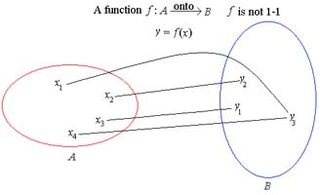
Mapping1 I don’t have nearly enough academic abbreviations behind my name to sort through the subtleties of this debate (no matter however shining an exemplar I am of how wrong-footed and turned around you can get while working through it). Yet something about the nature of the problem strikes me as analogous to—not perfectly mappable to, but analogous to—something I’m a little more fluent in, language.

“This sentence is false.” Just like the different organizational levels of biology (cells, organs, individuals, groups, populations), language has different levels, and the objects of one level glom together to form the higher level. The higher levels therefore contain the lower levels, too. The most common level of language is the normal sign-signifier relationship of words referring to things in the outside world: “He ate the hot dog with relish.” But there are other levels: We can talk about language itself functioning as language (“‘Type’ is a verb), and also talk about words as individual sensory phenomena, the sounds of them and their curvy looks. The really confusing part is that all of this language talking about language necessarily has to be spoken with words. And paradoxes, contradictions, and ambiguities sprout when you mix different levels without being careful.

Read the following sentences: “‘Computer’ has three syllables.” “Computer has three syllables.” The first is true, the second false (since a computer itself, the plastic and metal object, cannot have syllables). Another way of saying this is that the first sentence properly keeps track of which level the word “computer” belongs to (the level of language talking about language), while the second doesn’t. Similarly with, “This sentence is false.” For that paradox, if you persist on a basic level of analysis, you’ll end up on a pendulum where its swings both true and false and then true again but still somehow false, and so on. It’ll keep whipping you around.

But the game changes when you realize that language—when it’s talking about itself—doesn’t work the same as language that’s talking about something outside itself. This is more or less the problem Bertrand Russell (among others, though later) set out to solve in his philosophical system of sets and of sets of sets, and of sets of those sets, ultimately producing a careful hierarchy of different levels. And when translated into this hierarchy, the words “This sentence is false” become not paradoxical but meaningless, the equivalent of “Computer [no quotes] has three syllables.” The problem disappears, albeit a little dissatisfactorily.

Working through multiple levels is messy enough with easily separable and easily manipulated units like words, and the problem is a fortiori more snarly in biology. There, you still have multiple levels interacting—genes run cells, cells comprise individuals, individuals comprise groups, groups interact among themselves—but it’s much harder than in language to isolate the effects of any individual units on the whole. And just as you cannot help but talk about words with anything but more words, genes will show up at all levels of the analysis because they’re the currency, the unit that passes meaning and value.

Again, the analogies are imperfect. But there’s an intuitive parallel between determining whether selection pressures on high-level groups can be reduced to pressure on low-level genes and determining when it’s appropriate for language to talk about language. The point isn’t that biologists should somehow perform a linguistic analysis of genes, although genes are in an abstract sense a language like any other. But there may be underlying structural or mathematical similarities between logico-linguistic analysis like Russell’s and biological analysis that hops around among different levels of natural selection, schemes and strategies in one that can illuminate what’s going on in the other, just as the arcane mathematics of knot theory in the 1980s turned out to be darn useful for describing how DNA refolds and recombines itself.
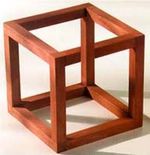
Paradox1 If nothing else, perhaps biologists can at least learn from linguists to live with the maddening ambiguities that language has built into it. Other philosophers disagree with Russell, et al., and say that “This sentence is false” isn’t meaningless so much as true and false. There’s ambiguity there. Deal. Similarly, while saying that someone is “not unattractive” is logically equivalent to saying he’s “attractive,” it’s not really of course. Or, the sentence cited above, “He ate the hot dog with relish” is holographically ambiguous, meaning one thing or another depending entirely on where you stand. You can parse these phrases till you’re blue, but they’re irresolvable, and the ambiguity becomes an irreducible part of the analysis. Perhaps it’s impossible for biologists to sort out whether groups or genes or individuals are the one thing being acted upon by natural selection—not impossible in the sense of too mysterious or too hard a problem, but impossible in the same sense that “with relish” is simply not resolvable or that “not unattractive”/“attractive” isn’t amenable to clean-jointed logical segmentation. And perhaps accepting that duality will open up new alleys of investigation.

When Darwin wrote, “There is grandeur in this view of life,” he was speaking about his science as something like art. We prize art partly for its ability to console us about paradoxes and ambiguities, even if it cannot explain them. Perhaps there’s consolation for biologists in the conundrums of everyday language.

Posted by Sam Kean at 12:25 AM | Permalink

Comments

Excellent contribution. It is the case that discussion of group selection is complicated by disagreement about what it would mean for a group to be selected. I'm one of those who was raised to believe that group selection is an illusion, but the Wilsons have got me thinking.

Posted by: kynefski | Feb 16, 2009 9:58:20 AM

The Lazy Lionness problem: someone forgot that the altruistic lioness also benefits disproportionately herself from the contributions of other altruistic lionesses. The risk that any individual will be hurt by any outside danger is smaller than the advantages gained from cooperation. It works like car insurance -worth paying to avoid huge liability in the event of an accident. Lions spend most of the day having sex so the lazy lioness has no breeding advantages over her more altruistic sisters (there is surplus sperm going around) Being less alert is also a disadvantage in itself, if she ever happens to be in the path of an attack.
"what get passed on are genes and genes alone." Not so. Exactly as with the case in Human language - the meaning of a word depends not only on its letters but also on the mind that understands it. The genes in a newly fertilized ovum are interpreted by the mRNA-tRNA-ribosome protein expression system in the mother-made cytoplasm around the nucleus, and there are gene switching proteins that can stop or start the expression of the gene. There is strong evidence from the study of epigenetics that genes can be switched on-or off for several generations by pathways that bypasses classical genetic inheritance.
Another form of non-genetic inheritance is culture. Even bees can generate collective memories of the location of flowers that survive the deaths of the worker bees that first found them. Lion cubs also acquire a certain amount of knowledge from adults around them, not necessarily their parents. All this means that groups can accumulate and pass on important data (hunting trails etc). Individuals that can identify/empathize with the group, through grooming and altruistic behavior, are more likely to acquire shared group knowledge than the selfish, gene calculating individuals postulated by the Selfish Gene advocates.
Group selection is alive and well.

Posted by: aguy109 | Feb 16, 2009 11:40:59 AM

Do biologists have similar arguments about whether there are actually any "living organisms", as opposed to "molecules knocking around near each other"? After all, any statement about the former is *really* just a statement about the latter.

Posted by: Ken C. | Feb 16, 2009 6:14:44 PM

I have to admit- I don't usually read Monday posts, but this one was an exception. It was easy to read and interesting. Thanks a lot!

Posted by: michelle | Feb 16, 2009 8:06:18 PM

You went down the same trajectory as I did, aguy109--I kept thinking, "How do we know that genes don't switch on and off in a single lifetime, based on temporal changes?" That would be one of my chief questions of the theory of Natural Selection--does it function purely through reproduction? I wonder.

Great article!

Posted by: Lambness | Feb 16, 2009 8:28:02 PM

In which case natural selection is selecting both for and against genes that are less fit, which isn’t natural selection in any real sense.

Sam,

Selfish gene theory manages this problem by postulating "Evolutionarily Stable Strategies" (ESS) that form stable ratios within populations. The classic example is "hawks and doves." Ratios are calculated with game theory, (as with the "Prisoners Dilemma") and is modeled on computers.

I'm not saying things actually works this way, but it explains how "lazy" and "dutiful" lionesses can coexist in the same population without resorting to group selectionist explanations.

I also think you misapprehend what selfish gene theory says about altruism when you write:

[D]oes anyone really believe that... animals like humans evolved to work in groups and desire group contact not because groups succeed more often in the wild; but because the animals really—deep down on the 1’s and 0’s level of their unconscious biochemical beings—are calculating what percentage of their own genes will get passed on if they take an overtime shift of guard duty?

There's no real contradiction here. Selfish gene theory says that if "groups succeed more often" then genes which encourage group-forming will thrive in the population. You don't need to postulate "calculations" in the cells for this to be so. The "calculations" are done by natural selection, in weeding out the genes that led to less optimal outcomes.

Posted by: Chris Schoen | Feb 17, 2009 12:40:25 AM

These seem like silly issues. On the lazy lionesses, it's a simple example of a selection effect that changes as the population changes, one that can easily be modeled and understood through evolutionary game theory. (Example: the hawk-dove game.) When the population is full of hardworking lionesses, lazy lionesses do well, when the population is full of lazy lionesses, hardworking lionesses do well, and there's an equilibrium state of the population consisting of some of each. How difficult is that? It doesn't require mystical group selection, just taking into account the rest of the population when considering individual selection.

On altruism and so forth, see Brian Skyrms, Evolution of the Social Contract, Cambridge University Press 1996.

Posted by: Paul Gowder | Feb 17, 2009 11:52:33 AM

Posted my comment before noticing Chris's... which is 100% right.

Posted by: Paul Gowder | Feb 17, 2009 11:59:53 AM

I meant to include this in my original post, but forgot to, and it addresses what Paul and Chris say above. It's from an article by EO Wilson and David Sloan Wilson in the Quarterly Review of Biology, Deceumber 2007, titled "RETHINKING THE THEORETICAL FOUNDATION OF SOCIOBIOLOGY."

(NB: It's available online for free.)


"The whole point of multilevel selection theory is, however, to examine the component vectors of evolutionary change, based on the targets of selection at each biological level and, in particular, to ask whether genes can evolve on the strength of between‐group selection, despite a selective disadvantage within groups. Multilevel selection models calculate the average effects of genes, just like any other population genetics model, but the final vector includes both levels of selection and, by itself, cannot possibly be used as an argument against group selection. Both Williams (1985:8) and [Richard] Dawkins (1982:292–298) eventually acknowledged their error (reviewed in D S Wilson and Sober 1998; see also Okasha 2005, 2006), but it is still common to read in articles and textbooks that group selection is wrong because “the gene is the fundamental unit of selection.”

A similar problem exists with evolutionary models that are not explicitly genetic, such as game theory models, which assume that the various individual strategies “breed true” in some general sense (Maynard Smith 1982; Gintis 2000). The procedure in this case is to average the fitness of the individual strategies across all of the social groupings, yielding an average fitness that is equivalent to the average effect of genes in a population genetics model. Once again, it is the final vector that is interpreted as “individual fitness” and regarded as an argument against group selection, even though the groups are clearly defined and the component vectors are there for all to see, once it is clear what to look for."

Posted by: Sam Kean | Feb 17, 2009 12:14:53 PM

On the last quoted paragraph: huh? Wilson goes wrong here: the the procedure in the various approaches derived from Maynard Smith (which go broadly under the name "evolutionary game theory") is not to average the fitness of the individual strategies across all of the social groupings. Quite the contrary, the procedure is (if I may describe it casually) to do a bunch of differential equations to solve for the population state (as a combination of strategies) such that no mutant strategy can prosper. Averaging doesn't enter into it, and I'm not even sure what the use might be for a notion of average fitness outside of various social states (in these models, selection is carried out by the [quasi-]strategic interactions between individuals in a given social state; why on earth would there be a notion of fitness apart from in a given social state?).

Posted by: Paul Gowder | Feb 17, 2009 12:41:25 PM

Reading over that paper, I think the issue is that Wilson and Wilson are confused about what it might mean to have group selection. They just casually dismiss all the models where group states are yielded by individual interactions as really being a form of group selection. Example:

For two‐person game theory, the cooperative tit‐for‐tat strategy never beats its social partner; it only loses or draws. The only reason that tit‐for‐tat and other cooperative strategies evolve in a game theory model is because groups of cooperators contribute more to the total gene pool than groups of noncooperators, as Anatol Rapoport (1991) clearly recognized when he submitted the tit‐for‐tat strategy to Robert Axelrod’s famous computer simulation tournament. The pairs of socially interacting individuals in two‐person game theory might seem too small or ephemeral to call a group (Maynard Smith 2002), but the same dynamic applies to N‐person game theory as a whole, including large and persistent groups that are described in terms of evolutionary game theory, but which overlap with traditional group selection models. All of these models obey the following simple rule, regardless of the value of N, the duration of the groups, or other aspects of population structure: Selfishness beats altruism within single groups. Altruistic groups beat selfish groups. The main exception to this rule involves models that result in multiple local equilibria, which are internally stable by definition. In this case, group selection can favor the local equilibria that function best at the group level, a phenomenon sometimes called “equilibrium selection” (Boyd and Richerson 1992; Samuelson 1997; Gintis 2000; the model by Peck 2004 described earlier provides an example).

But that paragraph is conceptually confused. Tit-for-tat wins in certain kinds of populations, and altruistic strategies prosper in certain kinds of populations, because the individual expected reproductive yield of such a strategy is conditional on the other strategies in the population. The selection is still happening at the individual level, it's just that one of the things that is influencing the fitness of an individual is the other stuff going on in the population. What's so mystical about that?

Posted by: Paul Gowder | Feb 17, 2009 12:54:12 PM

Post a comment


Subscribe to this blog's feed  

PayAnywhere with iphone credit card swiper

Android Tablet

Bluetooth Headset

2013 New Style Dresses

Compare Car Rental Prices

DHgate.com Wholesale

3QD on Facebook

3QD on Kindle

3QD by Daily Email

Receive all blogposts at the same time every day.

Enter your Email:


Preview 3QD Email

3QD on Twitter

Miscellany

Lijit Search

AddThis Social Bookmark Button

Add to Google

Recent Comments

Raza Husain on The Moral Status of Rocks

Fred on Unknown Mathematician Proves Elusive Property of Prime Numbers

Joel Grant on Why Rational People Buy Into Conspiracy Theories

Tomboktu on Why is Europe so Messed Up? An Illuminating History

Joe on Why Rational People Buy Into Conspiracy Theories

Jalees Rehman on The Science Mystique

Dredd on The Moral Status of Rocks

sjg on Why Rational People Buy Into Conspiracy Theories

Dredd on Why Rational People Buy Into Conspiracy Theories

Louise Gordon on Why race as a biological construct matters

Louise Gordon on The stories of two Palestinian villages: From Al-Araqib to Susiya

musafir on a pretty funny book

freddie on The stories of two Palestinian villages: From Al-Araqib to Susiya

freddie on The stories of two Palestinian villages: From Al-Araqib to Susiya

Junaida on Tuesday Poem

rafiq on Tuesday Poem

Raza Husain on the culture animal

Nebor on Tuesday Poem

Eleutheria on I am dust and ashes and full of sin

carlos on I am dust and ashes and full of sin

Joe on the culture animal

Sundar on the culture animal

Eleutheria on Positive Failure - a review of "The Power" by Rhonda Byrne

Eleutheria on Positive Failure - a review of "The Power" by Rhonda Byrne

Matt on The Science Mystique

Acclaim For 3QD


"I couldn't tear myself away from 3 Quarks Daily, to the point of neglecting my work. Congratulations on this superb site."—Steven Pinker, Johnstone Professor of Psychology, Harvard University.

"I have placed 3 Quarks Daily at the head of my list of web bookmarks."—Richard Dawkins, Charles Simonyi Professor of the Public Understanding of Science at Oxford University.

"Just wanted you to know I’m one of many who reads and enjoys 3 Quarks....almost daily."—David Byrne, musician, former lead-singer of the Talking Heads, artist, intellectual.

Read more here.

The 3QD Prizes

Subscribe to this blog's feed