
December 22, 2008
A New Spectrum of Mental Illness
David Schneider
They may not mean to, but they do.
They fill you with the faults they had
And add some extra, just for you.
– Philip Larkin
It's Christmastime, Solstice-time, that annual ritual of family and SADness. But whenever I get depressed, I remember that poets frequently intuit the nature of the world long before psychologists, physicists, biologists, mathematicians or theorists are able to parcel out their pieces into numbers, formulae, and systems. I remember, for example, how the German and British Romantic poets grasped an understanding of complexity, relativity, and organic growth that was largely alien to Enlightenment science and the Industrial Revolution – understandings we now take for granted in the scientific conceptions of Relativity Theory and Chaos Theory, which were devised, respectively, nearly 100 and 200 years later.
And so, as we return home to the faces yet more familiar than the years before, we return to Larkin. He was right. Your mom and dad fuck you up – and we might now understand why.
In a new theory that could revolutionize the practice of psychiatry, neuroscience and genetics, Bernard Crespi, a biologist at Simon Fraser University in Canada, and Christopher Badcock, a sociologist at the London School of Economics, propose – in essence – that men are stupid and women are crazy.
I joke. A bit. It's only that when an idea this elegant, this simple, and this beautiful is proposed, the mainstream press (and blog commenters) will try to publicize it using truisms – that blaspheme its beauty, and jeopardize the great conceptual leap that's been taken – which harm the reputation of Science.
But I digress.
Crespi and Badcock propose that
I think of Keats:
"Beauty is truth, truth beauty," - that is all
Ye know on earth, and all ye need to know.
This theory of mental disorders, I predict, will come to be known as true – because it is beautiful. It places a final piece, that of evolutionary genetics, in harmony with many, many correspondences that the human arts and sciences understand to be true. From the ancient Greeks, we receive the dichotomy of Apollonian and Dionysian powers: the former an ordering, the latter a disordering impulse. From them, we have the Renaissance resurgence of the classical terms melancholia and hysteria. From Coleridge and the German Romantics we are told of the Male versus the Female principles of mind – the male moves in a straight line, directionally; the Female sensibility dilates and contracts, a circle, the pupil of an eye. In Virginia Woolf's To the Lighthouse, Mr. Ramsay is the "columnar I"; Woolf (who was schizophrenic) brackets her alternate perspectives within circular-shaped parentheses. We know, from untold psychological studies and our own experience, that men have a tendency to be more emotionally withdrawn, insensitive and uncommunicative; women, more social, sensitive and voluble.
We see the male and female principles at work in American politics: the hypermasculine aggression and insistent righteousness of the Bush administration, autistic to alternative voices; the often-successful labeling of the Democratic party as "feminine," with its polyphonal constituencies.
We see it in society and the "Culture Wars": the "Great Man" theory of history, the patriarchal lineage of Western culture, versus the new social histories and multiculturalism. It's the difference between "Family values" and "the liberal agenda."
And finally, as Discover Magazine explains in its more comprehensive review of Badcock and Crespi's thesis, formulated in evolutionary genetic theory:
As fathers passed down these growth-stimulating genes, Haig continued, mothers would benefit from counterstrategies. They might evolve genes that slow the rapid growth of their children, in order to preserve their own long-term health. Moms could also evolve to imprint (deactivate) their copies of the genes that increase growth.
Crespi and Badcock extend Haig’s ideas beyond birth by arguing that imprinting brain genes can influence the behavior of children, and this behavior can be beneficial to mothers or fathers. Mothers have to spread limited resources among all their children, and so favor offspring with moderate demands. If a mother spends all her time nursing and caring for one child, any other children she has will suffer.
Fathers, meanwhile, can boost their reproductive success if they pass to their children genes that cause them to get more resources from their mothers. The children may nurse more, for example, or demand more attention. Imprinting and silencing those genes can benefit mothers, because they can blunt the demand. Fathers could also silence brain genes for their own evolutionary benefit.
In short, the great conflict between the sexes that has been so difficult to talk about for the last thirty years or so, as women have sought to minimize their differences from men in order to achieve equal rights and compete in the workplace. But just as in theoretical physics, which tries to understand why the universe is the way it is, the study of genetics is advancing the answers to why we are the way we are. And in all areas of human suffering, from mental illness to 9/11, from a perceived slight by a friend to the melting of the icecaps, understanding the why is, itself, a therapeutic contribution, lessening the emotional trauma and giving shape to the inexplicable. (As the great, late John Leonard said about Paradise Lost, the power to name is supreme.)
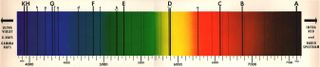
And it makes sense. The antonym of schizophrenia is autism. The antonym of mania is depression. The antonym of a star is a black hole. And the spectrum of the mind's light extends from the infrared to the ultraviolet.
This theory, if handled well in the genetic and pharmaceutical realm, would provide us an answer to the why of brain-chemical imbalances – to the relief of many a mental sufferer – as well as pose avenues of scientific thinking along the how axis. In psychiatric theory, Freud could finally be seen – not as a scientist, for which he has been thoroughly discredited – but as a type of poet, his theories a partial (in both senses of the word) revealing of a larger truth obscured by the one matrix he was unable to transcend by translating: gender into genes. In psychiatric practice, Freud would appear as an element of a larger psychiatric therapy that takes account of repressed psychosexual traumae within a genetic framework that is gender-unbiased, and relieved of sexism. In other words, the extreme of successful male genetic strategies is equally catastrophic as the extreme of successful female strategies. In addition, by thinking about mental illnesses on the radically-closed versus radically-open spectrum that the autism/schizophrenia dichotomy suggests, talk therapy could engage the patient via any one of the above analogies: Greek mythology, poetry, geometry, or more – considering, for example, spectra of musical tonalities or artistic palettes – depending upon the patient's individual mental and social background.
Of course the shadow of eugenic simplification threatens, whenever we philosophers write about the ramifications of a science whose complexities are hidden from us. The specter of extreme "solutions," from the Right and Left (capitalism/communism, patriarchy/feminism, religious fundamentalism/scientific amorality, individualism/collectivism), threaten like Scylla and Charybdis throughout our split personalities. It's the story of the 20th century: it is the true Long War we are fighting: the great conflict born when God created Darwin.
But I have hope, in this new century we have inaugurated with the election of Barack Obama. In the last fifty years, the cultural upheaval wrought by the '60s and the Vietnam War – a war (and its opposition) that defined the stark conflict between male and female principles in the most naïve terms – spun American culture through five decades of alternating political ideologies. We can read the terms clearly through the conventional American consensus: the "feminine" Carter, to "cowboy Reagan," vanquisher of the Soviet Union. From a weak neuter named George Herbert Walker Bush, caricatured as "must be prudent," to Clinton in the multicultural, globalizing '90s – and from Clinton to Bush, with W.'s swaggering poses and his fingers in his ears, we swung our American way, with a psychic violence in our national genes, into a sustained autism over the past decade.
It is no wonder, ultimately, that the "Country First" Republican ticket of McCain/Palin would try to rouse their evangelical-Christian base with ludicrous assertions that Obama is a "socialist." McCain isn't a techno-geek, but the coalition he represents has inculcated the values of the technocracy to such an extent that its world-view is binary. There is 1, or there is 0. Oh yes, read it through gender theory: the phallus and the empty space (the phallus which must penetrate the empty space, Rocketman); the I or the gaping hole. Masculine capitalism or feminizing socialism.
But today, in this 21st century, we finally understand, in the technological and financial realm, in the political and geopolitical realm, and – now, it seems – in the psychological and genetic realm – that binary extremes trend toward madness. Let us now remodel our hand, from its rapid fist-to-open-palm flexions, and bend it, half-closed, half-open, as a handshake: that symbol that once meant, "I have no weapon, let us have amity and intercourse." May we know the Scylla and Charybdis of our natures.
Posted by David Schneider at 01:18 PM | Permalink


Comments
David,
I think it's a little premature to get too excited about Badcock's theory. Genomic Imprinting is an epigenetic feature of numerous species, only a small minority of whom exhibit the alleged competitive dynamic between male and female over how many offspring to raise (most are plants or insects).
Even in the cases where this dynamic is supposed to exist, such as among primates, it's not clear why it would be in the father's genes' interest to try to maximize offspring size beyond what is already optimal. Bigger is not always better, and these "greedier" offspring would not necessarily be more likely to survive. Where is the differential advantage that would enable parent-specific gene imprinting?
But, more primarily, with this essay you've just completely wiped away environmental factors underlying mental illness. Genes don't work that way. A few, like the genes for Huntington's, have a direct and inevitable influence on disease. But in the far majority of cases, genes provide a disposition toward wellness or illness, which will manifest in varying ways depending on what sort of environmental stresses an organism is exposed to (neglectful parenting being one obvious example of an environmental stressor).
This is one of those theories that sounds plausible in summary, but can't hold up to any serious scrutiny.
Posted by: Chris Schoen | Dec 22, 2008 4:17:36 PM
This doesn't sound especially new, nor especially earth shattering, nor does a mass of poetry extolling a theory's supposed elegance and correspondence with Greek myth really show that it's got scientific merit.
I am instantly suspicious of any model that seeks to synthesise a one-dimensional scale out of a complex system like, for example, the interaction between a self-aware neurochemically produced creature and the systems multiples of those creatures produce to govern their interactions with others. When their "new, elegant" model turns out to be what you call "harmonious" with "what we know" and I call "that tired old evo-psych gender essentialism again" my suspicions are basically confirmed.
What we know, what our received wisdom is, what you lauded in your panegyric, is in fact nothing so true and universal as to be confirmed by the barely-tamed chaos of modern science. Male and female are not opposites on a fundamental scale - not without drastically oversimplifying things to absurdity - but clouds and groupings that overlap and intersect in peculiar ways, fly in and out of each other and always find ways to contradict what we "know".
Fundamentally, I think that you wrote this from the perspective of someone who would put "feminism" in a group of radical extremisms says a lot about where you're coming from and why simplistic, "elegant" models of gender identity are so appealing.
The irony is that you began with "what will happen when the press gets hold of this idea" and then proceeded to demonstrate it.
Posted by: McDuff | Dec 22, 2008 5:03:43 PM
Chris,
Thanks for your comments. I was a little dubious about the logic of the father's genes' interest argument as well -- it didn't seem a particularly strong rationale. But I don't think I "wiped away environmental factors"; it was never my intention to propose that environmental factors aren't strongly implicated in mental illness -- indeed, many forms of depression are directly triggered by environmental stresses and I have no doubt that longer-term environmental factors can be directly implicated. It is also widely known, even to the point of common sense these days, that genes provide a disposition which is then augmented or suppressed by an incalculable number of variables from the environmental, dietary, social etc. environments.
My intention, mainly, was to highlight a theory of mental disorders that creates a superstructure above molecular and electrochemical interactions -- a theory of mind that taps (newly) into mythological, political, and social structures we've inherited. To connect a very new idea to very old ideas, and thereby suggest that the sciences and the humanities work toward similar, overlapping goals by observing the world closely.
I'm very well aware that the biochemical interactions in the brain, and in the genetics of reproduction, are spectacularly complex and contingent upon constant revision (full disclosure: my fiancée is a molecular biologist). But in the sciences, just as in the humanities, an elegant idea is often a good one. And we forget, too often in the scientific ideology we all inhabit today, that the branching of capillaries have the same structures as the trees and the galaxies. ( cf: http://opusmaximum.blogspot.com/2008/11/just-in-case-you-missed-that-lesson.html )
Posted by: David | Dec 22, 2008 5:14:34 PM
McDuff,
I was not placing "feminism" in a group of radical extremisms; I was seeking to show that "feminism" is *seen as such an extreme position* only from the perspective of the hypermasculine. The implication is that strategies to emphasize *either* masculine or feminine to the exclusion of the other, whether in the social, the political, or in the genetic realm, may be of dangerous consequence.
Posted by: David | Dec 22, 2008 5:29:04 PM
David,
I don't understand what kind of theory of psychic causality this is.
I'm coming from the Lacanian psychoanalytic camp, and generally refrain from commenting on the articles on evolutionary psychology in this blog (as they're silly at best and offensive and speculative at worst.) Psychology and psychoanalysis are mutually exclusive models of the mind, and have vastly different ideas about the causes of psychic disorders.
My central qualm with this theory is the very idea of the spectrum itself. The disorders you mention aren't stations on a straight line. See, you can have 'psychotic' delirium in hysterics, and you can have it in psychotics. In both cases they'll look like schizophrenics, but structurally are completely different, and have completely different possibilities for cure or alleviation (besides pill popping.)
What is really curious for a psychoanalyst, though, is this gesture toward the inclination toward the Father vs. the Mother and your mention of sexual difference ('crazy' vs. 'stupid') Sexual difference lies at the heart of psychoanalytic theory, but it's a very different idea from the behavior exhibited by different genders.
It looks to me like this is an essentially psychiatric, or neuropsychological theory of the psyche, but with this strange nod toward this 'inclination' toward the parents factored into it. How is it that you end up on one end or the other of the spectrum? How is it that an infant inclines? Genetically or libidinally?
It seems as if the main position of this theory is that autism is one end of the spectrum and schizophrenia the other (which is think is just flat out wrong) and the father and mother are being thrown haphazardly into the mix as master metaphors for either destinations. But the relations between symptomatology and psychic structure are far stranger and more florid than this model accounts for.
(I wholeheartedly sympathize with your instinct toward looking to literature for insight into the life of affect, though.)
salud,
Alan Page
Posted by: Alan Page | Dec 22, 2008 6:20:22 PM
David,
I have trouble reconciling this with statements from your essay, such as when you write that "we might now understand" why Mum and Dad fuck us up. Larkin very plainly meant that they do this in person, as our psyche is formed over the course of our childhood. To imply after the fact that Badcock and Crespi have substantiated the sense of Larkin's verse is to misprepresent their theory, which is a genetic (or at least genomic) explanation that places the agency not with individual mums and dads, but with "mumness" and "dadness."
It's true that they don't deny environmental factors altogether. But their proposal is entirely dependent on Haig's very dodgy Parental Conflict Hypothesis. Without this, they offer very little. Their "spectrum" is of very little value if it's not proportional to actual etiology (which it isn't.)
As McDuff writes in his comment, it's nothing new for Ev Psych to try to ratify cultural stereotypes by trying to demonstrate a genetic basis for them. It's very seductive to think this way, partly because grappling with these stereotypes can be very exhausting.
When Keats wrote that truth is beauty, he did not mean it in the easy way, where descriptions that are pleasing to us must thereby be true. He meant it in the hard way, where it sometimes takes moral courage to see the elegance in what is. To equate biological maleness and femaleness with archetypical maleness and femaleness is to miss the point completely. The German Romantics were speaking allegorically. Virginia Woolf was not writing about intractible qualities of the male and female sex.
If the power to name is in fact supreme we want to be very careful to use the name "in our genes" where it's not warranted. Names like that are sure to stick.
Posted by: Chris Schoen | Dec 22, 2008 6:34:42 PM
The fact that schizophrenia often includes symptoms such as flat affect and sometimes catatonia (making them far more disconnected with what we normally call emotion than autistics) suggests to me that the emotional/rational dichotomy on which this theory is based is false.
Posted by: Steve Dekorte | Dec 22, 2008 9:43:23 PM
AWARD-WINNING BRAIN MUTATION
Hereditary malfunctions appear as variations that
resist thinking like the follow-the-leader bandwagon
knee-jerk behavioral reflexes, questioning everything.
This could be the story of my mother Ruth and my
brother David just couldn’t restrain their tongues
when confronted with verbal diarrhea, claptrap, or bull.
Just as the keyboard conditions the typist arranging
lines of argument, so too the tools presented by different
behavioral traits prompt both attack dog and Cheshire cat.
My experience of other people is limited by my manner.
Edward Mycue
Posted by: Edward Mycue | Dec 23, 2008 12:23:15 AM
I must agree with the other criticisms in these comments, though no doubt I enjoyed reading this eloquent article and found it stimulating; I generally try to avoid the latest evolutionary psychology theories but I find them inevitably, terribly wrong, but a well-represented update definitely inspires me to refresh my knowledge of these topics.
Posted by: M. Nestor | Dec 23, 2008 2:02:45 AM
^ "but I find them" = "because I find them"
:)
Posted by: M. Nestor | Dec 23, 2008 2:04:19 AM
David,
nice post, and the historical linkages were enlightening. Being one of the bloggers pioneering this theory I can sympathize with you when you face the skepticism in the comments.
Posted by: Sandeep Gautam | Dec 23, 2008 5:59:14 AM
Too much to regard at one fell swoop.
About this:
Ronald D Laing (if he were alive) would have had his part to say along, perhaps, with gadfly Thomas Szasz.
The architects of DSM-ETC would shudder at this prospective new encroachment into their monopoly.
I find it amusing...
Posted by: Felix E F Larocca MD | Dec 23, 2008 9:01:41 AM
I'm perplexed by how this theory has gained so much positive media coverage when it has what seems to me to be a glaringly obvious and fundamental problem right on its face. If autism and affective disorders are on opposite sides of a spectrum, then surely affective disorders should be uncommon- if not downright absent- in autistic individuals. But both anxiety and depression are common in autistics; more common in fact than in the general poplulation. Along with ADHD, Tourette's and seizure disorders, they are among the most common co-morbid medical issues for people with autism.
While I'm not denying that perhaps there are some esoteric cases in which individuals may occupy both extremes of a spectrum at the same time without invalidating the usefulness of that spectrum itself as a concept, I can't help thinking this would be an unusual situation. I would need a lot of evidentiary support before I could find such a theory very compelling.
Posted by: Laurie | Dec 23, 2008 11:13:33 AM
"The antonym of schizophrenia is autism"
Do we even understand clearly what these things are? What is meant by saying that schizophrenia is more "social" than autism?
The central idea is interesting but my inner male needs more details, less poetry.
Whatever we talk of,
whether con-
cave or -vex,
it always has something to do with sex
Posted by: Vicki Baker | Dec 23, 2008 12:26:50 PM
Thanks for your contribution this week, David -- and welcome.
Posted by: Elatia Harris | Dec 24, 2008 6:03:42 PM
I can't help but examine this article in light of my own mental illness, bipolar disorder. I wonder if, since autism is proposed to be the end of a spectrum where information is largely screened-out, and schizophrenia, where information is inadequately screened-out, bipolar disorder inhabits the middle ground. I suspect, however, that the premise of the article is that the healthier part of the population inhabit the middle ground of being able to screen out enough information to be able to function and concentrate on the information allowed by the screen.
If my bipolar illness is typical of that of other people with bipolar disorder, we alternate between over-screening and under-screening. I can readily identify times in my life where the ability to sort out information and use it before newer information takes its place in importance is the key difficulty I have. There is a literal flood of ideas and not enough time to act upon it in a way that brings the ideas to fruition. I am then not capturing enough of the ideas I have. In the down phase, my brain seems gummy. It just processes slowly, and does not admit much information in to it. I've literally had trouble picking out a plate of food in a public cafeteria. I simply asked the manager if he would please pick out a lunch for me, since I couldn't choose. This, in a person who got 800 on the verbal section of the Graduate Record Exam, seems perplexing. I didn't do so well on the quantitative section, but I didn't have much math education or like the math education that I did have. I've also maxed the verbally-administered Wexler.
So, is the middle ground a safe and steady performance based upon an ability to select out relevant information and reject irrelevant information? Or, is the middle ground my own alternation between both ends of the spectrum?
I'm intrigued, and I wish I could identify the environmental factors that "trigger" these "mood" changes. I've never been comfortable with this being termed "mood" disorder. It is really in my experience times when my nervous system is too inactive and times when it is overactive or too-easily triggered.
I have identified photo-periodicity, or the length and quality of light as a factor. I've also identified how the efforts of others to "discipline" me can be ill-advised, and badly-timed. Those efforts have been well-intentioned, I suppose, but just another bunch of information to screen out, if I am to function at all.
It is surprising how few times any positive response to my direct appeals for some sort of assistance in managing my "mood" has happened. People seem unable to take my own observations about my own needs into account. It is enough to struggle with a brain disorder, and quite beyond the call to have to also struggle with other people's active resistance to those adaptations.
I have tried to design my home environment in a manner that protects me from both extremes. I found that incompatible with marriage, so far. What works for me does not suit a partner. It can be worse when a spouse determines that it is all a personal mythology of mine and simply goes about deconstruction of these protective and adaptive measures.
Posted by: Duff | Dec 25, 2008 3:23:52 AM
This in no way strikes me as being accurate. Previous commenters have pointed out that the model is one-dimensional and that autism commonly coexists with affective disorders.
The whole thing, to me, smells like people looking for an easy answer.
Posted by: Amy | Dec 27, 2008 4:07:00 PM
I haven't quite had time to look over this article. The reason being: my mind can't currently process reading this. I am too excited by the concepts.
I am currently experiencing a pseudo-psychotic meltdown that I am coping with through various forms of therapy.
I have been hospitalized for acute psychosis, twice. I was diagnosed with bipolar, depression, and depression with psychotic symptoms. I am not schizophrenic, but I have experienced psychosis in its extremes.
My brother is severely autistic. He is closer to my father than I am. I am closer to my mother.
I just thought I'd throw that out there...
Posted by: Natalia | Jan 22, 2009 3:33:15 PM
Complete hogwash, Mental illnesses are related because they involve a break in parallel thalamo-cortical pathways. The mental illness characteristic is dependent on the entry point of the thalamo-cortical loop at the thalamus. Recent DTI imaging prove that mental illnesses are white matter diseases involving cuts in white matter bundles unobservable in MRIs. The etiology of mental illnesses is multi-dimensional. If mental illnesses involved a tug of war at conception, Twin siblings should exhibit mirror mental illnesses which is not the case.
Posted by: biotele | Jan 22, 2009 4:32:55 PM
Post a comment