
by Jonas Gardsby
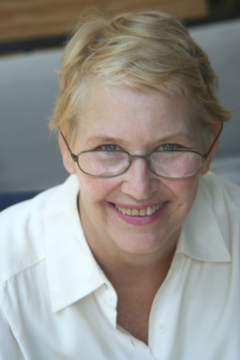
Annie Dillard is now ineligible for the Nobel Prize. The Swedish Academy won’t award it posthumously. In light of her recent passing, however, I think it is worth reflecting on the idea that she should have won the prize. While you could try to make the case solely on the merit of her style, the implications of winning the Nobel warrant something more than great talent fully realized. So, since each reader is their own judge, I offer for your consideration three reasons why Dillard deserved the prize, any one of which should have been enough. But when taken together, it’s truly apparent she was a global class talent.
She deserved the prize, first of all, as the major practitioner of literary nonfiction. The committee has historically overlooked this genre. Many other literary readers do the same. In The New York Times last year, Joseph Bernstein’s article “Why Did the Novel-Reading Man Disappear?” conflated fiction with all of literature and referred to nonfiction merely as informational. And in Sweden, where local culture incubates the committee that chooses the prize, essayist Nina Burton complained that “fictional prose is hijacking the term ‘literary arts’ and … essayists are confused with critics.” She wondered, “Have we squandered Montaigne’s legacy, and does anyone know how great it was?”
The Nobel laureates who are known for nonfiction tend not to have pursued it as art. Bertrand Russell and Winston Churchill turned clever phrases but lacked artistic structures. Two exceptions are Svetlana Alexievich who ghostwrites memoir, and Annie Ernaux who writes sociological memoir. But memoir is only one part of a much larger, overlooked pie. By contrast, Dillard’s nonfiction was influenced more by the structures of the long poem than by the narrative devices of fiction. The meaning is created not through argumentation or character development but through artistic structure, the relation of parts. Thus you have Pilgrim at Tinker Creek with its bilateral paired chapters, “An Expedition to the Pole” which invented the now popular braided essay, “Total Eclipse” which tells the same story four times through different levels of consciousness, and the nonfiction collage For the Time Being. She reinvented the form each time she wrote it, carving a trail that others then followed and developed in their own ways. Essayist and editor Brian Doyle said her work “changed the direction of American writing.” And she continues to influence younger innovative writers like Ocean Vuong, who repeatedly comments on her importance to his artistic development.
The second reason she deserved the prize? Read more »


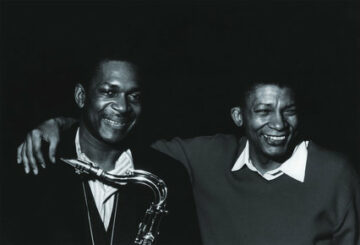

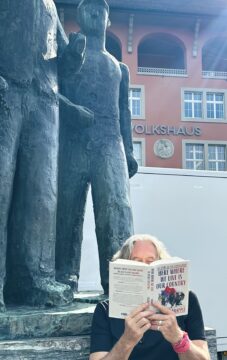
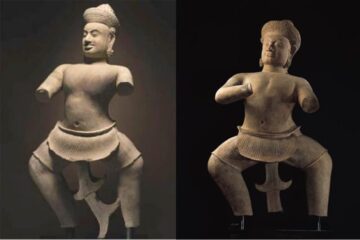
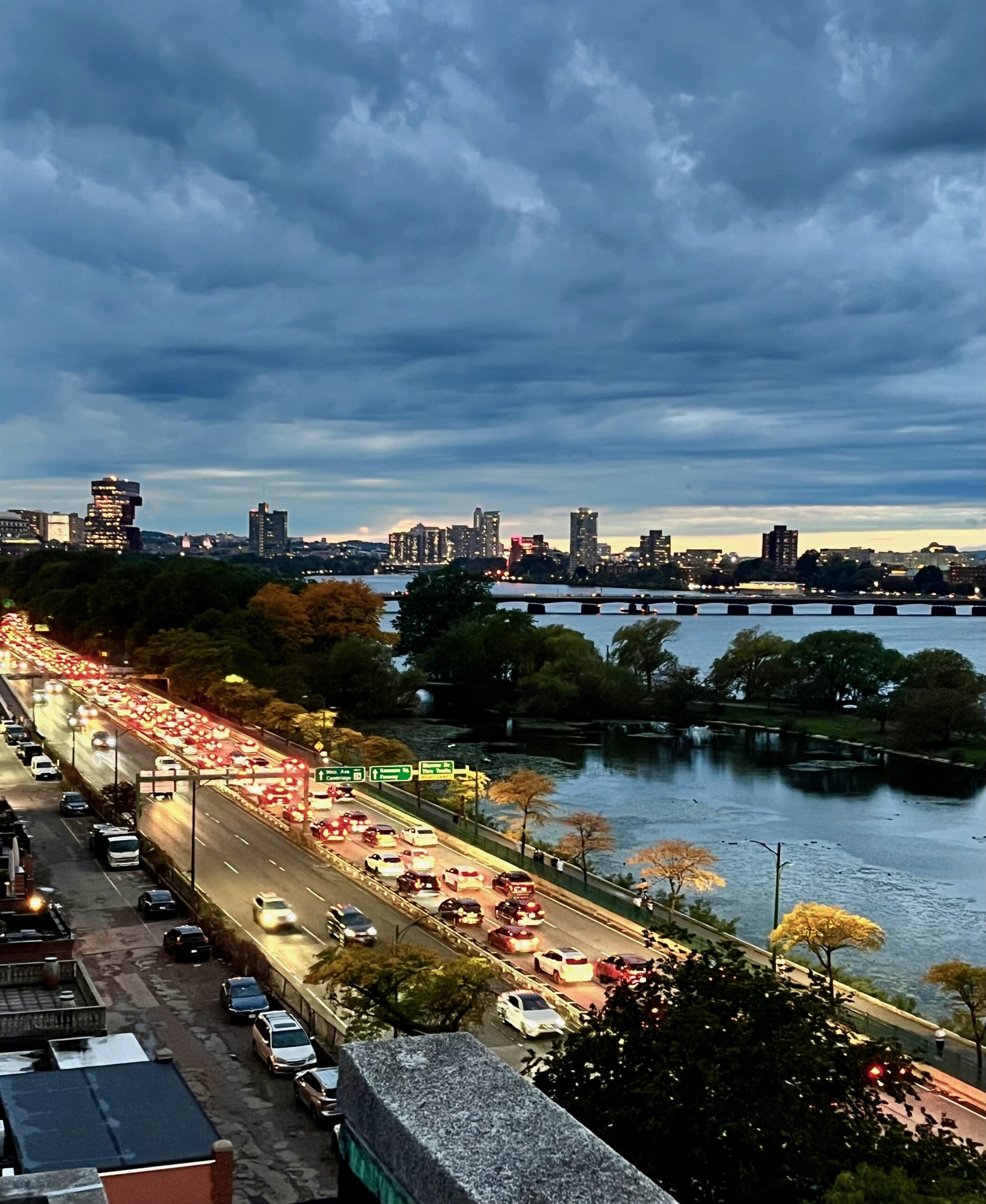 Sughra Raza. Rush Hour. Boston, Oct 1, 2026.
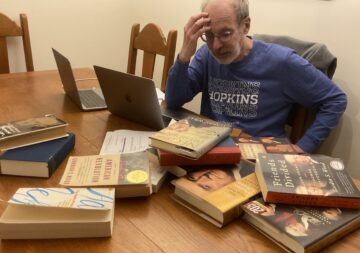 To quote the esteemed detective (and Classicist) Lieutenant Columbo, I think you see my problem. Who writes like this? I have spent a great deal of time over the last three months researching and writing about Thomas Jefferson and I do not think I am any closer to understanding the inner Jefferson then the day I started. I need a break. All those books (there are more in another room by other, just as authoritative writers) and every word of original source material I can find in texts and online haven’t shown me what the historian Joseph Ellis asks me to accept as defining qualities: “Jefferson was light, inspiring, optimistic.”
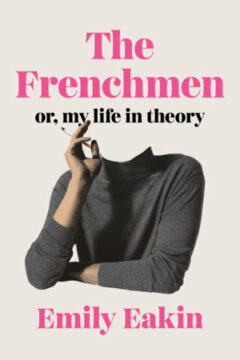 I met Derrida in Memphis in 1993. We were standing by a pool and he was smoking a cigar. I’m sure I was smoking a cigarette. I was twenty-four.

 I count among my simple pleasures a walk to a pocket beach not far from my home. Tucked between a couple of small headlands, barely 100 yards long, it overlooks Juan de Fuca Strait, separating Vancouver Island from Washington’s Olympic Peninsula to the south. It’s a quiet spot, empty of the summer crowds that flock to beaches elsewhere in the city, and for that reason a treasured refuge for readers and romantics in search of solitude with a tranquil view of snowy peaks. There’s always the possibility of sighting a pod of the killer whales that frequent these waters.